
Your cart is currently empty!
Trump’s Latest Message Sparks Serious Talk of Presidential Removal
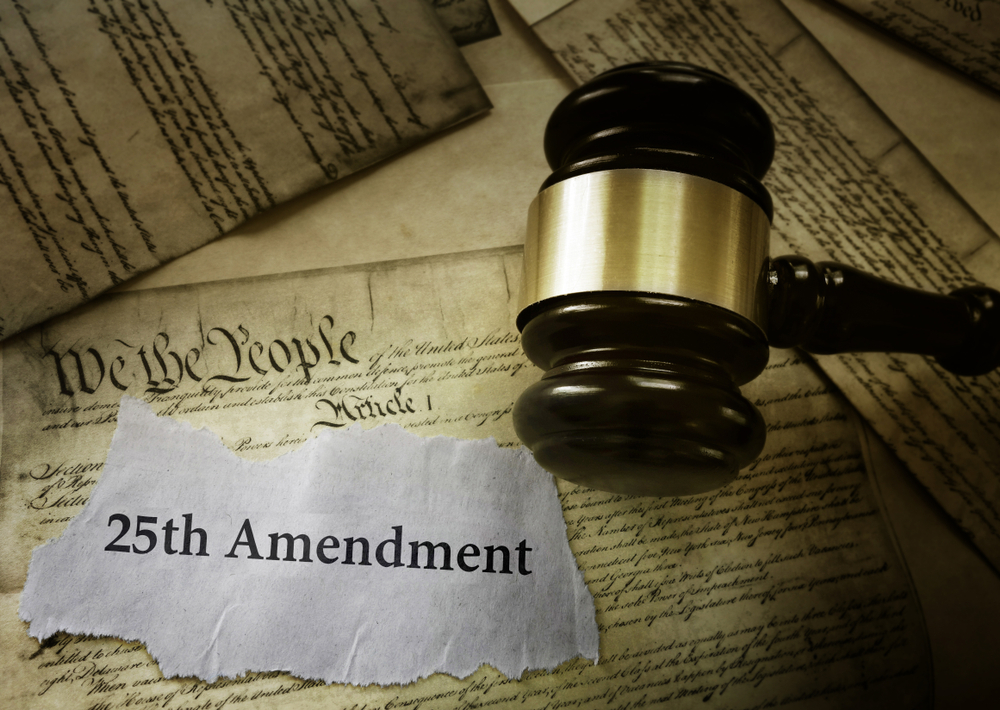
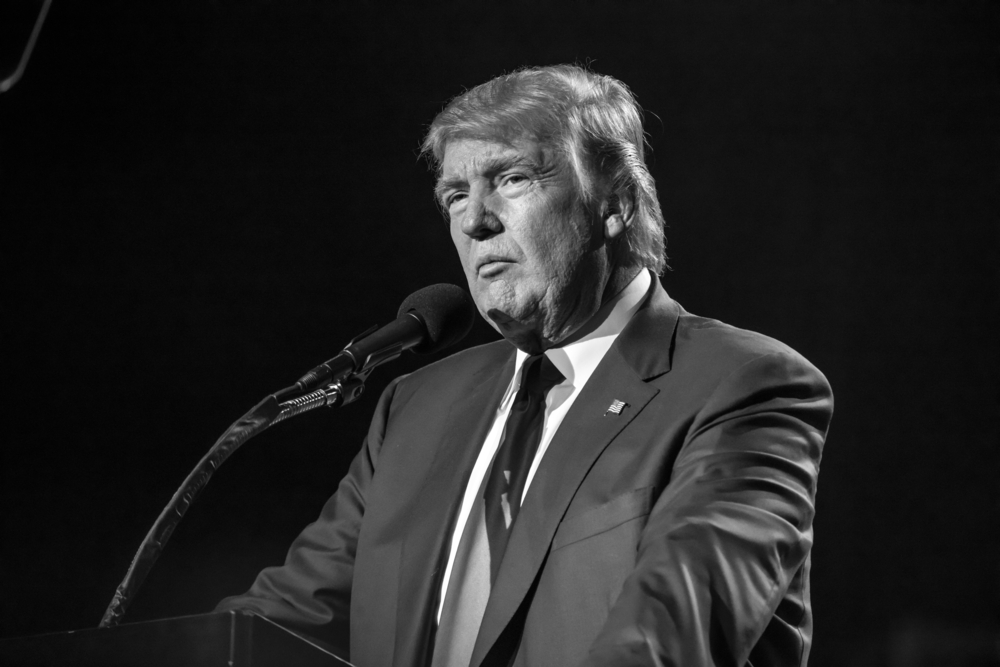
The idea of removing a sitting U.S. president is one of the most serious constitutional questions imaginable, yet it has returned to the center of public debate after a controversial Easter Sunday message from President Donald Trump. In a post that quickly spread across social media, Trump issued a stark warning directed at Iran, writing, “Tuesday will be Power Plant Day, and Bridge Day, all wrapped up in one, in Iran. There will be nothing like it!!! Open the F—–‘ Strait, you crazy bastards, or you’ll be living in Hell – JUST WATCH! Praise be to Allah. President DONALD J. TRUMP.” The language, tone, and implications of the statement triggered immediate backlash and reignited concerns about presidential conduct and decision-making at the highest level of power.
Contents
show
The response from lawmakers was swift and deeply divided. Some viewed the message as a dangerous escalation that could have real-world consequences, while others defended the president’s approach as part of a broader foreign policy strategy. Among the strongest reactions came from those who questioned whether such behavior could justify invoking one of the Constitution’s most extreme provisions. Senator Chris Murphy captured this sentiment when he wrote, “If I were in Trump’s Cabinet, I would spend Easter calling constitutional lawyers about the 25th Amendment. This is completely, utterly unhinged. He’s already killed thousands. He’s going to kill thousands more.” These reactions have pushed the 25th Amendment back into public conversation, raising questions about how it works and whether it could ever realistically be used.
What Sparked the Latest Calls for Removal?
The controversy surrounding Trump’s statement did not emerge in isolation but instead reflects a broader pattern of intense reactions to presidential rhetoric and decision-making. The Easter post stood out not only because of its aggressive tone but also because it explicitly referenced potential attacks on infrastructure, which many critics interpreted as a threat with serious humanitarian implications. For some lawmakers, this crossed a line that demanded more than political criticism and instead required constitutional consideration.
The calls for invoking the 25th Amendment came primarily from Democratic lawmakers who argued that the president’s behavior raised concerns about judgment and stability. These reactions were amplified across social media platforms, where the message circulated rapidly and sparked widespread debate. Critics framed the issue as one of national and global security, emphasizing the potential consequences of impulsive or inflammatory statements made by someone in such a powerful position.
This is not the first time such calls have surfaced. Following the events of January 6, 2021, lawmakers also explored the possibility of removing Trump through constitutional means. Similar discussions have appeared during other moments of political tension, showing that the amendment often becomes part of the conversation during periods of crisis or controversy. The recurring nature of these debates highlights how the 25th Amendment has evolved into a symbolic tool in political discourse, even if it is rarely seen as a practical solution.
At the same time, it is important to recognize that calls for removal are not limited to one political party or one presidency. In recent years, some Republicans raised concerns about President Joe Biden’s fitness for office, particularly following reports about memory issues and public appearances that drew scrutiny. This broader context shows that questions about presidential capability are a recurring feature of modern politics rather than a one-off phenomenon tied to a single leader.
Understanding the 25th Amendment
The 25th Amendment was ratified in 1967 to address uncertainties surrounding presidential succession and incapacity. Before its adoption, the Constitution did not clearly define what should happen if a president became unable to perform their duties but did not formally resign. This gap created confusion and concern, particularly during moments of national crisis.
Section 4 of the amendment is the most debated and controversial provision. It allows the vice president and a majority of the Cabinet to declare that the president is unable to discharge the powers and duties of the office. Once that declaration is made, the vice president immediately assumes the role of acting president. This transfer of power can happen quickly, which is why the provision is often described as a powerful safeguard.
However, the process does not end there. The president has the right to contest the declaration and assert that no inability exists. If that happens, the vice president and Cabinet must decide whether to reaffirm their position. If they do, the issue moves to Congress, where lawmakers must vote on whether the president is fit to serve. A two-thirds majority in both the House and Senate is required to keep the vice president in power, making it one of the highest thresholds in American governance.
This layered process reflects a careful balance between action and restraint. On one hand, it allows for swift intervention in cases of genuine incapacity. On the other, it ensures that such a serious step cannot be taken lightly or without broad agreement across multiple branches of government. The structure itself reveals how cautious lawmakers were when designing this mechanism.
What the Amendment Was Actually Designed For
To understand whether the 25th Amendment could apply in situations like the current controversy, it is essential to look at its original intent. The amendment gained momentum after the assassination of President John F. Kennedy, when the nation confronted the possibility of a president being incapacitated without a clear plan in place. Lawmakers recognized the need for a formal process that could handle such scenarios.
The architects of the amendment focused primarily on situations involving physical or mental incapacity. This could include cases where a president is unconscious, severely ill, or otherwise unable to communicate or make decisions. The language they chose was intentionally broad, using the phrase “unable to discharge the powers and duties of his office” to allow flexibility in unforeseen circumstances.
At the same time, legal experts have consistently emphasized that the amendment was not designed as a tool for addressing misconduct or controversial decisions. One scholar explained that its focus is limited to whether a president is physically or mentally incapable of doing the job, rather than whether their actions are unpopular or even dangerous from a policy standpoint. This distinction is critical because it separates constitutional incapacity from political disagreement.
Some of the amendment’s original contributors also suggested that it could apply in cases of severe mental impairment that prevents rational decision-making. However, even this interpretation requires a high standard of evidence and consensus. The framers did not intend for the provision to be used simply because a president behaves erratically or makes decisions that others strongly oppose.
Why Invoking It Against Trump Is Unlikely
Despite the intensity of recent reactions, most analysts agree that invoking the 25th Amendment in this case is highly unlikely. The primary reason lies in the structure of the process itself, which depends heavily on the cooperation of the vice president and Cabinet members. These individuals are typically chosen by the president and often share political alignment and loyalty.
In the current situation, there is little indication that such support exists for initiating the process. Trump continues to maintain strong backing within his administration, and Cabinet members have publicly expressed their support for his leadership and policies. Without that initial step, the rest of the process cannot begin, regardless of public or political pressure.
Even if the process were initiated, the requirement for a two-thirds majority in both chambers of Congress presents another major obstacle. Achieving that level of bipartisan agreement in today’s political climate is extraordinarily difficult. Partisan divisions make it unlikely that enough lawmakers would unite to remove a sitting president through this mechanism.
There is also the matter of historical precedent. The 25th Amendment has never been used to remove a president against their will. It has only been invoked in limited circumstances, such as temporary transfers of power during medical procedures. This history reinforces the idea that Section 4 is reserved for extreme and undeniable cases of incapacity rather than contested political situations.
A Broader Debate About Presidential Accountability
The renewed focus on the 25th Amendment has also sparked a wider conversation about how the United States addresses concerns about presidential fitness. While the Constitution provides mechanisms like impeachment and the 25th Amendment, both are difficult to implement and require significant political consensus.
Critics argue that this creates a gap in accountability, where concerns about leadership may not translate into meaningful action. This issue is not limited to one presidency but reflects a broader challenge within the political system. Questions about age, health, and cognitive ability have been raised about multiple leaders in recent years, showing that the problem is systemic rather than individual.
Examples from across the political spectrum illustrate these concerns. Reports of lawmakers continuing to serve despite serious health issues have fueled debates about whether existing safeguards are sufficient. These situations have led to growing frustration among voters who feel that the system is not equipped to respond effectively to such challenges.
Some commentators have taken a more satirical approach to the issue, using humor to highlight what they see as structural flaws. One writer joked about the difficulty of removing leaders by imagining extreme scenarios and unconventional solutions, suggesting that the system allows individuals to remain in power regardless of behavior. While exaggerated, these perspectives reflect a deeper unease about the resilience and adaptability of democratic institutions.

A Constitutional Tool Few Expect to See Used
The 25th Amendment stands as one of the most powerful yet rarely used provisions in the U.S. Constitution. Its existence reflects an understanding that even the highest office in the country is not immune to human limitations, but its design ensures that it can only be used in the most extreme circumstances.
In the current debate, calls to invoke the amendment highlight the depth of political division and public concern rather than a realistic path forward. The legal and political barriers are simply too high for it to be considered a likely outcome. Instead, the conversation serves as a reminder of the challenges involved in balancing accountability, stability, and democratic principles.
Ultimately, the discussion invites a broader reflection on how societies respond to questions of leadership and power. While the Constitution provides tools for addressing crisis, their effectiveness depends on the willingness of those in power to use them. For now, the 25th Amendment remains less a practical solution and more a symbol of the limits and possibilities within the American political system.