
Your cart is currently empty!
U.S. Issues Scathing Warning to Canada Over Potential Withdrawal From F-35 Deal
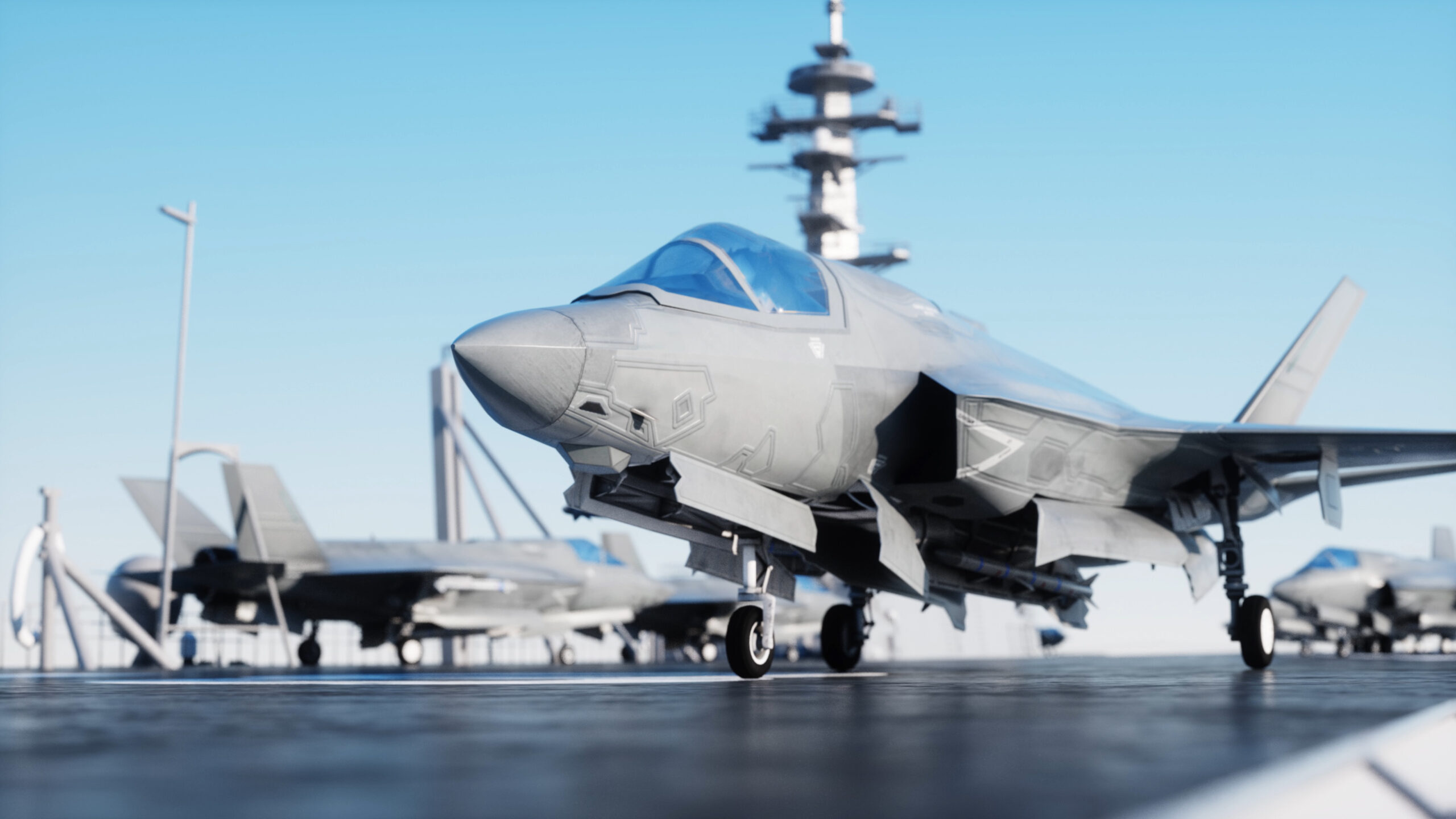
The relationship between Canada and the United States has long been considered the gold standard of international alliances, built on decades of mutual trust and shared defense. However, that historic partnership is currently facing a volatile stress test, transforming a standard military purchase into a heated diplomatic standoff.
Contents
show
With Washington delivering a stark ultimatum regarding the future of North American airspace, the conversation has shifted from simple procurement to a fundamental question of national independence. As pressure mounts from the south, the country is left to grapple with whether the price of continued security might ultimately be its own sovereignty.
The US Ultimatum on North American Defense

The decades-old defense partnership between Canada and the United States has entered a period of significant turbulence following a stark warning from US Ambassador Pete Hoekstra. As Prime Minister Mark Carney’s government reviews the acquisition of 88 F-35 fighter jets, American officials have signaled that canceling the full order could fundamentally alter the North American Aerospace Defense Command (NORAD) agreement. The dispute centers on Canada’s hesitation to finalize the purchase of 72 additional stealth fighters after initially committing to only 16 aircraft.
Ambassador Hoekstra publicly suggested that if Canada opts for an alternative aircraft, such as the Swedish-made Saab Gripen, the United States might consider the Canadian fleet incapable of meeting joint defense requirements. In an interview with CBC, Hoekstra stated that if Canada chooses what he termed an “inferior product” lacking interoperability with US technology, the US would be forced to “fill those gaps.” This statement carries profound implications for Canadian sovereignty, implying that the US Air Force would unilaterally patrol Canadian airspace to intercept threats if the Royal Canadian Air Force cannot meet American standards.
For over sixty years, NORAD has operated as a binational command where both nations monitor and defend North American airspace cooperatively. However, the suggestion that US jets could operate independently within Canadian borders challenges the spirit of this alliance. While the ambassador framed this as a necessary security measure to compensate for perceived Canadian capability gaps, it places immense pressure on the current government to proceed with the full Lockheed Martin contract despite ongoing reviews concerning cost and strategic autonomy.
Stealth Capability vs. Strategic Reality

Central to the US ultimatum is the assertion that the Swedish-made Saab Gripen cannot function effectively alongside American forces. Ambassador Hoekstra explicitly labeled the Gripen an “inferior product” that lacks the “interoperability” required for North American defense, suggesting that only the F-35 can maintain the integrity of the NORAD alliance. Supporters of the F-35 echo this sentiment, arguing that its fifth-generation stealth capabilities and advanced sensor fusion are indispensable for modern warfare, and that introducing a different airframe would sever critical digital lifelines with the US Air Force.
However, aviation experts and defense insiders have pushed back against these claims, characterizing the “interoperability” argument as a marketing tactic rather than a technical fact. Bill Sweetman, a prominent aviation writer and author of Trillion Dollar Trainwreck: How the F-35 Hollowed Out the U.S. Air Force, dismissed Hoekstra’s comments as “babbling nonsense.” Sweetman noted that Canada has successfully operated different aircraft from the USAF within NORAD for over 40 years without issue. Furthermore, the argument that the F-35’s stealth is a prerequisite for continental defense is debated; as Sweetman pointed out, the primary threats to North American airspace, such as Russian bombers, generally lack the air-to-air radar capabilities that would make stealth a deciding factor in an interception scenario.
The operational reality of NATO further contradicts the idea that the Gripen cannot integrate with allied systems. The jet is currently flown by NATO members such as Hungary and the Czech Republic, and has a proven track record of flying in conjunction with F-35s during joint exercises. This has led the Liberal government to consider a “split fleet” compromise, purchasing 40 F-35s for high-threat international missions where stealth is mandatory, while acquiring up to 80 Gripens for domestic defense and Arctic patrols. This hybrid approach would theoretically satisfy the need for US interoperability while insulating Canada from total reliance on a single foreign supplier, though it remains to be seen if Washington would accept such a nuanced solution.
Ballooning Costs and the Sovereignty of Supply

Beyond the diplomatic friction, the practical viability of the F-35 program faces intense scrutiny due to soaring costs and persistent maintenance challenges. The financial commitment required for these fifth-generation fighters has escalated significantly, with a 2025 audit revealing that the program’s cost had risen to $27.7 billion, an increase of nearly $8 billion from initial estimates three years prior. This sticker shock is compounded by reports from US oversight bodies questioning the fleet’s reliability. A paper published by the Canadian Forces College noted that the F-35A variant achieved a full mission-capable rate of only 36 per cent in 2023, while the Congressional Budget Office reported that availability rates for these new jets were often lower than those of aging F-16 aircraft.
These technical shortcomings have drawn criticism even from within Washington. Republican Senator Roger Wicker, speaking at a Senate hearing, admitted that while the F-35 is technologically advanced, “too many of them are sitting idle,” noting that readiness rates continue to fall short of Pentagon goals. For Canada, these reliability issues are inextricably linked to national sovereignty. Unlike the Gripen, which Saab has offered to manufacture locally with guaranteed job creation, the F-35 ecosystem relies on a supply chain strictly controlled by the United States. Reports indicate that the US retains ownership of spare parts even when they are stored on Canadian bases, raising fears that a foreign administration could ground the Royal Canadian Air Force by simply withholding essential components.
This vulnerability has prompted warnings from other NATO allies who are reliant on the platform. Rasmus Jarlov, head of the Danish parliament’s defence committee, cautioned Canada to “choose another fighter jet.” Citing the leverage the US holds over global partners, Jarlov warned that American authorities possess the power to effectively paralyze an ally’s air force by shutting down parts supplies, a scenario that defense analysts argue presents an unacceptable risk to national independence.
Political Leverage and the Split-Fleet Compromise
Paradoxically, Ambassador Hoekstra’s aggressive warnings may have provided Prime Minister Mark Carney with the precise political capital needed to pivot away from a full F-35 commitment. While the US ultimatum was intended to enforce compliance, it has sparked significant backlash among Canadians who view the comments as an infringement on national sovereignty. This public sentiment offers the Liberal government a unique opportunity to frame a reduction in the American order not as a failure of defense, but as a principled stand against foreign bullying.
Amidst this diplomatic standoff, a strategic compromise has emerged. Reports from the National Post indicate that federal planners are actively considering a “split fleet” solution: capping the F-35 acquisition at approximately 40 aircraft while supplementing the force with as many as 80 Saab Gripens. This hybrid model aims to thread the needle between alliance obligations and domestic independence. The smaller fleet of F-35s would remain dedicated to high-end NORAD missions, satisfying the US demand for fifth-generation interoperability, while the larger fleet of Gripens would handle routine patrols and sovereignty operations at a fraction of the cost.
Defense Minister David McGuinty has maintained a disciplined public stance, reiterating that “no final decision has been made” while emphasizing that the ongoing review focuses on “security, sovereignty, and industrial benefits.” However, the political logic of a mixed fleet is becoming increasingly attractive. It addresses the Royal Canadian Air Force’s need for advanced stealth technology without tethering the nation’s entire defense apparatus to a single, foreign-controlled supply chain, a vulnerability that has become impossible to ignore in the wake of recent threats.
A Defining Moment for Canadian Independence

The choice facing Prime Minister Mark Carney is not just about engine speeds or radar technology. It is about who holds the keys to Canada’s defense. The aggressive threats from the United States have made one thing very clear: relying 100% on a neighbor for protection comes with heavy strings attached. By linking the sale of fighter jets to the permission to patrol our own borders, Washington has shown that total dependence on American technology puts Canada in a vulnerable position.
The proposed idea of a “split fleet” offers a smart, balanced solution. By buying a smaller number of American F-35s, Canada can still work closely with its allies on high-tech missions. At the same time, investing in a larger fleet of Swedish Gripens, which would be built right here in Canada, ensures the country keeps control over its own security. It is similar to having a reliable vehicle in your own driveway rather than relying solely on a neighbor who might take away the car keys if you disagree with them.
Critics might argue that maintaining two different types of planes is complicated. However, the alternative is much riskier. If the US controls the software and spare parts for every single plane the Royal Canadian Air Force flies, they effectively control whether those planes can leave the ground. As global politics become more unpredictable, the ability for Canada to protect its Arctic and its borders without asking for permission is a necessity, not a luxury. The government must now prioritize long-term independence over short-term pressure, ensuring that Canada remains the master of its own skies.