
Your cart is currently empty!
Vanished Without a Trace: Ancient Colombian DNA Reveals Lost Human Lineage With No Descendants

Deep within Colombia’s mountainous plateau, scientists have stumbled upon something that defies our understanding of early human migration through the Americas. Ancient remains excavated near Bogotá have revealed a genetic profile so different from any known population that researchers are calling it a complete mystery.
Contents
show
DNA sequencing of bones and teeth from 21 individuals has exposed a lineage that appears nowhere else in the genetic record of North, Central, or South America. These people lived 6,000 years ago, yet their genes connect to no one who came before them and no one who came after. They simply vanished.
Colombian Plateau Yields Genetic Mystery From 6,000 Years Ago
Excavations at Checua, a site in Nemocon municipality north of Bogotá, first unearthed these ancient remains in 1992. Partial skeletal fragments from roughly 30 individuals lie preserved at an elevation of about 1.86 miles on the Altiplano Cundiboyacense plateau. Among them, archaeologists recovered one mostly intact skull.
For decades, these bones sat in collections while technology advanced enough to unlock their secrets. Now, scientists from an international team have successfully sequenced complete genomes from seven Checua individuals, making them part of the first ancient human genomes from Colombia ever published. DNA analysis pulled genetic material from the petrous bone of the temporal area and teeth, where preservation tends to be strongest.
Scientists combined data from four additional archaeological sites spanning 5,500 years of human history on the Altiplano. Nine individuals came from the Herrera period around 2,000 years ago, three from the Muisca period dating between 1,200 and 500 years ago, and two from Guane populations about 530 years ago.
Meet the Checua People
Checua people were hunter-gatherers who roamed the high plains surrounding modern Bogotá. Small, nomadic communities likely moved across the landscape in search of food. Their population size appears to have been quite limited compared to groups that came later. Genetic analysis reveals evidence of family relationships among the seven sequenced individuals, with four showing second- and third-degree kinship. Five of the seven were male, and related individuals shared Y-chromosome haplogroups but different mitochondrial DNA lineages.
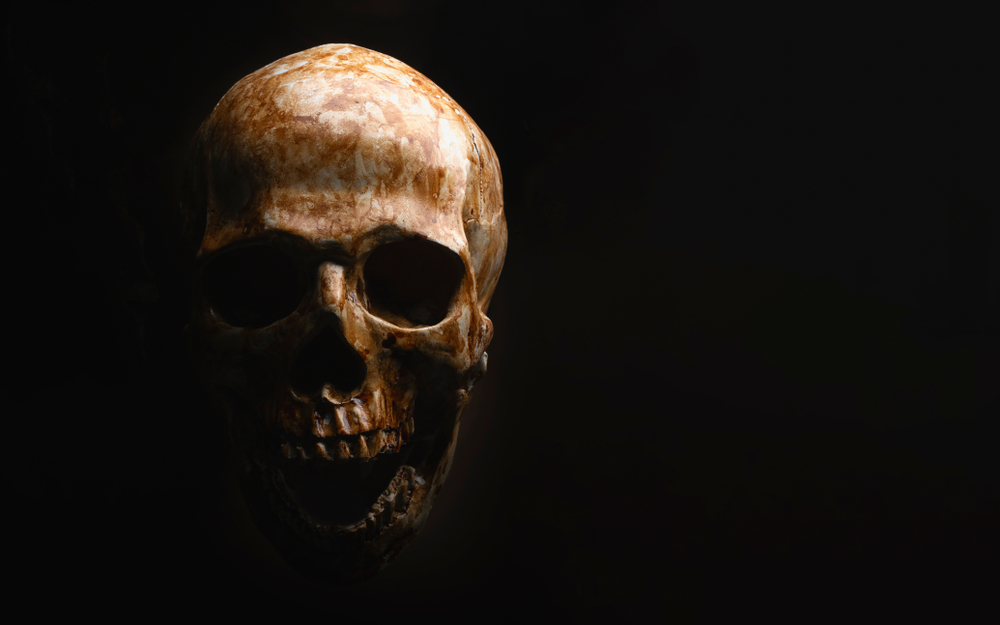
Physical differences between Checua skulls and later populations jump out immediately when examining the remains. Dr. Jose Vicente Rodriguez, a professor of physical anthropology at National University, handled the elongated Checua cranium with care as he pointed out its distinct shape. Later skulls from the plateau show rounder forms, marking a clear physical departure.
Dental evidence tells another story about daily life. Unlike skulls from subsequent periods whose teeth show cavities, the Checua skull bears signs of abscesses on the upper front jaw. Infection likely claimed several teeth during this individual’s lifetime. Diet probably shifted based on volcanic activity in the region, which damaged above-ground food sources and pushed people toward root vegetables like potatoes and tubers.
South America’s Earliest Settlers, But Not Who Scientists Expected

Human populations first reached the Americas by crossing the Bering Land Bridge from Siberia at least 20,000 years ago. As these groups moved south, they split into northern and southern Native American lineages. Everyone expected Checua people to fit neatly into one of the known branches of that southern lineage. They don’t.
Researchers compared Checua DNA against every available genetic profile from ancient North, Central, and South American populations. Standard genetic markers that should have linked them to the Clovis-associated Anzick-1 lineage from Montana came back negative. Tests for California Channel Islands ancestry also showed no connection. Even when measured against the primary ancestry source of South Americans, Checua individuals stood apart.
Scientists ran f-statistics, a tool for measuring shared genetic drift between populations. Results showed Checua people share higher genetic drift with Central and South Americans than with North Americans, but no specific allele sharing with any particular Central or South American population emerged from the data. Kim-Louise Krettek, an archaeologist at Germany’s University of Tübingen, explained what made this finding so unusual.
“We couldn’t find descendants of these early hunter-gatherers of the Colombian high plains — the genes were not passed on. That means in the area around Bogotá there was a complete exchange of the population.”
Complete Population Replacement Between 6,000 and 2,000 Years Ago
Something happened on the Altiplano between 6,000 and 2,000 years ago that erased every trace of Checua genetics from the region. By the time the Herrera ceramic complex appeared around 2,800 years ago, an entirely different genetic profile dominated the plateau.
Admixture analysis comparing ancient populations revealed the dramatic shift. Checua individuals carried ancestry components never seen in later Colombian groups. Meanwhile, people living on the Altiplano from 2,000 years ago onward displayed large amounts of ancestry found in ancient Panamanians and ceramic-associated Venezuelans.
Modern genetic techniques can track these population movements with remarkable precision. DNA contains instructions passed down through generations, creating links scientists can follow backward through time. When those links break completely, as they did with the Checua people, it signals either total extinction or absorption so thorough that unique genetic markers disappeared entirely.
Central American Migration Brings New Culture and Language
Populations from Panama and Costa Rica moved south sometime between 6,000 and 2,000 years ago, bringing sweeping changes to the Colombian highlands. Archaeological evidence points to their arrival coinciding with the Herrera ceramic complex, which introduced sophisticated pottery-making techniques to the region.
DNA from individuals associated with Herrera ceramics shows strong genetic ties to Chibchan-speaking populations from Lower Central America. Chibchan languages formed a widespread family across the Isthmus of Panama and parts of northern South America. At the time of European contact, Chibchan speakers occupied extensive territory throughout the Isthmo-Colombian area.
Genetic markers linked to Chibchan speakers first appeared on the Altiplano 2,000 years ago and persisted through Spanish colonization. Modern Chibchan speakers in Costa Rica and Panama show closer genetic relationships to ancient Colombians than Indigenous Colombian populations do today. Branches of Chibchan languages still survive in Central America, though the Muisca language, once spoken on the Altiplano, went extinct after colonization.
Cultural transformations accompanied this genetic replacement. Hunter-gatherer subsistence strategies gave way to more sophisticated agriculture. Maize cultivation evidence appears around 3,800 years ago. Ceramic technology spread across the plateau. Social structures grew more complex as population density increased.
1,500 Years of Genetic Continuity After Replacement
Once Chibchan-related populations settled the Altiplano, their genetic profile remained remarkably stable for at least 1,500 years. Individuals from the Herrera period, around 2,000 years ago, cluster genetically with Muisca period individuals from 1,200 to 500 years ago. Cultural transitions between these periods involved no substantial migration from regions with different ancestries.
Muisca culture emerged around 1,200 years ago and lasted until Spanish colonization in the mid-16th century. Population growth accelerated. Agricultural techniques advanced. Trade networks expanded. Social and political structures became increasingly complex. Yet through all these changes, genetic ancestry held steady.
Guane populations living north of Bogotá around 530 years ago showed similar genetic profiles to groups on the Bogotá plateau, confirming regional connections. Analysis proves populations speaking ancestral Chibchan languages, possibly basal to the Magdalenic branch that gave rise to the documented Muisca language, likely already inhabited the Altiplano during the pre-Muisca Herrera period.
What Happened to the Original Inhabitants?

Nobody knows for certain what caused the Checua people to vanish. Scientists can only speculate about possible scenarios. Climate shifts might have created conditions they couldn’t survive. Disease could have swept through their small population. Food sources may have become too scarce to sustain them. Competition with incoming groups might have led to conflict.
Another possibility exists. Perhaps Checua populations mixed with newcomers, but intermarriage happened at such low levels that their unique genetic markers got diluted beyond detection. Present genetic techniques might simply lack the resolution to spot trace amounts of Checua ancestry buried deep in later populations.
Casas addressed the uncertainty directly. “We are not certain what happened at that time that caused their disappearance, whether it was due to environmental changes, or if they were replaced by other population groups.”
Complete genetic replacement remains unusual for South America, where many regions show strong continuity through time. Yet Colombia sits at a critical junction between continents, making it vulnerable to waves of migration from both north and south.
Why Colombia Matters for Understanding Human Migration
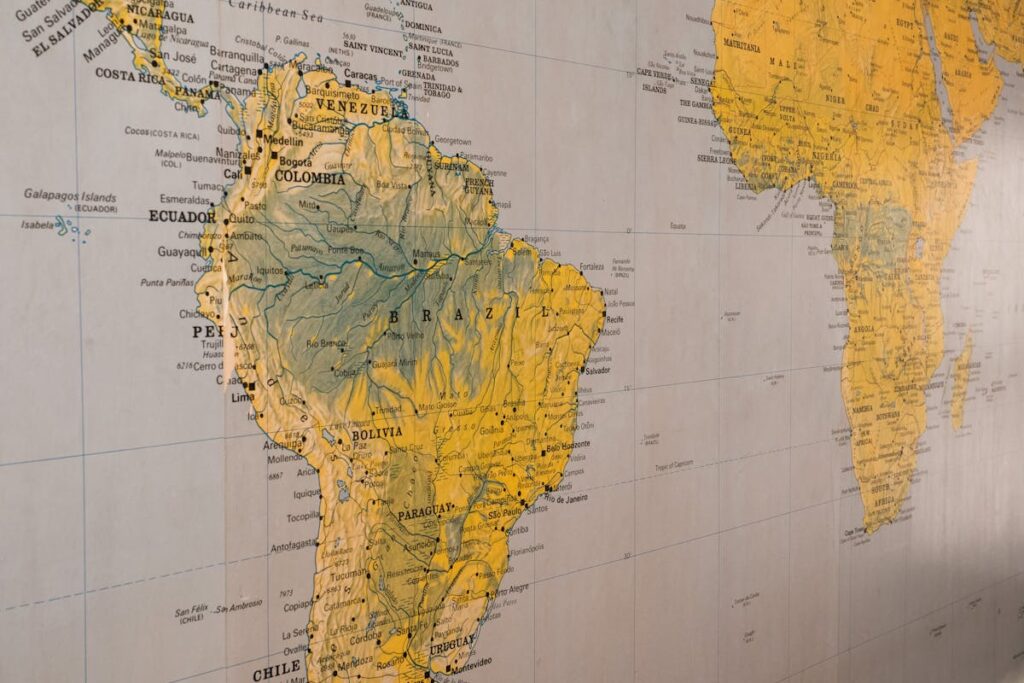
Colombia’s position as the entry point into South America gives it outsized importance for understanding how humans populated the southern continent. Every group moving south from Central America had to pass through Colombian territory. Studying ancient DNA from this region helps researchers map migration routes and timing.
Until now, Colombia represented a blank spot in ancient DNA studies of the Americas. No complete genomes from the region existed in the scientific literature. Researchers relied on mitochondrial DNA studies and indirect evidence from neighboring areas. Publishing these 21 genomes fills a major gap.
Christina Warinner, a Harvard University anthropologist not involved in the study, emphasized Colombia’s strategic importance for grasping the broader picture of human movement through the Americas. Ancient genomic data from the region points to Central America as a key influence on complex societies in both North and South America.
Unanswered Questions Drive Future Research
Major questions remain unanswered. Scientists need denser genomic time sampling to pinpoint exactly when Central American populations arrived on the Altiplano. More skeletal remains from the gap between 6,000 and 2,000 years ago could reveal whether replacement happened gradually or suddenly.
Researchers plan to analyze remains from other Colombian regions and neighboring areas. Western Colombia, western Venezuela, and Ecuador have never been studied through ancient genomics. Data from those regions could define the timing and ancestry sources of human migrations into South America more precisely.
Perhaps future excavations will uncover other remains that shed light on the mysterious Checua lineage. As Casas noted, scientists work with whatever remains available. Technology continues to advance, and new analytical methods might extract information that current techniques miss.
For now, the Checua people remain an enigma. They represent a previously unknown branch of humanity that appeared on the South American scene 6,000 years ago and disappeared without leaving descendants or clear explanations. Their story reminds us how much we still don’t know about human history and how many secrets still lie buried beneath our feet.