
Your cart is currently empty!
Viral Sketches Reveal What Woman Saw During Near-Death Experience

We tend to think of death as a simple “lights out” moment—a sudden end where everything goes dark and silence takes over. But recent events are challenging that terrifying assumption.
Contents
show
From a viral set of drawings depicting a crowded stadium in the afterlife to hospital monitors capturing unexpected surges of energy in dying patients, a new understanding is emerging. These glimpses suggest that the final transition might not be an empty void, but a complex, vivid experience that is far more active than we ever imagined.
A Sketch of the Afterlife
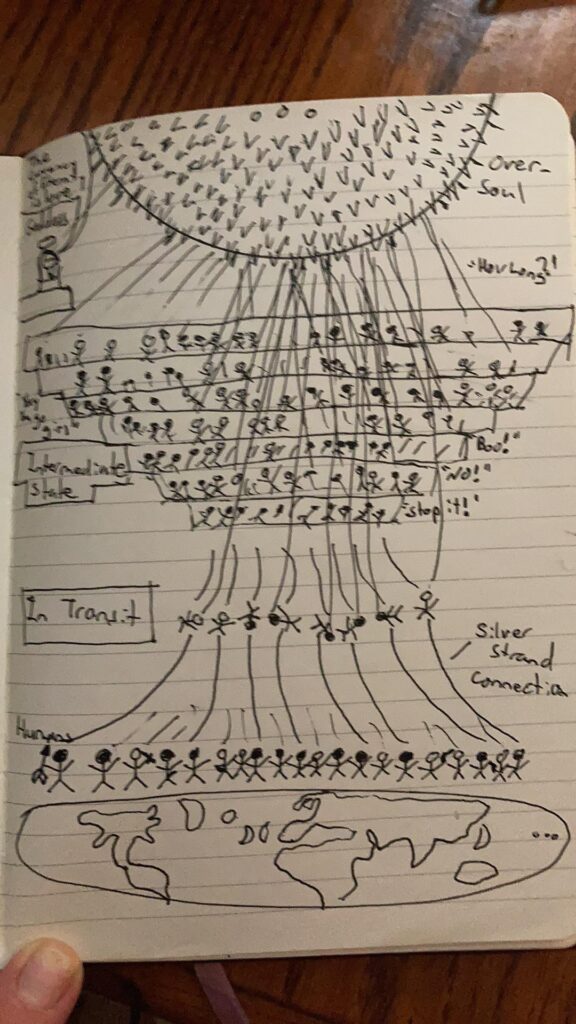
Humanity has grappled with the ultimate mystery of what lies beyond the final heartbeat. While science searches for neurological answers, personal testimonies often provide the most captivating glimpses into the unknown. Recently, a woman’s sketches of her near-death experience (NDE) captivated the internet, offering a visual diagram of a journey that transcends ordinary language. Two years after waking from a coma, she put pen to paper to depict a realm where Earth appeared as a “theater in the round,” visible in its entirety from above.
Her drawings illustrate a vivid ascent through a spiral, stadium-like structure leading toward a brilliant light. In this celestial arena, she described countless souls lining the steps, actively watching and reacting to events on Earth in real time. These observers were not passive; she recalls hearing their encouragement and cheers as they greeted newly ascended souls. The sketches also detail a profound encounter with a radiant female figure—adorned in a gown and crown—whose presence commanded immediate silence and reverence among the gathered spirits.
Perhaps the most moving detail in her account is the depiction of slender silver chords connecting every being to a singular, life-giving source. She struggled to capture the magnitude of this connection artistically but described the message she received with crystalline clarity. During this suspended state between life and death, she was told that “The Currency of Eternity is love.” These artifacts, along with a video recorded days after her recovery, serve as her anchor to that vivid memory, offering a comforting perspective on the connectivity of all life.
The Brain’s Final Surge
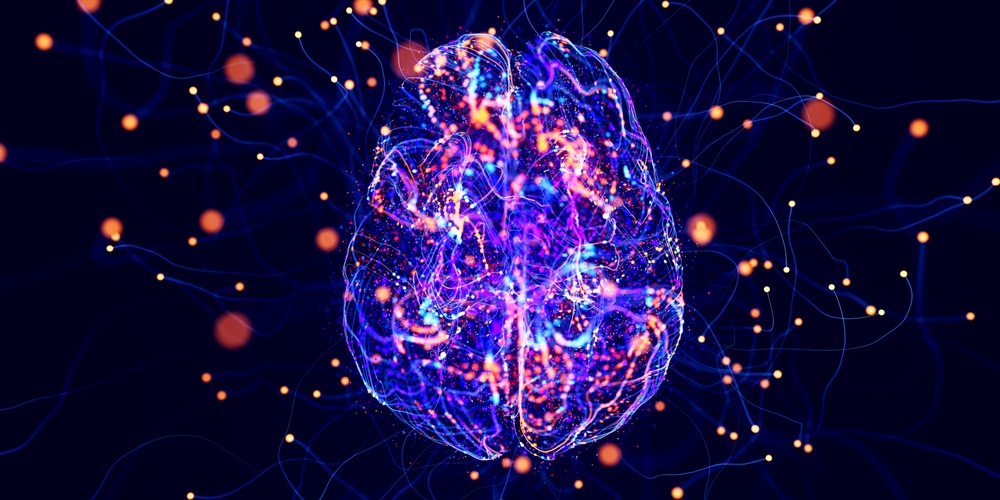
Many of us assume that death is like a switch flipping off. We tend to think that once the heart stops beating, the screen goes black and everything ends. However, recent medical discoveries suggest that the final moments of life might actually be incredibly active. When Apple founder Steve Jobs passed away, his final words were a repeated “Oh wow.” While we cannot know exactly what he saw, scientists are finally getting a look at what happens inside our heads during those mysterious last seconds.
Researchers at the University of Michigan, led by Dr. Jimo Borjigin, monitored the brain activity of patients passing away in intensive care. They found that after the heart flatlines, the brain does not immediately go quiet. Instead, it often lights up with a sudden, intense burst of energy. In some cases, this activity lasted for minutes after the oxygen supply was cut off.
This surge appears as gamma waves, which are the same fast-moving brain signals active when we are intensely focused, recalling a vivid memory, or dreaming. Dr. Ajmal Zemmar, a neurosurgeon, compares this phenomenon to a “fireworks finale.” He explains that as the brain loses oxygen, it releases a flood of chemicals that create a highly coordinated storm of electrical activity.
This biological data challenges the idea that the brain just gives up at the moment of death. The evidence suggests that while the body is shutting down, the mind may enter a state of heightened consciousness similar to deep meditation. Rather than a fade into nothingness, the dying brain might actually be more active than ever, working overtime to process the transition
Why Life Flashes Before Your Eyes

The old saying that “your life flashes before your eyes” when you die might be more than just a movie trope. The surge of electricity discovered in dying brains is not just random static; it is often concentrated in the specific areas responsible for memory and vision. Even though a person’s eyes are closed and they are unresponsive to family members in the room, their mind may be vividly replaying key moments from their past.
Dr. Jimo Borjigin suggests that the brain, starved of oxygen, triggers a cascade of events leading to intense memory recall. But it isn’t just memories; it is the feeling of those moments. Survivors of near-death experiences often describe a sense of overwhelming peace, unity, or floating, rather than fear. Dr. Charlotte Martial, a neuroscientist at the University of Liège, proposes that this is due to a massive release of neurotransmitters.
As the brain struggles to survive, it releases a flood of chemicals. A spike in serotonin might cause vivid visual hallucinations—like the bright lights or tunnels people often report. Meanwhile, a rush of endorphins and noradrenaline can create a profound sense of calm and help lock the experience into memory.
Evolutionary scientists believe this might be an ancient defense mechanism similar to “thanatosis,” or playing dead, seen in animals like possums or rabbits. Dr. Martial suggests that when the brain realizes it is in a critical, life-threatening situation, it attempts to cope by detaching from the immediate pain. This biological safety net ensures that, for many, the final moments are not filled with panic, but with a strange, chemical comfort.
Death is a Process, Not a Moment

We often think of death as a single, final instant recorded on a clock. However, science is beginning to show that it is far more complex than a timestamp on a certificate. Dr. Ajmal Zemmar notes that one of the biggest misconceptions in society is the idea of a specific “time of death.” Instead, the evidence points to death being a gradual process where the mind remains active well after the heart has taken its last beat.
This helps explain why survivors of near-death experiences, regardless of their background, tend to report the same things. Hundreds of case studies describe a consistent set of feelings: a sense of floating, seeing a bright light, and feeling a deep connection to others. These shared stories suggest that the transition out of life follows a structured path rather than being a chaotic end.
Research by Dr. Jimo Borjigin on animals even suggests the brain plays an active command role during this time. Her team found that the dying brain sends signals to the heart that may actually accelerate cardiac arrest, almost as if the mind is coordinating a system-wide shutdown. This indicates that the brain is not just a passive victim of oxygen loss but a central player in how we leave this world.
Understanding this biological reality shifts our perspective. The mind does not simply vanish the second the heart stops. Instead, it appears to guide the person through a final, significant journey. This knowledge is slowly transforming the “black box” of death into something less frightening and more understood.
A Lesson for the Living
Understanding that the end often brings peace rather than pain changes how we view mortality. Dr. Ajmal Zemmar emphasizes that knowing this offers immense comfort to grieving families. It removes the fear of a “scary black box” and replaces it with the knowledge that their loved ones likely found a moment of respite and tranquility at the very end.
This insight also holds a powerful mirror up to the living. If our final moments involve a vivid replay of our most significant memories, the quality of our lives today dictates what that final experience looks like. Zemmar poses a critical question to us all regarding the last emotional conversation we had with a friend or partner. He suggests that these genuine connections are what matter most when the screen finally fades.
Whether viewed through the lens of neurology or spirituality, the message remains consistent. The viral artist described earlier was told during her experience that “the currency of eternity is love.” Perhaps the best way to prepare for the unknown is not to fear it, but to invest deeply in the relationships and moments that will one day comfort us. By filling our lives with meaningful interactions now, we ensure that our final retrospective is a beautiful one to watch.