
Your cart is currently empty!
West Virginia Woman Arrested Over Alleged Threats Against President Trump
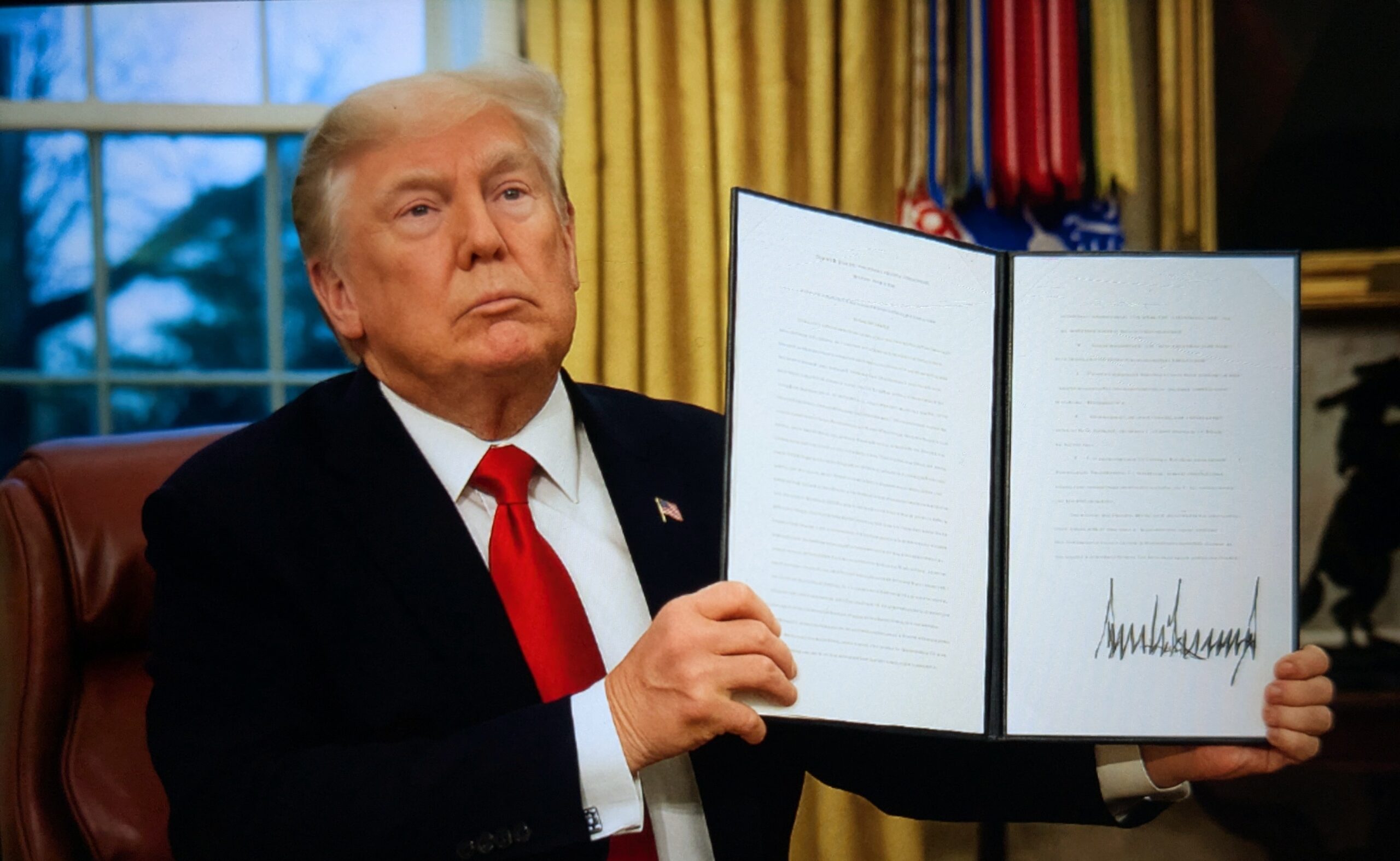
Political violence has long been one of the most uncomfortable fault lines in American democracy. While the United States prides itself on robust free speech protections and passionate civic engagement, moments arise that force a national reckoning over where expression ends and criminal threat begins. A recent arrest in West Virginia has once again pushed that uneasy debate into the spotlight.
Contents
show
A 39-year-old woman from Ripley, West Virginia, has been charged with making terroristic threats after authorities say she used social media to encourage the assassination of President Donald Trump. Investigators have emphasized that the case is not politically motivated, yet its implications reach far beyond one individual. It touches on the role of social media, the escalation of political rhetoric, and the increasing strain placed on institutions tasked with maintaining public safety.
As Americans continue to navigate an era marked by deep polarization and heightened emotions, the case raises difficult but necessary questions about accountability, responsibility, and the consequences of words shared online.
How the Investigation Unfolded
The arrest took place on the evening of January 25 following what officials described as a detailed and active investigation conducted by the Jackson County Bureau of Investigations in coordination with the Jackson County Sheriff’s Office and local police departments.
According to law enforcement statements and criminal complaints filed in Jackson County Magistrate Court, deputies became aware earlier that day of an online post that raised immediate concerns. The post appeared on a public TikTok account that investigators believe belonged to Morgan L. Morrow, a resident of Ripley, West Virginia.
The content of the post, while not naming President Trump directly, was interpreted by authorities as advocating violence against a public official. Deputies reviewed the wording, the surrounding context, and the broader pattern of activity associated with the account before determining that the statement warranted immediate action.
Law enforcement officials went to Morrow’s residence, where she was detained and transported to the sheriff’s department for questioning. After being advised of her Miranda rights, she allegedly admitted to authoring and posting the statement in question.
Later that evening, Morrow was formally arrested and taken to South Central Regional Jail. She was charged with one count of terroristic threats, a serious offense under West Virginia state law.
The Social Media Post at the Center of the Case

At the heart of the investigation is a single sentence posted on TikTok that authorities say crossed a legal line. According to multiple reports and court documents, the post included the statement: “Surely a sniper with a terminal illness can’t be a big ask out of 343 million.”
While the message did not explicitly mention President Trump by name, investigators said its meaning was clear when viewed in context. The reference to the population of the United States and the timing of the post led deputies to conclude that it was intended as a call to violence against the sitting president.
In the criminal complaint, authorities stated that such language is designed to encourage, inspire, or entice others to carry out a violent act, regardless of whether the speaker personally intends to do so. This distinction is central to how terroristic threat statutes are applied.
During her interview with police, Morrow reportedly acknowledged that the statement was directed toward President Donald J. Trump. She allegedly told investigators that she had personal reasons for wishing harm upon the president, though those reasons were not disclosed in public court filings.
Officials have emphasized that the law does not require proof that a suspect planned to personally carry out an attack. Instead, the focus is on whether the statement communicated a credible threat or encouragement of violence.
Charges and Legal Standards
Morrow has been charged with one count of making terroristic threats, a felony offense under West Virginia law. Such charges are intended to address statements or actions that threaten mass harm, violence against individuals, or acts meant to terrorize or intimidate others.
Legal experts often note that terroristic threat statutes exist in a gray area between free speech and public safety. Courts generally look at several factors when determining whether a statement rises to the level of a criminal threat, including intent, context, audience, and the likelihood that the speech could incite violence.
In this case, deputies argued that the public nature of the TikTok post and its phrasing created a risk that others could be encouraged to act. The complaint specifically states that even if the speaker claims no personal intention to commit violence, the act of encouraging others can still constitute a criminal offense.
As of the latest reports, Morrow is being held at South Central Regional Jail. Bond information has varied across reports, with some indicating that bond had not yet been set at the time of initial court appearances, while later updates suggested a monetary bond was imposed.
The case will now proceed through the court system, where prosecutors will need to prove that the statement met the legal threshold for a terroristic threat.
Law Enforcement’s Message: Not About Politics
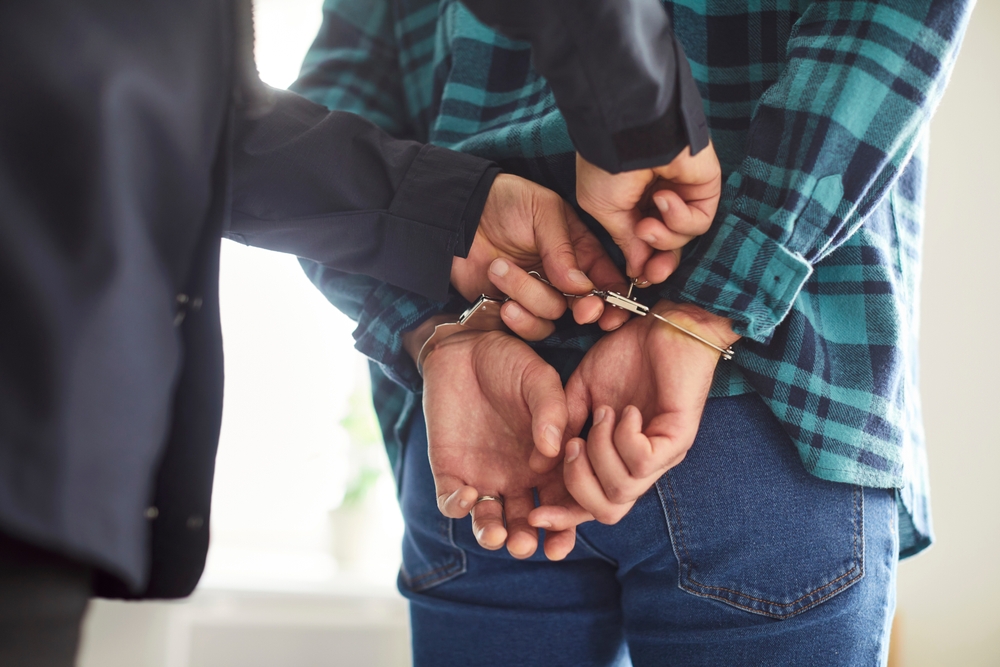
From the outset, local officials have taken pains to emphasize that the arrest is not a political statement. Jackson County Sheriff Ross Mellinger addressed the issue directly in public comments and social media posts following the arrest.
Mellinger stated that while Americans are entitled to their opinions and free to criticize government leaders, making threats against anyone’s life is illegal. He stressed that the same standards apply regardless of political affiliation or personal beliefs.
In one statement, the sheriff acknowledged the broader political climate but made clear that law enforcement’s role is limited to enforcing the law. According to Mellinger, promoting violence or recruiting others to carry out violent acts crosses a line that cannot be ignored.
Other officials echoed this sentiment, describing the investigation as a matter of public safety rather than ideology. The Jackson County Bureau of Investigations noted that additional details would be released as facts were compiled, reinforcing the view that the case was being handled methodically rather than emotionally.
The Role of Social Media in Escalating Rhetoric
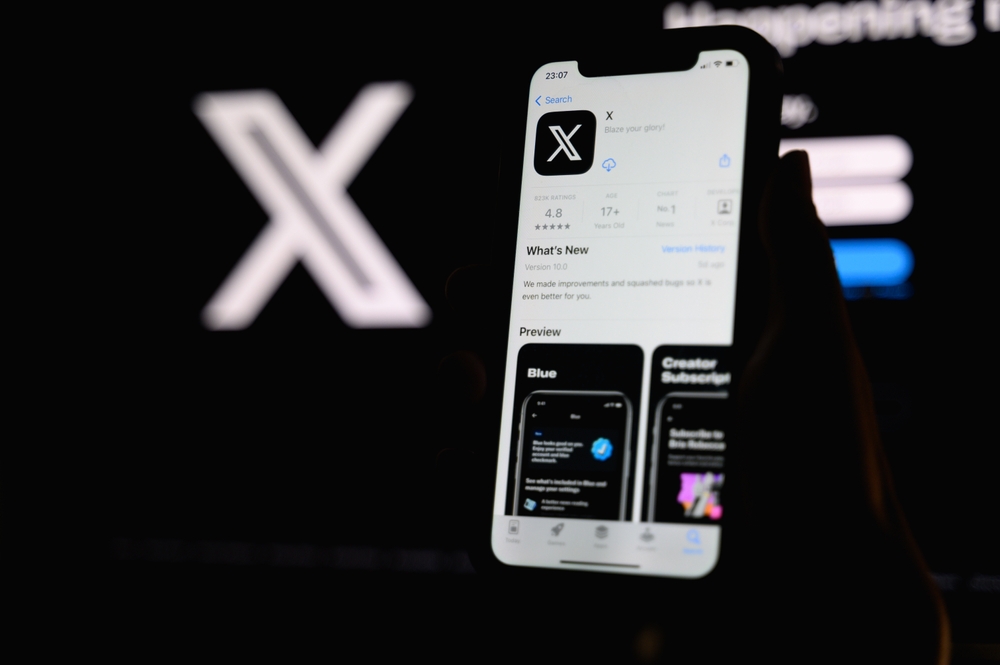
The case has renewed scrutiny on social media platforms and their role in amplifying extreme rhetoric. Platforms like TikTok, X, and Facebook allow users to broadcast thoughts instantly to large audiences, often without the filters or context present in traditional media.
While social media has democratized communication, critics argue that it has also lowered the barrier for inflammatory speech. Statements that might once have been confined to private conversations now exist in public spaces where they can be misinterpreted, shared widely, or acted upon.
Law enforcement agencies across the country increasingly monitor social media for credible threats, especially those involving public officials. This has led to debates about surveillance, privacy, and the balance between preventing violence and respecting civil liberties.
In Morrow’s case, deputies said the public nature of the TikTok account played a significant role in how the post was evaluated. Because the statement was accessible to anyone, authorities argued that it carried a greater potential for harm.
A Climate of Heightened Threats
The arrest comes against a backdrop of increased threats against President Trump and other political figures. Trump has been the target of multiple incidents in recent years, including a high profile assassination attempt during a 2024 campaign rally in Butler, Pennsylvania, which left him injured.
More recently, international tensions have also contributed to concerns about presidential security. Iranian state media aired a segment earlier this year that depicted Trump surrounded by Secret Service agents, accompanied by a caption suggesting that a future attack would succeed where past attempts failed.
Trump later responded to those threats in an interview, warning of severe consequences should any harm come to him. The exchange underscored how threats, whether domestic or international, have become a persistent feature of modern political life.
While the West Virginia case is not directly connected to these incidents, it exists within the same atmosphere of heightened alert and zero tolerance for perceived threats.

Employment and Community Fallout
Following the announcement of Morrow’s arrest, the Jackson County Public Library confirmed that she was one of their employees. The library later issued a statement distancing itself from the alleged comments.
In its message, the library emphasized that the statements attributed to Morrow did not reflect the organization’s mission, values, or standards of conduct. Administrators said they were addressing the matter internally and taking appropriate steps in response.
Cases like this often have ripple effects beyond the courtroom. For small communities, an arrest tied to national politics can bring unwanted attention and strain local institutions. Libraries, schools, and public agencies may find themselves drawn into controversies that challenge their reputations and relationships with the public.
Free Speech Versus Public Safety

One of the most challenging aspects of cases involving online threats is navigating the boundary between protected speech and criminal conduct. The First Amendment offers broad protections for political expression, including harsh criticism of public officials.
However, courts have consistently ruled that true threats and incitement to violence fall outside those protections. Determining what constitutes a true threat often depends on context and how a reasonable person would interpret the statement.
Civil liberties advocates warn against overreach, arguing that vague or hyperbolic statements could be misconstrued, chilling legitimate political discourse. Law enforcement officials counter that failing to act on warning signs can have devastating consequences.
The West Virginia case sits squarely at this intersection, illustrating how difficult these determinations can be in the digital age.
Political Polarization and Personal Anger
Beyond the legal specifics, the incident reflects a broader reality of American politics: intense polarization has become deeply personal for many citizens. Political disagreements increasingly feel existential, leading some individuals to express anger in extreme and dangerous ways.
Researchers studying political violence note that dehumanizing language and apocalyptic narratives can make violent ideas seem more acceptable. Social media algorithms that reward engagement can further amplify the most provocative content.
While most Americans who hold strong political views never resort to threats or violence, cases like this highlight how a small number of individuals can escalate rhetoric into criminal behavior.

What Happens Next in the Case
As the legal process continues, prosecutors will need to demonstrate that Morrow’s statements constituted a terroristic threat under state law. Defense attorneys may argue that the post was rhetorical, exaggerated, or protected speech.
The court will likely examine the full context of the TikTok account, any additional posts or messages, and Morrow’s statements to investigators. Witness testimony and expert analysis may also play a role.
Regardless of the outcome, the case is likely to remain a reference point in discussions about online speech and political threats.
A Broader Reflection for the Country
The arrest of a West Virginia woman over alleged threats against President Trump is not just a local news story. It is a snapshot of a nation grappling with the consequences of its political climate.
It serves as a reminder that words, especially when shared publicly, carry weight. In a time when frustration and distrust run high, the line between expression and endangerment can be crossed more easily than many realize.
For lawmakers, technology companies, and citizens alike, the challenge is finding ways to lower the temperature without sacrificing fundamental freedoms. For individuals, it is a moment to reflect on how anger is expressed and where responsibility lies.
As the case moves forward, it leaves behind an uncomfortable but necessary question: in an age of constant connectivity and constant outrage, how does a democracy protect both free speech and human life?