
Your cart is currently empty!
Why It Feels Like The Wrong People End Up In Power

Every election cycle carries a familiar mix of hope and quiet skepticism. New leaders arrive with promises of change, yet for many, the outcome feels strangely predictable. The faces may differ, but the frustration remains: why does leadership so often fall short of the intellectual and ethical standards we expect?
Contents
show

This question resurfaced in a viral discussion led by philosophy educator Julian de Medeiros, whose reflections resonated widely. But beyond the emotional reaction lies a deeper issue, one shaped by psychology, culture, and the structural realities of power itself.
Understanding this dynamic requires looking past individual leaders and examining the systems and behaviors that elevate them.
Power, Intellect, and the Leadership Paradox
Julian de Medeiros proposes a compelling idea: that power may resist intellectualism. As he explains, “power is inherently anti-intellectual. Because what does intellect do? Intellect questions power. It speaks truth to power. It critiques power. And power doesn’t like that.” This tension is not only philosophical but institutional. Positions of authority are embedded in systems that reward message discipline, loyalty, and strategic alignment over open-ended inquiry. In practice, leaders operate under constraints that make sustained critique risky, particularly when decisions must be communicated clearly to large audiences and defended under scrutiny. Intellectual habits such as revising one’s position or foregrounding uncertainty can be misread as inconsistency within these environments.

A second layer of the paradox lies in how organizations filter for advancement. Advancement often depends on signaling alignment with existing goals, managing stakeholders, and maintaining cohesion across teams with competing interests. These demands favor individuals who can simplify complex tradeoffs into actionable narratives without exposing every layer of uncertainty. Research has shown that perceptions of confidence and self-perception can strongly influence leadership effectiveness and how leaders are evaluated. Research also explores how internal self-assessment shapes leadership behavior and decision-making, particularly in how leaders present confidence and make decisions. Within such systems, intellectual depth may be present but selectively expressed, while visible certainty becomes a functional requirement of the role.
Finally, there is a structural mismatch between how knowledge is produced and how authority is exercised. Knowledge production is iterative and often slow, built on debate, revision, and peer challenge. Authority, by contrast, demands timely decisions under incomplete information, where accountability is immediate and public. This mismatch creates pressure to convert complex evidence into clear positions that can guide action, even when the underlying reality remains unresolved. Over time, this dynamic can give the impression that power sidelines intellect, when in many cases it is compressing it into forms that are legible within the constraints of leadership.
Why Voters Don’t Always Choose the Most Qualified Leaders
Leadership choices are shaped by the information environment in which voters make decisions. Most citizens do not have the time or resources to evaluate complex policy platforms in depth, which leads to what political scientists describe as rational ignorance. Instead of conducting exhaustive comparisons, voters rely on informational shortcuts such as party affiliation, endorsements, and media framing. These cues can be useful, but they also compress complex evaluations into simplified signals that do not always track with competence or policy expertise.
Another factor is the structure of modern political competition, where negative partisanship plays a central role. Voters are often motivated less by strong support for a candidate and more by opposition to an alternative. In this context, perceived alignment with group identity or shared priorities can outweigh technical qualifications. Research examining these dynamics shows how voter behavior can be guided by identity cues and heuristic decision making rather than detailed knowledge of policy positions.
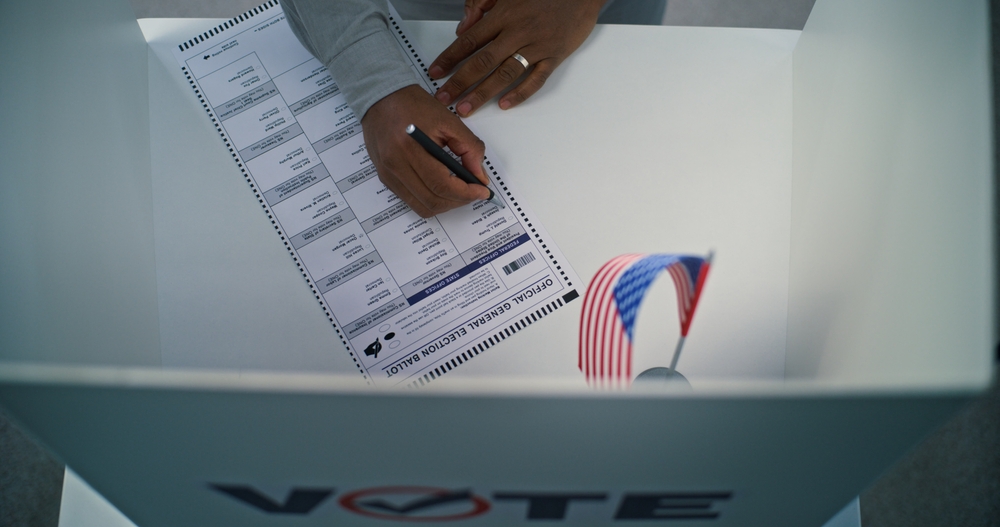
The result is a selection process that prioritizes navigability over depth. Candidates who are easier to categorize, quicker to understand, and more consistent within a recognizable framework gain an advantage. This does not necessarily mean voters disregard competence, but rather that competence must be legible within limited attention and competing information streams. In such conditions, the most qualified candidate is not always the most selectable one.
The Psychology of Charisma and First Impressions
First impressions operate through rapid perceptual mechanisms that compress visual and behavioral cues into judgments about competence, trustworthiness, and authority. Psychologists often describe this as thin slicing, where individuals draw stable conclusions from minimal exposure. In political contexts, these impressions are formed not only from facial structure but also from micro expressions, posture, vocal tone, and timing. Once established, these early judgments are resistant to change and can shape how subsequent information is interpreted, a process closely related to the halo effect.
Empirical research demonstrates how quickly these impressions solidify. Voters can form consistent evaluations of candidates from extremely brief exposures, with judgments correlating with actual election outcomes: This does not mean such judgments are accurate measures of competence. Rather, they reflect evolved cognitive shortcuts that prioritize speed and coherence over depth, especially in environments saturated with competing stimuli and limited attention.

Modern media ecosystems amplify these dynamics by repeatedly presenting leaders through curated images and short-form clips that emphasize presence over substance. Visual framing, camera angles, and editing rhythms can reinforce impressions of decisiveness or relatability without conveying underlying capability. Over time, this creates a feedback loop in which those who perform well within these perceptual channels accumulate advantage, not because they are more qualified, but because they are more easily read as such.
A Systemic View: Bonhoeffer and the Nature of Power
The concern that seemingly unqualified individuals rise to power is not new. Theologian Dietrich Bonhoeffer offered a broader explanation during the 20th century, suggesting that what appears as “stupidity” is not merely an individual failing but a condition shaped by social and political environments. In this view, individuals embedded within powerful systems can become detached from independent reasoning, not because they lack intelligence, but because the structure around them discourages dissent and rewards conformity. Language, identity, and group alignment begin to substitute for critical thought, narrowing the space for reflection and reinforcing shared narratives over individual judgment.
This perspective aligns with broader research on conformity and authority, which shows how individuals within structured hierarchies may internalize dominant narratives even when they conflict with personal reasoning. Rather than focusing on individual shortcomings, this approach emphasizes how systems shape behavior in ways that can make capable individuals appear limited, reinforcing the perception that those in power lack depth when they may instead be operating within restrictive conditions.
Why Disappointment in Leaders Is So Common
When we combine institutional pressures with the realities of governance, a clearer picture emerges. Disappointment in leadership is often less about individual failure and more about the inherent constraints of the role. Leaders operate within systems where competing interests, limited resources, and constant scrutiny shape every decision. Even well considered choices can produce imperfect outcomes when they must satisfy multiple stakeholders with conflicting expectations.

Another layer of this dynamic lies in the gap between public expectation and operational reality. Citizens often expect clarity, consistency, and decisive outcomes, while governance frequently involves ambiguity, compromise, and incremental progress. This mismatch creates a perception of underperformance, even when leaders are functioning within the bounds of what is realistically achievable. Over time, this gap reinforces the sense that leaders fall short, when in many cases they are navigating constraints that make ideal outcomes unattainable.
What This Means for Citizens
If leadership outcomes are shaped by both systems and human tendencies, then improving them requires more intentional participation from citizens. This does not mean becoming an expert in every policy area, but it does involve developing a more deliberate approach to how information is interpreted, how decisions are made, and how expectations are formed. Small shifts in how individuals engage with political information can collectively influence the quality of public discourse and, over time, the type of leadership that is rewarded.
Practical Ways to Engage More Thoughtfully
- Look beyond presentation
Move past surface level impressions and examine consistency over time. This includes reviewing past decisions, patterns of behavior, and how individuals respond under pressure, rather than relying on isolated moments or polished messaging. - Be comfortable with complexity
Accept that meaningful issues rarely have simple answers. Taking the time to understand tradeoffs and competing perspectives can reduce the appeal of overly simplified narratives and lead to more grounded judgments. - Engage with credible information
Prioritize sources that provide context, evidence, and multiple viewpoints. Developing the habit of cross checking information helps reduce reliance on incomplete or emotionally driven interpretations. - Reflect on expectations
Consider what is realistically achievable within existing systems. Recognizing constraints does not mean lowering standards, but it does help distinguish between genuine shortcomings and the limits of governance itself.

From Frustration to Awareness
The question of why less impressive individuals sometimes rise to power reveals something deeper about society itself.
Leadership is not determined solely by intelligence. It is shaped by perception, cultural values, psychological instincts, and structural constraints.
Understanding this does not eliminate frustration—but it reframes it. It shifts the focus from individual blame to collective awareness.
And perhaps that awareness is the first step toward better choices—not just from leaders, but from all of us.