
Your cart is currently empty!
She Absorbed Her Twin in the Womb And Lives With Two Skin Colors and Two Sets of DNA
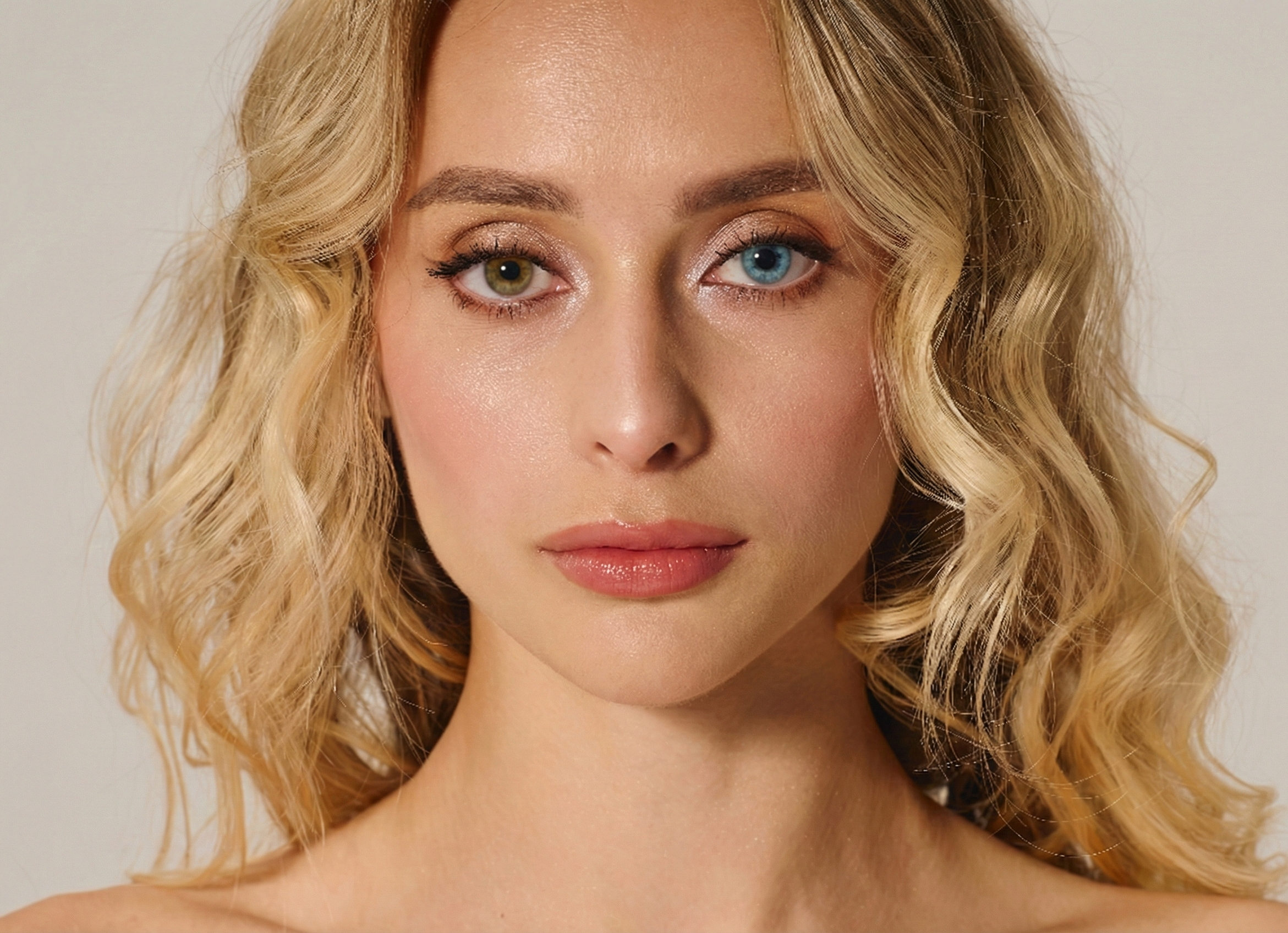
We often think of our DNA as a one-of-a-kind map that belongs only to us. But for Taylor Muhl, her body is actually a mix of two different people. For years, she looked at the straight line running down her stomach as just a quirky birthmark, but it turned out to be the key to a secret that doctors couldn’t solve for decades.
Contents
show
That line is where two sets of DNA and two immune systems meet, a rare condition called chimerism that happens when one person is technically their own twin. Her journey is a look at how she followed her gut feelings, dealt with hidden health struggles, and finally found the courage to embrace a body that is truly like no other.
The Biology of Being Your Own Twin
For Californian singer and model Taylor Muhl, the straight line running down the center of her torso was long dismissed by medical professionals as a simple birthmark. However, this distinct physical trait, where the skin on the left side of her body carries a darker pigmentation than the right, signals a rare and fascinating biological phenomenon. Muhl is technically her own twin, having been born with a condition known as chimerism.
Specifically, Muhl was diagnosed with tetragametic chimerism. This occurs during early fetal development when one fraternal twin is absorbed by the other. According to Dr. Brocha Tarshish, a clinical geneticist at Nicklaus Children’s Hospital, this specific type of chimerism happens when two separate eggs are fertilized by two separate sperm. Instead of developing into two siblings, these zygotes merge to form a single human being with two distinct cell lines.
Consequently, Muhl possesses two separate genetic codes within one body. She carries the DNA, immune cells, and bloodstream of her unborn sister along with her own. While many twins report feeling a deep psychological connection, this condition presents a literal physical fusion. Although physical markers like patchy skin or different colored eyes can serve as clues, Dr. Tarshish notes that without specific biomedical or genetic testing, most human chimeras likely go undiagnosed.
Physical Manifestations and Intuitive Bonds
Beyond the line dividing her skin tone, Muhl’s body tells the story of two genetic blueprints trying to work together. She noticed strange differences growing up, such as a double tooth on one side of her mouth or the fact that features on her left side were slightly larger than on her right. Her body even reacts differently to the environment; an insect bite or a specific metal earring might trigger an allergic reaction on her “twin’s side” while leaving her own side perfectly fine.
Long before doctors solved the medical mystery, Muhl felt the truth on a gut level. As a young child, she had an unexplainable fixation on twins. She frequently asked her mother if she had a missing sibling and insisted on dressing identically to her friends to mimic that bond. Her mother was baffled, as her pregnancy had been healthy and standard. Doctors assumed the physical traits were just quirks of nature. It took until adulthood for Muhl to realize that her childhood intuition was actually a sensing of the second genetic identity living within her.
A Body at War With Itself
While the physical signs of chimerism are fascinating, the internal reality is a constant battle for health. Because Muhl has two sets of DNA, she essentially has two immune systems. Instead of working together, her dominant system sees her twin’s cells as foreign invaders and attacks them. This ongoing biological war leaves her immune system dangerously low, comparable to that of a cancer patient.
This conflict causes severe autoimmune issues and extreme sensitivities. Muhl is allergic to almost everything, including many foods, medications, and even jewelry. When doctors tested her for 150 different allergens, only a handful came back negative. To stay safe, she has to rotate what she eats to avoid triggering a reaction. She also battles intense migraines and endometriosis, but treating them is difficult because her body rarely tolerates standard medicine. It is a hidden struggle where looking healthy on the outside masks a fragile balance on the inside.
Breaking Her Silence
For years, Muhl kept her diagnosis a closely guarded secret, sharing it only with her inner circle. Working in the competitive world of music, modeling, and entertainment, she feared that being labeled as “sick” would make her a professional liability. In an industry where 14-hour days and all-night shoots are the norm, she worried that investors and employers would see her condition as a risk. She spent years hiding her torso and maintaining the appearance of perfect health to protect her career opportunities.
However, the weight of the secret eventually became too much to carry. Muhl reached a turning point where she decided that being her authentic self was more important than any job. Since going public on shows like The Doctors, she has faced both overwhelming support and harsh judgment. Some critics even accused her of faking the condition because she appeared confident on stage. Despite the negativity, Muhl remains resilient. She views her public platform as a way to inspire others and spread a message of body positivity, proving that a medical diagnosis does not have to limit a person’s potential or define their beauty.
Finding Freedom in the Truth
Managing life as a human chimera requires a disciplined approach to wellness. Because her body is highly sensitive to traditional medications, Muhl relies on a natural regimen that includes organic nutrition, juicing, and a consistent exercise routine. While she still navigates chronic migraines and the daily realities of a low immune system, these lifestyle choices help her maintain the energy needed for her career. Her experience serves as a reminder that health is deeply personal and often requires advocating for one’s own unique needs.
Sharing her diagnosis has also brought a sense of personal liberation. After years of covering her torso and worrying about professional rejection, Muhl has found that being open about her “birthmark” has allowed her to live more authentically. She now uses her story to promote body positivity and raise awareness for a condition that is likely more common than current medical records suggest. Her message to others is simple: there is strength in owning your story and embracing the physical differences that make you unique. By speaking out, she hopes to encourage a world where different is simply seen as another version of beautiful.