
Your cart is currently empty!
17 Nurses in One Ohio Maternity Ward Are Pregnant at the Same Time
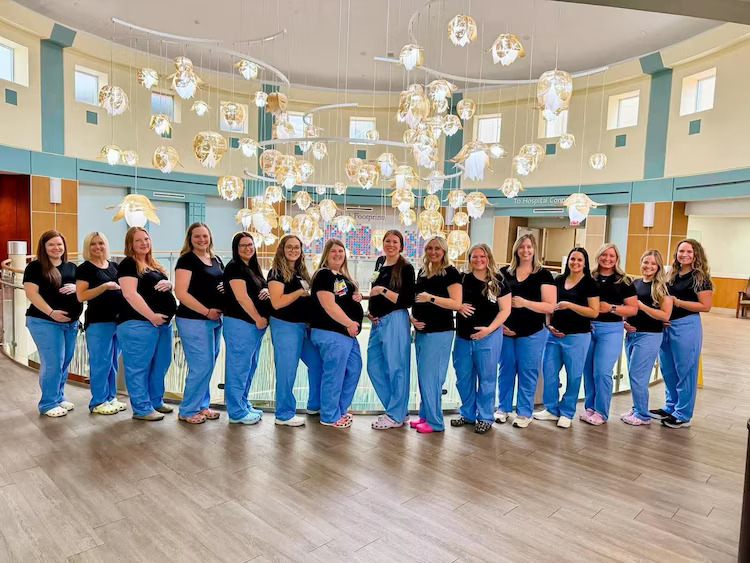
The labor and delivery staff at Miami Valley Hospital in Dayton, Ohio, spend their shifts guiding families through childbirth. Now they are preparing for a baby boom of their own. Seventeen nurses within the same maternity ward are currently pregnant at the exact same time. This rare statistical coincidence has set a new internal record for the facility, creating a highly unusual environment where the caregivers are navigating the physical and emotional milestones of pregnancy right alongside their patients.
Contents
show
A Record-Breaking Baby Boom in the Delivery Ward

In a remarkable convergence of life and work, the labor and delivery unit at Miami Valley Hospital in Dayton, Ohio, is currently experiencing an extraordinary internal baby boom. Seventeen nurses within the same department are expecting children simultaneously, with their pregnancies ranging from 12 to 35 weeks. This occurrence shatters the hospital’s previous internal record, set in 2019, when 11 nurses in the exact same unit were pregnant at once.
While simultaneous workplace pregnancies often spark playful rumors about “something in the water,” the foundation of this phenomenon is heavily rooted in occupational demographics. The nursing profession is female-dominated, with a significant percentage of registered nurses falling squarely within prime childbearing years. Consequently, localized baby booms in hospital wards—particularly in maternal care units where staff closely relate to the specialty—are statistically more likely to occur than in many other industries.
However, a localized cluster of 17 concurrent pregnancies in a single department remains exceptionally rare. A recent viral group photo of these expectant colleagues standing shoulder-to-shoulder in their matching hospital scrubs underscores a deeply unique reality: the medical professionals who dedicate their careers to guiding patients through the vulnerabilities of childbirth are now navigating those exact same physical and emotional milestones together. This shared timeline transforms a standard clinical environment into an intricate, real-time support system for the staff themselves.
A Built-In Support System at Work

Working a physically demanding job is challenging, but navigating long hospital shifts while pregnant can be especially exhausting. Expectant mothers can sometimes feel isolated if their coworkers do not understand their sudden fatigue or physical discomfort. However, the nurses at Miami Valley Hospital are completely avoiding this common workplace hurdle by going through the journey together.
For these women, the hospital ward has naturally turned into a daily support group. Maternal health experts frequently highlight that having a peer network—colleagues who truly understand the everyday challenges of expecting a child—is a highly effective way to lower prenatal stress and anxiety. Instead of having to explain why they are tired or feeling ill, these nurses can simply look across the nurses’ station to a coworker who is dealing with the exact same symptoms, doctors’ appointments, and cravings.
Because they work in labor and delivery, these professionals already know the medical side of having a baby inside and out. They spend their careers guiding patients through the unpredictable realities of childbirth. Yet, experiencing those physical and emotional changes firsthand is a deeply personal shift. By sharing this exact timeline, the nurses are taking the deep empathy they usually reserve for their patients and offering it to one another, making the heavy demands of their jobs much easier to carry.
Planning for 17 Maternity Leaves
While the shared pregnancies offer an incredible support system for the staff, they also present a very real logistical challenge for hospital management. Losing 17 specialized nurses to maternity leave over a highly condensed period is a major scheduling hurdle, especially in a specialized department. Labor and delivery is a high-skill unit; hospital administrators cannot simply pull nurses from general medical floors to fill these temporary vacancies, as the role requires specialized maternal and neonatal training.
In a nationwide healthcare landscape where nursing shortages are already a common hurdle, a sudden, localized drop in staff could easily strain a unit. Fortunately, the timing of these pregnancies offers a natural solution. Because the nurses range from 12 to 35 weeks along, their due dates are spread out over several months. This staggering means that while many leaves will overlap, the hospital will not lose all 17 nurses on the exact same day, allowing for a more manageable transition of duties.
Furthermore, Miami Valley Hospital has a distinct advantage: they have successfully navigated this exact situation before. Having previously managed the overlapping maternity leaves of 11 nurses in 2019, the hospital’s administration already has a tested playbook. By utilizing travel nurses, adjusting schedules in advance, and relying on per-diem (as-needed) staff to fill the gaps, management can maintain safe patient-to-nurse ratios without compromising the quality of care for the families coming in to deliver their own babies.
The Ultimate Staff Playdate

The maternity ward at Miami Valley Hospital is about to get significantly louder. While people love to joke about checking the water cooler when a workplace baby boom happens, this record-breaking cluster of pregnancies is simply a fun statistical coincidence. It certainly brings an undeniable energy to the hospital floor.
As these 17 nurses transition from guiding patients through labor to bringing their own children into the world, they have an incredibly rare advantage. They get to navigate the sleepless nights and early days of parenthood alongside 16 close coworkers who completely understand the assignment.
The real challenge now falls to the remaining staff in Dayton. Between managing the upcoming scheduling puzzle and picking up the physical demands on the floor, their hands will be full. For the non-pregnant nurses holding down the fort, it is probably time to start buying coffee and diapers in bulk.