
Your cart is currently empty!
1,800 People Joined Forces to Move a 396-Ton Japanese Castle Back Home
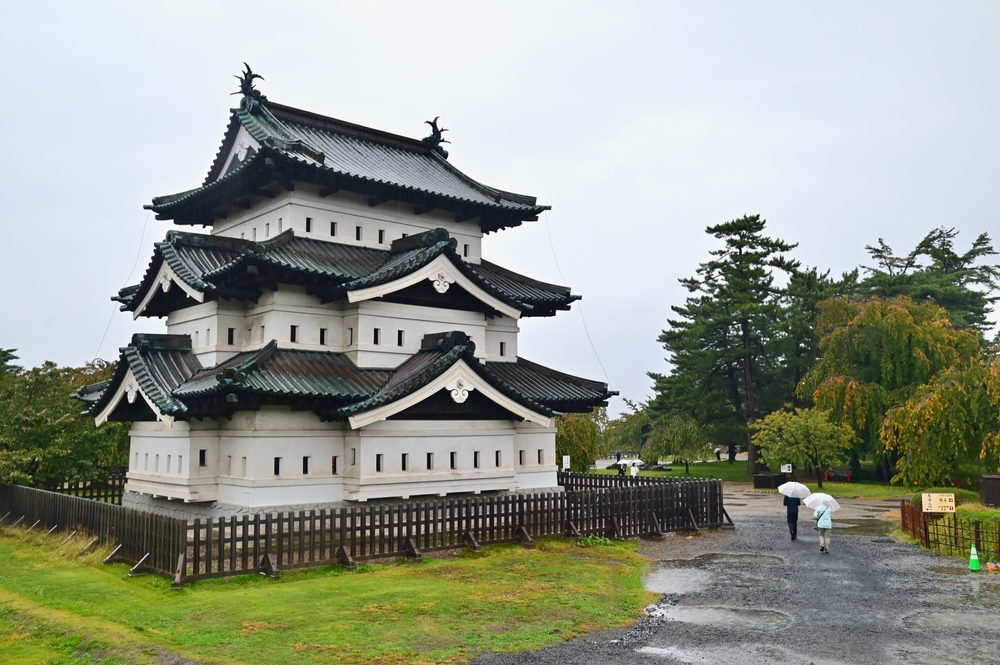
A 396-ton Japanese castle was pulled across a park by thousands of people, and the footage looks almost unreal. On August 22, 2026, roughly 1,800 volunteers gathered around Hirosaki Castle’s three-story keep, grabbed long ropes and began hauling the historic structure toward the stone foundation it had been separated from for 11 years.
Contents
show
Among those taking part was 82-year-old Katsumi Terada, who had helped move the same castle in the opposite direction back in 2015. At the time, he wondered whether he would live long enough to see the building return. More than a decade later, he was back with his hands on the rope, helping bring it home.
Japan is moving an entire 1810 castle keep 78 metres without taking it apart.
— Capital Buildcon (@capbcon) September 1, 2026
Hirosaki Castle was slid away from its original base in 2015 because the stone wall beneath it had started bulging and risked collapse.
That triggered an 11-year construction sequence.
Crews numbered… pic.twitter.com/4Jxua4lGZe
The Castle Had Been Moved 80 Metres Away
The enormous operation began with a problem that had been waiting for a solution for decades. An earthquake in 1983 damaged the stone wall beneath Hirosaki Castle’s keep, and engineers could not properly rebuild that foundation while a 360-metric-tonne building was still sitting on top of it. The answer was to temporarily move the entire wooden structure away from its original position, allowing workers to access the masonry underneath.
In 2015, the keep was shifted roughly 80 metres across Hirosaki Park using hikiya, a traditional Japanese method for relocating buildings without dismantling them. The structure was placed on rails and carefully moved as one piece, meaning its wooden framework, roof and interior remained together throughout the process. Around 1,800 people helped pull it during that first relocation, making the castle’s temporary move a public event as well as a major preservation project.
The keep then remained away from its original foundation while specialists worked on the damaged stonework. The restoration was far more involved than simply rebuilding a wall, because the original masonry had to be carefully dismantled and reconstructed. By December 2024, all 2,185 original stones had been returned to their original positions, effectively rebuilding the base that the castle would eventually sit on again.
The work also revealed parts of Hirosaki’s earlier history. Archaeological investigations beneath the site uncovered older walls, a well and drainage structures that had been hidden beneath the castle grounds for generations. What began as an engineering problem therefore opened a window into several layers of the site’s past.
🇯🇵🏯 With a collective shout, hundreds of volunteers in northern Japan have joined in an unusual operation. Using ropes, they are moving a 400-ton castle tower back to its original place. It is an old tradition.#Japan
— Silesian info 💛💙 (@Fana43124688) September 2, 2026
⬇️https://t.co/WuR9ylGB1V pic.twitter.com/8gRXWsenoU
Thousands Wanted To Take Part In The Return
When the time came to begin moving the keep back toward its foundation, the city once again turned the operation into a public event. Only around 1,800 volunteer places were available for the two-day hand-pulling effort, but roughly 8,000 people applied. That meant the available spaces were oversubscribed by about four times, with applicants coming from across Japan as well as other parts of the world.
The volunteers were divided into rotating groups so that people could pull the heavy ropes in coordinated sessions rather than attempting to maintain one continuous effort. Around 80 people worked together at a time, taking their positions along ropes attached to the massive structure. The sheer number of applicants showed how unusual the opportunity was. People were not simply watching a restoration project from behind a barrier; they were being given the chance to physically participate in it.
One participant, 46-year-old Azusa Nimiya, travelled from Shimane to take part. She described the experience as “the experience of a lifetime, a precious and unique memory.” High school student Mei Umetsu also returned to the ropes after participating in the original 2015 relocation, saying she felt “emotional being able to take part again.”
Kensuke Hayasaka, who heads Hirosaki City’s parks and green spaces division, said the project was designed to let people experience the preservation effort directly. “We wanted everyone to be able to experience history physically,” he said, describing the public participation as “extremely significant for passing on the history.” For those selected, the castle was no longer something they simply visited. For a few hours, they became part of its restoration.
The Ancient Pulling Technique Depends On Teamwork
The method used at Hirosaki is called hikiya, a traditional technique that allows a building to be moved without completely taking it apart. The structure is supported and positioned on rails or a similar system, allowing workers to gradually shift its enormous weight. The approach has existed in Japan for centuries and has previously been used to relocate historic buildings.
At Hirosaki, long ropes measuring around 30 metres were attached to the keep, with groups of volunteers pulling them together in short, carefully organized sessions. The volunteers chanted “so-re, so-re” as they worked, creating a shared rhythm that helped keep everyone pulling at the same moment. With hundreds of people involved across the operation, coordination was just as important as physical strength.
The reason becomes obvious when considering the weight involved. A building weighing roughly 360 metric tonnes does not respond simply because hundreds of people are attached to a rope. If everyone pulls at different times, much of the effort is lost. When the group moves together, however, that collective force can contribute to a controlled shift along the rails.
The movement was measured in surprisingly small increments. Saturday’s effort moved the keep 1.13 metres, while another 1.09 metres was added on Sunday. Takahiro Kogawa, a 56-year-old Hirosaki resident who participated, described the challenge by saying, “it’s like trying to move a mountain.” The castle may have moved only a little at a time, but every metre represented hundreds of coordinated efforts.
Hirosaki Castle Has A Remarkable History
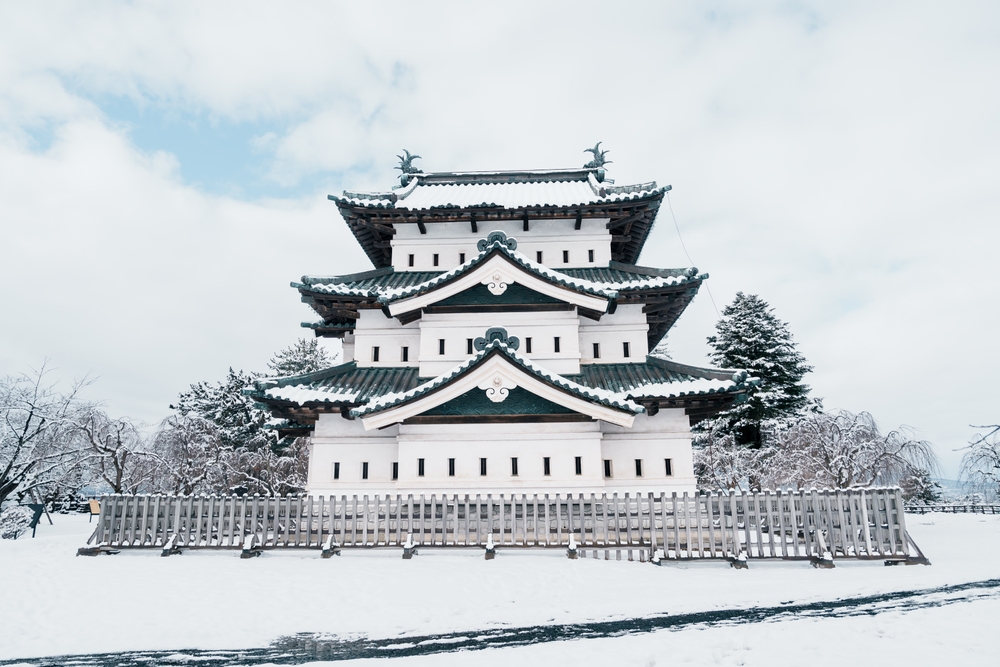
The current keep is already a survivor of several major changes. Hirosaki Castle was completed in 1611 by the Tsugaru clan, and its original keep was five stories tall. That structure was destroyed by lightning in 1627, leaving the site without a keep for nearly two centuries before the three-story tower that survives today was constructed in 1810.
That makes the present keep one of only 12 feudal-era castle keeps still standing in Japan. It is also the only original keep of its kind still standing in the Tohoku region. Hirosaki is considered unusual among Edo-period castles because so much of its historic character has survived, giving the current restoration significance beyond the building itself.
The castle has also been moved before. The tower was relocated during the 19th century and was hauled back to its original position in 1915, also using human effort. More than 100 years later, the 2026 operation has effectively repeated that part of the castle’s history, although modern engineering has been combined with the traditional principles of hikiya.
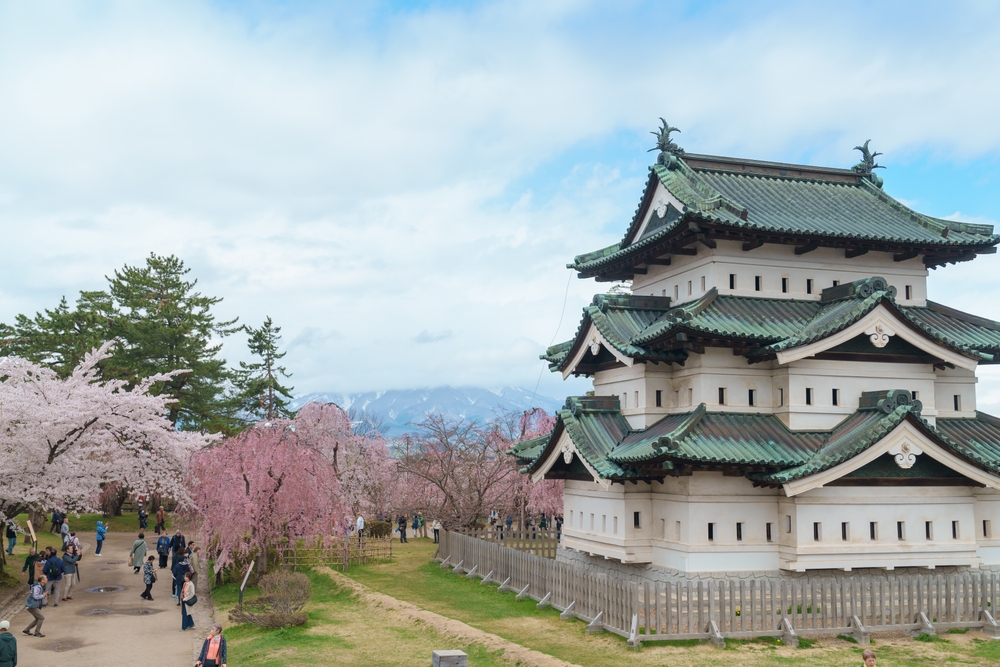
The surrounding Hirosaki Park adds another reason for the site to draw visitors. Around 2,600 cherry trees fill the grounds, and the park attracts roughly two million visitors each year during its spring festival. For many people, the castle is therefore part of a much larger cultural landscape rather than an isolated historic building.
Thousands Of People Moved It, But Machines Will Finish The Job
The volunteers were never expected to move the entire distance by hand. Their contribution was intended to form part of the larger restoration operation, allowing members of the public to participate while engineers and preservation specialists handled the more technical stages.
Across the August operation, about 4,000 volunteers took part in moving the keep, collectively shifting it close to five metres. The castle still needed to travel roughly 73 metres before reaching its rebuilt foundation, so heavy machinery was scheduled to take over in September.
The remaining work is expected to be completed by the end of 2026. The keep is scheduled to return to its rebuilt stone base in November, before the first major winter conditions arrive in Aomori Prefecture. After spending 11 years away from its foundation, the historic structure will once again occupy the position it held for generations.
That will not mark the end of the restoration. Once the keep is returned, it will be covered while preservation work continues on the building itself. Visitors are not expected to be able to enter again until 2033, meaning the public spectacle of moving the castle is only one stage in a restoration that will continue for years.
An 82-Year-Old Volunteer Finally Saw It Come Home
For Terada, the return had a personal significance that stretched across the entire restoration. He was 71 when he first helped pull the keep away from its foundation in 2015, and the estimated decade-long project left him wondering whether he would still be around when the castle eventually returned.
He did not simply survive long enough to see that moment. He returned to participate in it himself at 82 years old, taking hold of the ropes alongside volunteers who included people from across Japan and overseas. The same building he had helped move away was now slowly travelling back toward the rebuilt foundation.
“I wondered then, with some anxiety, if I would still be around to see it return to its base,” Terada said. “But look, I persevered. I’m alive and well.” His words capture something that the spectacle of thousands pulling a castle can easily obscure: restoration projects measured in decades are ultimately experienced by people one year at a time.
The castle still has years of preservation work ahead, and visitors will have to wait until 2033 to see the completed result. But the most remarkable part of this chapter may already have happened. An 82-year-old man who once feared he would never see the castle return stood among thousands of people and helped pull it home.