
Your cart is currently empty!
7 Personality Traits Psychologists Link to People Who Always Thank Their Server
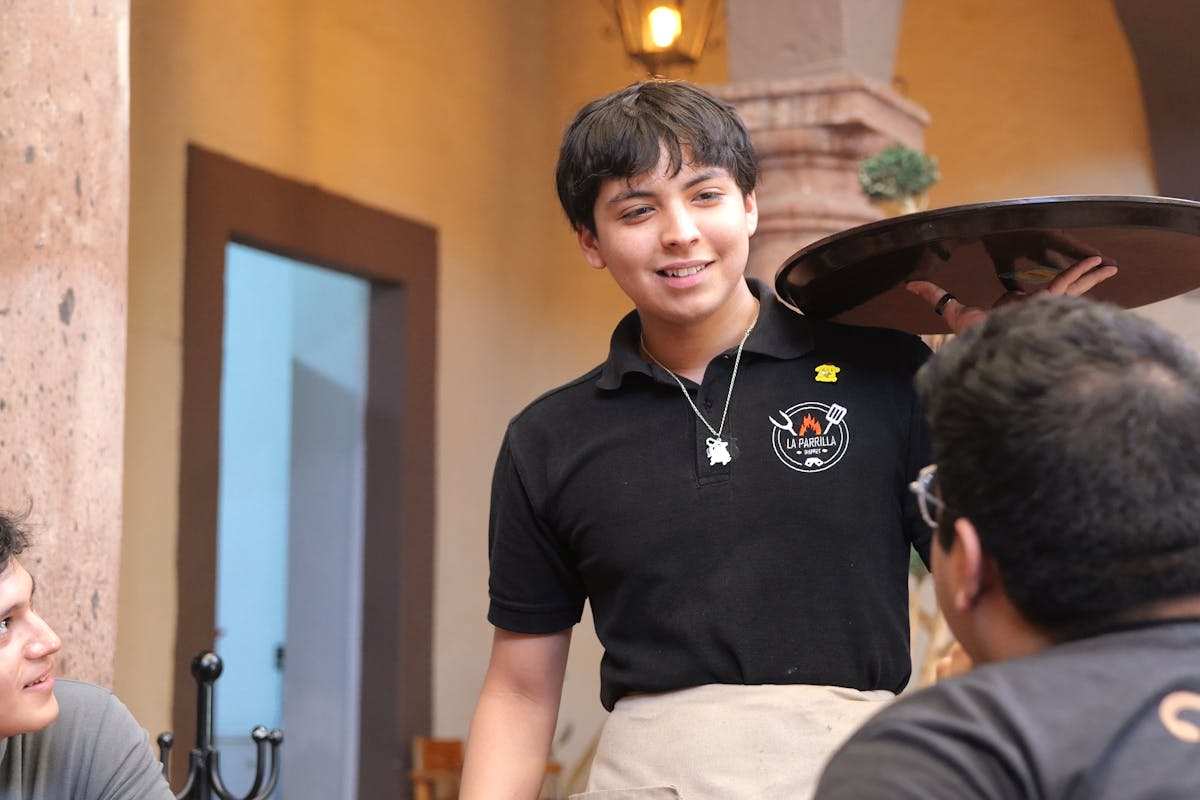
You have seen them at restaurants, coffee shops, and diners. Every time a server approaches their table, they respond with a genuine “thank you.” When the water glass gets refilled, they say it again. When the check arrives, once more. It happens so consistently that you might dismiss it as mere habit or social conditioning.
Contents
show
But what if those two small words revealed something far deeper about a person’s character?
Behavioral researchers and psychologists have long studied the connection between small social gestures and underlying personality structures. What they have found challenges the assumption that politeness is simply a learned behavior with no real meaning behind it. Instead, consistent expressions of gratitude, particularly toward service workers, often signal a cluster of traits that define how someone moves through the world and relates to others.
Consider for a moment the people in your own life who never fail to acknowledge a server’s effort. They probably share certain qualities you have noticed but perhaps never connected to this small ritual. Chances are, they make you feel comfortable. They listen when you speak. They remember details about your life that others forget. And they treat strangers with the same warmth they offer close friends. None of this is coincidental.
What follows are seven personality traits that psychologists have linked to people who consistently thank waitstaff. Some of these connections may surprise you. Others will confirm suspicions you have held for years. All of them suggest that paying attention to how someone treats a server might tell you more about their character than hours of conversation ever could.
1. Empathy Runs Deeper Than Surface Politeness
When a person thanks their server repeatedly throughout a meal, they are doing more than following social scripts. They are demonstrating an ability to recognize effort that often goes unnoticed.
Empathy requires imagination. It asks us to consider what another person might be experiencing, even when their situation differs entirely from our own. In the case of restaurant staff, this means noticing the long hours, the physical demands of staying on your feet, and the emotional labor required to remain pleasant while juggling multiple tables with competing needs.
People who consistently express gratitude to servers have usually made this imaginative leap. They see the person behind the uniform. They recognize that bringing a plate of food to a table, while seemingly simple, is part of a larger system of effort that deserves recognition.
And here is where it gets interesting. Research suggests that people who display empathy in low-stakes situations like restaurant interactions tend to carry that same sensitivity into higher-stakes relationships. They become the friends who remember what you mentioned three conversations ago. They become the partners who notice when something is wrong before you say a word. They become the colleagues who check in after a difficult meeting.
Saying “thank you” to a server is a small act. But it often reflects an emotional attentiveness that shows up in far more significant ways.
2. Gratitude Functions as a Daily Practice, Not an Occasional Gesture
For some people, gratitude is reserved for big moments. A promotion at work. A thoughtful birthday gift. A friend who shows up during a crisis. These occasions call for thanks, and thanks is given.
But people who consistently thank waitstaff operate differently. For them, gratitude is not situational. It is woven into the fabric of daily life, appearing in response to small kindnesses just as readily as large ones.
A barista who spells their name correctly on a cup. A delivery driver who places a package out of the rain. A stranger who holds a door. Each of these moments, however brief, receives acknowledgment.
Research on gratitude has found that people who practice it regularly, not just when circumstances seem to demand it, experience measurable benefits. They report higher levels of life satisfaction. They demonstrate greater resilience when facing setbacks. They maintain stronger relationships over time.
And perhaps most interesting, they tend to be more optimistic without being naive. They are not pretending problems do not exist. They are simply choosing to notice what is going right alongside what is going wrong. Consistent gratitude toward service workers is often the most visible sign of this broader orientation toward life.

3. Emotional Intelligence Shapes Every Interaction
You have probably heard the term emotional intelligence, sometimes abbreviated as EQ. It refers to a set of skills that includes recognizing your own emotions, managing them effectively, perceiving the emotions of others, and handling interpersonal relationships with care.
People who consistently thank waitstaff often score high on measures of emotional intelligence. They understand, perhaps intuitively, that a brief expression of gratitude can shift someone’s entire experience. A server who has spent the past hour dealing with rude customers might find their mood lifted by a single sincere “thank you.”
Emotionally intelligent people grasp this dynamic. They recognize that their words and actions create ripples, and they choose to create positive ones whenever possible.
But emotional intelligence is not just about being nice. It is about awareness. People with high EQ read situations accurately. They sense tension before it erupts into conflict. They know when to speak and when to listen. They adjust their communication style based on who they are talking to.
Consistently thanking service workers is one small manifestation of this larger skill set. It reflects an understanding that every interaction, no matter how brief or seemingly insignificant, involves real people with real feelings.
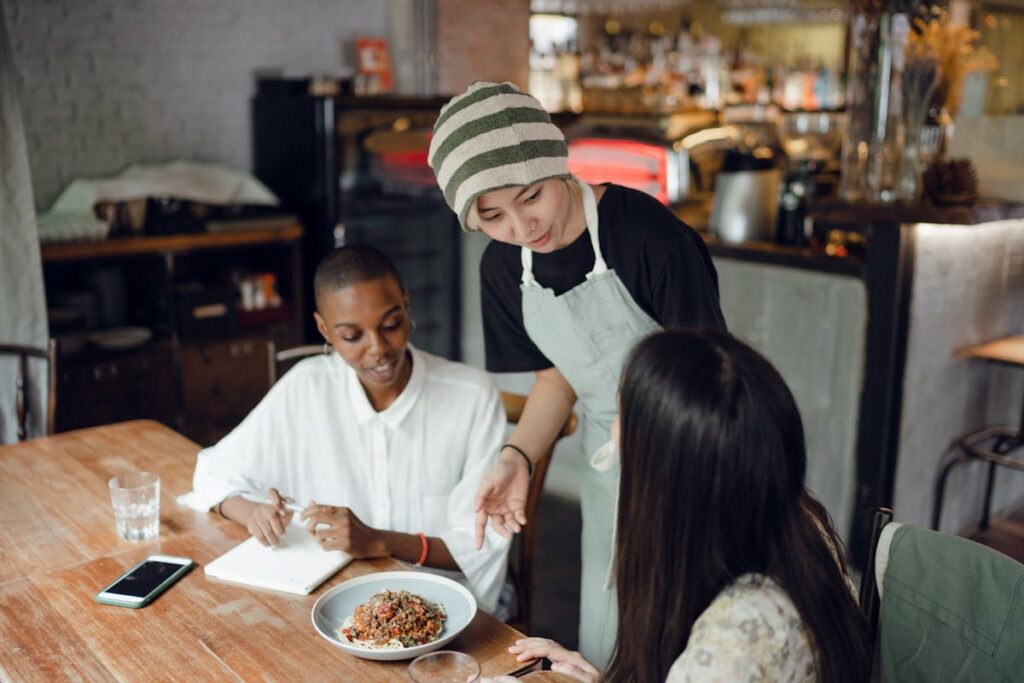
4. Respect Extends to Everyone, Regardless of Status
How someone treats a waiter says everything about their character. You have probably heard some version of this statement before. It has become a cliché precisely because it contains a kernel of truth that people recognize instinctively.
Some individuals reserve their best behavior for people who can benefit them. They are charming to bosses, influential colleagues, and potential clients. But they become dismissive or demanding when interacting with service workers, whom they perceive as holding less social power.
People who consistently thank waitstaff reject this hierarchical approach to respect. They do not calibrate their politeness based on someone’s job title or perceived status. Instead, they extend the same courtesy to a server that they would offer a CEO.
Why does this matter? Because it reveals something fundamental about how a person views the world. Those who treat everyone with dignity, regardless of role, tend to see human worth as intrinsic rather than earned. They believe respect should be given freely, not granted as a reward for achievement or withheld as a form of social dominance.
In relationships, this trait often translates into genuine equality. Partners who thank waitstaff usually also listen without interrupting, value their significant other’s opinions even during disagreements, and avoid using status differences to gain advantage. How they treat a server predicts, with surprising accuracy, how they will treat you once the initial courtship period ends.

5. Presence Matters More Than Productivity
Modern life encourages distraction. Phones buzz with notifications. Minds race ahead to the next task on an endless to-do list. Meals become mere fuel stops between obligations rather than experiences to be savored.
Against this backdrop, people who consistently thank waitstaff stand out because they are actually paying attention. When a server approaches their table, they look up. They make eye contact. They pause whatever conversation they were having to acknowledge the person in front of them.
Psychologists would call this mindfulness, though the people practicing it might not use that word. What matters is the underlying quality of presence. These individuals are not moving through life on autopilot. They notice their surroundings. They register the small moments that others miss entirely.
Research on mindfulness has documented a range of benefits associated with this quality of attention. People who practice presence tend to experience less anxiety. They report greater satisfaction with their relationships. They make better decisions because they are responding to what is actually happening rather than what they fear might happen or hope will happen.
Thanking a server requires a moment of presence. It means interrupting your own train of thought to recognize another person’s contribution. And people who do this consistently in restaurants often carry the same quality of attention into the rest of their lives.
6. Leadership Shows Up in Quiet Moments
When most people think of leadership, they imagine someone giving speeches, running meetings, or making high-stakes decisions. But leadership is not always loud or visible. Sometimes it appears in the quiet example someone sets through small, consistent actions.
People who thank waitstaff often function as subtle leaders in their social circles. Without ever demanding attention or declaring their values, they model a way of treating others that influences everyone around them.
Consider what happens when someone in a group consistently expresses gratitude to service staff. Others at the table often begin doing the same, whether consciously or not. A tone gets established. An expectation emerges. Treating servers well becomes the norm for that group, not because anyone issued a mandate, but because one person’s behavior set a standard that others naturally adopted.
Leadership, at its core, is about influence. And influence does not require authority or position. It requires integrity, which means acting according to your values even when no one important is watching. People who thank servers in empty restaurants, where no one will notice or be impressed, demonstrate precisely this quality.
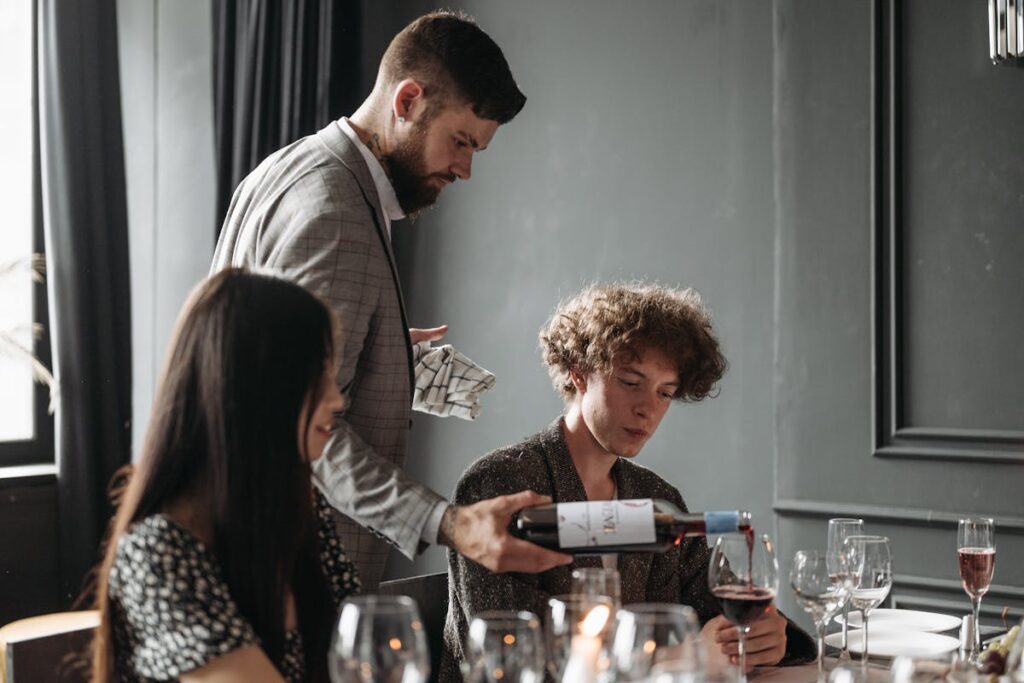
7. Connection Matters More Than Convenience
Perhaps the most revealing trait shared by people who consistently thank waitstaff is their orientation toward human connection. They do not view service interactions as mere transactions. They see them as moments, brief but real, where two people have the opportunity to acknowledge each other’s humanity.
These are the individuals who learn their regular barista’s name. They ask the rideshare driver about their day and actually listen to the answer. They treat every interaction, no matter how fleeting, as a chance to create a small positive moment in someone else’s life.
Why do they bother? Not because they expect anything in return. Not because they are performing kindness for an audience. They do it because they genuinely believe that every person they encounter matters, and that even a brief exchange can leave both parties feeling a little better than before.
In an era of increasing isolation, where technology often mediates human contact and efficiency gets prioritized over connection, this orientation is becoming rarer. And that rarity makes it all the more valuable.
People who seek connection rather than convenience in their daily interactions tend to build richer social networks over time. They accumulate goodwill in ways they may not even realize. And they move through the world with a sense of meaning that comes from feeling genuinely connected to the people around them.

What Two Small Words Can Reveal
At first glance, thanking a server seems trivial. Two words spoken dozens of times each day by millions of people. Surely it cannot mean much.
But language and behavior are never truly disconnected from character. How we act in small moments reflects who we are in large ones. And patterns, especially patterns that persist across time and situations, reveal the values and traits that define us.
People who consistently thank waitstaff are showing you something about themselves. They are telling you, through action rather than words, that they notice effort, value all people equally, practice presence, and seek genuine connection. These qualities do not appear in isolation. They form a constellation of traits that shape every relationship these individuals enter.
So the next time you find yourself dining with someone new, pay attention to how they treat the server. Watch whether they look up when their water gets refilled. Notice whether gratitude comes automatically or has to be prompted by social obligation.
What you observe might tell you more than any first date conversation or job interview ever could. Because character reveals itself in small moments. And two simple words, spoken with sincerity, can illuminate an entire personality.