
Your cart is currently empty!
Pilot Saves Lives of 148 Passengers After Hearing ‘Voice’ Telling Him to Take Off 3 Minutes Early

On a day of unimaginable destruction, when a 7.5 magnitude earthquake unleashed chaos across Palu, Indonesia, one flight defied the odds. Batik Air Flight 6321 lifted off the ground just minutes before disaster struck, carrying 148 lives to safety. While passengers and crew were unaware of the devastation left behind, their escape was far from coincidental. It was the result of an air traffic controller’s unwavering commitment and a pilot’s inexplicable sense of urgency—decisions that would come at a heavy cost.
The Timeline of Events: A Tragic Day in Palu
September 28, 2018, will forever be etched in Indonesia’s history as a day of devastation and unimaginable loss. A 7.5 magnitude earthquake struck the island of Sulawesi, triggering a massive tsunami that swept through the coastal city of Palu. The disaster claimed over 4,300 lives, left thousands injured, and displaced countless others. Amid the chaos, a story of extraordinary courage unfolded at Palu’s Mutiara SIS Al-Jufrie Airport, where two individuals—pilot Ricosetta Mafella and air traffic controller Anthonius Gunawan Agung—rose to the occasion to save lives.
As the tremors shook the control tower at Palu Airport, Mafella, captain of Batik Air flight 6321, felt an unusual sense of urgency. Speaking to the BBC later, he recalled, “There was a voice in my head that told me, just get out of here immediately.” Acting on this intuition, Mafella informed his crew and ground staff to expedite preparations for departure. His decision to take off three minutes earlier than scheduled would prove critical in saving the lives of 148 passengers and crew onboard.
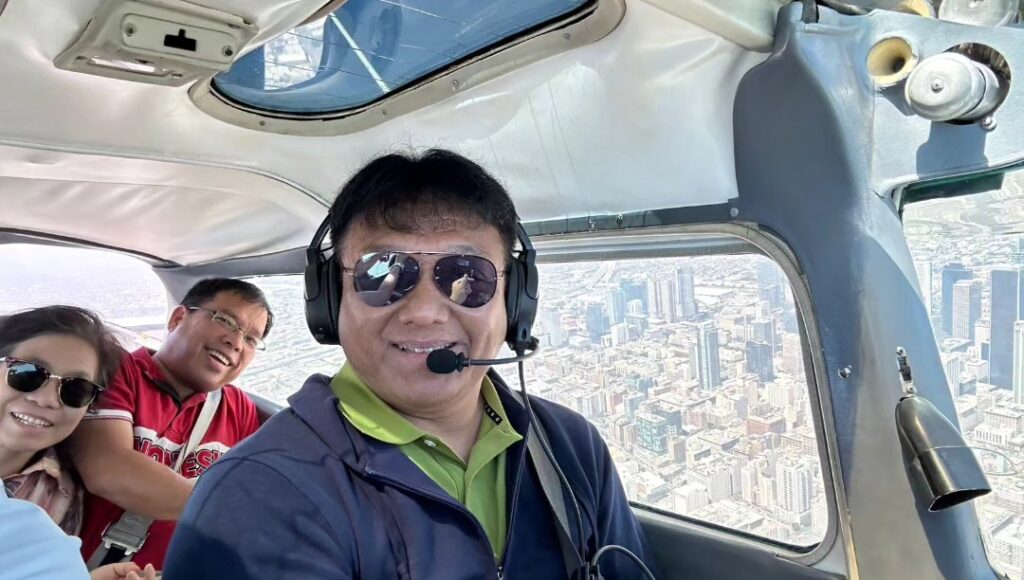
At precisely 6:02 PM, Mafella’s plane lifted off the runway. From the cockpit, he witnessed a chilling sight—giant waves forming along the coastline. “I saw it was a wave moving in a circle with a huge radius, it was getting bigger and bigger, but I didn’t know what it was,” he later described. Unaware of the scale of the disaster below, Mafella tried to contact the control tower to warn them of the unusual phenomenon, but his calls went unanswered.
The reason for the silence was that Anthonius Gunawan Agung, the 21-year-old air traffic controller guiding Mafella’s takeoff, had chosen to stay behind in the collapsing tower to ensure the plane’s safe departure. As the earthquake intensified, the four-story control tower began to crumble, forcing Agung’s colleagues to evacuate. Yet Agung refused to leave his post, determined to guide the Batik Air flight into the air.
Once the plane was airborne, Agung attempted to escape, but the destruction around him left no clear path. With his exit blocked by structural damage, Agung made a desperate leap from the tower. The fall broke his leg and caused severe internal injuries. Though he was rushed to a nearby hospital, the facility was overwhelmed with casualties and ill-equipped to handle his condition. Tragically, Agung succumbed to his injuries while awaiting a helicopter transfer to a better-equipped facility.
Mafella later reflected on the heartbreaking news, sharing, “I’m in a WhatsApp group with other air traffic controllers, and one of them told me that they had asked Agung to get away from the tower. But he said, ‘Wait, wait, Batik is still here.’ When I found out what happened, I was speechless.”
This series of events exemplifies the extraordinary courage displayed during moments of crisis. Mafella’s quick thinking and Agung’s selfless dedication ensured that 148 lives were spared that day, even as disaster engulfed the region.
The Unsung Hero: Remembering Anthonius Gunawan Agung
Amid the devastation of the Sulawesi earthquake, one name stands out as a symbol of selflessness and sacrifice: Anthonius Gunawan Agung. At just 21 years old, Agung exemplified the highest standards of duty and bravery, staying at his post as an air traffic controller while the world around him crumbled.
Telah wafat saat menjalankan tugasnya sebagai personel layanan navigasi penerbangan, Saudara Anthonius Gunawan Agung, Air Traffic Controller (ATC) AirNav Indonesia Cabang Palu pada Sabtu (29/09).#RIPAgung #DoaUntukSulteng#PrayforDonggala #PrayforPalu pic.twitter.com/6Wpobp3R7m
— AirNav Indonesia (@AirNav_Official) September 29, 2018
As the earthquake struck Palu Airport, Agung’s colleagues urged him to evacuate the control tower. The four-story structure was already swaying violently, and the risk of collapse was imminent. But Agung, aware that Batik Air flight 6321 was still on the runway preparing for takeoff, chose to remain. His commitment to his role ensured that the plane could safely depart, carrying 148 passengers and crew to safety.
Agung’s final act of duty was immortalized in his last transmission: “Batik 6321 clear for takeoff.” These words encapsulate his unwavering dedication to others, even as his own life hung in the balance. His actions earned him the admiration of pilot Ricosetta Mafella, who described Agung as a “guardian angel” and a “national hero.”
Tragically, Agung paid the ultimate price for his heroism. After ensuring the plane’s takeoff, he attempted to escape the tower. With his path blocked by structural damage, he was forced to jump, a decision that left him with a broken leg and critical internal injuries. Despite being rushed to a nearby hospital, the overwhelmed medical facility could only provide basic treatment. As he waited for a helicopter to transfer him to a better-equipped hospital, Agung succumbed to his injuries.
News of Agung’s sacrifice spread quickly, sparking an outpouring of grief and admiration across Indonesia. Colleagues, government officials, and citizens paid tribute to his bravery, hailing him as a symbol of selflessness and national pride. Tributes poured in on social media, with many calling for him to be formally recognized as a hero.
Agung’s story is a poignant reminder of the quiet courage displayed by those who work behind the scenes. While pilots and passengers often receive the spotlight, the efforts of air traffic controllers like Agung are no less vital. His willingness to put others’ lives ahead of his own exemplifies the best of humanity and serves as a lasting legacy of sacrifice and duty.
In remembering Agung, we are reminded of the countless unsung heroes who, in moments of crisis, choose to act with bravery and compassion. His story continues to inspire, ensuring that his sacrifice will never be forgotten.
Echoes of Courage: Similar Stories of Heroism in Aviation
Throughout aviation history, moments of extraordinary bravery and quick thinking have averted disasters and saved countless lives. Much like the actions of Anthonius Gunawan Agung and Ricosetta Mafella, these stories highlight the resilience, intuition, and heroism displayed in critical moments. Here are three notable examples:
Captain Chesley “Sully” Sullenberger – Miracle on the Hudson
On January 15, 2009, US Airways Flight 1549 took off from LaGuardia Airport in New York City but struck a flock of geese shortly after. The impact caused both engines to fail, leaving the aircraft powerless and without thrust. Faced with the near-impossible task of landing a plane in one of the most densely populated areas in the world, Captain Chesley “Sully” Sullenberger made a split-second decision to ditch the plane on the Hudson River.
With no viable airports nearby and limited time to act, Sullenberger relied on decades of experience and unparalleled composure. His skillful water landing ensured the survival of all 155 passengers and crew onboard. Despite the danger of hypothermia in the icy river waters, rescue operations swiftly evacuated everyone to safety.
Sullenberger’s calm demeanor and exceptional airmanship turned what could have been a devastating tragedy into one of aviation’s most celebrated examples of heroism. His actions are now a case study in crisis management, underscoring the value of preparation, focus, and decisive leadership.
Tammie Jo Shults – Southwest Airlines Flight 1380
In April 2018, Southwest Airlines Flight 1380 faced a harrowing mid-air emergency when an engine exploded, sending shrapnel into the fuselage and causing rapid cabin depressurization. Captain Tammie Jo Shults, one of the first female fighter pilots in the U.S. Navy, was at the helm. Her military background and extensive training in high-pressure scenarios proved invaluable during this life-threatening event.
Despite the chaos in the cabin and the terrifying loss of an engine, Shults remained composed. She coordinated with air traffic control, assured her passengers, and safely conducted an emergency descent to land the plane in Philadelphia. Tragically, one passenger was fatally injured during the depressurization, but Shults’ quick actions saved the lives of 148 others.
Her calm and professionalism under unimaginable stress earned her widespread recognition as a trailblazer for women in aviation and an exemplar of crisis management. Shults later reflected that her training had prepared her for such moments, reminding us of the critical importance of experience and readiness in saving lives.
Neerja Bhanot – The Heroine of Pan Am Flight 73
On September 5, 1986, Pan Am Flight 73 was hijacked by four armed terrorists at Karachi Airport, Pakistan. Neerja Bhanot, a 22-year-old flight attendant, displayed remarkable courage as she took charge of the situation, using her training to calm passengers and secretly alert the cockpit crew. Her quick thinking allowed the pilots to escape, preventing the plane from being flown to its intended destination.
Throughout the 17-hour standoff, Neerja risked her life to protect passengers, distributing food and water while hiding American passports to shield targeted individuals. When the hijackers began firing and detonating explosives, Neerja led passengers to safety, staying behind to assist those in need. Her decision to shield three children from gunfire ultimately cost her life.
Neerja’s bravery saved 359 of the 379 passengers onboard and earned her posthumous recognition, including India’s highest civilian award for bravery, the Ashoka Chakra. Her legacy continues to inspire as a testament to selflessness and heroism in the face of unimaginable danger.
A Legacy of Heroism and Humanity
The stories of Anthonius Gunawan Agung, Ricosetta Mafella, Chesley “Sully” Sullenberger, Tammie Jo Shults, and Neerja Bhanot remind us of the incredible resilience and selflessness displayed in moments of crisis. These individuals, faced with unimaginable danger, chose courage over fear and put the lives of others above their own. Their actions saved hundreds of lives, left lasting legacies, and continue to inspire generations to act with bravery and compassion when it matters most.
In every corner of aviation history, these acts of heroism shine a light on the extraordinary capacity of ordinary individuals to do the extraordinary. Whether guiding a plane to safety, remaining steadfast at their post, or protecting passengers from harm, these heroes embody the best of humanity, reminding us that even in the darkest moments, courage can prevail and lives can be saved.
Image From Ricoseta Mafella on Facebook