
Your cart is currently empty!
This 29-Year-Old Man Left His Corporate Job and Cashed Out $400,000 to Sail the World With His Cat

What would you do if the steady paycheck that’s supposed to buy you freedom instead felt like a set of golden handcuffs? For many in their twenties and thirties, the corporate ladder no longer looks like a path upward but a treadmill long hours, rising costs, and little sense of progress. Studies show that nearly 60 percent of workers report feeling disengaged at their jobs, and burnout has become so widespread that the World Health Organization officially recognized it as an occupational phenomenon. Against that backdrop, Oliver Widger did something most only fantasize about.
Contents
show
At 29, Widger cashed out his retirement savings, bought a sailboat he barely knew how to operate, and pointed it toward the open Pacific. His only passenger was Phoenix, a rescue cat who had been with him through quieter years on land. The leap was bold, even reckless, but it was also a declaration: life is too fragile to waste on a grind that drains more than it gives. Within weeks, his videos of crashing waves, golden sunsets, and intimate confessions from sea went viral, transforming him from an unknown manager at a tire company into a global symbol of escape and reinvention.
Breaking Away from the Grind
For Oliver Widger, the daily rhythm of corporate life felt more like captivity than stability. At just 29, he was already worn down by the routines of his managerial job at a tire company in Oregon. In a selfie video filmed from his car, he confessed bluntly: “I work a corporate job at a tire shop. I absolutely hate this life.” The honesty struck a chord with millions online because it echoed a broader frustration.
Even when the paycheck looked good on paper, Widger argued it rarely translated to freedom or fulfillment. “You can be making $150,000 a year and you still feel like you’re just making ends meet,” he said. That sentiment reflects a wider reality.
In the U.S., median wages have stagnated when adjusted for inflation, while the cost of housing, healthcare, and education has continued to climb. A 2024 Gallup survey found that nearly six in ten employees feel “disengaged” at work, while burnout levels remain at historic highs.
Widger’s frustration wasn’t just about long hours and corporate dress codes. It was about the emptiness of working tirelessly without feeling alive. When he was diagnosed with a rare neck condition that carried the risk of paralysis, that sense of futility sharpened. The diagnosis forced him to confront not only the fragility of health but also the question of how he wanted to spend his remaining years. The answer, he realized, could not be found in fluorescent-lit offices or performance reviews.
From Diagnosis to Decision
The moment that truly unraveled Oliver Widger’s attachment to corporate life came four years earlier, when a neck injury led to a startling diagnosis. Doctors warned that the condition carried the risk of paralysis. Suddenly, the grind he had tolerated seemed intolerable. The injury didn’t just disrupt his health; it cracked open the illusion that stability equaled safety.
“I think it shook up my world and changed my perspective on everything,” Widger later reflected. He found himself questioning why he was spending the best years of his life in an office he resented, shaving each morning to meet dress codes and chasing numbers that felt meaningless. The diagnosis became a catalyst not for despair, but for action.
Psychologists describe this kind of shift as post-traumatic growth, a phenomenon where people facing major crises or health scares emerge with stronger convictions about what matters. According to research published in the Journal of Traumatic Stress, such events often spark changes in priorities, deepening appreciation for life and motivating individuals to pursue long-deferred dreams. Widger’s decision fits squarely into this pattern.
Instead of clinging to the comfort of familiarity, he did the opposite. He quit with “no money, no plan” and $10,000 in debt. He liquidated his retirement savings roughly $400,000 and began scouring for a boat. The idea wasn’t born of long-standing ambition. It was seeded in chance encounters with stories of sailors who had made the daring voyage from California to Hawaii. That spark was enough.
Most people confronted with a life-altering diagnosis double down on security. Widger chose the sea. For him, the risk of chasing an absurd dream was less frightening than the risk of never trying.
Preparing for the Unknown
Dreams are romantic, but turning them into reality requires an uncomfortable mix of risk and resourcefulness. Oliver Widger had neither sailing experience nor a roadmap when he decided to abandon corporate life for the Pacific. What he did have was determination and YouTube. He immersed himself in sailing tutorials, moving from Portland to the Oregon coast to live closer to the water. His classroom was the internet, and his exams would be played out in the unforgiving conditions of the open sea.
With his retirement savings, Widger purchased a $50,000 sailboat and spent months refitting it with his own hands. The work was grueling: replacing lines and sails, checking the engine, and patching leaks. Every adjustment was a crash course in engineering, mechanics, and seamanship. For someone who had been trained to run meetings and balance spreadsheets, the transformation was as symbolic as it was practical he was literally rebuilding the vessel that would carry him into a new life.
By his side through the preparation was Phoenix, a scrappy cat he had rescued from a dumpster years earlier. Phoenix became more than a pet; she was a tether to companionship in an adventure defined by solitude. Sailors have long relied on animals for both practical and emotional reasons, and while Phoenix had no role in trimming sails or steering, her presence provided comfort in the face of uncertainty.
Widger’s preparation was anything but conventional. He didn’t have sponsors, mentors, or a wealthy safety net. What he carried instead was the conviction that doing nothing was more dangerous than trying and failing. Each day of sanding, wiring, or watching online tutorials brought him closer to the moment of departure the day when he would finally cast off from the Oregon coast, heading toward a horizon that promised both peril and possibility.
The Voyage Across the Pacific
On April 30, 2025, just after sunrise, Oliver Widger pushed away from the Warrenton Marina on the Oregon coast. His Instagram caption captured both the enormity and the simplicity of the moment: “Ahead of me is the journey of a lifetime. Over two thousand miles of open ocean. No land. No help. Just wind, waves, and a boat I prepared with my own two hands. And of course, my first mate, Phoenix.” With that, he left behind the familiar grind of land for the wide, unpredictable canvas of the Pacific.
The weeks that followed tested every ounce of his resolve. He fought seasickness, navigated rough weather, and endured close calls that could have ended the voyage before it began. In one harrowing moment, a massive wave slammed the hatch shut while he was inside the boat’s engine compartment. Locked in darkness with water rocking violently around him, he managed to pry himself free using a wrench he happened to be carrying. Later, a rudder failure left him drifting and vulnerable until he could improvise a fix. He called these moments among the scariest of his life, stark reminders that adventure is rarely as romantic as it appears on social media.
Yet for every brush with disaster, there were moments of awe that made the risk worthwhile. Dolphins danced in the boat’s wake. Whales surfaced in the distance. On some days, the ocean transformed into a glassy mirror, stretching in all directions with no horizon in sight. “Being in the middle of the ocean when it was completely glass in every direction was an absurd feeling,” he told reporters after making landfall. Between repairs and rationing supplies, Widger found time to snorkel, watch sunsets paint the sky crimson, and share quiet mornings with Phoenix curled beside him.
He was not entirely alone. Thanks to Starlink satellites, he stayed in contact with friends via video calls, posting regular updates to TikTok and Instagram for his swelling audience of more than a million followers. It was a paradox of modern adventure: raw solitude paired with instant digital connection. Older sailors may have endured the same waters in silence, but Widger’s voyage unfolded in real time before a captivated global audience.
After weeks at sea, the long horizon finally broke with the green peaks of Hawaii. Widger docked at the Waikiki Yacht Club to the cheers of fans, cameras flashing, and even a proclamation presented by Governor Josh Green. He admitted he felt “really weird,” as if he needed to hold onto something to keep from toppling over. The contrast was stark leaving in solitude, returning in spectacle.
From Unknown Sailor to Viral Sensation
When Oliver Widger set sail, he was just another disillusioned young professional trying to outrun the monotony of a job he despised. By the time he reached Hawaii, he was a viral phenomenon. His social media accounts where he documented everything from near-disasters to quiet mornings with Phoenix exploded with millions of followers. The rawness of his posts, unpolished and unfiltered, made people feel as if they were on the voyage with him.
By the time his boat docked at the Waikiki Yacht Club, the reception bordered on surreal. Fans crowded the harbor with cameras, cheering him ashore. Even Hawaii’s governor, Josh Green, greeted him personally and handed him a proclamation, an honor usually reserved for athletes and dignitaries. Widger, still swaying from weeks at sea, admitted he felt overwhelmed: “I just feel like I have to, like, hold on to things to not fall over.”
The attention was about more than a daring adventure. Widger’s leap struck a nerve in a culture fatigued by burnout and uncertain about the value of working harder for less. His videos became symbols of rebellion against a system that often leaves people exhausted, even when they’re financially comfortable. “It’s just the world’s in a weird place, and I think people have seen that it’s possible to break out,” he told reporters.
In an age where “van life” influencers and digital nomads often present curated escapism, Widger’s journey stood apart. His feed wasn’t just sunsets and dolphins it was breakdowns, repairs, fear, and resilience. That authenticity resonated. People didn’t just admire the beauty of the Pacific; they envied his courage to walk away from what so many secretly resent. His voyage blurred the line between private rebellion and public performance, showing how one man’s escape could become a collective fantasy for millions.
Life After Hawaii: What Comes Next?

Reaching Hawaii was never meant to be the finish line, only the first chapter. Yet once the applause faded and the boat was docked, Oliver Widger faced an inevitable question: what now? He admitted that his focus had been so fixed on surviving the Pacific crossing that he hadn’t planned much beyond the arrival. “I had been focused on getting to Hawaii and not on what I’d do after that,” he said candidly.
The practical challenges came quickly. His boat needed repairs, from the rudder that had failed mid-journey to other wear-and-tear sustained over weeks at sea. Sailing on to French Polynesia, his next planned stop, would require both time and resources. While liquidating his retirement savings gave him a financial cushion, maintaining a seaworthy vessel is an expensive, ongoing commitment.
At the same time, Widger found himself navigating a new kind of responsibility: internet fame. His voyage turned him into a creator whose story was being consumed by millions. “Sailing with Phoenix,” the video series documenting his journey, had transformed from a personal log into a brand with a global audience. For every breathtaking sunset clip, there were hours spent editing, uploading, and engaging with fans all while managing life at sea. The dream of escape had inadvertently tethered him to new obligations.
A Modern Rebellion Against Burnout Culture
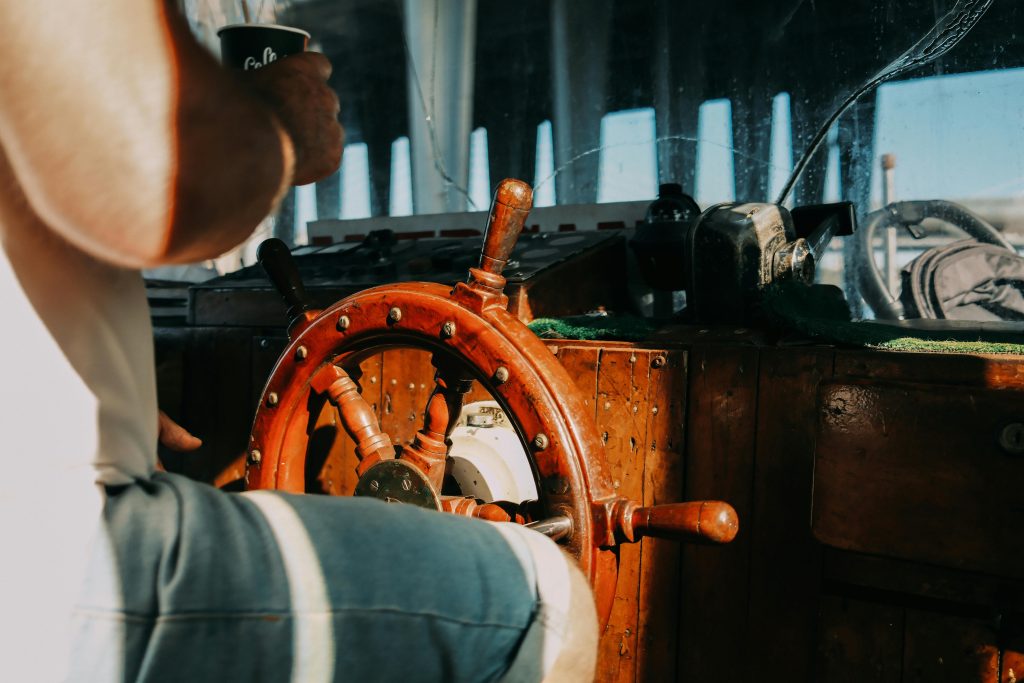
Burnout has become the defining affliction of modern work life. The World Health Organization now classifies it as an occupational syndrome, and surveys show more than half of U.S. employees report being disengaged at work. For millennials and Gen Z, who came of age amid financial crises, soaring housing costs, and rising student debt, the promise that hard work leads to stability often feels hollow. Widger’s words “You can be making $150,000 a year and you still feel like you’re just making ends meet” land with force because they mirror lived reality.
His decision to cash out, leave, and document the journey tapped into a cultural undercurrent already visible in movements like van life, tiny homes, and digital nomadism. Social media has amplified these lifestyles, turning personal experiments into public blueprints. Widger’s voyage, though more extreme, is part of the same search for autonomy: proof that it’s possible to step away from conventional paths and still survive, even thrive.
Experts see parallels to what’s known as “existential migration,” a term coined by psychologist Greg Madison to describe the pull some people feel to uproot their lives in search of authenticity and freedom. Whether it’s trading a desk for a sailboat or a mortgage for a van, the common thread is dissatisfaction with scripted routines and a hunger for meaning. Widger’s cat Phoenix may make his journey unique, but the longing behind it is anything but rare.
Daring to Rewrite the Script
Oliver Widger’s voyage across the Pacific wasn’t simply about reaching Hawaii. It was about proving to himself and to anyone watching that life doesn’t have to be dictated by resignation. He walked away from a job that drained him, cashed out the savings meant for a predictable future, and bet everything on a dream most would dismiss as impossible.
“Everything I’ve done, I once thought was impossible,” he has said. His words serve as both confession and challenge. For Widger, the greatest victory wasn’t surviving rough seas or gaining online fame it was finding the courage to try.
That is why his story resonates far beyond the sailing community. It’s not an invitation for everyone to sell their belongings and set off to sea, but a reminder that meaning rarely emerges from routine. Whether the leap is as small as pursuing a neglected passion or as large as crossing an ocean, what matters is daring to step away from inertia.
Widger’s journey is a mirror for a generation caught between security and fulfillment. It asks a question many quietly avoid: if not now, when?