
Your cart is currently empty!
Erika Kirk Opens Up on Forgiving Husband Charlie Kirk’s Killer: ‘It’s What Christ Would Do’
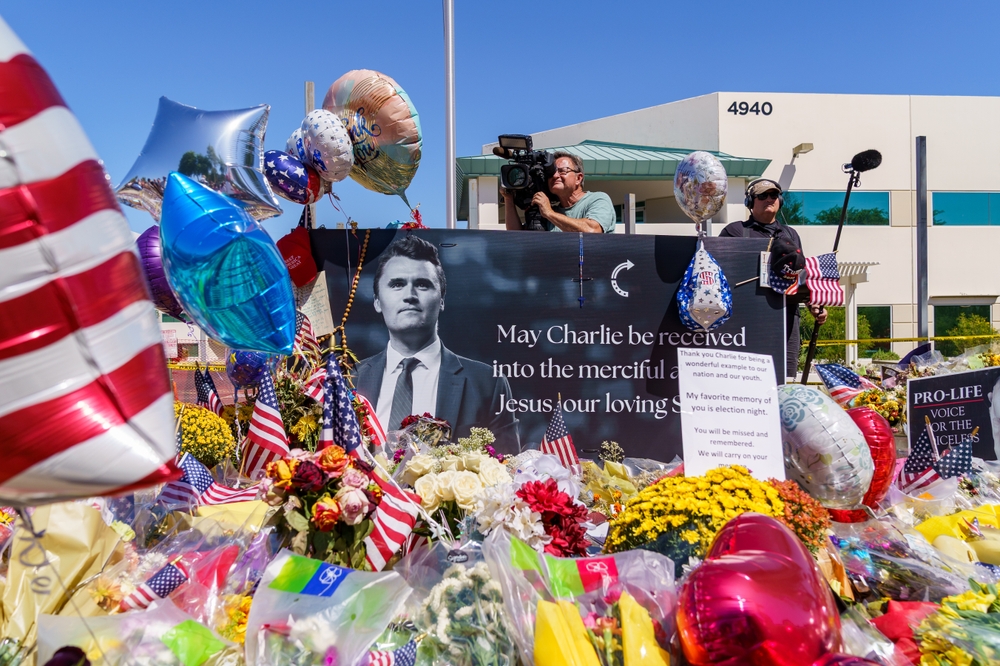
At a memorial service in Glendale, Arizona, Erika Kirk, widow of conservative activist Charlie Kirk, chose a path that startled and moved many: forgiveness. Just days after the fatal shooting of her husband, she stood before thousands to speak not of vengeance or bitterness, but of grace. With her voice steady but charged with emotion, Erika said she forgave the man accused of killing Charlie. Her reasoning was rooted in faith and love: “I forgive him because it was what Christ did, and it’s what Charlie would do.” Her message cut through political divisions and the natural desire for retribution, leaving a lasting impression on those in attendance.
Contents
show
Her words stood in sharp contrast to the polarized and combative climate that often dominates American public life. Forgiveness, as she expressed it, is not just a personal choice but also a public statement—a challenge to the cycles of hatred and retaliation that define so much of political and social discourse. In taking on Charlie’s role as CEO of Turning Point USA, Erika also underscored her commitment to carrying forward his legacy, but with a clear emphasis on love and faith. Her approach has reignited conversations about whether forgiveness is compatible with justice and whether compassion can survive in spaces usually ruled by anger.
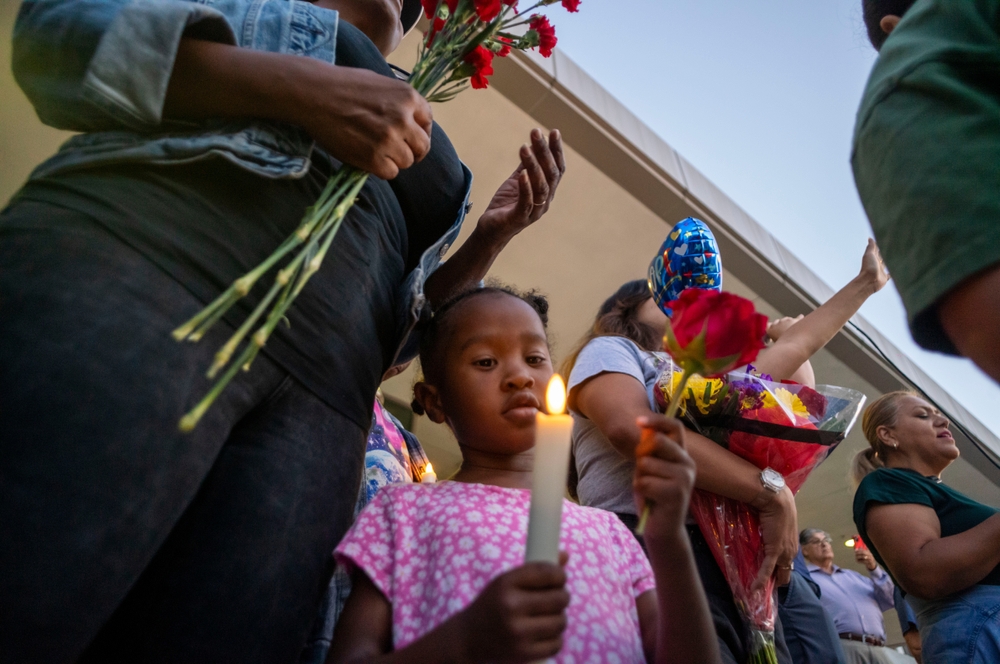
The Power of Forgiveness
Forgiving someone who has inflicted unimaginable harm is not a common response, and Erika Kirk’s decision has drawn both admiration and skepticism. Forgiveness is deeply intertwined with Christian teachings, where believers are called to love their enemies and pray for those who persecute them. For Erika, forgiveness was not simply an ideal but an act of faith. She described it as aligning with Charlie’s principles, portraying it as a continuation of his values even in death. This resonates with broader traditions across religions and philosophies where forgiveness is seen as essential for breaking cycles of hatred.
Psychologists who study forgiveness have long pointed out its profound effects on mental health. Research consistently shows that forgiveness reduces anxiety, depression, and intrusive thoughts associated with trauma. Choosing forgiveness does not erase pain or excuse wrongdoing; instead, it creates room for healing and helps survivors regain a sense of control. In Erika’s case, it appears to be as much about personal peace as it is about spiritual alignment. This adds depth to her role as both widow and leader, setting an example that transcends politics and personal grief.
Yet forgiveness also raises difficult questions. Some argue that forgiving too quickly can minimize accountability or dismiss the severity of wrongdoing. Critics worry that such actions risk signaling acceptance of injustice. In public tragedies especially, the tension between forgiveness and justice is complicated. Erika’s stance sparks debate about whether true forgiveness must come after a process of accountability—or whether it can coexist with the pursuit of justice through the courts. In either case, her words have become a focal point for reflection on how grief and faith can transform responses to violence.

Trump’s Contrast: Hatred vs. Grace
While Erika offered forgiveness, Donald Trump, who also spoke at the memorial, offered a counterpoint that was just as memorable. Reflecting on Charlie Kirk’s approach to political adversaries, Trump admitted he did not share that same grace. “He did not hate his opponents. He wanted the best for them,” Trump said, before bluntly adding: “That’s where I disagreed with Charlie. I hate my opponent, and I don’t want the best for them.” His remarks drew laughter and applause from some, but they also highlighted a stark divergence in values at a highly emotional moment.
Trump’s comment underscores his longstanding style of politics: combative, oppositional, and fueled by conflict. To some, this honesty felt refreshing and consistent with his persona; to others, it came across as jarring given the solemnity of the occasion. In juxtaposition with Erika’s message of forgiveness, Trump’s admission illuminated the competing narratives at play in American public life—one emphasizing reconciliation, the other embracing rivalry and division. This difference in tone is not simply a quirk of personality but also a reflection of how leaders choose to frame relationships with those who disagree.
The symbolism of these contrasting messages cannot be ignored. Erika spoke as someone who had endured a personal tragedy and emerged with compassion, while Trump spoke as a political figure who thrives on enmity. Together, they represented the two poles of human response to adversity: forgiveness and hatred. Their words provide a case study in how grief, politics, and personal values intersect—and how public figures embody the philosophies they embrace.

Why This Matters: Relationships, Values, and Public Discourse
The intersection of Erika Kirk’s forgiveness and Trump’s declaration of hatred raises larger questions about the role of values in public life. Forgiveness is often portrayed as a lofty or even unattainable virtue, yet research suggests it has tangible benefits for relationships and society. Studies show that forgiveness can repair fractured bonds, improve emotional resilience, and reduce the corrosive effects of long-term anger. In relationships—whether personal, communal, or political—it provides a way to move forward without becoming trapped in cycles of resentment.
Hatred, by contrast, can feel invigorating in the short term, giving people a sense of clarity and energy. But psychologists warn that persistent hatred corrodes the person who carries it. Long-term anger has been linked to increased stress, heart problems, and weakened social bonds. In the political sphere, hatred fuels polarization, pushing people further apart and making compromise almost impossible. Trump’s candid acknowledgment of hatred may reflect his authenticity, but it also mirrors the deep divides that shape modern American politics.
Erika’s choice of forgiveness and Trump’s choice of hatred create a vivid contrast for anyone navigating conflict in their own lives. Whether in personal relationships or political arenas, the question becomes: do we define ourselves by what we oppose or by the values we choose to uphold? For some, forgiveness may feel like surrender. For others, hatred may feel like strength. The truth likely lies in the consequences of each path—both for individuals and the communities around them.
The Science and Spirituality of Forgiveness
Scientific research gives weight to what many faith traditions have long taught: forgiveness benefits the forgiver as much as the forgiven. A 2020 study published in Frontiers in Psychology found that people who practice forgiveness experience lower blood pressure, reduced levels of cortisol (the stress hormone), and improved sleep. These benefits translate into long-term physical and emotional health. Forgiveness can thus be understood not only as a moral or spiritual act but also as a scientifically supported practice for wellbeing.
At the same time, forgiveness is not an automatic process. Psychologists differentiate between decisional forgiveness—the conscious choice to forgive—and emotional forgiveness—the gradual softening of resentment. Erika’s speech clearly expressed decisional forgiveness, but the emotional journey may take years. Recognizing this distinction helps explain why forgiveness can seem paradoxical: one can decide to forgive even while still experiencing grief and anger. This layered process reflects the complexity of human emotions when confronted with tragedy.
Spiritual frameworks add another layer of meaning. For Christians like Erika, forgiveness is modeled after Christ’s own sacrifice and teachings. It is considered a calling rather than an option. Other traditions, including Buddhism and Indigenous practices, also emphasize compassion and the release of hatred as paths to harmony. Together, scientific and spiritual insights affirm that forgiveness is both practical and profound—an act that shapes body, mind, and spirit.
Takeaways and Reflection
The memorial service for Charlie Kirk became more than a moment of mourning; it became a mirror for society’s struggles with forgiveness and hatred. Erika Kirk’s words demonstrated that forgiveness, while difficult, can emerge even in the shadow of loss. Her decision reflected not weakness but resilience, rooted in faith and sustained by love. It stands as an example of how individuals can reclaim agency after tragedy by refusing to be defined by anger.
Trump’s remarks, though in sharp contrast, also revealed something important: the enduring pull of opposition in political life. His candid admission that he hates his opponents spoke to a reality that many feel but few acknowledge openly. It was a reminder that the ways leaders frame conflict shape not only politics but also the cultural climate. In this sense, his words were as instructive as Erika’s, though in very different ways.
For readers, the lessons are clear but not simple. Forgiveness is not easy, nor is it universally appropriate in every circumstance. Hatred, while tempting, carries costs that often exceed its rewards. The real challenge lies in discerning when to let go, when to hold accountable, and how to live in alignment with one’s values. Erika and Trump, through their contrasting responses, invite us all to consider what kind of legacy we wish to leave—in our relationships, in our communities, and in the narratives that define our time.