
Your cart is currently empty!
Trump Voices Frustration in Candid Seven Word Moment

The atmosphere inside the White House that afternoon was already charged. It was supposed to be a routine moment built around policy, not personality. Yet the roomful of lawmakers, advocates and press made something unmistakably clear. They were far more interested in hearing from Melania Trump than the president standing beside her. Donald Trump noticed, and he did what he always does when he feels the room tilt. He said the quiet part out loud.
Contents
show
Those seven words ‘what the hell I’m not good enough’ landed with the same mix of humor, resentment and self awareness that has defined so much of Trump’s political theater. The line echoed across social feeds and news alerts, but it also opened a window into the dynamic between the former president and his wife. The moment was not isolated. Variations of these seven word comments have surfaced at funerals, international gatherings and disaster zones.
To understand why this became a recurring theme, you have to look at the contrasting ways Trump and Melania are received, the political stakes wrapped around their public relationship and the odd mix of humor and defensiveness that shapes moments like this.
The White House Moment That Started the Headline
Melania Trump began the foster care event with a polished and composed speech. She has long placed children’s welfare at the center of her platform and she used the event to spotlight the Fostering the Future executive order. She spoke about connecting federal agencies with private partners, expanding educational access, and widening job training networks for kids aging out of the foster system. According to the White House she was the one who pushed for a twenty five million dollar investment aimed at preventing homelessness among young adults transitioning out of care.
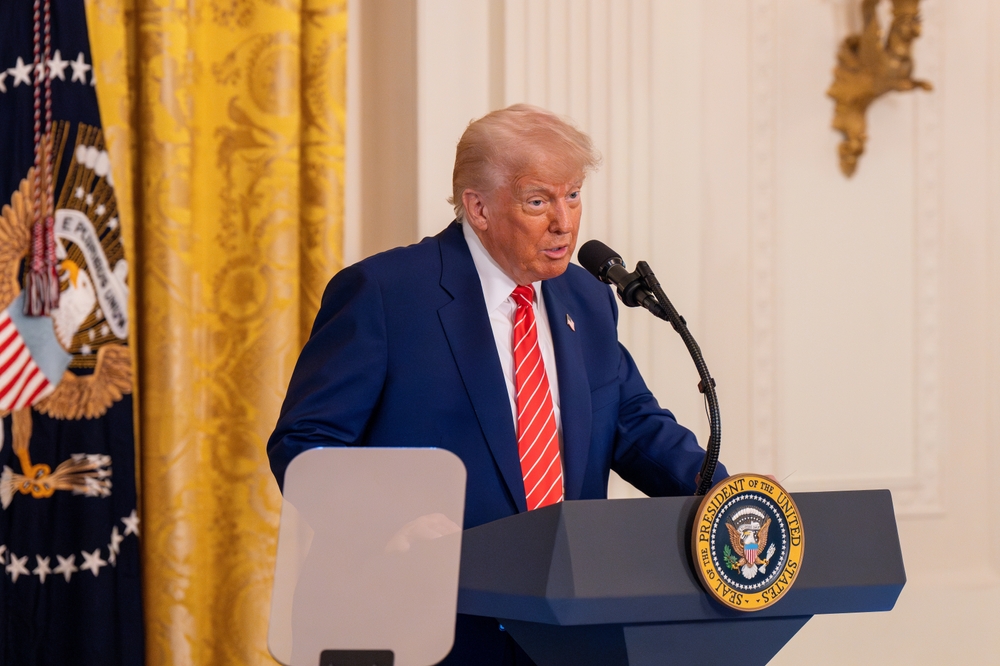
When Donald Trump stepped up to speak, he praised her talents and her work. He admired the fact she speaks multiple languages. He told the audience the country was lucky to have her. And then he acknowledged the thing everyone in the room already felt. They love her, he said. Then he added the line that blew up across headlines. “Every time I get up and make a speech, they say we want our First Lady. What the hell I’m not good enough.”
It was a joke, but not fully a joke. The president was poking at the fact that Melania often gets warmer reactions in settings where she is allowed to focus on humanitarian goals instead of political combat. The line exposed his frustration mixed with grudging admiration and maybe even a hint of insecurity.
A Pattern of Seven Word Moments
The White House exchange was not the first time seven words from Trump generated scrutiny. In fact, reporters and lip readers have caught similarly revealing quips in very different settings.
DURING POPE FRANCIS FUNERAL
While attending Pope Francis funeral in Vatican City, Trump and Melania sat among world leaders and dignitaries. Cameras caught Trump leaning in toward his wife. A lip reader hired by Oddspedia reported he whispered seven words. “I’ll go over and speak to him.” Melania gave what observers described as a side glance.
That small exchange became its own storm because no one could be entirely sure who him referred to. Given Trump had recently clashed publicly with Ukrainian President Volodymyr Zelenskyy, and Zelenskyy sat several seats away, most outlets speculated he meant the Ukrainian leader. Before the funeral began the two did in fact speak and reportedly had a productive conversation.
AT THE FLOOD ZONE IN TEXAS
Another moment unfolded during the Trumps visit to flood stricken Texas. They stepped off Air Force One surrounded by devastated families, first responders and national media. According to reporting from the Irish Star Trump again leaned toward Melania and said seven unmistakable words. “Look at how shaken up everyone is.” The lip reader noted he followed the remark with comments about wanting to work with survivors and formalizing support.
These remarks were different in tone. They were observational and almost surprisingly empathetic for someone often painted as blunt in crisis settings. Yet the pattern held. Short sharp phrases delivered privately became defining public moments.

THE MELANIA FACTOR
Melania Trump stands in a strange position within American politics. She is simultaneously part of the Trump political brand and separate from it. She speaks far less than her husband, but when she does her tone is calmer and more reserved. Her advocacy work focuses on children, mental health and digital safety areas that allow her to avoid the political battlefield.
This creates a contrast. Trump thrives in conflict driven spaces. Melania avoids them. Trump personalizes political struggles. Melania sidesteps them. Sometimes her distance from political brawls makes her appear more relatable or sympathetic.
During the foster care event the audience reaction made that dynamic visible. The warmth toward Melania was organic. It was also a reminder that Trump though larger than life in political circles does not command universal warmth in intimate domestic policy settings.
The result is a situation where she can be praised and he can be teased for not quite matching her tone. His joke about not being good enough tapped into the public perception that Melania is viewed more favorably in some contexts.
POLITICS OF PERCEPTION
Politics is performance. Every gesture, every quip, every side glance becomes part of a narrative. Trump knows this better than most political figures. He often leans into humor to defuse moments where the energy in a room tilts away from him.
His seven word line inside the White House was part humor, part complaint and part message. He wanted the room to know he saw what was happening. Yet he also wanted to reclaim the moment by turning it into a punchline. It worked because both supporters and critics could read the line differently. Supporters saw a self aware joke. Critics saw insecurity.
By the time variations of similar seven word remarks surfaced in Vatican City and Texas the pattern began to look intentional at least in tone. Trump likes to puncture the seriousness of moments with blunt phrases. It gives him control of the narrative even when he is reacting rather than leading.
How The Media Amplified The Line

The media loves anything that can fit neatly into a headline. Seven words is perfect. It is small enough to be shareable and sharp enough to stir curiosity. When Trump said the line in the White House it checked every box. It involved the former president. It involved Melania. It involved insecurity. It involved humor. And it happened during a policy event that otherwise would not have made many front pages.
Coverage from sources like Express, Irish Star and others amplified the pattern. Lip readers broke down gestures at funerals and disaster visits. Reporters parsed tone and timing. Analysts debated whether Trump was joking or venting.
These small moments became magnified because they say something about how the former president navigates public emotion. He rarely hides his reactions even when they reveal vulnerability.
The Significance of Melania’s Advocacy
Lost in the spectacle of the seven word headline was the fact that the foster care executive order was substantial. The initiative aims to give aging out foster youth access to training, education and technology. Advocates warn that nearly half of children leaving foster care risk unemployment or homelessness. Melania used her platform to champion solutions for these fragile years.
Her efforts ranged from supporting legislation to combat deep fake exploitation of minors to pushing for technology scholarships for foster youth. According to National Foster Youth Institute data only about fifty percent of foster youth graduate high school and only three percent earn a college degree. Melania sought to improve those odds.
Trump, despite the headline grabbing moment, did emphasize her work. He asked her to sign the executive order something highly unusual for a First Lady. It was symbolic but meaningful. It signaled that she was not just a ceremonial partner but an advocate shaping the policy behind the scenes.
The Unusual Public Marriage

The Trump marriage has long existed in a space between public fascination and political symbolism. They present differently than most political couples. Their interactions are scrutinized in photos, gestures and brief exchanges.
Moments like the seven word jokes deepen this fascination because they offer glimpses into their communication style. Trump tends to speak loudly and publicly even when addressing intimate topics. Melania tends to respond with subtle cues. Her side eye at the Vatican became a meme not because it was dramatic, but because it fit the pattern of restraint she is known for.
These small moments add texture to the political narrative surrounding them. They are reminders that political couples are people who grapple with the oddness of living in the center of global attention.
The Broader Political Context
Trump remains a polarizing figure. His public comments carry weight far beyond any single event. When he jokes about not being good enough, the line is not heard in isolation. It sits next to years of political conflict, international disputes, investigations and high stakes campaigns.
Melania, in contrast, occupies a gentler corner of the political map. Her initiatives aim to uplift rather than challenge. Even when she publicly criticized Vladimir Putin for abducting Ukrainian children she did so from a humanitarian frame.
The difference in their roles shapes how comments land. A joke from Trump hits differently because he is a force who has shaped global politics for nearly a decade. When he says ‘what the hell I’m not good enough,’ he is not only speaking as a husband but as someone whose every word becomes a headline.

The Global Spotlight and Its Consequences
The seven word comment at Pope Francis funeral showed the unusual global visibility the couple carries. World leaders do not often move through events with cameras ready to analyze every whispered phrase. Yet for the Trumps this level of scrutiny has become standard.
Trump’s comment at the Vatican was interpreted through geopolitical tension. His strained relationship with Zelenskyy created a layer of suspicion around even a casual whisper. Analysts spent days dissecting whether the remark reflected diplomacy, hostility or something in between.
This level of attention can be exhausting, even for seasoned political figures. It amplifies the meaning of every gesture. It turns human moments into political signals. The Trumps navigate this environment differently. Donald leans into the spectacle. Melania quietly endures it.

Media, Memes and Modern Politics
The viral nature of seven word headlines reflects something larger about political culture. Social media rewards brevity. Complex policy discussions rarely go viral, but a seven word quip does. Even when Melania’s work focuses on children in crisis or teens aged out of care those details struggle to compete with the spectacle of personal interaction.
This creates an imbalance. Policy becomes the backdrop to personality. The foster care initiative was a serious, much needed policy effort. Yet the headline that emerged from the event focused not on the executive order but on Trump’s reaction to the audience’s reception of his wife.
This is not new. Modern politics consistently prizes emotional flashpoints over substantive governance. For the Trumps this dynamic is particularly intense. Their relationship, their gestures and their brief exchanges often overshadow the issues they address.
Looking Beyond the Headlines
The seven word line that sparked this story became a viral moment because it captured something people recognize. It reflected the contrast between two very different public figures who happen to share a marriage and a political stage. It showed Trump wrestling with the energy of a room that preferred hearing from someone else and turning that discomfort into a performative laugh line.
But beneath the spectacle was a serious initiative aimed at supporting some of the most vulnerable young people in the country. Melania used her platform to champion children aging out of foster care. Trump acknowledged that work even as he cracked jokes about the attention she received.
Their public dynamic remains one of the more unusual partnerships in modern politics. Sometimes the smallest comments reveal the largest truths. The seven words that traveled across headlines did more than express frustration or humor. They showed how perception shapes political storytelling. They highlighted the role Melania plays as both partner and contrast. And they reminded audiences that even in the halls of power, people still feel the sting of comparison.