
Your cart is currently empty!
Scientists Capture the Smallest Water Bubble Ever Seen and It Could Change Space Travel Forever
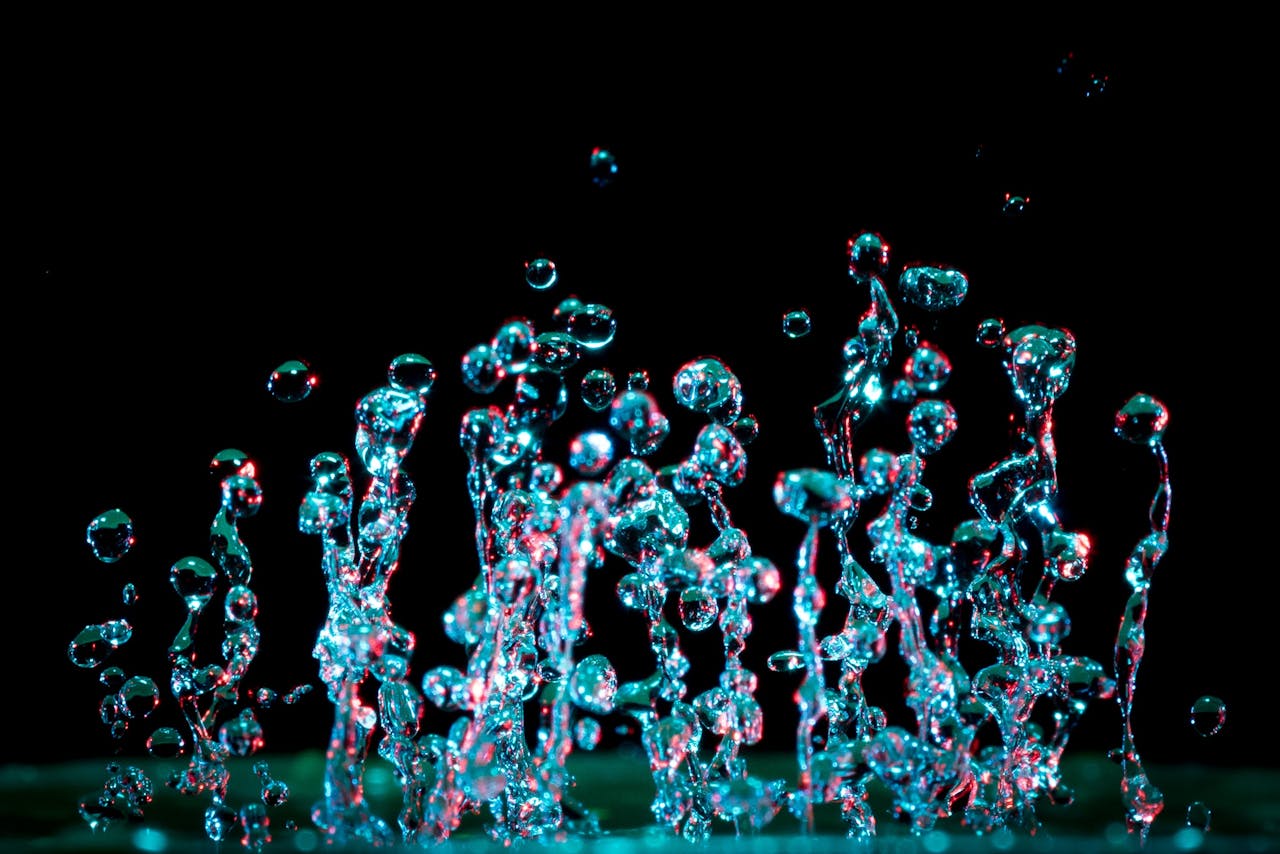
Watching water form is something most of us take for granted. It happens in our kitchens, in our gardens, and on rainy days when droplets gather on windows. But in 2024, scientists at Northwestern University witnessed something entirely different: water forming from hydrogen and oxygen at a scale so unimaginably small it pushes the boundaries of what we thought could be seen and it may change how future astronauts survive long missions.
Contents
show

Their discovery was not simply a scientific flex. It was a glimpse into how chemistry functions at the tiniest limits of nature, and as the researchers soon realized, it has implications that reach far beyond the lab. From sustainable resource generation in deep space to advancing our understanding of catalytic reactions on Earth, this breakthrough invites us to consider what innovation looks like when it literally starts at the nanoscale.
How Scientists Watched Water Form One Molecule at a Time
The effort to observe water formation at the atomic scale depended on developing a way to keep reactive gases stable long enough for imaging. The team achieved this by creating honeycomb-shaped nanoreactors made of ultra thin glassy membranes, which allowed hydrogen and oxygen molecules to be confined in controlled spaces while remaining compatible with high vacuum transmission electron microscopy. This setup provided an unusual combination of stability and transparency, giving researchers a clear window into a reaction that previously unfolded too quickly or unpredictably to capture.
By placing palladium within these nanoreactors, the scientists could watch how the metal interacted with incoming hydrogen at a level of detail that traditional imaging methods could not reach. Their approach not only enabled direct observation but also allowed them to track the sequence of structural changes inside the palladium as it absorbed hydrogen. This structural tracking was essential for understanding how the reaction environment shifts at the exact moment when water begins to form.
The work illustrates the value of pairing advanced imaging techniques with carefully engineered nanoscale environments. It also shows how targeted instrumentation, when designed for specific reactions, can turn abstract chemical models into visible processes.
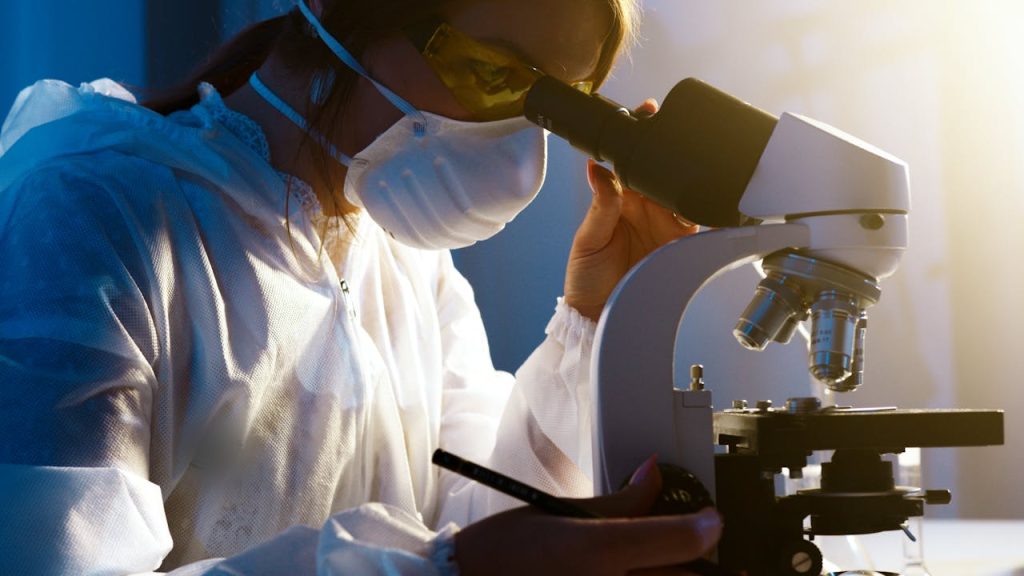
The Smallest Water Bubble Ever Recorded
When the nanosized bubble of water appeared on the screen, the scientists were surprised. As Liu put it, “We think it might be the smallest bubble ever formed that has been viewed directly. It’s not what we were expecting. Luckily, we were recording it, so we could prove to other people that we weren’t crazy.” In that moment, what had long been treated as an inferred event in textbooks turned into something concrete and visible, a tiny pocket of liquid forming inside a metal host.
At the scale they were working with, describing something as a bubble means identifying a distinct region where water has collected and separated from its surroundings, not just a hint of moisture or scattered molecules. The team could watch this confined region appear and stabilize within palladium, offering a rare look at how a familiar substance behaves when it is restricted to spaces far smaller than a typical cell. Seeing this separation occur in real time allowed them to connect subtle shifts in the material to the emergence of liquid water.

To validate what they were seeing, the team analyzed the bubble using electron energy loss spectroscopy, a highly sensitive method also used aboard India’s Chandrayaan 1 mission to confirm water on the Moon. Rather than relying only on the visual contrast in the images, they used this technique to examine how electrons lost energy as they passed through the bubble region. Those energy loss patterns carry the fingerprints of specific elements and chemical bonds, and in this case they matched the signatures expected for water.
This combination of direct visualization and spectroscopic confirmation did more than prove that the bright feature on the screen was truly water. It also helped the researchers pinpoint the conditions under which water can form quickly inside the metal under ambient settings, such as the balance of gases and the stability of the bubble before it disperses.
Why This Matters for Future Space Missions
While the discovery is scientifically exciting on its own, its real-world applications are what make this story fascinating for anyone curious about exploration beyond Earth. The study’s senior author, Vinayak Dravid, connected the lab findings to a familiar cinematic reference.
“Think of Matt Damon’s character, Mark Watney, in the movie ‘The Martian.’ He burned rocket fuel to extract hydrogen and then added oxygen from his oxygenator. Our process is analogous, except we bypass the need for fire and other extreme conditions. We simply mixed palladium and gases together.”
Dravid explained that by directly visualizing nanoscale water generation, the team could uncover promising conditions for producing water in situations where conventional methods are not feasible. And few environments are as unforgiving as deep space.
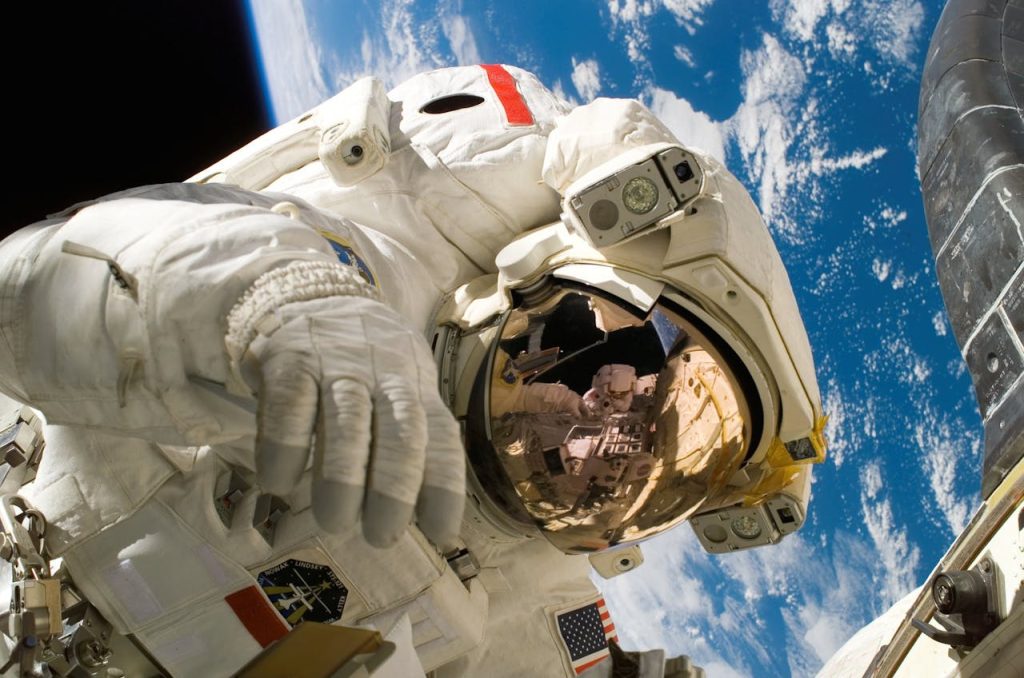
In long-term missions, water becomes one of the most precious resources. Bringing enough supply is often impossible due to weight restrictions, and extracting water from local sources depends heavily on landing sites and available technology. Having a reliable, low-energy method to generate water from hydrogen and oxygen two substances available on spacecraft and other celestial bodies could be transformative.
How Palladium’s Secret Could Create Future Water Systems
One of the most important findings was how the sequence of gas introduction affects water production. The team discovered that palladium responds differently depending on whether hydrogen or oxygen enters first. This observation could influence the design of future catalytic systems and may lead to more efficient water generation techniques.

If palladium can be pre-saturated with hydrogen, astronauts may only need to add oxygen to produce drinkable water a simple, elegant solution in an environment where complexity can mean danger. The research also hints at broader applications:
- Deep-space survival systems could incorporate nanostructured catalysts that generate water on demand.
- Space habitats and bases might use similar technology to recycle air and produce oxygen as well as water.
- Earth-based industries could leverage this reaction to refine hydrogen-based energy systems.
The Bigger Picture Understanding Nature at Its Smallest Scale
This study, published in Proceedings of the National Academy of Sciences, is not just about water; it’s about observing fundamental reactions in real time. For decades, researchers could only theorize what happened at this scale. Now they can watch it unfold.
It reminds us that many natural processes from how metals store hydrogen to how catalysts speed up reactions begin at scales far smaller than the eye can see. And when we understand these processes at their foundations, we can design smarter, safer, and more sustainable technologies.
In a world where scientific breakthroughs often compete with viral trends, discoveries like this bridge the gap. They offer a sense of wonder grounded in fact, reminding us that nature still holds mysteries waiting to be unraveled.
What This Breakthrough Means for Understanding Water in Natural Ecosystems
Although the study centers on nanoscale chemistry rather than wildlife, it offers insights that may eventually influence how scientists study water in natural environments, including those that support bird populations. Many bird species rely on microhabitats where water availability changes rapidly, such as ephemeral puddles, thin film water layers on leaves, or moisture trapped within soil and bark. These small reservoirs often form and disappear at scales too fine for traditional measurement tools, leaving gaps in ecological data.
By revealing how water can emerge, stabilize and be detected in confined spaces, this research underlines the importance of examining water behavior at dimensions smaller than previously emphasized in ecological studies. Such precision could support future research on how micro sources of hydration influence bird foraging behaviors, nesting patterns or migration routes, especially in regions affected by climate variability. Understanding these micro scale water dynamics may help conservationists develop more accurate models of habitat suitability and resource availability.
This perspective does not suggest that the Northwestern University experiment replicates natural settings, but rather that its tools and insights could inspire finer scale approaches when studying how small amounts of water support life. As ecosystems face ongoing environmental pressures, recognizing the importance of water at every scale, even the ones we cannot easily see, becomes increasingly valuable.
What We Can Learn From a Bubble So Small
At first glance, a nanosized bubble might seem trivial. But this research offers a broader life lesson: progress often starts with paying attention to what we can barely see.
In nature, the smallest interactions lead to the most powerful outcomes. Water shapes landscapes. Hydrogen fuels suns. And now, a tiny bubble captured in a lab could shape the future of space exploration.

For readers intrigued by the intersection of science and humanity, this discovery reinforces the value of curiosity the willingness to examine the subtle details of our world and see where they lead. It challenges us to look closer, think deeper, and remember that breakthroughs are often born from questions as simple as: What happens when we look closer?
As we continue exploring the cosmos, it’s discoveries like these that remind us that even the smallest moments matter on Earth and beyond.