
Your cart is currently empty!
NJ-Bound Plane That Suddenly Plunged Thousands Of Feet Likely Hit By ‘Cosmic Rays’ From A Whole Other Galaxy
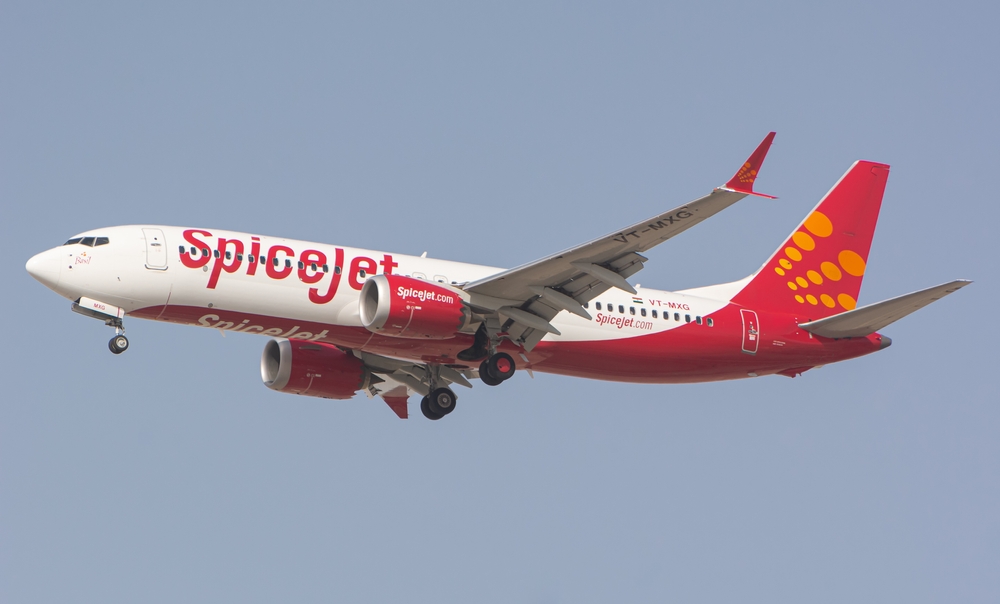
The story of a New Jersey-bound JetBlue Airbus A320 that suddenly plummeted thousands of feet in midair has quickly become one of the most puzzling and unsettling aviation events in recent years. What began as a routine flight turned into a moment of chaos when the aircraft abruptly lost altitude without warning, leaving passengers terrified and investigators scrambling for answers. Early theories like turbulence and mechanical issues did not align with the aircraft data, which showed an unexpected irregularity that could not be traced to any of the typical systems that fail during flight. The sudden drop pushed researchers to consider explanations that most travelers never imagine when boarding a plane.
Contents
show
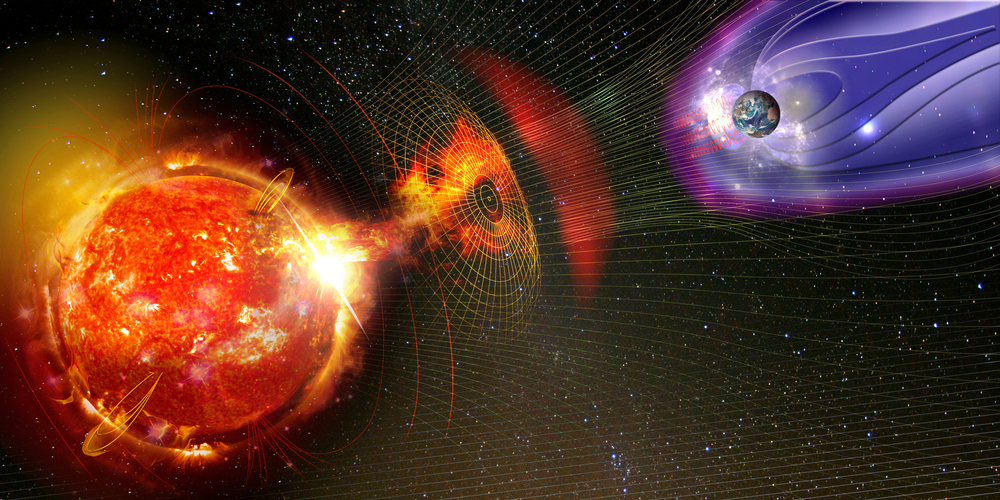
As aviation authorities and scientific experts reviewed the incident, their attention shifted away from the aircraft itself and toward forces originating far outside Earth. According to specialists who study cosmic radiation, the plane may have encountered high-energy particles that were launched from a distant galaxy millions of years ago when a massive star exploded. These particles are known as cosmic rays, and they have the ability to interfere with the microelectronics that power modern aircraft systems. Although the theory sounds like it belongs in a science fiction film, it aligns with decades of research on high-altitude radiation and highlights how air travel intersects with the larger universe around us.
How the Incident Unfolded in Midair
The JetBlue flight was moving steadily through its cruise altitude and everything inside the cabin seemed ordinary when the aircraft suddenly dropped thousands of feet. Such a descent can create an intensely disorienting experience for passengers because it happens faster than the body can register. People may briefly feel their stomach rise or sense the kind of weightlessness associated with a steep roller coaster. Items that were resting on trays might lift into the air or slide off seats, and the abrupt change can send a wave of panic across the cabin. The crew responded quickly and stabilized the aircraft, but the nature of the descent immediately raised questions about what could have triggered it.
When investigators reviewed the aircraft systems, they discovered evidence of an electronic irregularity rather than a mechanical malfunction. This shifted the focus toward potential external factors that could have interfered with the flight systems. Space-radiation expert Clive Dyer explained that “cosmic rays can interact with modern microelectronics and change the state of a circuit.” According to him, these interactions may cause “a simple bit flip, like a zero to one or one to zero,” which can distort how a system interprets critical information. Such flips can lead to unexpected responses from automated systems that pilots rely on.
As researchers continued evaluating the incident, they found that the system behavior matched what would be expected if a cosmic ray struck a sensitive electronic component. Dyer noted that “they can mess up information and make things go wrong” and pointed out that “they can cause hardware failures too, when they induce a current in an electronic device and burn it out.” These statements helped reinforce the theory that an external cosmic factor, not an onboard fault, may have been responsible for the sudden plunge that passengers experienced.

Why Experts Believe Cosmic Rays Played a Role
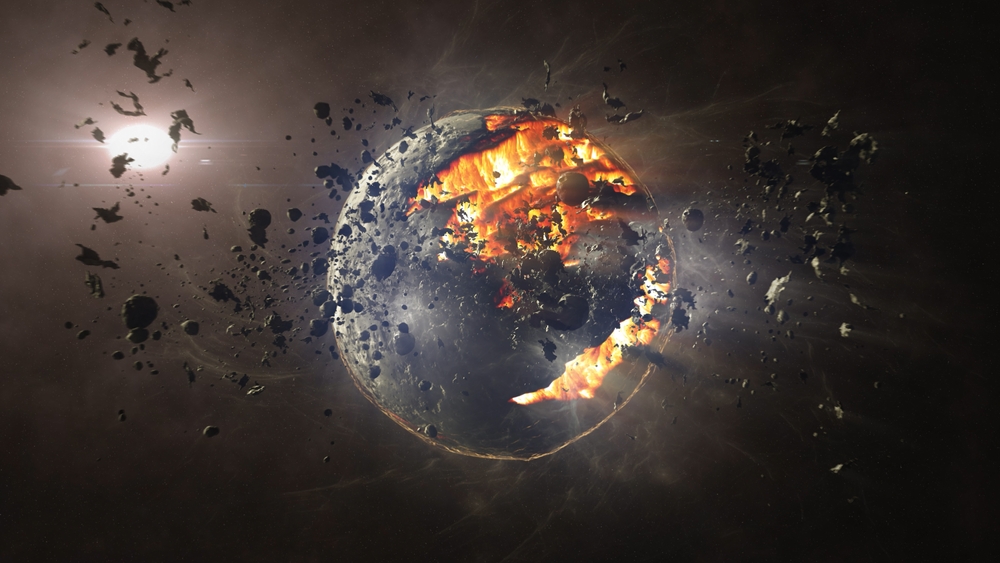
Cosmic rays are produced when enormous stars reach the end of their lifespan and explode in supernovas that release unimaginably powerful energy into space. These explosions hurl particles across the universe at speeds close to the speed of light, and many of them continue traveling for millions of years until they eventually encounter Earth. The planet’s atmosphere absorbs most of these particles before they reach the surface, but aircraft flying at high altitudes exist above much of that natural protection. This makes their electronics more vulnerable to radiation exposure, and this vulnerability has been studied in both aviation and space industries for decades.
Clive Dyer pointed out that while the usual levels of cosmic radiation are not typically strong enough to affect a flight, the circumstances of this case may be tied to an unusually energetic source. According to him, the radiation levels detected were “not strong enough to impact the flight” ordinarily, which is why he suggested that the event “was likely due to a supernova.” A supernova generates much more energetic particles than the sun produces, and these particles can create disturbances in microelectronics that normal shielding cannot fully prevent.
Investigators searching for a conventional explanation found no mechanical malfunctions or sensor defects that could account for the altitude loss. This absence strengthened the theory that a cosmic interaction had occurred. Unlike mechanical failures that leave physical signs, cosmic ray strikes leave no visible trace and can alter the behavior of a circuit through a microscopic interaction. Although these events are rare, they are well documented in satellites and space systems. The alignment between the aircraft behavior and known cosmic ray effects has made this explanation one of the most compelling under review.
What Passengers Likely Experienced During the Descent
Even without direct passenger testimony, similar altitude-loss events reveal a great deal about what people on board may have felt. A drop of thousands of feet creates a dramatic shift in bodily sensation, and many passengers would have experienced the familiar but unsettling feeling that comes with rapid loss of altitude. Some may have felt objects move unexpectedly around them while others may have clutched their armrests as they tried to process what was happening. The cabin may have briefly fallen silent or erupted in startled reactions as the aircraft lurched downward faster than anyone anticipated.
The flight crew had to focus on stabilizing the aircraft while ensuring communication with air traffic control, all while managing the uncertainty of what caused the sudden descent. Pilots train for unexpected system disruptions, but external cosmic interference is a scenario that is difficult to anticipate because it leaves no immediate clues. The crew’s ability to regain control reflects the importance of training and redundancy, but also underscores how dependent modern flight is on flawless electronic function.
After an incident like this, passengers often describe feeling unsettled long after the plane returns to normal altitude. Even though air travel is statistically extremely safe, the experience of an abrupt altitude drop can leave a lasting emotional impact. It exposes the contrast between the trust passengers place in aviation systems and the rare moments when external forces disrupt that sense of security. This flight serves as one more example of how sudden and unexpected moments can reshape a traveler’s sense of comfort.
The Science Behind Cosmic Interference in Aviation Technology
Modern aircraft rely heavily on electronic systems that manage navigation, sensors, communication and automated functions. These systems are built with shielding and error-correcting features, but cosmic rays present a challenge because their energy levels can exceed what ordinary materials can block. When a high-energy particle strikes a microchip, it can change the electrical charge within a circuit and alter how that circuit behaves. This means that even a single microscopic event can trigger a larger system response without leaving physical damage for engineers to examine later.
To reduce these risks, avionics designers incorporate redundant systems so that one computer can take over if another encounters an error. Memory systems often include error-correcting code that identifies and fixes certain data flips. Aircraft components also include shielding materials designed to absorb or weaken radiation before it reaches sensitive circuits. However, shielding cannot stop every high-energy particle, especially those originating from supernovas, and this limitation is one of the ongoing challenges in aviation engineering. Diagnostic systems help detect irregularities, but not every radiation-induced disruption is easily traceable.
The JetBlue incident reinforces how important it is for the aviation industry to continue studying and adapting to cosmic radiation risks. Researchers, engineers and regulators often collaborate to update guidelines and improve protections as new findings emerge. The incident serves as a real-world example of the scientific principles that have long been discussed in the context of space travel and high-altitude electronics. As flights depend more heavily on automated systems, the influence of cosmic radiation becomes an area of increasing significance for future safety standards.
What This Event Suggests About Our Connection to the Universe
Cosmic rays strike Earth constantly, and while most never affect human life, the small percentage that reach higher altitudes remind us that we are part of a much larger cosmic system. Aircraft and satellites experience more exposure to these particles than anything on the ground, which is why the aviation and space industries monitor cosmic radiation levels closely. The possibility that a particle from a star that exploded millions of years ago influenced a commercial flight to New Jersey is both scientifically remarkable and deeply humbling because it highlights the interconnectedness of the cosmos and human technology.
This incident invites people to consider how forces beyond human control shape the environment in which our technology operates. It illustrates that no matter how advanced aviation systems become, they still exist within a universe filled with unpredictable and powerful energy. While such events remain extremely rare, they are reminders of the relationship between Earth and the cosmic environment that surrounds it. The story also encourages scientists to continue studying cosmic rays so that aviation systems can be further strengthened against natural phenomena that humans cannot eliminate.
As investigators continue reviewing data from the incident, the event serves as a powerful example of how microscopic interactions can influence large-scale human experiences. Whether the sudden descent was definitively caused by a cosmic ray or another factor still emerging from the investigation, the theory itself highlights how the universe remains an active participant in the operation of human technology. It encourages both scientific fascination and practical reflection about how we continue to build resilience into the systems we depend on.