
Your cart is currently empty!
Man With Reported IQ of 276 Explains Why AI Will Never Match Human Emotional Intelligence

When someone claims to possess an IQ of 276, people tend to listen. Whether they agree or roll their eyes, curiosity takes over. What does a person with such alleged brainpower think about the questions that keep philosophers, scientists, and tech moguls awake at night?
Contents
show
YoungHoon Kim has built a following online by doing just that. He shares his thoughts on politics, cryptocurrency, faith, and now, one of the most debated topics of our time. His target? Artificial intelligence and the question of whether machines can ever match what makes humans human.
His answer might surprise you. It has nothing to do with processing power, data sets, or algorithmic sophistication. Instead, Kim grounds his argument in something far older than silicon chips. He believes the answer lies in scripture and the soul.
Measuring Intelligence and Its Discontents
Before examining Kim’s claims about AI, his own credentials deserve some attention. An IQ of 276 would place him far beyond any recorded measurement in modern history. Such a score raises eyebrows among skeptics and psychometricians alike.
Modern IQ testing traces its origins to 1905, when French psychologist Alfred Binet developed assessments to identify students who needed academic support. Since then, IQ has become a cultural shorthand for intelligence, though experts have long debated what these tests actually measure.
For decades, Guinness World Records tracked the highest recorded IQ scores. Marilyn vos Savant entered the record books in 1985 with a score of 228, a title she held until 1989. Yet even she found the distinction more burden than blessing. As she once explained, “I am becoming amazingly informed to a superficial extent.”
Guinness retired the category in 1990. Competing tests, inconsistent methodologies, and growing controversy made the idea of crowning a single “smartest person” seem less scientific and more like a parlor trick. Different tests produced different results, and psychologists questioned whether any single number could capture something as complex as human intelligence.
Kim’s claimed IQ of 276 exists outside any official verification system. Critics have questioned his credentials, and no mainstream scientific body has endorsed his score. Yet Kim has pressed forward, using his platform to comment on matters ranging from faith to finance to the future of technology.
Where Politics and Technology Collide

Kim has expressed public support for President Donald Trump, placing him within a particular political orbit. Yet on the subject of artificial intelligence, the two figures appear to diverge.
Trump’s 2025 agenda has featured AI as a centerpiece. His administration has pursued landmark deals with tech companies and signed executive orders aimed at rolling back regulations on AI development. For Trump, AI represents economic opportunity and American competitiveness on the global stage.
Kim takes a different view. While he has not called for specific regulations, his public statements suggest deep skepticism about AI’s potential to replicate human qualities. His concerns go beyond economics or safety. For Kim, the issue is spiritual.
A Soul-Sized Gap in the Machine

Kim made his position clear in a post on X, the platform formerly known as Twitter. His argument cut straight to what he sees as AI’s insurmountable flaw. “AI can never attain the fullness of human intelligence created in the image of God, because it lacks true emotion, morality, free will, love, and a soul capable of relationship with God.”
For Kim, intelligence means more than pattern recognition or language processing. Human beings, in his view, carry something divine within them. Machines, no matter how sophisticated, remain tools built by human hands. Without a soul, they cannot participate in the relationship with God that defines human existence.
His argument echoes centuries of theological debate about what separates humans from animals, angels, and, now, algorithms. Religious traditions have long grappled with questions of consciousness, free will, and moral responsibility. Kim brings these ancient questions into conversation with cutting-edge technology.
Whether one accepts his premises, his argument identifies a gap that many AI researchers acknowledge. Current AI systems, including large language models, lack genuine emotion. They simulate emotional responses based on training data, but no inner experience accompanies their outputs. When a chatbot expresses sympathy, no feeling underlies those words.
Morality presents similar challenges. AI systems can be programmed with ethical guidelines, but they do not wrestle with moral choices the way humans do. A human being feels the weight of a difficult decision. An algorithm processes inputs and produces outputs.
Free will remains one of philosophy’s thorniest problems, and AI has not solved it. Machine learning models operate according to mathematical functions. Their outputs follow from their inputs in deterministic or probabilistic ways. Whether humans possess genuine free will is itself debated, but AI systems clearly lack whatever freedom we might possess.
When Humans Turn to Machines for Comfort

Kim’s concerns arrive at a moment when the relationship between humans and AI has grown increasingly intimate. People now spend hours conversing with AI chatbots, seeking advice, companionship, and emotional support.
For some users, these interactions fill genuine voids. Loneliness has reached epidemic levels in many countries, and AI offers a judgment-free listener available around the clock. Yet these relationships carry risks that researchers and mental health professionals have begun to document.
Tragic cases have brought these dangers into public view. Adam Raine’s death highlighted the potential consequences when vulnerable individuals form deep attachments to AI systems. While details of such cases vary, they raise urgent questions about boundaries, dependency, and the difference between simulated care and genuine human connection.
Kim’s spiritual argument intersects with these practical concerns. If AI lacks the capacity for authentic emotion and moral reasoning, what happens when people treat AI as though it possesses these qualities? Can a machine offer real comfort if it cannot truly care?
These questions do not require religious faith to take seriously. Secular ethicists and technologists have raised similar concerns about the psychological effects of AI companionship. Yet Kim’s framework adds a dimension that resonates with billions of people worldwide who understand themselves in spiritual terms.
Reactions From the Digital Congregation
Kim’s post sparked considerable discussion online. Many of his followers echoed his spiritual reasoning.
One commenter wrote that AI is “man-made, not made by God,” drawing a clear line between human creation and divine creation. Another agreed that artificial intelligence, by definition, cannot possess a soul.
Yet not everyone accepted Kim’s conclusions. Some respondents offered a more nuanced theological position, suggesting that God’s sovereignty extends over all creation, including human-made technologies. One commenter argued that God could use AI as a tool, just as God might use any instrument to accomplish divine purposes.
Kim responded to these objections by returning to scripture. He cited Genesis 1:27 as the foundation of his position.
“Only humans were created in the image of God, as written in Genesis 1:27 ‘So God created man in His own image, in the image of God He created him; male and female He created them’.”
For Kim, this verse settles the matter. Being made in God’s image grants humans a status that no machine can share. AI might process information. It might generate text, images, and music. It might even pass certain tests for intelligence. But it cannot bear the divine image.
A Larger Cultural Reckoning
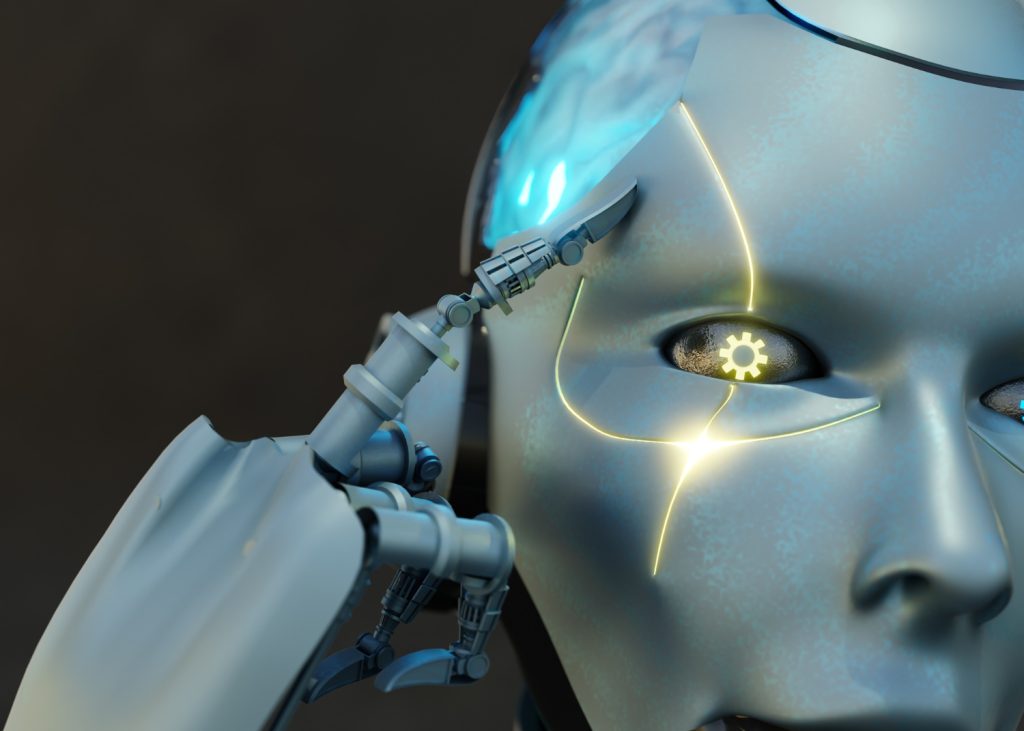
Kim’s intervention arrives as popular culture grapples with AI’s spiritual implications. Podcast host Joe Rogan has speculated that AI might somehow play a role in bringing about the Second Coming of Jesus. Such ideas, whether offered seriously or provocatively, indicate how deeply AI has penetrated religious imagination.
Faith communities around the world are wrestling with the questions Kim raises. Can AI participate in worship? Should AI be used for pastoral care? What happens to human dignity if machines perform tasks we once considered sacred?
These discussions will intensify as AI capabilities grow. Language models already write sermons and compose prayers. AI systems offer spiritual guidance through apps marketed to religious users. Each new application forces believers to consider where technology ends and the sacred begins.
Kim has staked out a clear position in this debate. His argument may not convince everyone, and his credentials remain contested. Yet he has articulated a view that millions of people share, even if they lack his platform to express it.
What Remains Beyond the Algorithm
Whether Kim truly possesses the world’s highest IQ cannot be verified. What can be observed is that his argument about AI touches something real. Across cultures and centuries, humans have sensed that they possess something beyond mere matter. Religious traditions call it a soul. Philosophers speak of consciousness or personhood. Scientists debate emergent properties of complex systems.
AI has forced a fresh confrontation with these ancient questions. When a machine can hold a conversation, write a poem, or offer comfort, what remains distinctly human?
Kim’s answer points toward faith, scripture, and a relationship with the divine that no algorithm can simulate. For him, the gap between human and artificial intelligence is not a matter of processing speed or data volume. It is a gap measured in eternity.
Featured image Source: catholicconnect.in
catholicconnect.in/news/man-with-worlds-highest-iq-declares-jesus-christ-is-god