
Your cart is currently empty!
A Texas Plumber, a Ford Truck, and an Image That Changed Everything
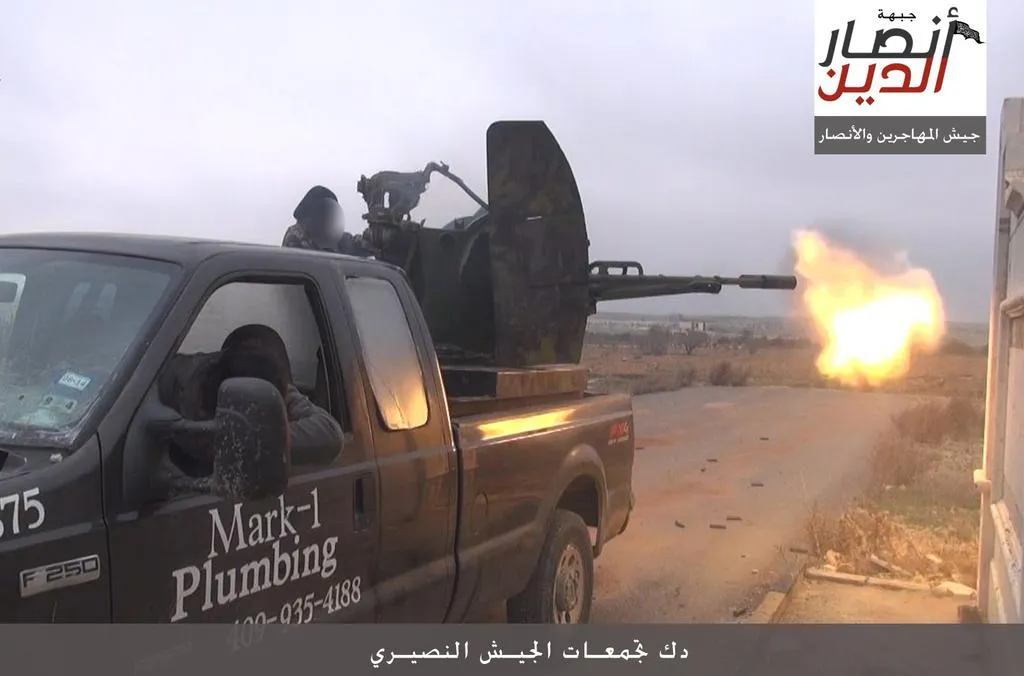
Mark Oberholtzer had spent 32 years building his plumbing business in Texas City, Texas. He had earned a solid reputation, a loyal customer base, and a fleet of work trucks bearing his company’s name. In October 2013, he drove one of those trucks to a Houston dealership for a simple trade-in. What happened next would thrust his small business into an international spotlight no amount of advertising could have prepared him for.
Contents
show
More than a year after that routine transaction, Oberholtzer’s phone began ringing. And it did not stop.
A Promise Made at a Houston Dealership
Oberholtzer pulled into AutoNation Ford Gulf Freeway with his 2005 Ford F-250, a black pickup that had served Mark-1 Plumbing well. He planned to upgrade to a newer model, a 2012 F-250 that better suited his growing operation. Before handing over the keys, he began peeling off his company’s decals from the doors.
A salesman stopped him. Removing those decals yourself will damage the paint, the salesman warned. AutoNation would handle it. Staff would strip the branding before reselling the truck to its next owner.
Oberholtzer trusted that promise. He drove away in his new truck, expecting never to see the old one again.
AutoNation wasted no time moving the vehicle. According to court filings and contemporaneous reporting, the dealership sent the F-250 directly to ADESA, an auction house in Houston. A local used-car dealer called Maz Auto purchased it. When the truck arrived at their lot, Mark-1 Plumbing’s name and phone number remained fixed to the driver’s door.
Maz Auto even advertised the vehicle on its website with the decals still visible. Soon, an international buyer called from overseas. Payment arrived via wire transfer. Shipping arrangements followed. By December 2013, the truck had crossed the Atlantic and arrived at Mersin, a port city on Turkey’s Mediterranean coast.
From there, its path grew murky. But its destination would soon become horrifyingly clear.
An Image Emerges from a War Zone
December 15, 2014, started like any other Monday at Mark-1 Plumbing. Phones rang with service requests. Technicians headed out on calls. Oberholtzer managed his business as he had for three decades.
Then his secretary interrupted him with news that made no sense. A photograph had appeared on Twitter. Caleb Weiss, an analyst who tracked militant activity for the Long War Journal, had posted an image from Syria. It showed fighters near Aleppo firing a Soviet-made anti-aircraft gun mounted in the bed of a black Ford F-250. On the driver’s door, clear as day, appeared the words “Mark-1 Plumbing” and the company’s Texas phone number.
“My secretary called me and said, ‘You can’t believe this,’” Oberholtzer later told ABC News. “I really at first thought it was just somebody playing with us.”
He was not playing. Neither were the thousands of people who saw that image spread across social media, news websites, and television screens around the world.
Militants, Misattribution, and Media Frenzy
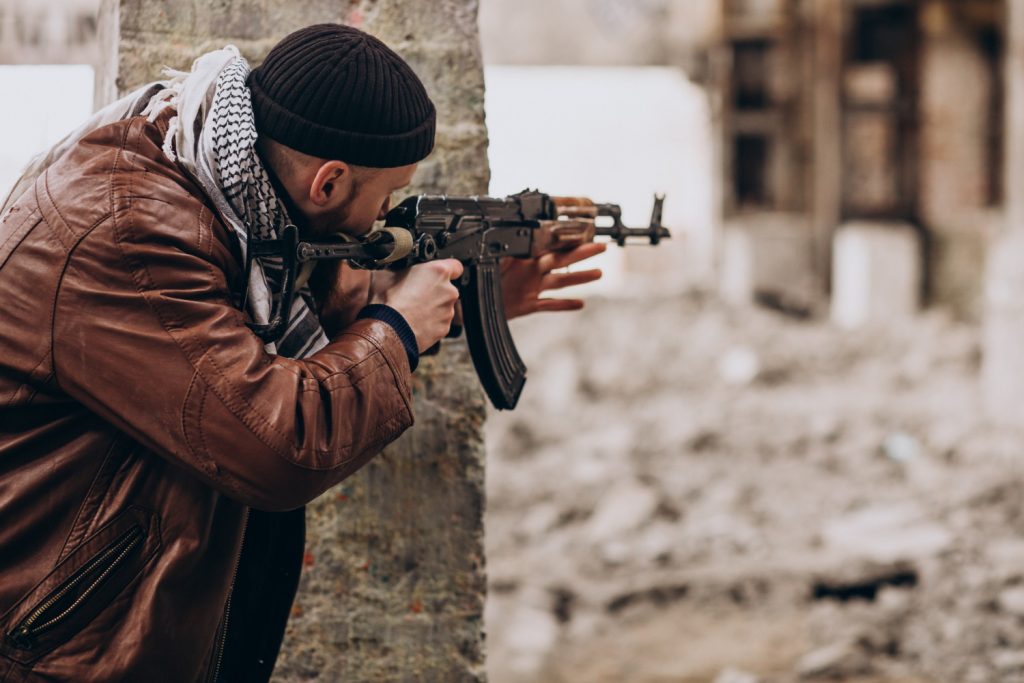
Early reports and social media commentary linked the photograph to ISIS, a connection that stuck in public memory despite being inaccurate. Analysts who studied the image identified the fighters as members of Ansar al-Deen Front, a jihadist faction operating near Aleppo. Some reporting also connected them to Jaish al-Muhajireen wal-Ansar, a Chechen-led militant group.
But accuracy mattered little in the viral storm that followed. Headlines screamed about a Texas plumber’s truck in ISIS hands. News outlets amplified the story, each broadcast renewing attention and adding to the chaos engulfing Oberholtzer’s life.
Using Carfax records, journalists traced the vehicle’s journey from Houston to Turkey to somewhere near Aleppo. That paper trail confirmed what Oberholtzer already knew. His old work truck, still bearing his company’s branding, had become a weapon of war on the other side of the planet.
Over 1,000 Calls in a Single Day

Within hours of the photograph’s appearance online, Mark-1 Plumbing’s phone lines became unusable. Calls flooded in from across the country and beyond. Most were not customers seeking plumbing services.
Court filings later described the onslaught in detail. Callers yelled expletives at whoever answered. Some sang in Arabic for the duration of their calls. Others made direct threats against Oberholtzer, his employees, and his family.
His administrative assistant grew too frightened to return to work. Attorney Craig Eiland, who would later represent Oberholtzer in court, described what staff endured. Callers hurled slurs and accusations, telling employees things like “I’m gonna kick your ***. You don’t want to be an American, get outta here and I’ll help you go.”
By day’s end, Mark-1 Plumbing had received over 1,000 calls. Oberholtzer made a decision no business owner wants to face. He shut down operations, locked the doors, and took his family out of town.
Federal Agents Arrive
Safety was not Oberholtzer’s only concern. Within days of the photograph going viral, agents from the FBI and Department of Homeland Security appeared at his door. They had questions about the truck, its sale, and how it had ended up with Syrian militants.
Oberholtzer cooperated fully. Investigators found no wrongdoing on his part. He had simply traded in a work truck at a dealership, trusting that the business would handle the transaction properly. But the federal visits added another layer of stress to an already overwhelming situation.
After the agents left, Oberholtzer began carrying a gun for protection. He was a plumber from Texas City, not a security consultant. Yet circumstances had forced him to think about personal safety in ways he never anticipated.
Comedy Central Amplifies a Nightmare
Three days after the photograph first appeared, Stephen Colbert addressed the story on his final episode of “The Colbert Report.” Millions of viewers tuned in to watch the comedian’s farewell, and Oberholtzer’s truck cut. “A Texas plumber’s work truck showed up in Syria, although, pickup truck, desert, giant machine gun, that could still be Texas,” Colbert joked on air.
Audiences laughed. Late-night fans shared clips online. And Mark-1 Plumbing’s phones lit up all over again.
When the Emmy Awards later rebroadcast portions of that final episode, the cycle repeated. Every media mention, every joke, every reshare brought fresh waves of harassment to a small business that wanted nothing more than to fix pipes and drains in peace.
A Million-Dollar Lawsuit
On December 9, 2015, exactly one year after the photograph’s viral spread, Oberholtzer and Mark-1 Plumbing filed suit against AutoNation Ford Gulf Freeway in Harris County, Texas. His attorneys pleaded multiple causes of action, including negligence, gross negligence, fraud, negligent misrepresentation, libel per se, and invasion of privacy.
At its core, the lawsuit rested on a simple claim. AutoNation had promised to remove the company’s branding before reselling the truck. They had failed to do so. And that failure had cost Oberholtzer his peace of mind, his sense of security, and substantial business revenue.
Court filings detailed how the photograph had damaged Mark-1 Plumbing’s reputation beyond anything Oberholtzer could have imagined. Online searches for his company returned results linking the business to ISIS. Review bombing campaigns targeted the company’s listings. Harassment continued in waves whenever news outlets revisited the story.
Oberholtzer sought more than one million dollars in damages. AutoNation responded through a spokesperson, stating that the truck had gone directly to auction with the understanding that markings would be removed by subsequent handlers. Company representatives called the damages sought excessive and emphasized that AutoNation had served merely as a pass-through in the chain of title.
Settlement Behind Closed Doors
Legal proceedings continued through 2016. Depositions were taken. Evidence was gathered. Attorneys on both sides prepared for a potential trial.
In October 2016, the parties filed a stipulation with the Harris County District Court announcing they had settled. Terms remained confidential. Both sides agreed to dismiss the case with prejudice, meaning Oberholtzer could not refile the same claims.
Trade media reported the settlement publicly in January 2017, more than two years after the photograph first appeared. Whatever compensation Oberholtzer received, he kept private. But the ordeal had left lasting marks that no settlement could fully erase.
New Policies and Lingering Calls
Following his legal victory, Oberholtzer changed how Mark-1 Plumbing handled vehicle disposals. Every truck leaving the fleet now has all branding stripped before sale. No exceptions. No trusting dealerships to handle it later.
He has shared that lesson with other contractors and small business owners, warning them about secondary markets they may never consider. American work trucks flow overseas in significant numbers, many ending up in regions where conflicts rage. Without proper precautions, any business could face what Oberholtzer endured.
Despite those changes, the harassment has never fully stopped. Whenever images of the truck resurface online, calls trickle back in. Social media users rediscover the story and decide to remind Oberholtzer of his unwanted fame.
Yet Mark-1 Plumbing perseveres. As of September 2025, the company remains an active, state-licensed contractor operating in Texas City. Construction analytics firm BuildZoom ranks it in the top eight percent of Texas plumbers, logging 35 permitted projects between 2022 and 2025 alone.
Oberholtzer survived a nightmare he never saw coming. His reward was hard-won wisdom about trust, branding, and the unexpected ways a simple transaction can spiral beyond anyone’s control.