
Your cart is currently empty!
The Most Famous Dog Walking for Peace Across America Was Once a Stray in India
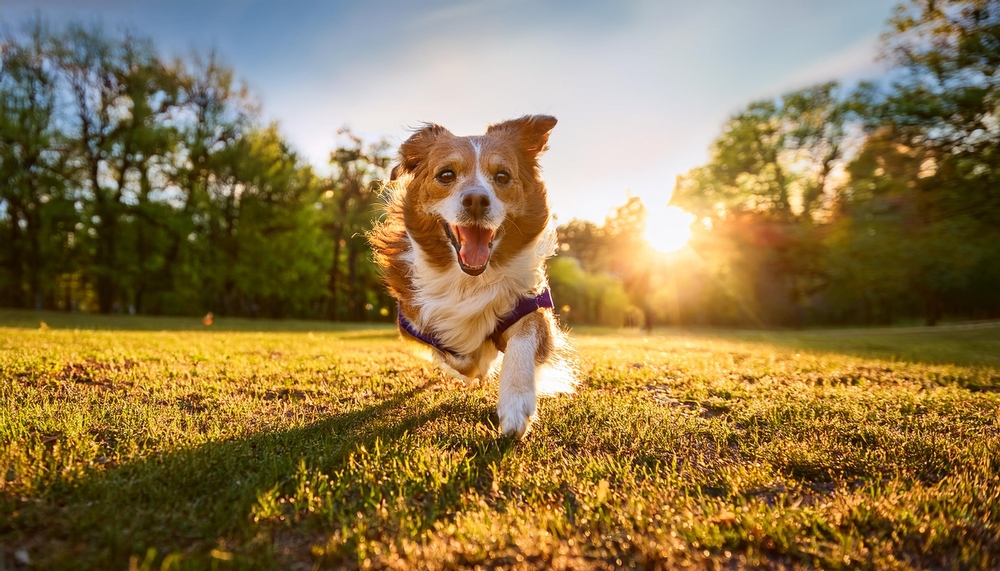
On a quiet stretch of road softened by early morning fog, a medium sized dog in a bright green jacket walks a few steps ahead of a line of Buddhist monks. His ears are alert, his stride steady, and his focus unwavering as he moves through the mist. This is Aloka the Peace Dog, a former stray whose calm presence has become one of the most recognizable and moving images of a 2,300 mile pilgrimage across the United States. What began as a simple act of walking has slowly turned into a shared story of compassion, devotion, and quiet leadership that now reaches hundreds of thousands of people around the world.
Contents
show
More than two months into the Walk for Peace, the journey has evolved into something far greater than a physical trek from Texas to Washington, D.C. Through daily updates, photographs, and short videos, people from different backgrounds and beliefs have found themselves pausing to watch a dog and a group of monks move slowly through towns, highways, and countryside. At the center of that attention is Aloka, who walks when he can, rests when he needs to, and seems to embody the very peace the monks hope to cultivate. In a time defined by noise and urgency, his presence feels like a gentle interruption, reminding people that peace can be lived, not declared.
A Walk Built on Intention Rather Than Attention
The Walk for Peace was organized by monks from the Huong Dao Vipassana Bhavana Center as a pilgrimage rooted in nonviolence, compassion, and understanding. The journey began in Fort Worth, Texas, on October 26 and stretches across roughly 2,300 miles, passing through ten states before concluding in Washington, D.C. Over approximately 110 days, the monks walk on foot, carrying very few belongings and relying on the kindness of communities they encounter for food, water, and rest.
Rather than holding rallies or making public speeches, the monks allow the act of walking itself to communicate their message. Long periods of silence are part of the practice, with conversation kept minimal and intentional. In a press conference held on October 19, Tue Nhan Bhikkhu, also known as Rev. Nguyen, described the pilgrimage as “a journey to bring blessings to countless lives in a world filled with uncertainty and restlessness,” according to the Fort Worth Report. That intention shapes every step, turning ordinary roads into places of reflection.
As the monks move through small towns and along rural highways, reactions are often quiet but deeply personal. Some people offer water or food without saying a word. Others ask questions, walk alongside the group for a short distance, or simply stand still as the monks pass. For safety reasons, the monks have asked supporters not to follow them across entire states, but even these brief encounters have a way of lingering in people’s minds long after the monks are out of sight.
The Dog Who Chose to Walk This Path
Aloka’s story began far from the roads of the United States. According to an official Facebook post shared by the monks, he was once a stray dog in India who encountered monks during a similar peace walk. Drawn to their presence, he began following the group and, over time, never left their side. What started as curiosity slowly became companionship, and eventually commitment.
Estimated to be around four years old, Aloka is believed to be an Indian Pariah dog. One of his most striking features is a white patch on his forehead that naturally forms the shape of a heart, a detail that many admirers see as a quiet symbol of the journey’s purpose. The monks do not describe Aloka as owned or trained in a traditional sense. Instead, they speak of mutual care, allowing him to choose when to walk, when to rest, and how to move alongside them.
That same rhythm continues on the American pilgrimage. Aloka alternates between walking stretches of the route and riding in a support vehicle when he becomes tired. He receives regular veterinary checkups along the way to ensure his health and well being, a practical but essential part of sustaining such a long journey. Through it all, he remains calm and attentive, never rushing ahead too far and never falling far behind.
A Viral Following Grows Organically
As the Walk for Peace progressed, social media became an unexpected extension of the journey. On the first day of the walk, the monks created a Facebook page to share updates with supporters. Within a few months, the page had amassed hundreds of thousands of followers, many of whom began asking specifically about Aloka and how he was doing each day.
In response to that growing interest, the monks created a separate page on December 9 called Aloka the Peace Dog. The page quickly drew hundreds of thousands of followers and is on pace to surpass the main Walk for Peace page. Photos and videos show Aloka walking calmly beside the monks, wearing scarves that read “Aloka” or “Walk for Peace,” and occasionally breaking into short bursts of playful energy before settling back into step.
One widely shared photo captures Aloka walking ahead of the monks in his green jacket, surrounded by mist. The caption reads, “Right now, Aloka is walking with the venerable monks through a beautiful morning mist.” It continues, “Wearing his cozy green coat, he looks so peaceful moving through the fog on this Day 72 of our journey. Even in the quiet mist, our faithful guardian stays alert and leads the way with a calm heart.” The image and words resonated deeply, offering a moment of stillness that felt increasingly rare online.
Small Encounters That Leave a Lasting Impression
Along the route, countless small interactions have shaped the journey. People pull over their cars, step out, and watch quietly as the monks pass. Some offer water or food. Others ask questions about the walk, its purpose, or the dog walking faithfully at the front. Each encounter is brief, but many are deeply meaningful.
Aloka, in particular, has a way of drawing people closer. He sits patiently as people approach, accepting affection with calm curiosity. Photos shared online show him beside firefighters, families, and children, often sitting quietly as if fully present in the moment. There is no sense of performance or expectation, only a gentle openness.
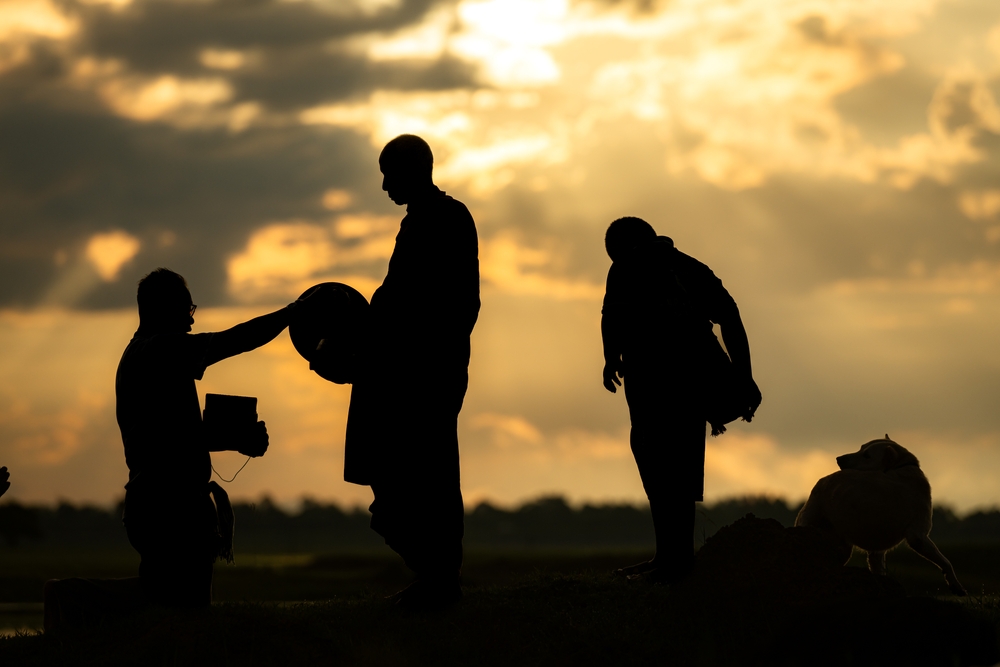
In videos posted to social media, Aloka can be seen running playfully for short stretches or stopping to accept treats and toys offered by supporters. Despite his growing fame, his demeanor never shifts. He remains gentle and unassuming, reinforcing the feeling that his presence is not about attention, but about simply walking alongside others.
Why Aloka’s Story Feels So Timely
The widespread attention surrounding Aloka and the Walk for Peace comes at a moment when many people feel overwhelmed by constant conflict and division. Against that backdrop, the image of monks walking in silence with a calm dog at their side offers something quietly powerful. It suggests that meaningful action does not always require confrontation or spectacle.
Aloka’s presence feels symbolic without being forced. His heart shaped marking, steady pace, and alert but gentle posture mirror the values the monks hope to share. For many followers, he represents patience, trust, and leadership rooted in calm rather than control.
As the pilgrimage continues toward Washington, D.C., Aloka remains a steady figure at the front of the line. He is not simply a viral star, but a living reminder that peace can be practiced through everyday movement. One step at a time, one shared moment at a time, and sometimes through the quiet companionship of a dog who chose to walk the path of peace.