
Your cart is currently empty!
The End of the Corporation for Public Broadcasting After 58 Years
For generations of Americans, public television and radio were not luxuries or background noise. They were teachers, neighbors, and lifelines. From the first lessons in sharing and empathy learned in front of a television set, to calm voices guiding communities through emergencies, public media quietly shaped daily life across the country.
Contents
show
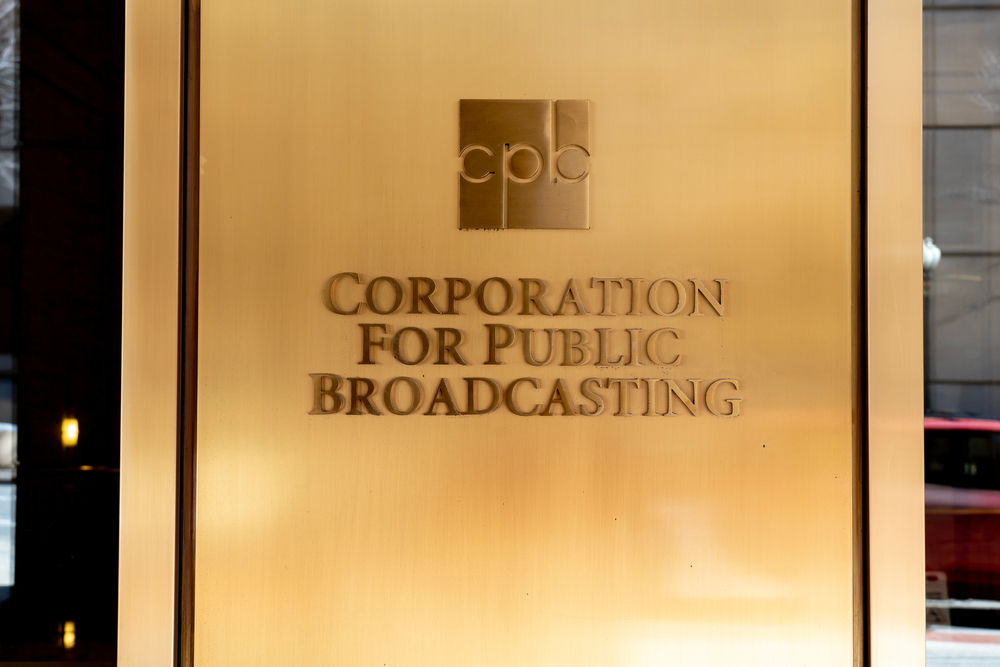
That era has now reached a historic turning point. After 58 years of service, the Corporation for Public Broadcasting has voted to dissolve, closing the organization that helped build and sustain the modern public media system in the United States. The decision follows Congress’s rescission of all federal funding, leaving the nonprofit without the resources required to continue operating.
The closure marks the end of one of the most ambitious cultural and educational projects in modern American history. It also raises deeper questions about what is lost when public institutions designed for the common good disappear.
The Institution That Rarely Sought the Spotlight
The Corporation for Public Broadcasting was never meant to be a household name. Created by Congress under the Public Broadcasting Act of 1967, its role was intentionally quiet and structural. CPB did not produce most of the shows Americans watched or the radio programs they listened to. Instead, it served as a steward, distributing federal funds to more than 1,500 locally owned public radio and television stations across the nation.
Those stations became trusted fixtures in cities, suburbs, and rural communities alike. They delivered local news coverage where commercial outlets often saw little profit. They aired educational programming that commercial television largely abandoned. They preserved regional culture, music, and storytelling that would otherwise have little space in a competitive media marketplace.
For decades, CPB operated on a simple idea. Access to information, education, and culture should not depend on where someone lives, how much money they earn, or whether advertisers see value in their community.
Why the Board Chose to Dissolve
The vote to dissolve CPB was unanimous. According to board members and leadership, the decision was not made lightly. After Congress rescinded forward funded appropriations for fiscal years 2026 and 2027, the organization entered a wind down phase. Most staff were laid off by late September, with a small transition team remaining to handle compliance, financial obligations, and the orderly distribution of remaining funds.
Initially, CPB leadership suggested that a scaled back version of the organization might continue. That possibility ultimately faded. Without resources to fulfill its congressionally mandated responsibilities, CPB leaders concluded that maintaining a nonfunctional entity would not serve the public interest.
They also warned that a dormant and defunded organization could become vulnerable to political manipulation or misuse. In their view, dissolution was a final act of protection, intended to preserve the independence and credibility of public media rather than allow it to erode under constant attack.
The Long Political Road to Defunding

The closure of CPB did not happen overnight. Public broadcasting has faced political opposition almost since its inception. Critics have long argued that taxpayer funding for media is unnecessary or inappropriate, particularly in an era dominated by commercial networks and digital platforms.
That opposition intensified in recent years. Republican lawmakers, backed by the Trump administration, repeatedly accused public broadcasters of political bias and framed funding cuts as fiscal responsibility. In 2025, those efforts culminated in Congress eliminating more than one billion dollars in CPB funding over two years as part of a broader package of spending cuts.
The decision came despite sustained public support for public broadcasting. Polls conducted over several years consistently showed that PBS and NPR ranked among the most trusted media institutions in the country. Surveys also found broad support for continued federal funding, including among voters who otherwise disagreed on major political issues.
The gap between public trust and political outcomes became one of the defining tensions surrounding CPB’s final years.
What CPB Built Over Nearly Six Decades
To understand the significance of CPB’s closure, it helps to look at what it helped create.
Public broadcasting filled gaps that commercial media rarely addressed. Educational programming for children remained a core focus long after cable networks pivoted toward entertainment driven content. Federal studies repeatedly found that public television provided the majority of educational children’s programming in the United States.
CPB funding also supported in depth journalism. Local stations produced investigative reporting on housing, education, healthcare, and government accountability. National programs delivered long form reporting and documentaries that explored science, history, and global affairs without commercial interruption.
Cultural programming flourished as well. Music, theater, literature, and regional storytelling found audiences that might never encounter them elsewhere. Public broadcasting became a place where complexity was not a liability and where audiences were trusted to engage thoughtfully.
What CPB Built Over Nearly Six Decades

Few aspects of CPB’s legacy are as widely felt as its impact on childhood education.
For decades, public television served as an informal classroom, especially for families without access to preschool or expensive educational materials. Shows designed with child development experts helped teach reading, math, emotional intelligence, and social skills.
Parents and educators alike relied on these programs as safe, research based tools that supported early learning. Studies repeatedly showed that children who regularly watched educational public television entered school better prepared academically and socially.
In many homes, these programs were free, reliable, and universally accessible. They did not require subscriptions, high speed internet, or new devices. They simply required turning on a television.
The disappearance of CPB does not immediately erase these programs, but it removes a crucial pillar that supported their creation and distribution.
Rural America and the Uneven Impact

While the closure of CPB affects public media nationwide, rural communities are expected to feel the impact most sharply.
According to CPB data, nearly half of its grantee organizations served rural areas. Many of these stations relied heavily on federal funding to operate. In regions where advertising revenue is limited and donor bases are small, CPB support often made the difference between staying on the air and shutting down.
These stations did more than broadcast national programming. They covered local school board meetings, town councils, and regional issues that rarely attracted commercial media attention. They also played a critical role during emergencies, providing real time information during natural disasters, extreme weather, and public safety crises.
The loss of CPB funding places these services at risk, potentially deepening existing information gaps in communities already experiencing a decline in local journalism.
Public Media in an Age of News Deserts

The closure of CPB comes at a time when local journalism is already under severe strain. Studies have found that one in three counties in the United States lacks a full time local journalist. News deserts continue to expand, leaving communities without reliable coverage of local institutions and events.
Public media has often served as a last line of defense against this erosion. Public radio and television stations stepped in where newspapers closed and commercial broadcasters consolidated.
Without CPB, stations must rely even more heavily on donations, grants, and sponsorships. While some will succeed, others may not. The result could be fewer reporters, less local coverage, and a diminished public understanding of local governance and civic life.
Trust, Independence, and the Public Good
One of CPB’s most significant achievements was fostering trust. In an era marked by misinformation, partisan media, and declining confidence in institutions, public broadcasting consistently ranked among the most trusted sources of news and information.
This trust was not accidental. It was the result of editorial standards, transparency, and a mission oriented approach that prioritized public service over profit. CPB’s structure was designed to insulate public media from direct political interference, allowing journalists and producers to operate with independence.
The dissolution of CPB raises concerns about how that independence will be maintained in the future. Without a central steward, individual stations may face increased pressure from donors, sponsors, or political actors.

The Legal and Institutional Unraveling
In its final months, CPB became entangled in legal disputes that underscored its precarious position. Court filings revealed ongoing tensions between the organization and the Trump administration, including lawsuits involving board members who resisted efforts to remove them.
These conflicts highlighted the vulnerability of public institutions caught between political power and public mission. For CPB’s board, dissolution became a way to close the organization on its own terms rather than allow it to be dismantled through prolonged conflict.
As part of the closure, CPB committed to distributing remaining funds according to congressional intent and ensuring that outstanding obligations, such as music licensing agreements, were addressed. PBS and NPR are expected to manage these agreements going forward.
Preserving a Cultural Record

Although CPB itself is dissolving, its historical record will not disappear.
The organization’s archives, dating back to its founding in 1967, will be preserved in partnership with the University of Maryland and made accessible to the public. CPB will also continue supporting the American Archive of Public Broadcasting, which is digitizing and preserving historic radio and television content.
These archives represent more than nostalgia. They are a record of American life, capturing voices, debates, and stories that shaped the nation over decades. Preserving them ensures that future generations can study and understand the role public media played in education, culture, and democracy.
Can Public Media Survive Without CPB
CPB leaders have emphasized that public media itself is not ending. Local stations, producers, journalists, and educators will continue their work.
PBS and NPR will remain on the air, supported by donations, sponsorships, and other funding sources. Many stations have already adapted to years of political uncertainty by diversifying revenue and strengthening community ties.
Still, the absence of CPB changes the landscape. Federal funding once provided stability and long term planning capacity. Without it, stations face greater financial volatility and may be forced to make difficult choices about programming and staffing.
The long term consequences will likely unfold slowly, unevenly, and largely out of public view.
The Broader Question About National Priorities

At its core, the dissolution of CPB forces a broader reflection on national priorities.
The Public Broadcasting Act of 1967 was rooted in the belief that a healthy democracy requires informed citizens, cultural expression, and educational opportunity. It treated media not only as a marketplace but as a public good.
Over time, that vision increasingly clashed with political and economic pressures that favored privatization, commercialization, and short term cost cutting.
The decision to defund CPB signals a shift away from collective investment in shared civic institutions and toward a model where access to information and education is shaped more by market forces than public commitment.
Voices of Loss and Hope
For many who worked in public media, CPB’s closure feels deeply personal. Staff members who dedicated their careers to public service have seen their positions eliminated. Communities fear losing trusted local voices. Educators worry about fewer resources for children.
At the same time, CPB leaders and supporters continue to express hope. They point to the resilience of public media and the enduring public appetite for trustworthy, educational content.
Some believe that future political shifts could restore federal support or create new models of public investment. Others see the current moment as a test of whether communities will rally to sustain the institutions they value.

Lessons From a 58 Year Experiment
The story of the Corporation for Public Broadcasting is ultimately a story about what a society chooses to build together.
For nearly six decades, CPB demonstrated that publicly supported media could educate children, inform citizens, and enrich culture without chasing profit or political favor. It showed that slow, thoughtful storytelling still had a place in a fast moving world.
Its closure does not erase that legacy, but it does place it firmly in the past.
When a Public Institution Quietly Fades Away
As CPB prepares to file its final dissolution documents and close its doors, the question left behind is not simply what happens to public broadcasting, but what happens to the idea behind it.
The idea was simple and ambitious. That every person, regardless of circumstance, deserves access to knowledge, culture, and trustworthy information.
The Corporation for Public Broadcasting spent 58 years turning that idea into reality. Its absence will be felt not in a single dramatic moment, but in quieter ways over time.
In the end, CPB’s story asks Americans to consider what they value, what they are willing to support, and what they are prepared to lose when public institutions fade away.