
Your cart is currently empty!
Seen From Space, Bitcoin Mining Is Leaving a Heat Signature on Earth

We often talk about the digital world as if it floats above reality, detached from land, air, and consequence, yet every online system still depends on physical energy drawn from the Earth. Most of the time, that connection remains hidden behind screens and interfaces, until something forces it into view. That moment came when satellite imagery over rural Texas revealed an intense concentration of heat radiating from a single site, visible from orbit and impossible to ignore. What looked like a quiet patch of land suddenly told a different story, one where invisible transactions leave visible traces. It invites a simple but unsettling question. If digital currencies exist only as code, why is their presence now being written into the landscape itself?

When Energy Leaves a Trace
Most conversations about technology happen at the level of software, markets, and abstract systems, but occasionally the physical world interrupts that narrative. That is what happened when thermal imagery captured by a satellite operated by SatVu showed an unusually intense heat signature rising from land near Rockdale. The company did not publicly identify the facility, yet the location aligns with operations run by Riot Platforms, widely regarded as the largest Bitcoin mining operation in the United States. What the images revealed was not symbolic or interpretive, but a clear physical imprint of energy use concentrated in one place.
What makes these images especially significant is their level of detail. With a resolution of roughly eleven and a half feet, the thermal data allows analysts to distinguish individual features across the site, including cooling units on rooftops, transformers, and electrical yards. The heat patterns show which systems are actively working and which are idle, offering a rare look at how much power is being drawn at specific moments. This shifts energy consumption from a reported statistic to something observable, grounding the conversation in evidence rather than estimates.

As Thomas Cobti has explained, this kind of thermal monitoring provides a direct view of operational activity as it unfolds, without relying on delayed reports or corporate disclosures. Based on available estimates, the facility consumes around seven hundred megawatts of electricity, roughly equivalent to the power needed to supply about three hundred thousand homes. Seen this way, the satellite images do more than capture industrial activity. They reveal how digital systems depend on constant physical inputs, reminding us that even technologies built on code are sustained by energy that must come from somewhere and leave its mark somewhere else.
When Digital Value Pulls on Real Power
Cryptocurrency often feels removed from daily life, yet every transaction depends on electricity drawn from the same grids that support homes, hospitals, and cities. As digital currencies expand, so does the physical infrastructure behind them. According to McKinsey, investment in large scale computing centers linked to cryptocurrency is projected to exceed $7,000,000,000 by 2030, signaling that what appears abstract on a screen is backed by systems comparable to traditional heavy industry.
The scale of this energy use becomes clearer when translated into familiar terms. Analysts estimate that processing a single Bitcoin transaction can produce a carbon footprint similar to driving a gasoline-powered car for about 1600 miles, roughly the distance between New York City and Dallas. When this level of energy use is repeated millions of times without pause, cryptocurrency begins to resemble a constant industrial operation rather than a lightweight digital network.
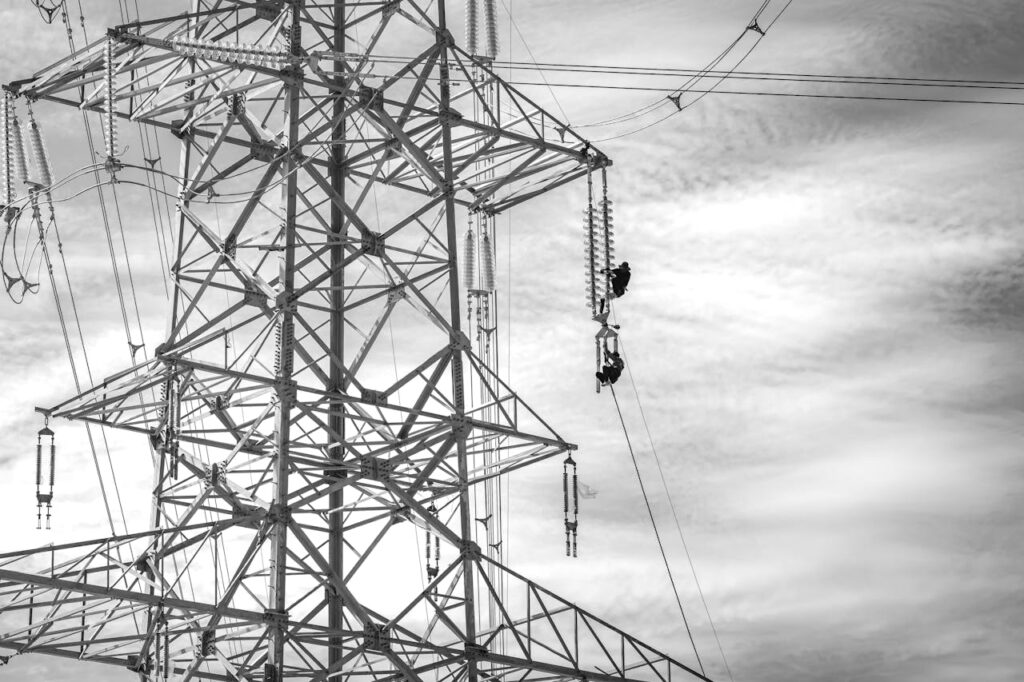
Research from Harvard T.H. Chan School of Public Health underscores this shift. Examining the thirty four largest Bitcoin mining facilities in the United States, researchers found that between mid two thousand twenty two and mid two thousand twenty three, their combined electricity use exceeded that of the entire city of Los Angeles by about one-third. Much of that power came from fossil fuels, linking digital transactions directly to physical emissions and raising questions about how shared energy resources are allocated in an increasingly digital economy.
When Digital Demand Enters the Air We Breathe
Bitcoin mining is often discussed in terms of long term climate impact, but the electricity that powers these operations also affects human health in more immediate ways. Researchers at Harvard T.H. Chan School of Public Health examined cryptocurrency mining through a public health lens and found that mining-related electricity demand is linked to higher exposure to PM2.5, fine particulate matter small enough to penetrate deep into the lungs and enter the bloodstream. Prolonged exposure to these particles has been associated with increased risks of heart disease, certain cancers, and neurological conditions, including dementia.

The study estimates that roughly one point nine million people in the United States are exposed to elevated PM2.5 levels specifically connected to Bitcoin mining. These increases are not limited to the areas where mining facilities operate. Higher pollution levels were observed across major regions such as New York City, the Houston Austin metropolitan area, parts of northeast Texas, and communities near the border between Illinois and Kentucky, reflecting how environmental exposure can spread far beyond its point of origin.
This pattern is driven by the structure of the electrical grid. Bitcoin mining facilities operate around the clock, prompting utilities to increase output wherever generation is available, often from fossil fuel plants. Pollution released at these sites can travel hundreds of miles, carried by wind into neighboring states. The researchers highlighted one example in which a mining operation in North Carolina drew power from a plant in Kentucky, with PM2.5 emissions drifting into Metropolis. In an interconnected energy system, the health consequences of digital activity do not stay local. They move with the air itself.
What This Means for Everyday Communities
Beyond infrastructure and emissions, large-scale cryptocurrency mining increasingly affects the rhythms of everyday life in the places where it operates. In several regions, residents have reported rising electricity prices as industrial demand competes with household use, particularly during periods of high consumption such as heat waves or winter storms. When power grids are pushed to their limits, utilities often pass those costs on to consumers, meaning families may pay more for electricity without directly benefiting from the activity driving demand.
There are also practical strains on local systems that rarely make headlines. Sudden increases in industrial electricity use can force utilities to delay maintenance, rely on older power plants, or prioritize constant demand over flexibility. For communities, this can translate into greater vulnerability during outages, less grid resilience, and fewer options when extreme weather disrupts supply. These effects are not hypothetical. Energy regulators in several states have already raised concerns about how large data centers and mining operations alter local grid stability.

From a human perspective, the issue becomes less about technology itself and more about proximity and consent. Communities living near these facilities often have limited say in how much energy is drawn from shared resources or how environmental burdens are distributed. When digital systems scale quickly, the impacts tend to surface first at the local level, where infrastructure, public health, and household costs intersect.
This makes the conversation around cryptocurrency mining relevant not only to policymakers and investors, but to anyone navigating rising living costs and environmental stress. Understanding how large digital operations shape local realities helps shift the discussion from abstract debates toward practical questions of fairness, accountability, and how shared resources are managed in a rapidly digitizing world.
When the Digital World Touches the Ground
The story of cryptocurrency mining challenges the idea that modern technology exists apart from everyday life. What happens on servers and screens is powered by shared electricity, shaped by physical infrastructure, and carried into the air people breathe. Satellite images, energy data, and public health research all point to the same conclusion. Digital systems leave tangible marks on the world, even when their value feels abstract.
For communities, this reality brings the conversation closer to home. Rising energy demand can affect electricity prices, strain local grids, and shift environmental burdens onto people who have little connection to the technology itself. These impacts are not evenly distributed, nor are they always visible until they reach a scale that can no longer be ignored. When power is redirected toward constant industrial use, it quietly reshapes daily life in ways that deserve attention.

The larger question is not whether digital innovation should continue, but how it fits into shared systems that sustain human and ecological wellbeing. Energy is a common resource, and how it is used reflects collective priorities. As digital technologies grow more powerful, understanding their real world effects becomes essential. Paying attention to where energy flows and who carries the cost may be one of the most grounded ways to decide what kind of future is being built.