
Your cart is currently empty!
Why Space Is Freezing Cold Even Though the Sun Is Incredibly Hot

Look up at the Sun on a clear day and it feels almost impossible to believe that anything touched by its light could be cold. The Sun burns at millions of degrees at its core and pours staggering amounts of energy into the solar system every second. That energy crosses millions of kilometers of space to warm oceans, melt ice, and make life possible on Earth. Yet scientists consistently tell us that space itself is freezing cold.
Contents
show
This apparent contradiction often sparks confusion. If heat from the Sun travels all the way to Earth, why does it not warm the vast space in between. Shouldn’t space be at least somewhat warm if it is constantly flooded with sunlight. At first glance, it feels like something does not add up.
The explanation is not only logical but deeply fascinating. It reveals how temperature works, how heat moves, and why space behaves nothing like the environments we experience on Earth. Once you understand it, the coldness of space starts to make perfect sense.
What Temperature Really Measures
Temperature is often misunderstood as simply how hot or cold something feels. In reality, temperature is a measure of how fast particles are moving inside a substance. The faster atoms and molecules vibrate and collide, the higher the temperature. Slower movement means lower temperature.
On Earth, we are surrounded by air, water, and solid materials packed with trillions of particles. When these particles move faster, we can easily detect the change with our senses or with thermometers. Heat is something we feel because there are countless particles transferring energy to our skin.
Space is fundamentally different. Most of space is a near perfect vacuum. That means there are incredibly few particles present. In some regions of deep space, there may be only a handful of atoms in an entire cubic meter. With so few particles, there is almost nothing there to measure temperature in the usual way.
Because temperature depends on particle motion, space ends up being extremely cold. Not because it actively loses heat, but because it has almost nothing in it that can hold heat at all. In many ways, calling space cold is a shortcut for saying it lacks the particles needed to be warm.
How Heat Moves Through the Universe
On Earth, heat moves in ways we take for granted. Conduction happens when heat flows through a solid object as particles bump into one another. Convection occurs in liquids and gases when warmer material rises and cooler material sinks, spreading heat through motion. These two processes dominate everyday experiences of heat.
Neither conduction nor convection works in space. There is no continuous material connecting one point to another, and there is no atmosphere in most of space to circulate warm and cool regions. Without particles packed together, heat cannot be transferred through physical contact or movement.
The only method of heat transfer that works in space is radiation. Radiation is energy carried by electromagnetic waves, including visible light and infrared heat. Unlike conduction and convection, radiation does not need a medium. It can travel through empty space at the speed of light.
This distinction is critical. Radiation can pass through space without heating it. Heat is only produced when that radiation is absorbed by something with particles that can convert the energy into motion. Space itself simply lets the radiation pass through.

Why Sunlight Warms Earth but Not Space
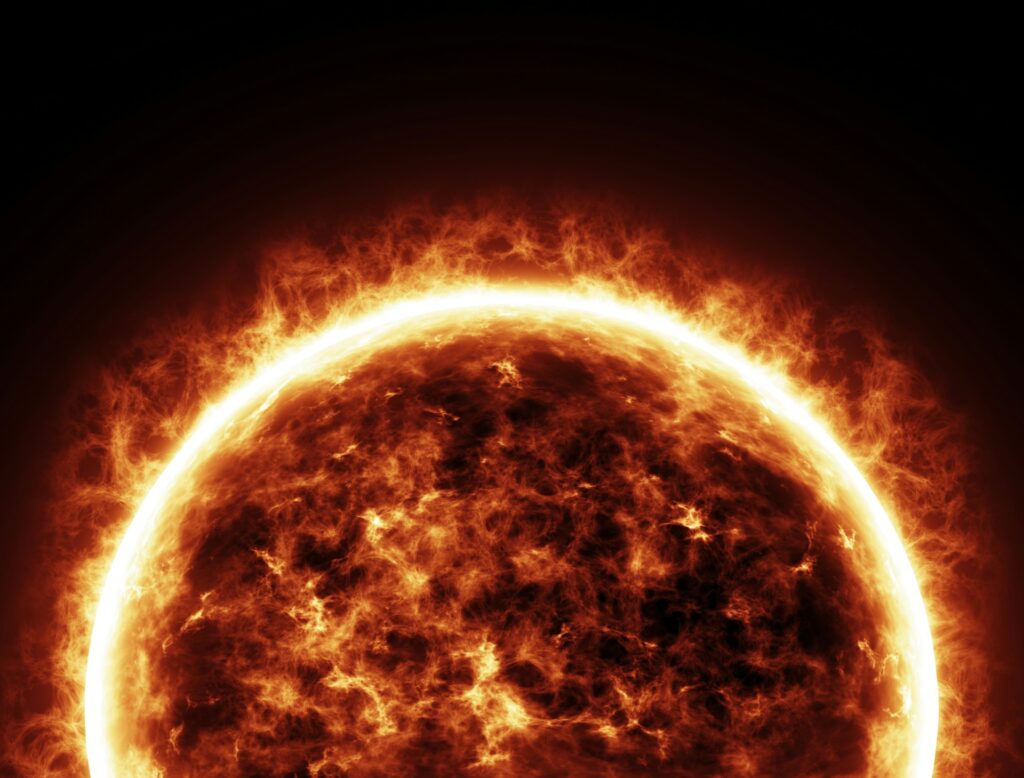
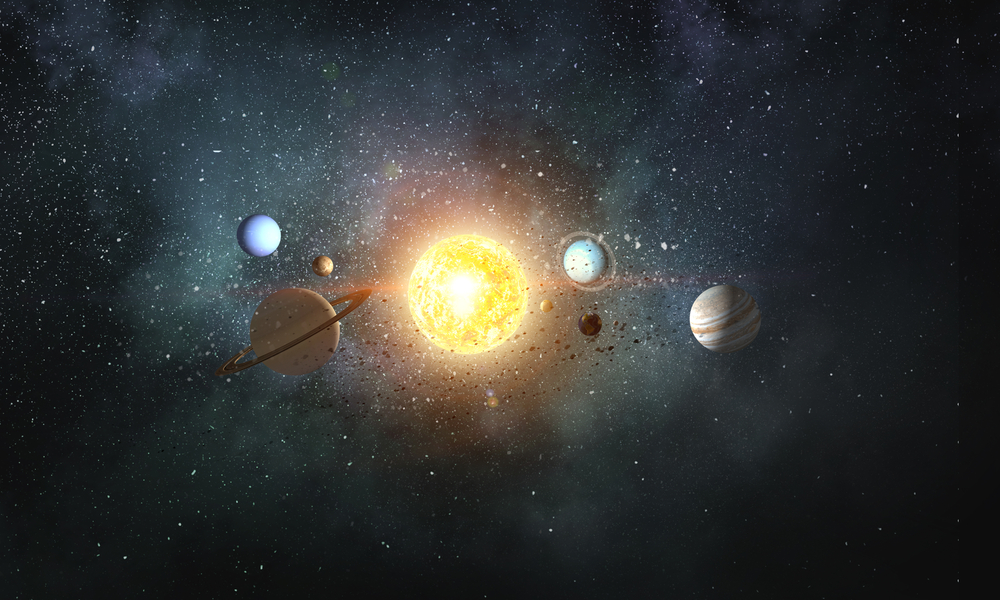
The Sun constantly emits radiation in all directions. That radiation streams outward through space until it encounters an object capable of absorbing it. When sunlight reaches Earth, it strikes the atmosphere, land, and oceans. These materials absorb the energy and their particles begin to move faster.
This increase in particle motion is what we experience as warmth. The ground heats up, the air warms, and energy is redistributed through winds and weather systems. Earth holds onto much of this heat thanks to its atmosphere, which slows the escape of energy back into space.
Space between the Sun and Earth does not absorb much of this radiation. With so few particles present, most sunlight passes straight through without interacting with anything. Since there is nothing to absorb the energy, there is no significant warming.
In simple terms, sunlight does not heat space because there is nothing there to heat. The energy travels through until it finds matter capable of absorbing it. This is why astronauts in orbit can be in sunlight on one side of their spacecraft and extreme cold on the other.
How Cold Is Space Really
When scientists say space is cold, they are usually referring to the background temperature of the universe. This temperature is known as the cosmic microwave background, which is the leftover radiation from the early universe. It measures just a few degrees above absolute zero.
This background temperature exists everywhere in space, even in regions far from stars and galaxies. It represents the minimum temperature anything in the universe can reach unless additional energy is absorbed.
However, temperature in space can vary dramatically depending on location. Near the Sun or inside a cloud of gas, particles can become extremely hot. Individual objects exposed to sunlight can heat up quickly, even while the surrounding space remains cold.
This contrast highlights an important truth. Space is not uniformly cold in every sense. Instead, it is a place of extremes where objects can be incredibly hot or cold depending on their ability to absorb or radiate energy.
Why Astronauts Do Not Freeze Instantly
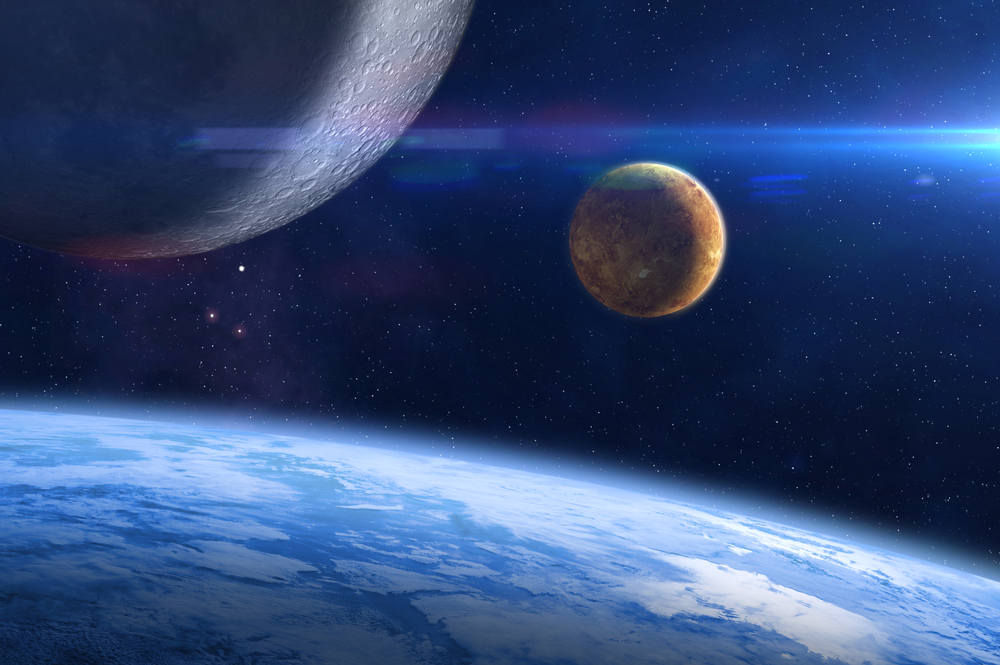
A common myth is that astronauts would instantly freeze in space. While space is cold, freezing does not happen immediately. In fact, without an atmosphere to carry heat away, a human body would initially retain much of its warmth.
In sunlight, an unprotected astronaut would actually overheat rather than freeze. Without air to cool the body through convection, heat would build up quickly. This is why spacecraft and spacesuits are carefully designed to regulate temperature.
On the shaded side, however, heat would slowly radiate away into space. Over time, without protection, the body would lose heat and become dangerously cold. The process is slower than many people imagine, but still deadly.
This balance of heating and cooling through radiation is one of the biggest engineering challenges in space exploration. Managing heat is just as important as shielding from cold.
The Bigger Lesson About Space and Heat
The reason space is cold despite the Sun’s intense heat teaches us a broader lesson about the universe. Heat is not just about energy existing somewhere. It is about how that energy interacts with matter.
Without particles to absorb energy, even the most powerful heat source cannot warm its surroundings. Space acts as a vast highway for energy rather than a storage system for heat. Radiation passes through until it meets something solid enough to stop it.
This principle explains not only why space is cold but also why planets, stars, and galaxies behave the way they do. It underpins everything from climate science on Earth to the formation of stars.
Understanding this concept helps us appreciate how finely balanced our planet is. Earth sits at just the right distance from the Sun, with an atmosphere capable of trapping enough heat to sustain life.
The Science That Brings It All Together
The idea that space is cold while bathed in sunlight feels counterintuitive at first. Yet once you understand temperature, particle motion, and radiation, the mystery fades. Space is cold not because the Sun fails to heat it, but because there is almost nothing there to hold that heat.
Sunlight travels effortlessly through the vacuum, warming planets and people when it finds matter capable of absorbing it. The emptiness in between remains largely untouched. This elegant simplicity is one of the most fascinating aspects of physics.
Next time you feel the warmth of the Sun on your skin, remember that you are experiencing a rare interaction. In the vast silence of space, energy is everywhere, but warmth is something that only matter can create.