
Your cart is currently empty!
Authorities Report Severe Injuries To ICE Agent In Renee Nicole Good Incident

Video footage from January 7 showed Jonathan Ross, a 10-year veteran of Immigration and Customs Enforcement, walking away from a scene in south Minneapolis. He moved toward his vehicle, climbed inside, and drove off. Minutes earlier, his gunshots had ended the life of Renee Nicole Good, a 37-year-old mother of three who had moved to the city just last year.
Contents
show
Yet according to the Trump administration, Ross had come close to death himself that afternoon. Vice President JD Vance claimed the agent “nearly had his life ended.” President Donald Trump went further, stating that “it is hard to believe he is alive.” Such dramatic characterizations seemed at odds with what cameras had captured. And when CBS News published an exclusive report about Ross’s medical condition, the disconnect between official claims and visual evidence sparked not just public skepticism but internal turmoil within one of America’s most storied news organizations.
At stake in this dispute is more than one officer’s health status. Questions about what happened to Ross have become a proxy battle in a larger war over truth, media access, and whether journalism can hold power accountable when that power controls the sources reporters depend upon.
An Anonymous Claim Enters the Record
On January 14, CBS News published a report citing two unnamed US officials briefed on Ross’s medical condition. According to these sources, the ICE agent had suffered internal bleeding in his torso following the January 7 incident. Department of Homeland Security officials confirmed that Ross sustained an injury but declined to provide specifics about its severity or the treatment he received.
Homeland Security Secretary Kristi Noem had already acknowledged that Ross went to a hospital after the shooting. She told reporters on January 7 that he was released the same day. Her account framed Ross as an experienced officer who believed he was defending himself and fellow agents from a woman who had “weaponized her vehicle.”
“The officer was hit by the vehicle. She hit him. He went to the hospital. A doctor did treat him. He has been released,” Noem stated during a press conference hours after Good’s death.
But the CBS report, labeled an “exclusive,” raised immediate questions. If Ross had suffered internal bleeding serious enough to warrant mention by senior government officials, why had he been released from the hospital within hours? Why did video show him walking without apparent difficulty? And why were anonymous officials now emphasizing his injuries more than a week after the shooting?
Inside CBS, Journalists Push Back
Internal emails obtained by The Guardian revealed that some CBS News employees viewed the report with considerable skepticism. Before publication, a medical producer at the network suggested in an email to colleagues that more details were needed about Ross’s treatment and whether he had undergone surgery or any other procedure.
David Reiter, CBS News senior vice president, expressed his own reservations in an email that questioned the broad nature of the medical claim. “I’m no doctor, but internal bleeding is a very broad term and can range in severity,” Reiter wrote. “A bruise is internal bleeding. But it can also be something serious. We do know that the ICE agent walked away from the incident – we have that on camera.”
Reiter’s observation cut to the heart of the matter. Internal bleeding can describe anything from minor soft tissue trauma to life-threatening organ damage. Without specifics about the location, volume, or treatment of such bleeding, the diagnosis itself meant little. A man who walks to his car and drives away has not typically suffered the kind of internal hemorrhaging that threatens life.
Yet CBS News editor-in-chief Bari Weiss expressed a strong interest in the story during an editorial call on Wednesday morning, according to staffers who listened. Her enthusiasm reportedly persisted despite the concerns raised by colleagues.
A CBS News spokesperson defended the publication, stating that the network “went through its rigorous editorial process and decided it was reportable based on the reporting, the reporters, and the sourcing.” Some staffers characterized the internal discussions as standard editorial debates that occur before any sensitive story runs.
Others saw something more troubling.
A Question of Access and Accountability
One anonymous CBS staffer offered a blunt assessment of why the internal bleeding story had generated such friction within the newsroom. “It was viewed as a thinly veiled, anonymous leak by [the Trump administration] to someone who’d carry it online,” the staffer told The Guardian.
A second network employee echoed that concern, suggesting that colleagues believed CBS was “carrying water for the admin’s justifying of the shooting to keep our access to our sources.”
Such accusations touch on one of journalism’s most persistent ethical tensions. News organizations depend on access to government officials for information the public needs. Yet that dependence can create pressure to publish favorable coverage or to amplify official narratives without sufficient scrutiny. When sources remain anonymous, readers cannot evaluate their credibility or potential motives.
In the months since Weiss took over as editor-in-chief in early October, CBS has faced growing accusations of favoritism toward the Trump administration. CBS is now controlled by Paramount Skydance, a media conglomerate with heavy investment from tech billionaire Larry Ellison, who maintains a friendship with President Trump. Critics have pointed to this ownership structure as context for the network’s editorial choices.
Just one day before the internal bleeding report ran, CBS News anchor Tony Dokoupil secured an exclusive interview with Trump. During that conversation, the president claimed Dokoupil would not have been made anchor of the CBS Evening News if Kamala Harris had won the 2024 election. When Dokoupil pushed back, Trump conceded that perhaps he might have, “but at a lesser salary.”
Other Outlets Approach with Caution
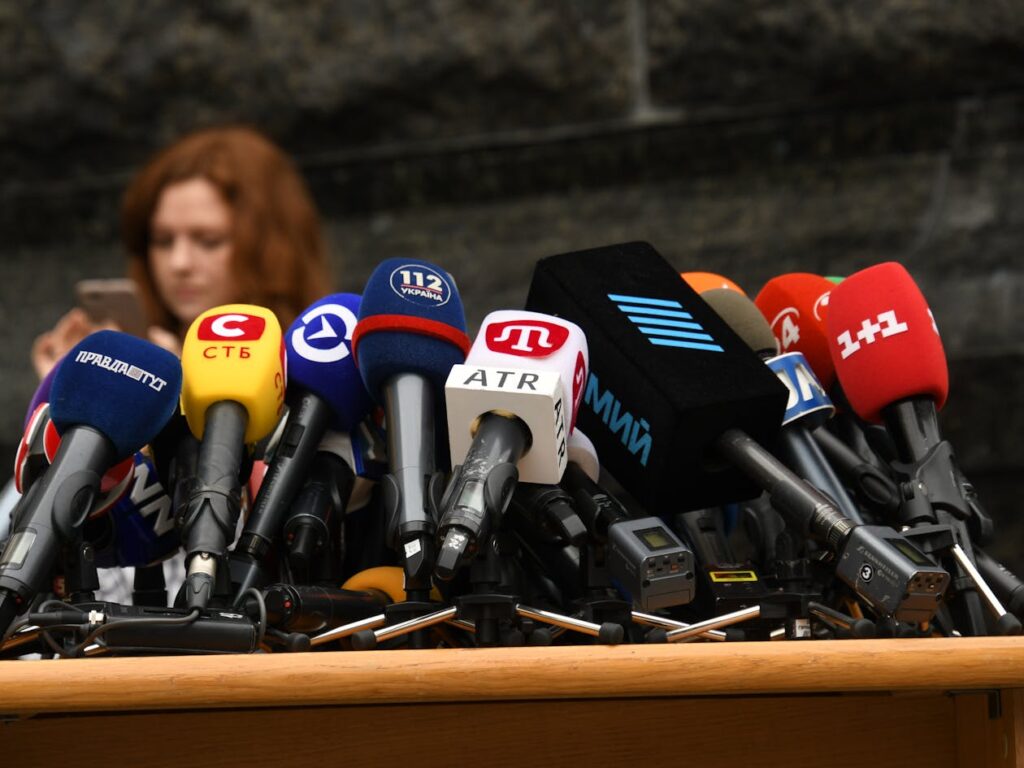
CBS did not stand entirely alone in reporting on Ross’s alleged injuries, but other news organizations handled the claim with greater circumspection. ABC News published a brief update on its live blog repeating the allegation and citing “multiple US officials familiar with his medical condition.” However, the network noted that these officials “didn’t provide more details about the medical condition.”
NBC News and The New York Times made only passing mention of the claim without extensive coverage. Fox News published a full story citing confirmation from DHS spokesperson Tricia McLaughlin but acknowledged that “the extent of the bleeding was not immediately clear.”
The Guardian stated that it had not independently confirmed the report about Ross’s injuries.
Such hedging reflected broader uncertainty about what had actually happened to Ross and whether the administration’s characterization of his condition matched reality. When multiple news organizations decline to fully commit to a story that a competitor has labeled exclusive, it often signals doubt about the underlying facts.
Threats Force Ross into Hiding
Whatever the true extent of his injuries, Jonathan Ross now faces consequences beyond physical recovery. US Border Patrol Commander Gregory Bovino told CBS News in an interview that Ross “has had several threats against his life,” adding, “he’s in a safe location. He’s recovering from those injuries, and we’re thankful that he’s recovering.”
Ross has not returned to work since January 7. Officials have not specified whether his absence stems from his injuries, the ongoing investigation, security concerns, or some combination of factors.
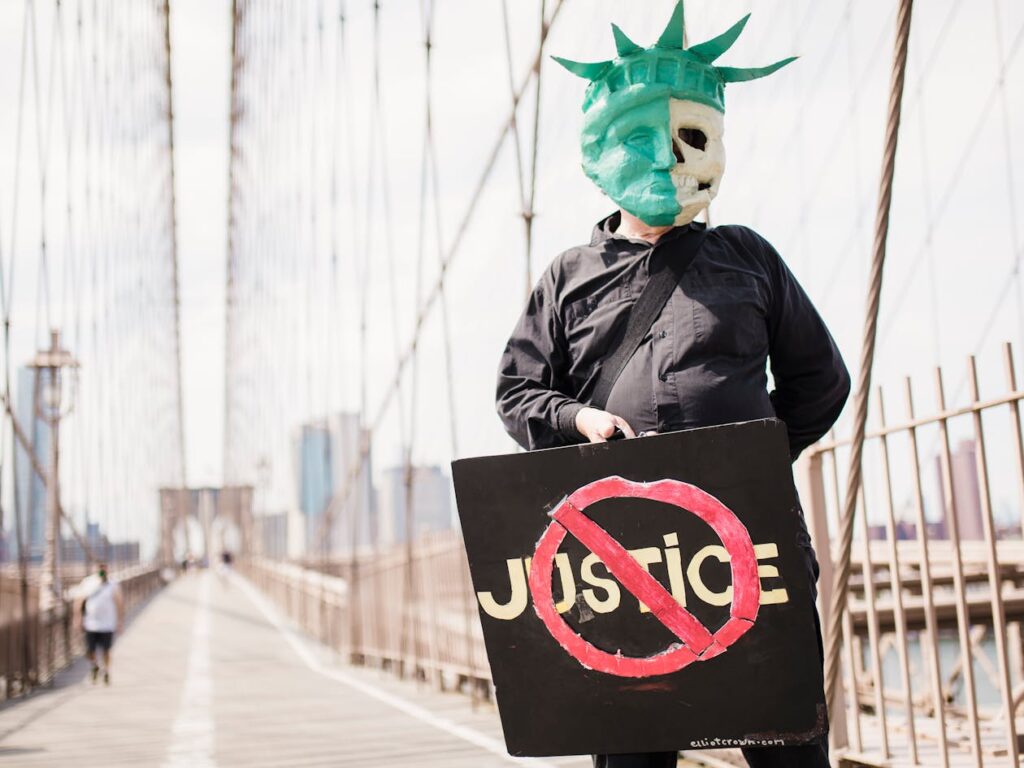
Good’s death ignited protests across multiple American cities. Demonstrators have carried signs reading “Justice for Renee” while actors Mark Ruffalo and Wanda Sykes wore badges referencing ICE and Good’s death at the Golden Globe awards ceremony. Ruffalo told USA Today that his “BE GOOD” pin was “for Renee Nicole Good, who was murdered.”
Such intensity of public response has made Ross a target for those who view Good’s shooting as an act of state violence against an innocent woman. His name, once unknown to the public, now carries weight as a symbol in a national debate about immigration enforcement and the use of lethal force.
A Pattern of Violent Encounters
Court records reveal that the January 7 incident was not Ross’s first violent encounter in the Minneapolis area. In June, he suffered serious injuries during a separate attempted arrest when a suspect dragged him with a car. That incident required 33 stitches and hospital care.
Such history adds complexity to any assessment of Ross’s actions on January 7. An officer who has previously been injured by a vehicle might react more quickly to perceived threats involving cars. Whether such heightened vigilance constitutes reasonable caution or excessive force depends heavily on the specific circumstances of each encounter.
Minneapolis Mayor Jacob Frey has made clear where he stands. After reviewing video of Good’s death, Frey called the administration’s account of events “bullshit” and described Ross as “an agent recklessly using power that resulted in somebody dying, getting killed.”
An Investigation Without Local Input
FBI agents are now leading the investigation into Good’s death. Minnesota law enforcement officials have said they were blocked from accessing evidence, a decision that has frustrated state leaders who believe local involvement would produce a fairer outcome.
Governor Tim Walz, a Democrat, expressed concern during a press conference about the investigation’s structure. “It feels now that Minnesota has been taken out of the investigation, it feels very, very difficult that we will get a fair outcome,” he stated.
Good lived just a few blocks from where she died. Her neighborhood sits about one mile from the intersection where George Floyd was murdered by a Minneapolis police officer in 2020, sparking worldwide protests against police violence and racial injustice.
Her widow, Becca Good, has urged those angered by her wife’s death to honor her memory through compassion rather than hatred. “Renee lived by an overarching belief: there is kindness in the world and we need to do everything we can to find it where it resides and nurture it where it needs to grow,” Becca Good told Minnesota Public Radio.
Family members have asked the public to focus on “humanity, empathy, and care for the family most affected” rather than engaging in the heated political rhetoric that has surrounded the case. Good’s sister-in-law Jessica Fletcher told The Guardian that the family wanted to avoid “pouring more gasoline on the fire.”
Truth Remains Contested
More than a week after Renee Nicole Good’s death, basic facts about what happened on January 7 remain in dispute. Administration officials describe a domestic terrorist who weaponized her vehicle and nearly killed a federal agent. Minneapolis city leaders describe an unarmed woman shot to death by a reckless officer. Video footage shows moments of the confrontation but leaves room for competing interpretations.
Into this contested terrain, CBS News introduced a medical claim that some of its own journalists viewed with suspicion. Whether Ross truly suffered significant internal bleeding or merely sustained minor trauma remains unclear. What has become clear is that the fight over narrative control extends beyond politicians and activists into the newsrooms tasked with informing the public.
For Good’s three children, now left without their mother, such debates offer little comfort. For Ross, now in hiding from those who wish him harm, vindication through anonymous sourcing provides cold solace. And for Americans trying to understand what their government does in their name, the fog of competing claims grows thicker with each passing day.