
Your cart is currently empty!
Nuclear Historian Reveals 15 US Cities Most Likely Targeted in World War III
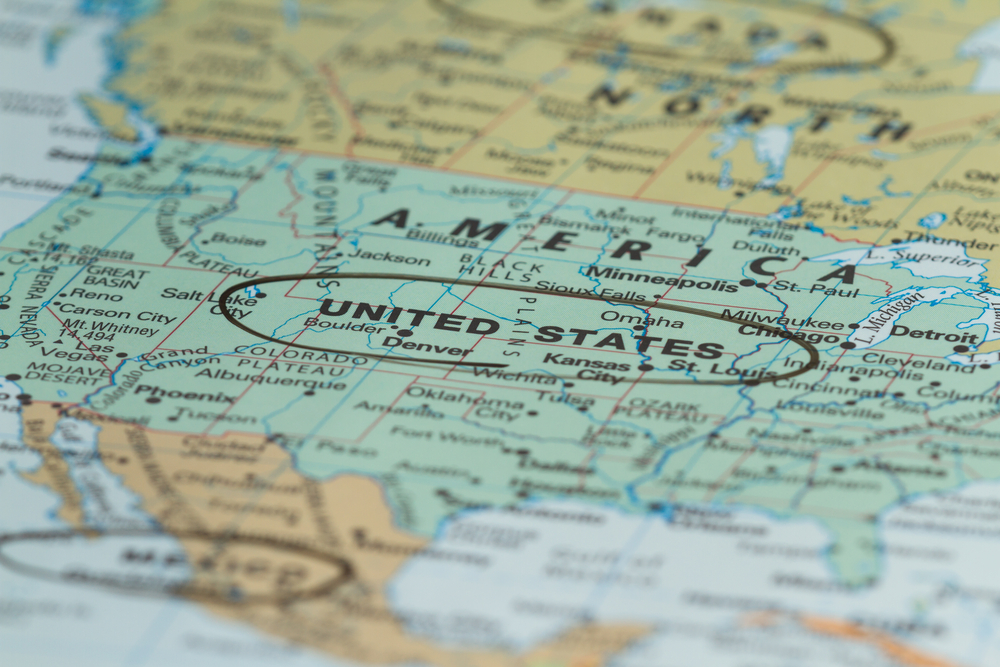
Most Americans picture New York or Washington when they imagine a nuclear attack on US soil. Skyscrapers crumbling, monuments reduced to ash, millions of lives lost in an instant. Yet nuclear strategists and military historians paint a far different picture of how such a conflict might unfold.
Contents
show
Some of America’s smallest cities sit squarely in the crosshairs. Remote towns in Montana, Wyoming, and Utah could face destruction before a single bomb ever reached Manhattan. And for those living in these communities, geography has made them targets in a war they never asked to fight.
Alex Wellerstein, a nuclear historian and professor at Stevens Institute of Technology, explained how different adversaries would approach an attack on American soil. “If the adversary is Russia and their goal is to disable US retaliation, command centers and ICBM sites will be hit first,” he told the Daily Mail. “If the attacker is a rogue actor, symbolic or densely populated areas might be targeted instead.”
His analysis suggests that population alone does not determine which cities face the greatest danger. Military assets, command infrastructure, and strategic geography all factor into the equation. What follows is a closer look at fifteen American cities that experts believe would face early strikes in a global nuclear conflict.
1. Great Falls, Montana
Great Falls has a population of just 60,422. Residents enjoy mountain views, clean air, and relative isolation from major metropolitan chaos. Few would guess their small city ranks among the likeliest nuclear targets in America.
Malmstrom Air Force Base sits just miles away, controlling hundreds of nuclear missile silos. Any adversary seeking to neutralize American retaliatory capacity would need to eliminate these silos early in a conflict. Long distances between population centers, cold weather, and limited roads make emergency evacuation slow and dangerous for Montana residents.
2. Cheyenne, Wyoming
A ten-hour drive south from Great Falls brings you to Cheyenne, another small city with outsize strategic value. Francis E Warren Air Force Base operates within its borders as a key command center for US nuclear missile operations.
Cheyenne has been part of America’s “nuclear sponge” since the Cold War, a grim term describing regions designed to absorb enemy strikes before they reach larger population centers. With just 66,000 residents, evacuations here are complicated by surrounding mountains and sparse transportation options. Rural communities would struggle to move large numbers of people on short notice.
3. Ogden and Clearfield, Utah
Utah’s Wasatch Front offers stunning mountain scenery and a suburban quality of life that attracts families from across the country. It also houses one of America’s most important military installations.
Ogden and Clearfield sit near Hill Air Force Base, which supports the Air Force Nuclear Weapons Center. Combined, these cities are home to over 121,000 residents. Despite mountain views and suburban charm, evacuating would prove difficult because of the mountainous surroundings and limited main roads. Highways could jam within minutes of any warning.
4. Albuquerque, New Mexico
New Mexico’s largest city is home to 557,198 people and Kirtland Air Force Base, which holds one of the largest stockpiles of nuclear weapons in the US arsenal. Desert scenery draws tourists and retirees alike, but military planners see something else entirely.
Desert terrain and a sprawling urban layout would slow any mass evacuation to a crawl. Infrastructure struggles with sudden, large-scale movements of people, leaving residents vulnerable if warnings come with little lead time.
5. Shreveport, Louisiana
Shreveport rarely makes national headlines. Yet military planners in Moscow, Beijing, and Tehran have almost certainly circled it on their maps.
Barksdale Air Force Base hosts B-52 bombers capable of delivering nuclear strikes anywhere on the globe. With a population of around 172,033, Shreveport’s proximity to the base makes civilian casualties very likely in any attack. Residents live just six miles from runways where nuclear-armed aircraft stand ready around the clock.
6. Omaha, Nebraska
Omaha played a central role during the Cold War and retains that status today. Offutt Air Force Base, located just south of the city, serves as a top-level command site for nuclear operations. About 486,051 people call Omaha home.
Flat plains and harsh winter weather create their own evacuation challenges. Roads can become impassable during storms, and shelter options remain limited for a city of its size. Any attack during the winter months would compound survival difficulties for fleeing residents.
7. Colorado Springs, Colorado
Nearly half a million residents live in Colorado Springs, sharing their city with a concentration of military assets few American cities can match. At the foot of the Rockies sits the North American Aerospace Defense Command, known as NORAD, along with Peterson Space Force Base and military satellite operations.
NORAD defends the airspace over both the United States and Canada, making it an obvious early target. Mountainous terrain makes evacuation extremely difficult, with sparse civilian shelters and limited exits creating conditions for gridlock during any emergency.
8. Honolulu, Hawaii
Pearl Harbor lives in American memory as the site of a devastating surprise attack. Eight decades later, Honolulu remains one of the most exposed cities in the nation.
Several major military installations call the island home, including Pearl Harbor and Hickam Air Force Base. With around 350,429 residents densely packed on the island and 2,500 miles of ocean separating them from California, escaping quickly would be nearly impossible. Paradise could become a trap with no way out.
9. Seattle, Washington
More than 767,060 people live in Seattle near Naval Base Kitsap, a major submarine and nuclear weapons facility. Seattle also functions as a global tech hub and major seaport, adding layers of strategic importance that military planners cannot ignore.
Mountains and waterways surround the city, leaving only a few exits on land. Any warning of incoming missiles would trigger a chaotic rush toward limited escape routes, with geography working against survival.
10. San Francisco, California
San Francisco presents an attractive target with 842,000 residents, major tech operations, and busy port facilities. Water and mountains box in the city on multiple sides, creating natural barriers that complicate emergency planning.
Bridges would clog quickly during any evacuation attempt, with few alternate routes available. Getting millions of Bay Area residents to safety would require time that a missile attack simply would not provide.
11. Houston, Texas
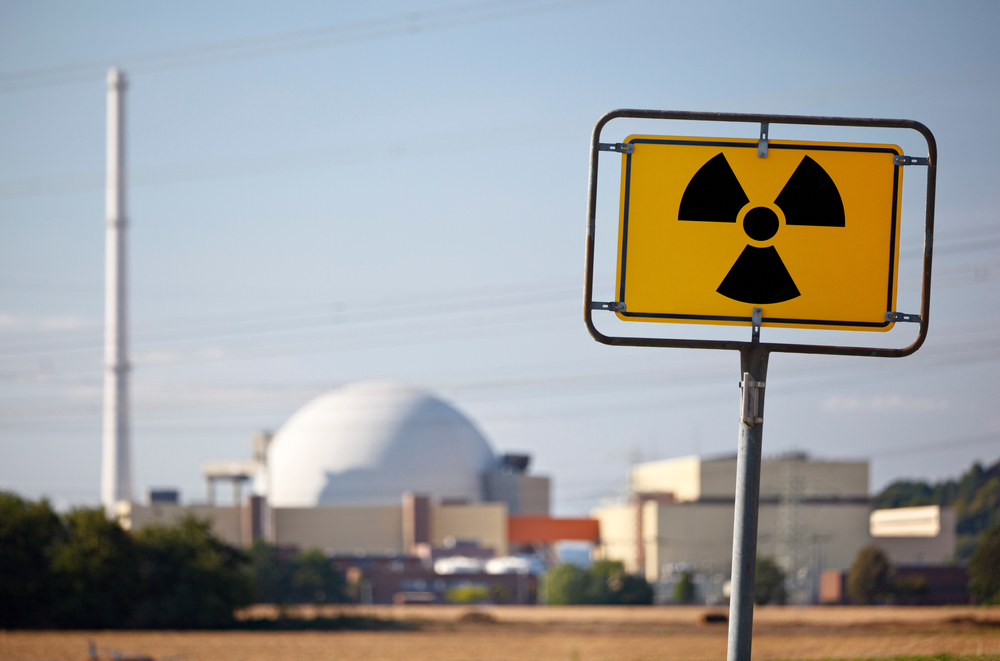
Houston powers much of the American economy. With 2.3 million people, the city serves as the US energy capital, home to oil refineries, shipping ports, and a nearby nuclear power plant. Any strike here would send ripples across the entire country.
Evacuating the region would prove nightmarish, as roads are congested even on regular days. Hurricane season has already shown how difficult mass evacuations can be when millions try to leave at once.
12. Los Angeles, California
Los Angeles now tops 3.7 million residents, making it America’s second-largest metropolitan area. Major ports, tech companies, media operations, and defense industry sites all call Southern California home.
Evacuating Los Angeles could prove a near-impossible task. Chronically jammed freeways and strained public transportation would buckle under emergency conditions. City planners have long struggled to develop realistic scenarios for moving millions of people on short notice.
13. Chicago, Illinois
America’s third-largest city has nearly 2.7 million residents within city limits and roughly 9.6 million in its greater metro area. Four nuclear power plants surround the region, and Chicago serves as a national transportation hub connecting east and west.
Lake Michigan borders the city to the east, eliminating escape routes in that direction. Dense urban development and aging roadways could make remaining exits unreliable during a crisis.
14. Washington, D.C.

About 684,394 residents share their city with the White House, Congress, and the Pentagon. As the seat of both political authority and military command, the capital would rank among first-strike priorities in any nuclear exchange.
No serious analysis of American vulnerability can overlook Washington. Every adversary with nuclear capability has likely planned strikes against the political heart of the nation.
15. New York City
New York City remains the most obvious target on any list. With 7.9 million people, Wall Street, the United Nations, and major media outlets, a strike here would prove both devastating and visible worldwide. It’s the kind of target meant to send a global message.
Manhattan’s density and limited exit points would make evacuation catastrophic. Bridges, tunnels, and transit systems would be overwhelmed within minutes of any warning.
What Geography Reveals About Risk
A pattern emerges across all fifteen cities. Military proximity matters as much as population, and sometimes more. Towns with fewer than 70,000 residents face destruction because missile silos and bomber bases sit within their borders.
Mountain ranges, waterways, desert terrain, and aging infrastructure all limit how quickly Americans could flee danger zones. Even cities with warnings might struggle to move their populations to safety.
For residents of Great Falls or Cheyenne, Shreveport or Omaha, the calculus of nuclear war feels far more personal than abstract geopolitical tensions might suggest. Their cities exist on maps drawn by strategists who see not homes and schools and churches, but targets.