
Your cart is currently empty!
How a Spanish Lab Made Pancreatic Tumors Disappear in Mice Without Triggering Resistance
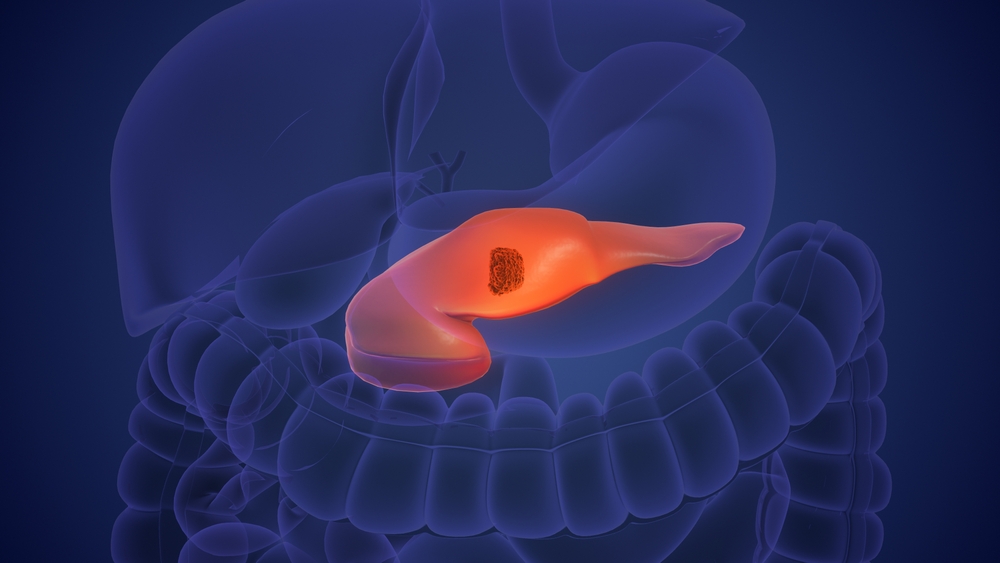
Pancreatic cancer has humbled modern medicine for half a century. Drugs that worked against other cancers failed here. Promising treatments crumbled within months. Patients and families watched survival statistics barely budge while breakthroughs in other oncology fields made headlines.
Contents
show
Something different happened in a Spanish laboratory. Researchers at Spain’s National Cancer Research Centre, known as CNIO, have eliminated pancreatic tumors in mice using a combination of three drugs. Animals that would have died within weeks remained cancer-free for over 200 days. No tumors returned. No resistance emerged.
Before anyone gets ahead of themselves, a clear disclaimer belongs at the top of any discussion about these findings. Mice are not humans. Laboratory success does not guarantee clinical success. Years of work remain before patients might benefit from anything resembling what worked in these experiments.
Yet after decades of near-total stagnation, pancreatic cancer research has produced results that demand attention. And understanding why requires grasping just how stubborn this disease has proven to be.
One Target Was Never Enough
Pancreatic ductal adenocarcinoma accounts for most pancreatic cancer cases. It kills with ruthless efficiency. Fewer than 10 percent of patients survive five years after diagnosis. In Spain alone, doctors diagnose more than 10,300 new cases each year.
A mutated gene called KRAS drives roughly 90 percent of these cancers. For decades, scientists considered KRAS “undruggable” because its molecular structure offered no obvious place for medications to grab hold. A discovery in 2013 changed that, revealing a small pocket in the KRAS protein where inhibitors could bind.
By 2021, drugs targeting specific KRAS mutations had reached patients. Hope flickered. Then reality set in.
Tumors treated with single KRAS inhibitors shrank at first. Patients improved. But within months, cancer cells found workarounds. Resistance developed. Tumors returned with a vengeance. What looked like progress became another dead end.
Mariano Barbacid, head of the Experimental Oncology Group at CNIO, had spent decades studying KRAS. He understood the resistance problem better than most. His team decided that hitting KRAS at one point would never be enough. Cancer cells adapt too well. Block one pathway, and they activate another. Shut down one escape route, and they find two more. What if researchers blocked three escape routes at once?
How a Triple-Drug Combination Works

Barbacid’s team built its strategy around a simple concept. A beam fixed to a ceiling at three points holds far stronger than one fixed at a single point. Apply that logic to cancer treatment. Attack the KRAS signaling network at three separate locations, and tumor cells might have nowhere left to run. Executing that idea required finding the right combination of drugs.
Daraxonrasib, an experimental KRAS inhibitor, formed the foundation. Unlike earlier drugs that targeted only specific KRAS mutations, daraxonrasib blocks multiple KRAS variants. It attacks the primary engine driving tumor growth.
Afatinib, already approved for certain lung cancers, added a second layer of attack. It blocks EGFR and HER2 receptors, which sit upstream in the signaling chain that KRAS uses to promote cancer growth. When KRAS gets blocked, tumors often rely on these receptors to maintain their survival signals. Afatinib cuts that lifeline.
SD36, a protein degrader, completed the trio. When researchers blocked both KRAS and EGFR in earlier experiments, they noticed something troubling. A protein called STAT3 became activated. Tumors were using STAT3 as a backup survival mechanism. SD36 destroys STAT3 before it can rescue cancer cells from the other two drugs.
All three drugs needed to work together from the start. Sequential treatment failed. Cells that developed resistance to daraxonrasib alone could not be rescued by adding afatinib and SD36 later. Timing mattered as much as the combination itself.
Results Across Mouse Models

Researchers tested their triple therapy across three different mouse models of pancreatic ductal adenocarcinoma. Each model mimics different aspects of how the disease develops and progresses in humans. Consistent results across all three would suggest the findings were not a fluke limited to one particular experimental setup. Tumors regressed completely in every model. Not partially. Not temporarily. Completely.
Animals remained cancer-free for over 200 days after treatment ended. No resistance emerged during that observation period. Careful examination of pancreatic tissue at the end of the experiments revealed no trace of tumor cells. Even the stromal tissue that typically surrounds pancreatic tumors had vanished, suggesting that this supportive matrix depends entirely on living cancer cells to sustain itself.
Equally important was what did not happen. Mice tolerated the triple therapy without significant toxic side effects. Blood counts remained normal. Organs showed no damage. Weight stayed stable. Many aggressive cancer treatments fail not because they cannot kill tumors but because they devastate the patient along the way. Barbacid’s combination avoided that trap, at least in mice.
As researchers noted in their paper published in Proceedings of the National Academy of Sciences, “This study describes a triple combination therapy that induces the robust regression of experimental PDACs and avoids the onset of tumor resistance.”
Why Resistance Develops and How Scientists Blocked It
Understanding why the triple therapy worked requires understanding why single-drug approaches fail.
Cancer cells operate like criminal organizations facing a crackdown. Block their main operation, and they shift to side businesses. Target those side businesse,s and they find new revenue streams. Survival is their only goal, and they will exploit any pathway left open.
When researchers blocked KRAS and EGFR together in earlier experiments, tumors activated STAT3 through a protein called FYN. STAT3 normally helps regulate cell growth and survival. Hijacked by cancer, it becomes another engine of proliferation. Tumors that lost access to KRAS and EGFR signaling survived perfectly well as long as STAT3 remained active.
Genetic experiments confirmed the importance of all three targets. Eliminating any two of the three still allowed cancer cells to survive. Only when all three were removed simultaneously did tumors die. Expression of just one of the three signaling nodes was enough to keep cancer cells alive.
Patient-derived tumor models showed similar results. Human pancreatic cancer cells transplanted into mice responded to triple therapy with complete regression. Tumors disappeared within 60 days. No relapses occurred within 80 days of observation. Different KRAS inhibitors produced comparable outcomes, suggesting that the strategy does not depend on any single drug but rather on the principle of multi-target attack.
Clinical Trials Remain Years Away

Barbacid has been clear about the distance between laboratory success and patient treatment. “We are not yet in a position to carry out clinical trials with this triple therapy,” he stated, emphasizing that optimizing such complex combinations for human use will take considerable time and effort. Several practical obstacles stand in the way.
Afatinib doses used in mice far exceeded what regulators have approved for human use. At 20 milligrams per kilogram of body weight, mice received roughly 33 times the dose typically given to lung cancer patients. Whether lower doses would work remains unknown. Whether higher doses would prove safe in humans is equally uncertain.
SD36, the STAT3 degrader, lacks the pharmaceutical properties needed for clinical development. It must be injected rather than swallowed. Its behavior in the human body has not been characterized. Better STAT3 degraders, ideally ones that patients could take as pills, will need development before clinical trials become feasible.
Alternative approaches tested by the research team hit dead ends. Dasatinib, an approved drug that blocks the SRC family of proteins, including FYN, caused fatal gastrointestinal bleeding when combined with daraxonrasib and afatinib. Related drugs produced similar toxicity, suggesting the problem was fundamental rather than specific to one medication.
Replacing afatinib with cetuximab, an antibody that blocks EGFR, also failed. Blocking EGFR alone was not enough. Afatinib’s additional activity against HER2 appeared necessary for the combination to work.
What Patients and Families Should Know Now
Anyone facing a pancreatic cancer diagnosis today will not receive the triple therapy described in this research. Standard treatments remain unchanged. Surgery, chemotherapy, and newer targeted therapies continue to represent the best available options.
Researchers have not found a cure for pancreatic cancer. What they have demonstrated is that resistance, long considered inevitable, can be engineered out of a treatment strategy under laboratory conditions. Tumors that would have escaped single-drug therapy found no exit when three pathways were blocked simultaneously.
As the CNIO team wrote, these results “open the road to design novel combination therapies that may improve the survival of PDAC patients.”
Note the careful language. May improve. The road is open. Walking that road will require years of additional work.
Better Drugs Needed Before Human Trials Begin

Scientists will work to optimize drug combinations that human bodies can tolerate. Development of better STAT3 degraders stands as an immediate priority. Oral medications that patients could take at home would be far more practical than injections requiring clinical visits.
EGFR inhibitors or degraders with better safety profiles than high-dose afatinib need exploration. Whether genetic elimination of EGFR, which mice tolerated well, can be mimicked pharmacologically in humans remains an open question.
Combination approaches validated in this research may inform strategies for other cancers driven by KRAS mutations, including certain lung and colorectal cancers. Principles learned from pancreatic cancer experiments could have applications beyond the specific disease studied.
No timeline exists for human trials. Researchers have demonstrated proof of concept, not a finished treatment. Translating laboratory findings into patient care has defeated promising therapies before and will likely defeat some that look promising today.
Yet something has shifted in how scientists think about this disease. For 50 years, pancreatic cancer seemed to win every fight through sheer adaptability. Block one pathway, and it found another. Target one weaknes,s and it revealed none.
Barbacid’s team showed that adaptability has limits. Close enough escape routes simultaneously, and even pancreatic cancer cells cannot survive. Whether that principle can translate into treatments that save human lives remains uncertain. But after half a century of frustration, researchers are asking a different question than before. Not whether pancreatic cancer can be beaten in principle, but how to bring what works in mice to people who need it.
That shift, modest as it sounds, represents real progress in a field that has known precious little.