
Your cart is currently empty!
Ancient Bear Discovered in Siberian Permafrost Leads Scientists to Rethink Initial Conclusions
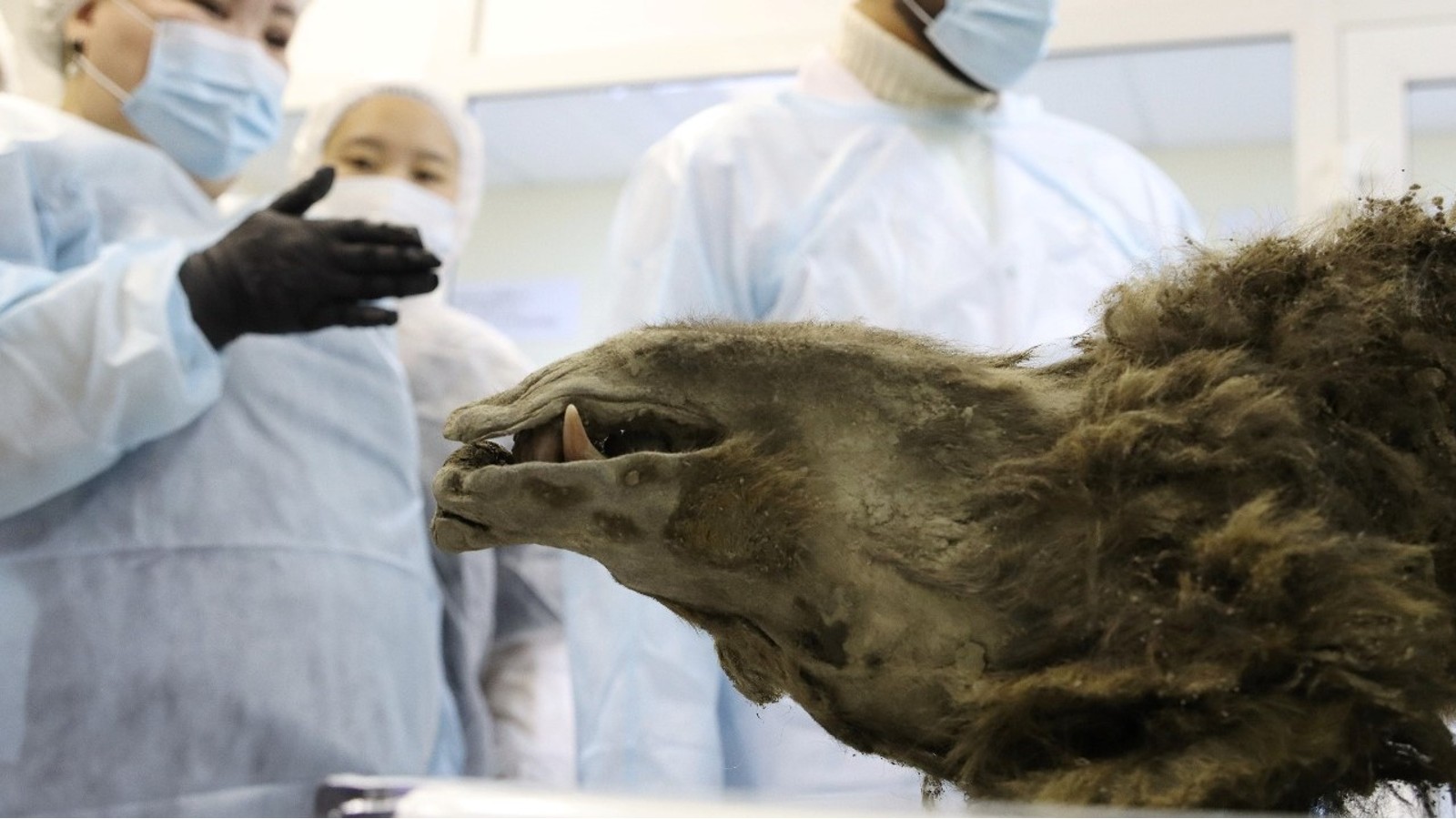
In one of the most remote corners of the planet, where human presence is sparse and the environment has long resisted intrusion, a discovery quietly challenged what scientists thought they knew about the deep past. As Arctic ground begins to thaw, remains that were once locked away are appearing with an unexpected level of preservation, offering rare opportunities for study. These findings are not the result of planned excavations, but of chance encounters that raise as many questions as they answer.
Contents
show
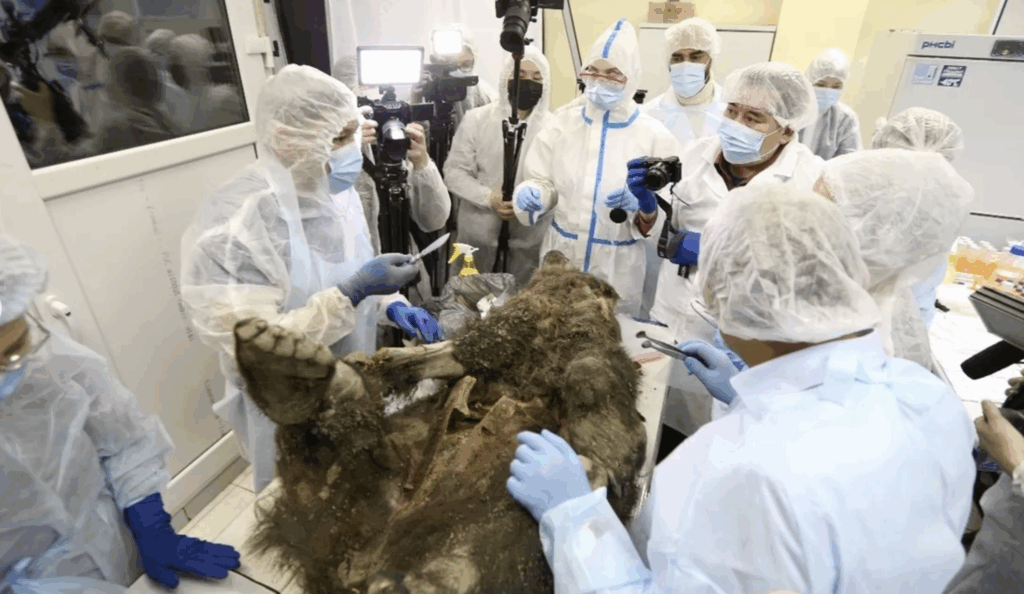
That sense of uncertainty surrounded the discovery of a remarkably well preserved bear on Bolshoy Lyakhovsky Island. Initial assessments suggested something extraordinary, even unprecedented, prompting global attention. But as further analysis unfolded, the story shifted in important ways. What followed became less about a single dramatic find and more about the process of science itself, where early conclusions are tested, refined, and sometimes overturned as new evidence comes to light.
A Remote Discovery That Reframed the Conversation
The bear was found on Bolshoy Lyakhovsky Island, a sparsely populated stretch of land in the East Siberian Sea where frozen ground has preserved traces of past life for thousands of years. This region is known among scientists for its ability to protect biological material far beyond what is possible in most environments. When remains surface here, they often do so with a level of detail that allows researchers to move beyond speculation and examine physical evidence directly.
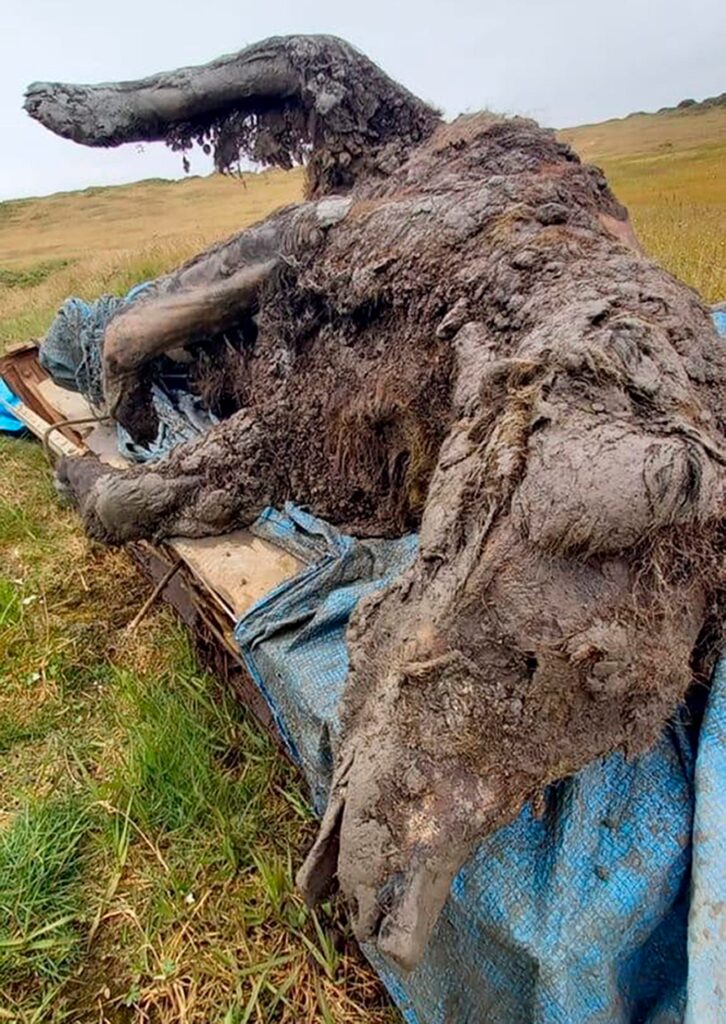
The discovery itself did not come from a formal expedition. Reindeer herders traveling across the island were the first to encounter the exposed carcass and quickly recognized that it was unusual. They contacted researchers at North Eastern Federal University in Yakutsk, who were struck by the condition of the animal. The bear still retained its skin and fur, along with a preserved nose, teeth, claws, body fat, and internal organs. Such completeness is rare and immediately suggests that the remains were not recent.
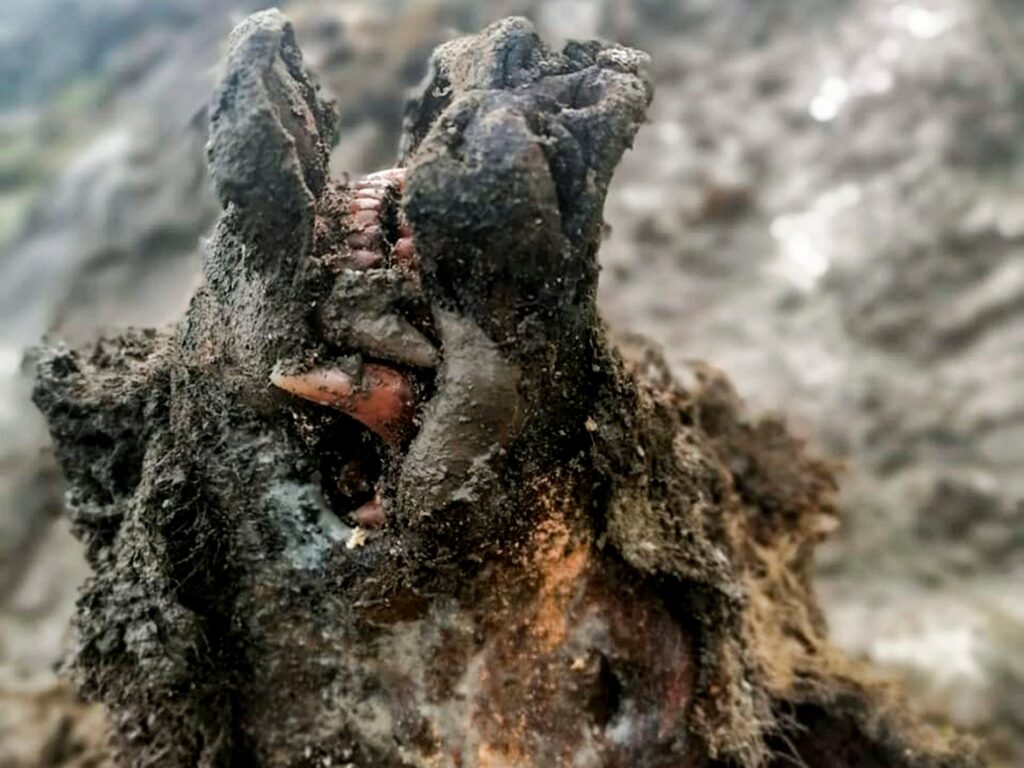
When scientists began examining the carcass in 2020, the most reasonable conclusion was that it belonged to an extinct cave bear, Ursus spelaeus. Cave bears lived during the last Ice Age, disappeared roughly 22,000 years ago, and were significantly larger than modern bears while remaining closely related to brown and polar bears. Early age estimates placed the remains between twenty two thousand and nearly forty thousand years old, a range that would have made this the first fully preserved cave bear ever identified.
In a press release announcing the discovery, NEFU researcher Lena Grigorieva said, “This is the first and only find of its kind, a whole bear carcass with soft tissues.” At the time, the statement reflected the strongest interpretation available based on the evidence at hand. What followed would later complicate that picture, but the initial conclusion underscored just how extraordinary the find appeared when it first came to light.
A Reassessment That Changed the Narrative
As researchers continued their work, the confidence surrounding the bear’s identity began to soften. More detailed anatomical study and refined dating techniques introduced inconsistencies that no longer fit the original conclusion. The physical proportions and internal structure pointed away from an extinct species and toward a more familiar one. What initially appeared to be a once-in-a-lifetime Ice Age discovery began to look like something closer in time, though still ancient by human standards.
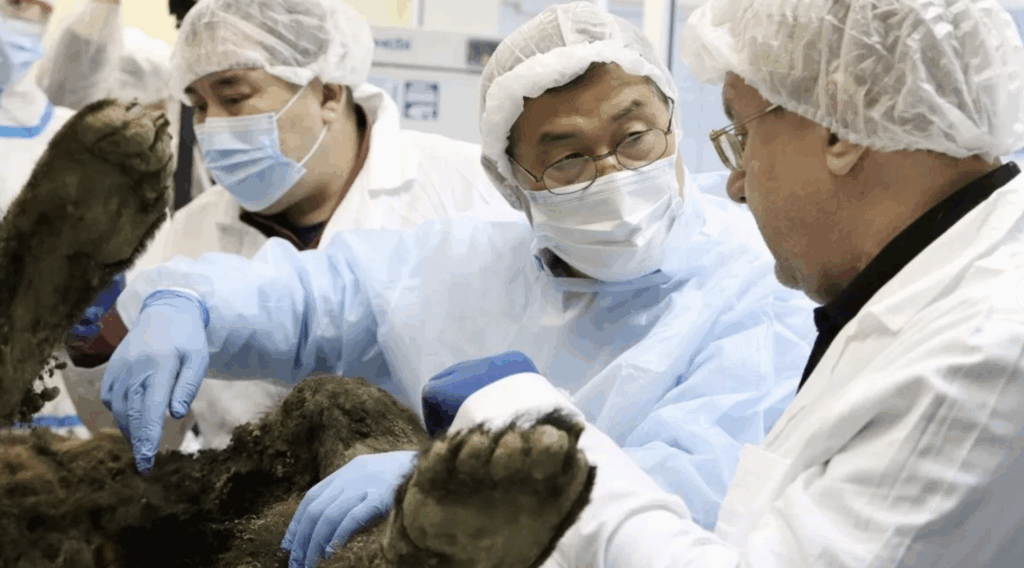
That shift was confirmed in December 2022, when the research team at North Eastern Federal University released updated findings showing the bear was a brown bear, Ursus arctos, that lived approximately three thousand four hundred and sixty years ago. To reflect both the revised understanding and the location of the find, researchers named it the Etherican bear after the nearby Bolshoy Etherican River. The correction was not a setback, but a refinement that underscored the complexity of working with exceptionally preserved remains. In environments like permafrost, preservation can blur timelines, making animals appear far older than they are and reminding scientists that even the most compelling first impressions must yield to careful analysis.
Inside the Evidence the Body Preserved
Once the bear’s identity was clarified, researchers turned their attention to what its condition could reveal about its final days. The necropsy offered an uncommon opportunity to study an ancient animal as a living body rather than a collection of bones. Preserved muscles, connective tissue, and internal organs allowed scientists to evaluate health directly, something rarely possible with prehistoric remains. This level of preservation made it possible to move beyond assumptions and assess how the animal functioned while it was alive.

The findings pointed to a bear that had not been weakened by long term hardship. The organs showed no signs of prolonged illness, and the distribution of fat and muscle suggested a young animal that had been adequately nourished. These details helped rule out starvation or chronic disease as contributing factors, narrowing the range of explanations for how the bear died and shifting attention away from environmental stress.
More telling evidence came from the spine. Researchers identified trauma severe enough to significantly limit movement, injuries that would have made survival unlikely. The nature of the damage suggested a sudden event rather than gradual deterioration, allowing scientists to distinguish between an abrupt fatal injury and long term physical decline. Beyond these conclusions, the necropsy preserved tissue samples for future study, opening the door to deeper analysis of how cells, proteins, and fats endure after thousands of years in frozen ground. Together, these insights transformed the bear from a remarkable find into a detailed case study, offering a rare look at the health, injury, and preservation of an ancient animal with a clarity seldom available to science.
Why These Finds Are Appearing at This Moment
The timing of discoveries like the Etherican bear is not the result of increased exploration or new research programs. Instead, it reflects changes in the ground itself. Remains that were once sealed deep within frozen layers are now reaching the surface as those layers shift. What emerges was already there, preserved for centuries or longer, but only now becoming visible. This process turns chance encounters into significant scientific moments, often without warning.
For much of the past, these remains lay beyond observation, protected by stable layers that resisted erosion and movement. As those conditions change, material that once stayed hidden can suddenly appear in exposed areas, riverbanks, or coastal zones. This is why many recent finds do not come from traditional excavations, but from locations where the landscape itself has altered. Scientists are often responding to discoveries rather than seeking them out, adjusting quickly to what the environment reveals.
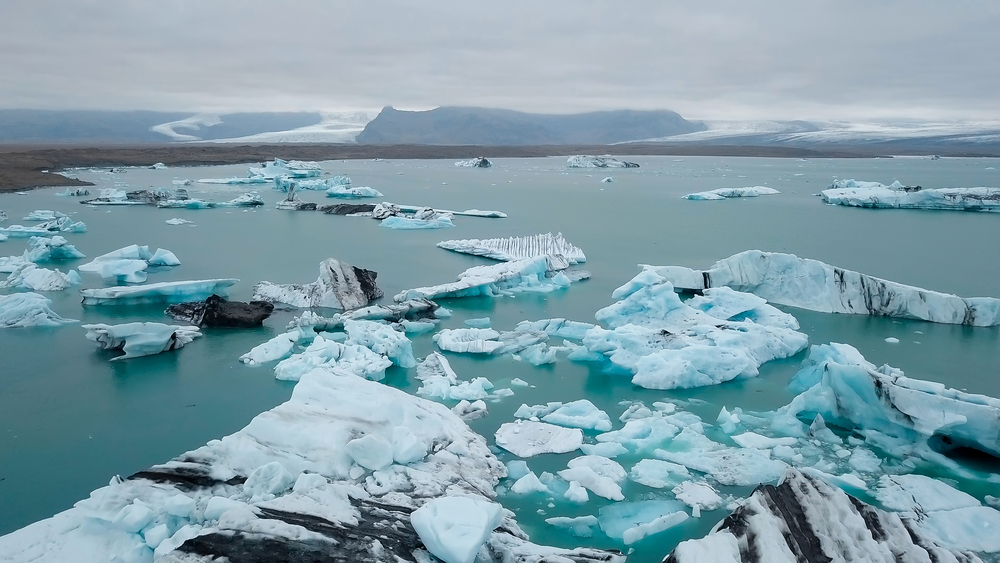
This shift creates a narrow window between exposure and loss. Once remains surface, they face stresses that were absent while they were buried, making recovery and documentation time sensitive. As a result, intact finds tend to appear irregularly and unpredictably. Their significance lies not in a change of scientific priorities, but in the reality that the physical barriers that once concealed them are no longer holding everything in place.
When Local Knowledge Becomes the First Alert System
One overlooked aspect of discoveries like this is how often they begin outside formal scientific channels. The Etherican bear was not uncovered by a research team working from a grant proposal or excavation plan, but by reindeer herders moving through land they know intimately. In regions as remote as the Arctic, local communities are often the first to notice changes in the landscape and the first to encounter what those changes reveal. Their familiarity with the terrain allows them to recognize when something does not belong, long before scientists are aware that anything has surfaced.
This kind of collaboration has become increasingly important as discoveries emerge unexpectedly. Scientists rely on timely communication from people who live and work in these environments year round, while local observers depend on researchers to assess, preserve, and interpret what is found. When that relationship works well, it bridges practical knowledge and scientific expertise, ensuring that fragile remains are documented rather than lost.
In the case of the bear, that chain of awareness made the difference between a fleeting curiosity and a meaningful scientific record. It serves as a reminder that behind many high-profile discoveries is a quieter network of individuals whose awareness and decisions shape what ultimately reaches the public and the scientific community alike.
A Discovery That Asked for Restraint
What made this bear remarkable was not the surprise it generated, but the discipline it demanded. The discovery moved from excitement to examination, from certainty to correction, without losing its value along the way. In fact, the willingness to revise early conclusions strengthened the story, showing how evidence leads when patience is allowed to guide interpretation. The bear became a reminder that credibility in science is built not on dramatic claims, but on careful follow through.
As more discoveries surface under similar circumstances, this one sets a quiet standard. It shows that meaningful stories are not defined by how quickly they capture attention, but by how responsibly they are understood. In a moment when rare finds can easily become headlines first and facts second, this case stands out for doing the opposite, letting accuracy shape the narrative long after the initial shock has passed.
Featured Image from North-Eastern Federal University