
Your cart is currently empty!
Your Body Obeys Your Voice: The Science of the Nocebo Effect

Have you ever jokingly said you were “worried sick,” only to find yourself physically unwell moments later? Science reveals that this common figure of speech is alarmingly literal.
Contents
show
While we often champion the healing power of positive belief, a darker biological force is at work when our thoughts turn negative—one that suggests your body is constantly eavesdropping on your internal monologue, often with tangible and unintended consequences.
Understanding the Nocebo Effect

Most people are familiar with the placebo effect, where positive belief in a treatment leads to genuine healing. However, a parallel, darker phenomenon exists known as the nocebo effect. Derived from the Latin word nocere, meaning “to harm,” this psychological mechanism occurs when negative expectations regarding a situation or medical treatment manifest as actual physical symptoms. If the placebo effect demonstrates the mind’s ability to heal, the nocebo effect illustrates its power to cause suffering.
This phenomenon is not simply a case of imagining symptoms. When a person anticipates pain or illness, the brain triggers a distinct physiological response. Research indicates that negative anticipation can activate specific brain regions associated with pain processing and release stress hormones like cortisol. This chemical cascade can depress the immune system and heighten sensitivity to discomfort. The body essentially acts on the brain’s pessimistic prediction, creating a self-fulfilling prophecy.
A clear illustration of this involves the anticipation of pain. Experts note that having blood drawn often feels significantly worse than unexpectedly stubbing a toe, even if the physical impact of the toe injury is objectively more severe. The difference lies in expectation. With the needle, the mind prepares for pain, effectively amplifying the sensation before the event occurs. In contrast, the toe injury happens without warning, bypassing the brain’s predictive anxiety.
While the placebo effect is often described as a beneficial biological trick, the nocebo effect acts as a physiological warning system gone awry. It transforms internal fears into external realities, demonstrating that the body often obeys the mind’s specific instructions, even when those instructions are harmful.
The Self-Fulfilling Prophecy of “Side Effects”

Medical professionals may inadvertently trigger this response through routine warnings and consent forms. In clinical settings, the specific phrasing used by a doctor can drastically alter a patient’s physical experience. For instance, research highlights that patients told an epidural injection would feel “like a bee sting” reported significantly higher pain levels than those simply reassured they would be comfortable. The anticipation of a specific hurt primed their nerves to receive it.
This phenomenon extends to pharmaceutical side effects. People taking statins for cholesterol frequently report muscle aches, yet studies reveal that participants taking sugar pills report these aches at the same rate. This suggests the side effect is often driven by the belief that statins cause pain rather than the chemical compound itself. Similarly, patients prescribed beta blockers were found to be three to four times more likely to report sexual dysfunction if they were explicitly warned about it beforehand compared to those who were not.
Even in placebo controlled studies, the power of suggestion remains potent. In one migraine study, two out of five people taking a placebo reported distinct adverse reactions, such as memory loss and appetite suppression, solely because they believed they were consuming a strong pharmaceutical. These instances reveal a startling truth: a significant portion of what patients perceive as drug toxicity is actually the biological fallout of negative expectation. When the mind is convinced a pill will cause harm, the body dutifully produces the evidence.
When Anxiety Becomes Infectious
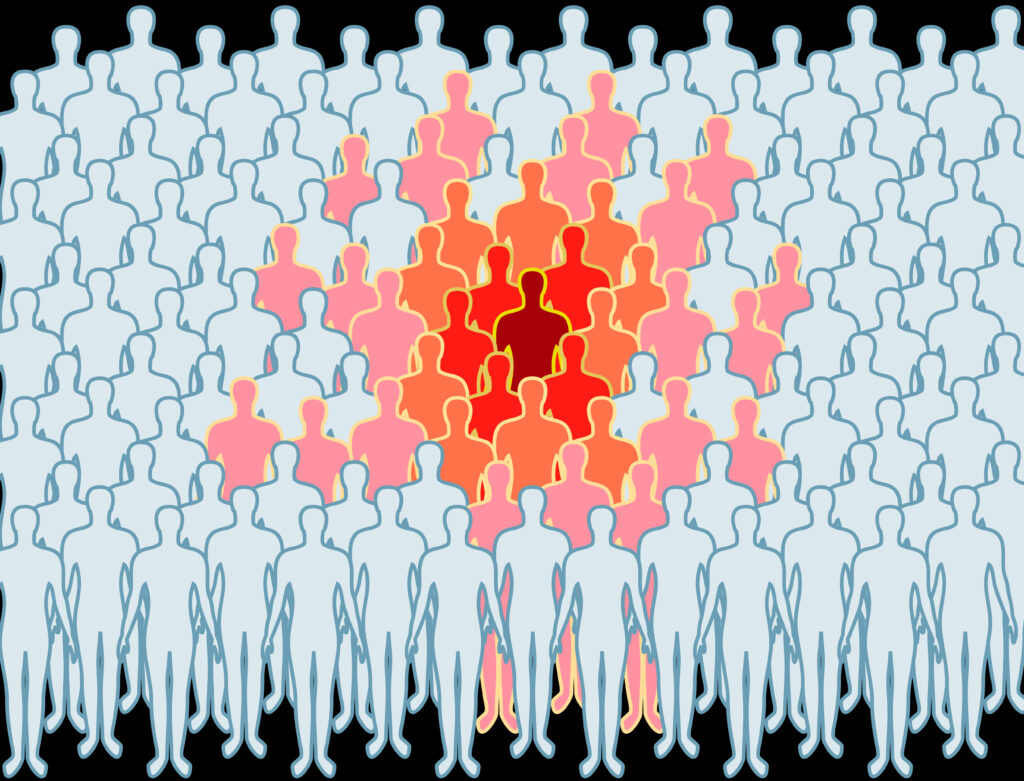
The nocebo effect is not limited to individual experiences; it can ripple through entire communities. This phenomenon, often termed mass psychogenic illness, occurs when the suggestion of a threat causes physical symptoms to spread among a group without any organic cause. History provides striking examples of how fear can be as infectious as a virus.
A classic case occurred in a US textile factory in the 1960s, known as the “June Bug” incident. Employees began reporting dizziness and nausea, attributing their sickness to a mysterious biting insect. Sixty-two people fell ill, yet an exhaustive CDC investigation found no evidence of any bug or toxin. The symptoms were physically real, but the cause was psychological, fueled by anxiety and rumors circulating on the factory floor.
More recently, the confusing cases of “Havana Syndrome” starting in 2016 presented a similar puzzle. US diplomats in Cuba reported severe neurological symptoms, sparking global fears of sonic attacks or microwave weapons. While government investigations have been complex, many experts argue this fits the historical pattern of psychogenic illness. In this view, the intense stress of a hostile diplomatic environment, combined with the fear of surveillance, manifested as physical debilitation.
These events demonstrate that in high-anxiety environments, the shared belief in a threat can trick the body into defense mode, causing genuine illness in the absence of a biological pathogen.
How Media Reports Amplify Adverse Reactions

During the global rollout of COVID-19 vaccines, public discourse shifted heavily toward potential adverse reactions. News outlets published headlines warning that the second dose could be a “doozy” or advising employees to plan sick days in advance. While vaccines do have biological side effects, experts argue that this barrage of negative anticipation likely contributed to the severity of reported symptoms through the nocebo effect.
Research suggests that a significant portion of the fatigue, headaches, and low-grade fevers reported after vaccination were not solely reactions to the vaccine ingredients but also physical manifestations of anxiety and expectation. When a person reads countless anecdotes of post-vaccination illness on online forums, their brain primes the body to replicate that experience. The New York Times COVID tracker noted that concern over these effects fueled resistance, yet many of these sensations were likely psychogenic in origin.
This highlights a modern public health paradox: while informed consent is vital, the overconsumption of negative health data can be toxic. By fixating on potential fallout, media narratives can inadvertently create the very suffering they aim to describe. If the public conversation focused less on the “inevitability” of feeling sick, it is plausible that fewer people would experience debilitating side effects, and vaccine hesitancy might decrease.
The Power of Your Inner Voice

Understanding the nocebo effect offers a unique opportunity to take back control of your health. While biology is complex, science is clear on one thing: your mindset plays a massive role in how you feel. Realizing that your body is constantly eavesdropping on your thoughts changes how you should talk about aging, pain, and recovery. If you constantly say, “I am getting so old,” or “This is going to hurt so bad,” you are not just describing your reality; you are helping to create it.
So, how do you stop it? Experts suggest simply paying attention to your own negative self-talk. This does not mean you have to be blindly optimistic or ignore real problems. It just means shifting toward more neutral or helpful thoughts. If you are facing a medical procedure, try focusing on the relief you will feel afterward instead of the pain of the needle. In daily life, try to see aging as a natural process rather than a steep decline. This simple shift can lower the stress hormones that weaken your immune system.
At the end of the day, your brain is a prediction machine that is always looking for evidence to prove itself right. If it expects pain, it will likely find it. By steering your expectations away from the worst-case scenario, you can break the cycle of anxiety and physical symptoms. Your body is listening to everything you say, so make sure the message you send is one of strength, not defeat.