
Your cart is currently empty!
Astronomers Say Asteroid 2024 YR4 Could Trigger the Most Energetic Lunar Impact Ever Recorded
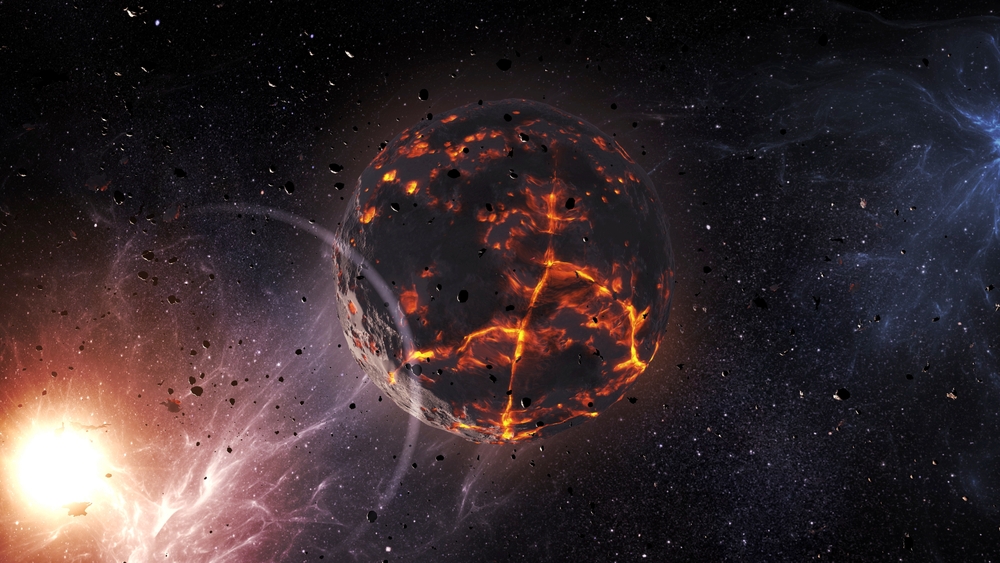
Astronomers are rarely given the luxury of time when it comes to cosmic events. Most asteroid impacts happen without warning, either burning up in Earth’s atmosphere or striking distant worlds long before humans had the tools to notice. That is why Asteroid 2024 YR4 has generated such intense scientific interest. It is not because the asteroid threatens Earth anymore, but because it carries a small yet meaningful chance of colliding with the Moon in 2032. If that collision occurs, researchers believe it could become the most energetic lunar impact event ever witnessed in human history, offering a front row seat to a phenomenon that normally unfolds silently and unseen.
Contents
show
What makes this situation especially remarkable is that scientists are not scrambling to react after the fact. Instead, they are actively modeling the event, planning observations, and debating the risks and rewards years in advance. The impact could generate a visible flash, send seismic waves rippling through the Moon, and eject material into space that may briefly travel between the Moon and Earth. While there are practical concerns, particularly for satellites, many researchers see this as an extraordinary opportunity to study impact physics, lunar geology, and near-Earth space dynamics in real time, something that has never been possible at this scale.
The Discovery That Briefly Alarmed Earth
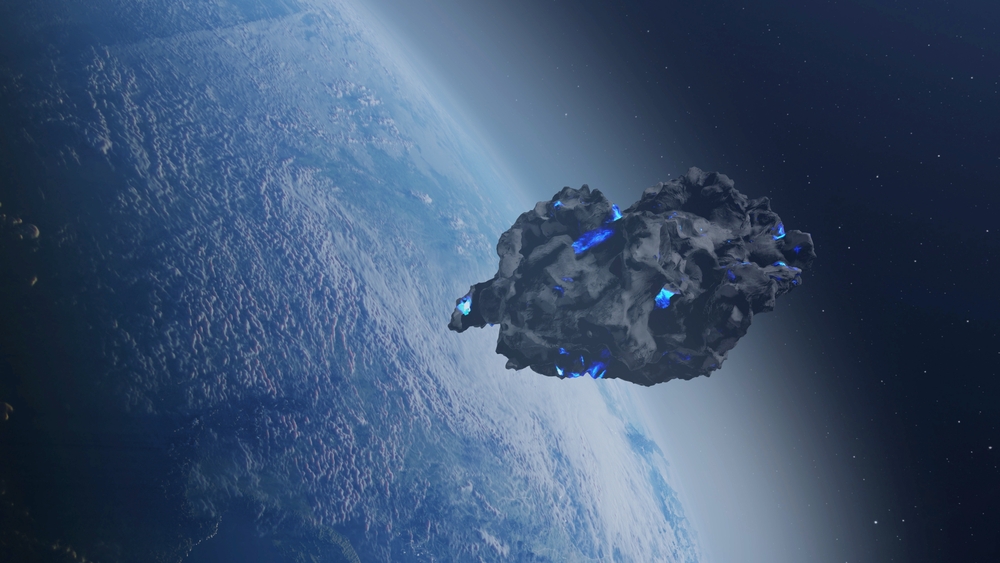
Asteroid 2024 YR4 was first detected on December 27, 2024, by the Asteroid Terrestrial-impact Last Alert System telescope in Chile. Like many newly discovered near-Earth objects, its early observations came with significant uncertainty. Initial calculations suggested roughly a one percent chance that the asteroid could collide with Earth on December 22, 2032. As more data was added, that probability briefly climbed to 3.1 percent, making it, for a short period, the most potentially dangerous object tracked since systematic monitoring began.
That brief spike in probability triggered alarming headlines and widespread public concern. Phrases like “city-killer asteroid” dominated coverage, despite astronomers repeatedly warning that early orbital estimates often fluctuate before stabilizing. This phase is a normal part of asteroid tracking, where small gaps in data can lead to large swings in predicted outcomes. Scientists were confident that continued observation would clarify the situation.
They were right. Follow-up observations steadily refined the asteroid’s orbit and pushed the probability of an Earth impact down to effectively zero. While that news eased fears on the ground, it did not end scientific interest. Instead, something unexpected emerged as Earth moved out of the danger zone and another celestial body quietly moved into focus.
How the Moon Became the New Focus
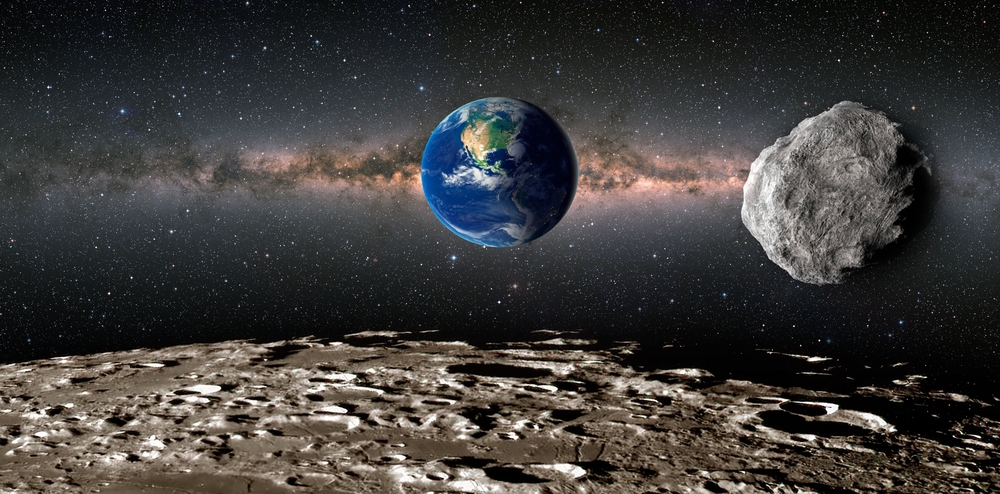
As researchers gathered more data, including observations from the James Webb Space Telescope and analysis by NASA’s Center for Near-Earth Object Studies at the Jet Propulsion Laboratory, the predicted path of 2024 YR4 shifted. The asteroid’s orbit moved farther from Earth, but closer to the Moon. Based on current models, NASA now estimates there is around a 4.3 percent chance that the asteroid could strike the lunar surface in 2032.
Planetary scientist Dr Andrew Rivkin from Johns Hopkins University explained the shift in an interview with IFLScience. “The odds of an impact into the Moon have always been there. It’s been lower at that time because the Earth [was] a bigger target,” he said. His comments highlight how orbital refinements can redistribute risk rather than eliminate it entirely.
He went on to clarify the current situation by saying, “The way that the orbit improved made the position move away from the Earth, but it moved toward the Moon. So there’s like almost a 4 percent chance it’s going to hit the Moon. That means there’s a better than 96 percent chance it’s going to miss the Moon, but if it did hit the Moon, it really would be pretty spectacular.” While the odds still strongly favor a miss, the potential consequences of a hit are enough to keep astronomers watching closely.
Why Scientists Say the Impact Would Be Historic
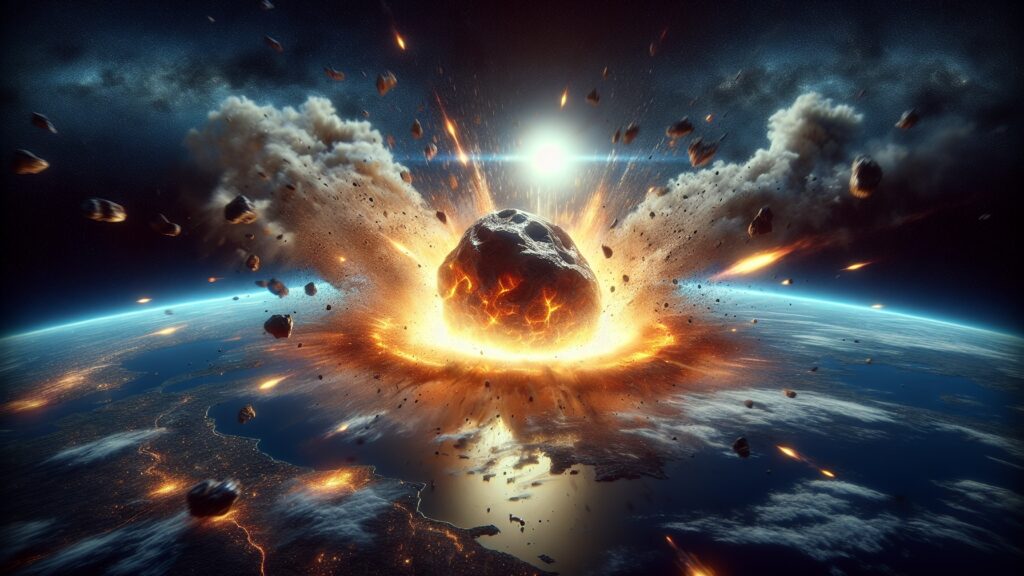
According to the authors of a new paper that has not yet been peer reviewed, a collision between 2024 YR4 and the Moon would release an extraordinary amount of energy. “Such an impact, with equivalent kinetic energy of ∼6.5 Mt TNT,” the authors explain, “is expected to produce a ∼1 km [0.6-mile] crater on the Moon, and will be the most energetic lunar impact event ever recorded in human history.”
This level of energy places the potential event far beyond anything humans have observed on the Moon before. Even comparatively small impacts have left measurable traces in the past. The authors point out that “historical Apollo seismometers recorded even the ∼1 kT TNT-equivalent impact of the Apollo 13 S-IVB stage at global distances,” demonstrating how sensitive lunar instruments can be.
By comparison, a 2024 YR4-sized collision would dwarf those events. The researchers emphasize that it would “produce seismic signals readily detectable across the Moon,” making it not only visually dramatic but scientifically invaluable for understanding how large impacts affect airless planetary bodies.
The Moon Would Shake, Glow, and Echo
Beyond the formation of a massive crater, the Moon itself would respond dramatically to such a collision. Researchers predict that the released energy would trigger a global-scale lunar reverberation equivalent to a magnitude 5.0 moonquake. Because the Moon lacks Earth’s complex tectonic systems, seismic waves can travel long distances with minimal loss, allowing instruments across the surface to detect the event clearly.
The impact would also produce an extraordinary visual display. “Our results suggest an optical flash of visual magnitude from -2.5 to -3 lasting several minutes directly after the impact,” the team writes. Such brightness would make the flash potentially visible to observers on Earth using telescopes, and possibly even detectable with the naked eye under ideal conditions.
That initial flash would not be the end of the show. The researchers add that it would be followed by “hours of infrared afterglow from ∼2,000 K molten rock cooling to a few hundreds K.” This extended afterglow would give scientists a rare chance to study freshly melted lunar material as it cools, offering insights into the Moon’s composition beneath its surface.
Debris, Meteor Showers, and Satellite Risks
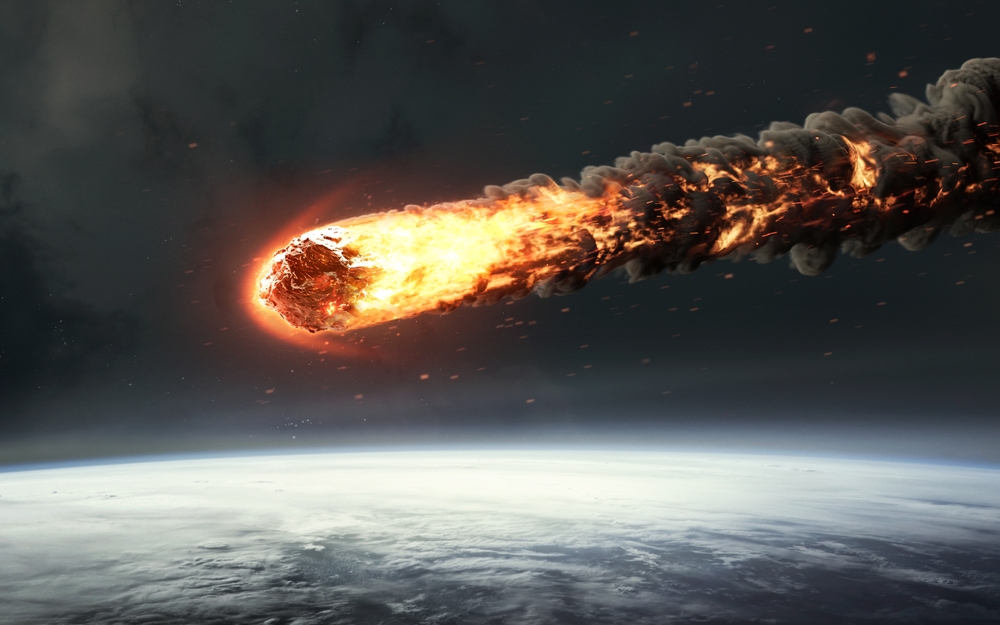
A collision of this magnitude would eject a vast amount of material from the Moon’s surface. In a previous study, researchers explained that “if 2024 YR4 strikes the Moon in 2032, it will (statistically speaking) be the largest impact in approximately 5,000 years.” They estimate that “up to 10^8 kg of lunar material could be liberated in such an impact by exceeding lunar escape speed.”
Some of that material could travel toward Earth, potentially producing meteor showers as fragments burn up in the atmosphere. While the possibility of meteorites reaching the ground cannot be ruled out, scientists stress that the more serious concern lies above the planet. Satellites orbiting Earth could encounter this debris, posing risks to communication, navigation, and weather monitoring systems.
According to the team, “107–108 kilograms of material could be ejected, ranging from millimeter-sized meteoroids to meter-scale boulders.” Any fragments that eventually reach Earth would fall across all latitudes, including Antarctica, which has historically proven to be one of the best places to recover meteorites due to its ice-covered landscape.

A Rare Opportunity for Planetary Defense Research
Despite the risks, scientists also see the potential impact as a unique research opportunity. In their latest modeling work, the team explains that “the year following the 2024 YR4 impact offers a unique window to monitor tens to hundreds of observable meter- and sub-meter-sized lunar ejecta.” Observing this debris in real time could significantly improve understanding of how impact fragments evolve in space.
They also note that “crucially, the majority remain bound to Earth, implying close proximity and low relative velocities.” This makes the debris particularly valuable for testing planetary defense concepts, since it would be more accessible than most near-Earth objects.
Under these conditions, researchers believe the debris could be used to test tracking systems, study how impacts alter object trajectories, and even explore whether some fragments could be captured and moved into stable orbits for future investigation or resource studies.
Where the World Could Watch It Happen
If the impact does occur, visibility from Earth will depend heavily on timing and geometry. “The predicted impact on 2032-12-22 occurs when the Moon is waning gibbous (∼70 percent illumination),” the team explains. Their analysis shows that the southern impact corridor would be visible across much of the Pacific hemisphere.
They highlight that observatories in Hawai‘i would be among the best positioned. “In particular, the Mauna Kea observatories will enjoy optimal visibility with the Moon high (∼80°) above the horizon and local pre-dawn darkness,” creating ideal conditions for detailed observations.
The researchers also emphasize that global amateur astronomy networks could play a meaningful role. With enough coordination, observers around the world could contribute valuable data alongside major professional observatories.
A Once-in-a-Generation Moment
There is still a very strong likelihood that Asteroid 2024 YR4 will miss the Moon entirely and pass quietly through space. Even so, the preparations underway highlight how far humanity’s ability to track and model cosmic events has advanced in recent decades.
As the authors conclude in their paper posted to the preprint server arXiv, “If the predicted collision indeed come up, 2024 YR4 will offer a once-in-a-generation opportunity to observe, in real time, the interplay between impact dynamics, lunar geology, and near-Earth space environment, providing crucial benchmarks for planetary-defense modeling and future lunar science.”
Whether the impact ultimately happens or not, the story of 2024 YR4 stands as a reminder that the universe is active, unpredictable, and increasingly observable, and that sometimes the most important discoveries come not from threats, but from rare chances to watch nature unfold.