
Your cart is currently empty!
What People Say When They Feel Unloved in Their Own Home

Families do not always break apart with shouting matches or slammed doors; sometimes, the real cracks form in total silence. It is the quiet realization that you are invisible, or that your feelings do not carry weight, that often hurts the most.
Contents
show
These subtle moments can build up over time, creating a deep ache that is hard to explain but impossible to ignore. Recognizing these signs is crucial because the worst kind of loneliness is feeling alone in a house full of people.
1. “Does Anyone Even Notice When I’m Not Here?”

This thought often starts as a quiet observation while walking out of a crowded living room, or perhaps it slips out as a self-deprecating joke. But underneath the humor or the silence is a heavy realization: the feeling of being invisible in one’s own house. It is not just about whether family members see an empty chair; it is about wondering if anyone would actually miss the energy, personality, or voice that usually fills it.
When a person feels like their presence carries no weight, they often start to pull back. It becomes a defense mechanism. They stop sharing stories about their day or voicing their opinions, secretly testing to see if their silence will finally make someone pay attention. Unfortunately, this withdrawal often deepens the gap, turning the home into a place of isolation rather than connection.
Psychology explains why this experience is so damaging. As Abraham Maslow identified decades ago, the need to feel loved and belong is a fundamental human requirement, sitting right above basic safety needs. When that connection is missing, it does not just cause sadness; it stunts emotional thriving. Living with the constant worry that one’s absence wouldn’t register creates a deep loneliness that often follows people well beyond their front door.
2. “I Feel Like I’m Walking on Eggshells”
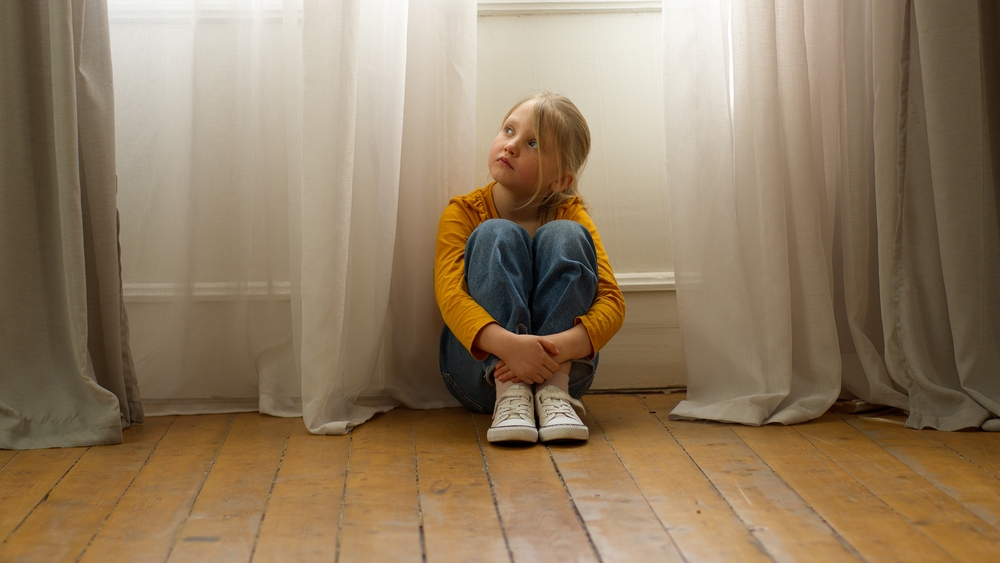
Living this way means being constantly on high alert. It is the habit of pausing at the door to listen for the mood inside or changing the subject quickly to avoid an argument. This is not simply about being polite. It is a quiet fear that one wrong word or action will cause a problem.
Home is meant to be the place where a person can relax and let their guard down. But for those who feel this way, it becomes a place of work. They spend their energy managing the emotions of others instead of tending to their own. They edit their thoughts and hide their true feelings just to keep things calm.
This constant state of tension is physically and emotionally draining. Experts in relationships note that true closeness requires safety. People need to know they can be tired, grumpy, or imperfect without being attacked or ignored. When that safety is missing, a person cannot truly connect with their family. They just survive living with them. The trust that binds a family together dissolves when fear takes the driver’s seat.
3. “You Only Talk to Me When You Need Something”

This sentiment arises when family interactions start to feel less like a relationship and more like a business arrangement. It is the realization that a text message or a knock on the door almost always comes with a request attached. The conversation rarely starts with “How are you?” but instead jumps straight to “Can you do this for me?”
When conversations become purely transactional, the warmth in a home begins to cool. The dynamic shifts from connection to obligation. The person on the receiving end feels useful, but they do not feel valued. They begin to suspect they are appreciated only for what they can provide or fix, rather than for who they are as a person.
Healthy relationships require more than just logistical cooperation. While family members naturally rely on one another for help, there must be a foundation of interest that has no agenda. Without moments of connection that are simply for the sake of talking or spending time together, the bond weakens. The individual starts to feel like a tool in the household machinery rather than a loved member of the group. Eventually, resentment builds because they know the attention will vanish the moment the task is complete.
4. “I’m Always the Last to Know”

Being left out of the loop is not just a logistical annoyance; it is a painful reminder of where a person stands in the family hierarchy. This phrase usually comes up when someone hears about a sibling’s engagement, a parent’s health issue, or a weekend trip from a neighbor or a social media post rather than from the family itself.
When a person is consistently the last to hear important news, it signals exclusion. It draws a clear line between the “inner circle” who make the memories and decisions, and the outsider who merely observes them. The individual begins to feel like a spectator in their own family’s story. It suggests that their reaction or involvement was not a priority to anyone else.
This kind of distance creates an emotional gap that is hard to bridge. Humans are social creatures who thrive on shared experiences and narratives. When someone is systematically cut off from the flow of information, they stop feeling like an active participant in the group. Over time, they may stop asking questions altogether, accepting that they are no longer central to the family’s life.
5. “I’m Tired of Pretending Everything’s Fine”

Wearing a mask of contentment is exhausting work. For many people, walking through the front door means stepping onto a stage where they must perform the role of the “happy” or “easygoing” family member. They swallow their frustrations and hide their tears, convinced that showing their true feelings would be too disruptive or burdensome for everyone else.
This creates a lonely paradox. By prioritizing the comfort of others, the individual ensures that no one actually knows them. They might be the person holding the family together, smoothing over awkward moments, or forcing a smile at dinner, but inside, they are crumbling. The family loves the version of them that causes no problems, but they remain strangers to the person who is struggling.
Maintaining this illusion drains a person’s energy. It reinforces the damaging idea that negative emotions are failures rather than natural parts of life. When a person believes they are only lovable when they are “fine,” they stop viewing home as a place for support. Instead, it becomes just another place where they have to work to be accepted.
6. “You Never Remember What’s Important to Me”

It stings when a parent forgets a birthday or a partner dismisses a major achievement at work. To an outsider, these might look like simple memory lapses. But when the people closest to you repeatedly fail to recall the details of your life, it feels less like a mistake and more like a rejection. It sends a quiet, painful message that your interests, milestones, and worries are not worth holding onto.
This specific type of neglect chips away at a person’s sense of worth. It is not about demanding expensive gifts or constant praise. It is about the basic human desire to be truly known. When a family member cannot remember your allergies, your friends’ names, or what you are currently struggling with, the relationship feels hollow.
Renowned relationship researchers like Dr. John Gottman refer to this knowledge as a “Love Map.” This map consists of all the small, vital details about a loved one’s world. Healthy families maintain these maps by asking questions and remembering the answers. When those details are ignored, the individual stops feeling like a priority. They realize they are sharing a home with people who do not actually see them, but only see a blurry outline of who they used to be.
7. “I Wish Someone Would Stand Up for Me”

Conflict is difficult enough on its own, but facing it without an ally makes it significantly harder. This thought usually emerges when a person is being unfairly criticized or targeted during a family dispute, while others sit nearby in silence.
Silence in these moments is rarely interpreted as neutrality. To the person under fire, that silence feels like an agreement with the attacker. It plants a damaging seed of doubt: perhaps they are not worth defending. This lack of backup forces the individual to adopt a “me against the world” mentality, even within their own living room.
Feeling protected is a core component of trust. When family members repeatedly fail to advocate for one another, the sense of loyalty erodes. The home transforms from a collective unit into a group of individuals looking out only for themselves. Knowing that someone has your back, even if it is just a small interjection of support, can drastically change the outcome of a conflict. Without it, the isolation hurts far longer than the argument itself.
8. “Maybe I Should Just Stop Trying”
This sentence marks a critical turning point. It is rarely spoken in anger. Instead, it is usually a quiet admission of defeat. It represents the shift from frustration to resignation. For a long time, a person might fight to be heard, plan family gatherings, or try to fix broken dynamics. But after facing repeated rejection or indifference, the will to keep pushing eventually runs out.
Psychologists often refer to a similar concept known as “learned helplessness.” This occurs when an individual feels that no matter what they do, the outcome remains the same. Since their efforts to connect do not yield positive results, they stop making the effort altogether. The brain essentially decides that trying is too “expensive” emotionally for the lack of reward it brings.
In a household, this looks like a sudden calm. The arguments stop. The person stops complaining about being left out or ignored. To the rest of the family, it might seem like peace has finally been restored. However, this silence is misleading. It is not contentment; it is emotional detachment. The individual has decided that being lonely on their own terms is less painful than trying to force a connection that simply is not there.
9. “I’m Always the One Compromising”

Relationships are supposed to be a two-way street. However, for some family members, the traffic only flows in one direction. This phrase captures the deep frustration of being the only person willing to bend. Whether it is constantly changing a schedule to accommodate others, giving up on personal preferences, or always being the first to apologize, constant compromising feels less like cooperation and more like erasure.
When one person does all the adjusting, they slowly lose pieces of themselves. They shrink their own needs to make room for the demands of everyone else. The goal shifts from finding a middle ground to simply avoiding a fight. In these households, peace is maintained, but it is a peace purchased entirely at the cost of one person’s happiness.
This dynamic creates a lasting resentment. Healthy connections rely on reciprocity, the understanding that effort and sacrifice are mutual. When that balance is broken, the person giving endlessly eventually runs empty. They begin to realize that their flexibility is not viewed by the family as an act of love, but rather as an expectation. Being the “easy” one to deal with often means ending up as the one who matters least.
10. “I Feel Like I’m Just Background Noise”
There is a specific type of loneliness that occurs when a person speaks but suspects no one is actually listening. This feeling often emerges during family dinners or car rides where conversations seem to happen around the individual rather than with them. It is the sensation of being a blur in a photo while everyone else is in sharp focus.
When a person feels like background noise, they believe their presence is merely ambient, like a television humming in the corner that no one is watching. Their stories get interrupted, their opinions are glossed over, or they are met with distracted nods from family members glued to their phones. It is not necessarily that they are being told to be quiet; it is that their voice simply does not command attention.
Humans crave “responsive interaction,” where one person signals and the other responds. When that signal is repeatedly ignored, the individual starts to view themselves as a supporting character in the lives of their family members. They slowly stop sharing their thoughts because they assume their words will just dissolve into the air. Eventually, the silence they keep becomes louder than the words they used to speak.