
Your cart is currently empty!
Spectacular Deep-Sea Footage Reveals Rare, School Bus-Sized Phantom Jellyfish
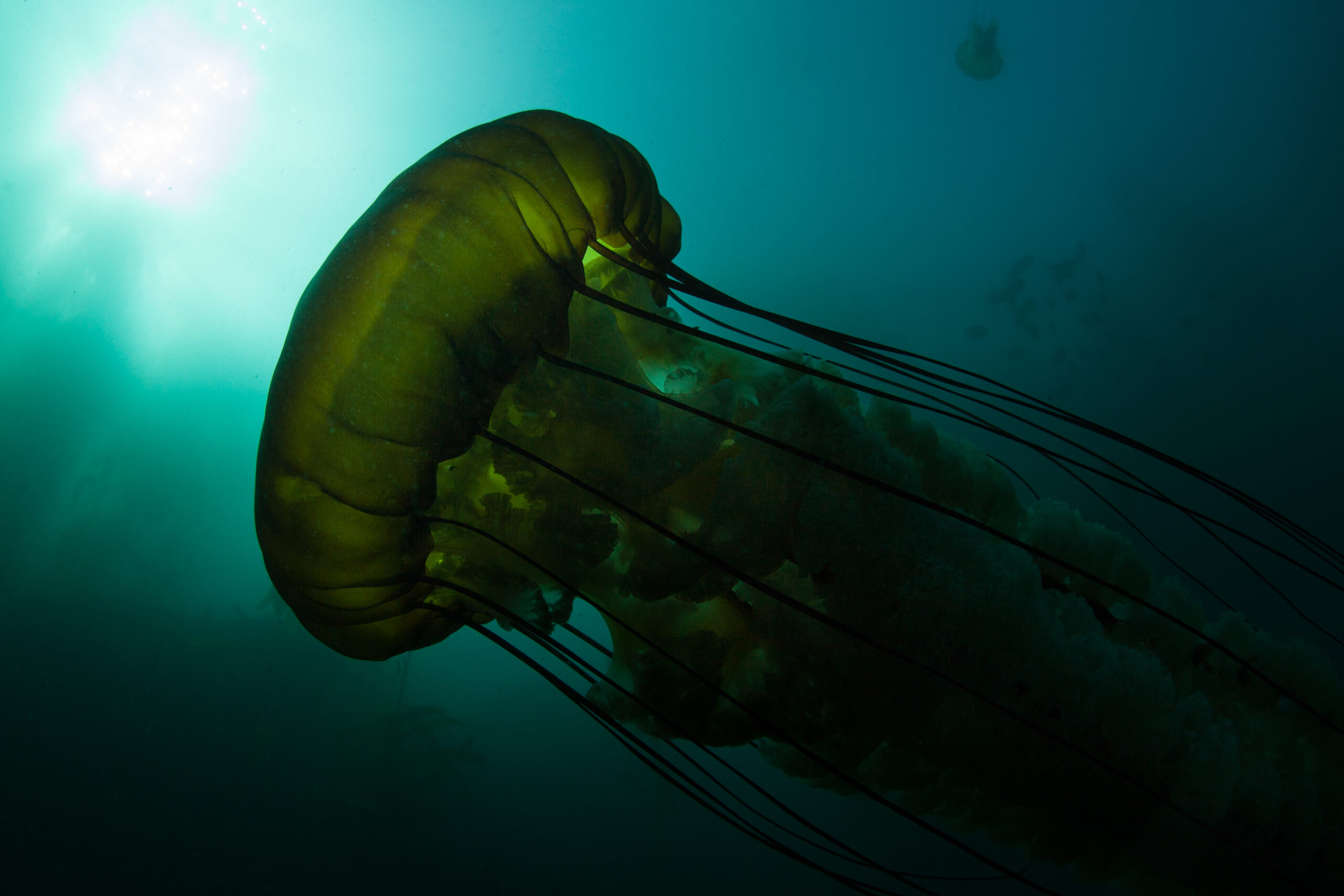
The ocean covers the majority of our planet, yet the deep sea remains one of the last true frontiers of exploration. In these crushing depths, life evolves in forms that challenge our imagination—ethereal, massive, and strangely beautiful. Recently, the dark waters off the coast of Argentina yielded a rare glimpse into this alien world, offering scientists and the public alike a front-row seat to the dance of a giant.
Contents
show
This recent expedition by the Schmidt Ocean Institute was more than just a hunt for specific data; it was a journey into the unknown biodiversity of the Southwestern Atlantic. From the discovery of ancient coral reefs to the mapping of chemical seeps, the mission highlighted the richness of the deep. Yet, it was the silent appearance of a bus-sized “phantom” that stole the spotlight, reminding us of the secrets that still drift in the abyss. Here is the story of that remarkable finding and what it reveals about the hidden ecosystems beneath the waves.
An Unexpected Encounter in the Argentine Deep
In late December, a team of researchers aboard the R/V Falkor (too), operated by the Schmidt Ocean Institute, captured rare footage of a giant phantom jelly (Stygiomedusa gigantea) during a dive off the coast of Argentina. While the expedition’s primary goal was to locate cold seeps and study the region’s chemical makeup, the sudden appearance of this deep-sea titan became a defining moment of the voyage. As the remotely operated vehicle (ROV) SuBastian descended to a depth of roughly 800 feet, the control room fell silent.
María Emilia Bravo, a marine biologist at the University of Buenos Aires who led the dive, described the atmosphere on the ship as a mixture of excitement and disbelief. She noted that the creature’s ethereal and delicate presence in such an extreme environment was deeply surprising. The encounter was not without technical challenges, however. The sheer size of the jellyfish made maneuvering the underwater vehicle difficult for the operators on the ship, as they had to navigate carefully to avoid the animal’s extensive reach.
This sighting was part of a broader research initiative spanning from Buenos Aires to Tierra del Fuego. The team was investigating the biodiversity of the Argentine deep sea, a mission that ultimately uncovered dozens of new species, including corals and sea urchins. Bravo remarked on the significance of the findings, stating that seeing the biodiversity and ecosystem functions unfolding together was incredible. She added that the expedition opened a window into the country’s biodiversity, revealing that many more avenues for discovery remain.
A Giant Hidden in Plain Sight
Despite its imposing size, the giant phantom jelly remains one of the ocean’s most elusive residents. Scientifically known as Stygiomedusa gigantea, this species is a true titan of the deep. Its bell can expand to more than three feet in diameter, while its four ribbon-like oral arms can trail up to 33 feet in length. This length is comparable to that of a standard school bus. These massive appendages are used to ensnare plankton and small fish, which are then reeled into the creature’s mouth.
First collected in 1899, the species was not formally recognized until sixty years later. For decades, scientists only knew of its existence through damaged specimens found caught in trawling nets. It is only recently, with the advent of advanced remotely operated vehicles, that researchers have been able to observe the animal alive in the midnight zone.
Steve Haddock, a marine biologist at the Monterey Bay Aquarium Research Institute, noted the irony of such a massive creature remaining hidden for so long. He explained that people often assume undescribed deep-sea species are minute or obscure. “But no,” Haddock said, “it’s these giant things, the size of a giant squid practically, that have gone largely unnoticed.”
To date, the giant phantom jelly has been documented approximately 100 times in over a century. Its rarity and the depth at which it lives, typically in the dark layer extending down to 13,000 feet, have made comprehensive study difficult. Haddock added that until recently, nobody was able to actually see it in its natural habitat and in its full glory.
The Phantom’s Companions
The giant phantom jelly exhibits a unique hunting strategy, eschewing the active pursuit of prey for a more passive approach. It relies on its voluminous, curtain-like arms to entrap plankton and small fish. Yet, these deadly appendages also foster life. The species maintains a symbiotic relationship with certain fish, often seen hovering near the jelly’s bell or weaving through its arms. Dr. Haddock describes this lasting bond as almost an “Odd Couple” type story, remarkable for its persistence in the vastness of the ocean.
In the food-scarce environment of the midnight zone, which extends down to 13,000 feet, shelter is a rare commodity. The phantom jelly provides a crucial haven for smaller fish, shielding them from larger predators. In exchange, these tenants perform a cleaning service, feeding on parasites that afflict the jelly.
The specific nature of this alliance varies by region. In the Northern Hemisphere, the phantom jelly’s usual companion is the pelagic brotula. However, the Argentine expedition documented a different partner: a medusafish belonging to the genus Centrolophus. This observation is scientifically significant, as Dr. Bravo noted. While such associations are known historically, this specific interaction had never before been recorded in the deep waters of Patagonia, marking an important addition to the biological records of the Southern Atlantic.
Unveiling the Secrets of the Seafloor
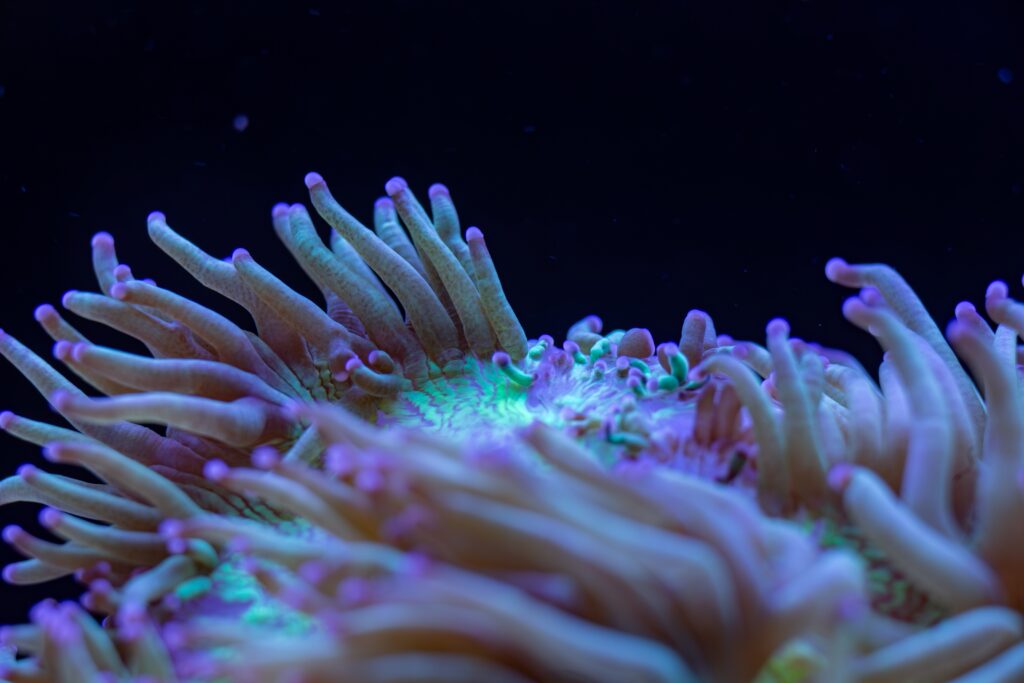
Beyond the mesmerizing phantom jelly, the expedition illuminated the rich tapestry of life on the Argentine continental shelf. The researchers’ primary objective was to map cold seeps—areas where methane bubbles up from the seafloor, fueling distinct ecosystems. They successfully identified a massive active seep covering nearly half a square mile, roughly the size of Vatican City. These chemical hotspots sustain specialized communities of microbes, which in turn support animals like clams and mussels.
The team also uncovered sprawling gardens of life in the darkness. They documented the world’s largest known reef of Bathelia candida, a stony cold-water coral. This discovery significantly expands the known range of this species, pushing it nearly 400 miles further south than previously recorded. Deeper still, in the Malvinas Trough at depths approaching 10,000 feet, the ROV revealed ancient bubblegum corals sheltering within large sponges. In total, the mission cataloged twenty-eight new animal species and the country’s first recorded deep-water whale fall, painting a picture of a vibrant, interconnected ecosystem thriving in the deep.
A Window into a Vulnerable World
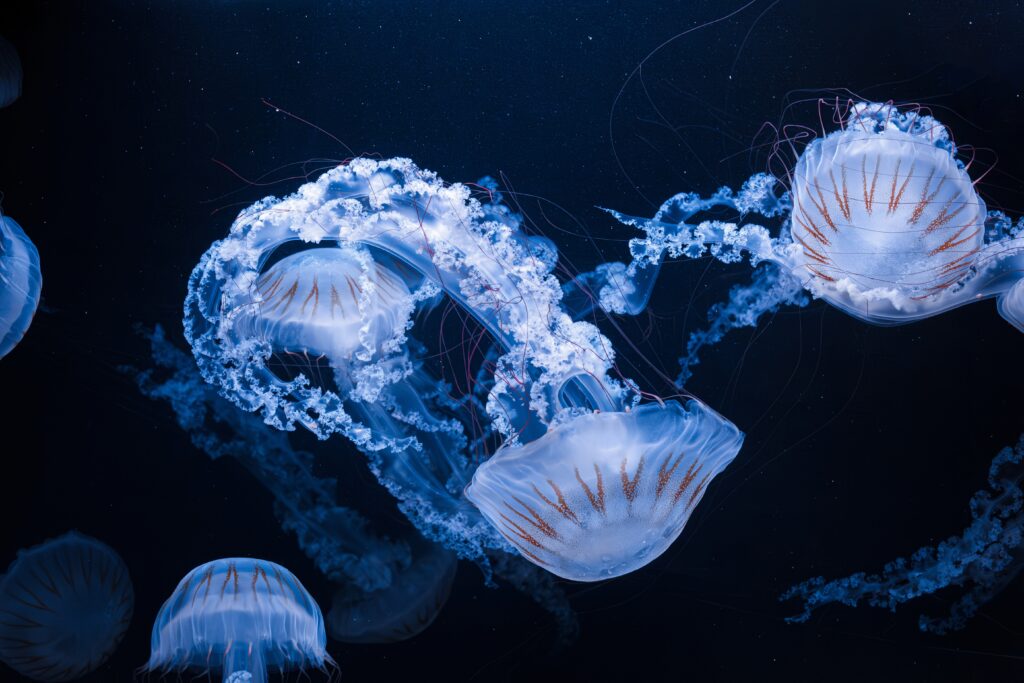
The samples and footage collected during this expedition offer more than just a glimpse of rare creatures; they represent a critical baseline for understanding the health of our oceans. Melisa Fernández Severini, a researcher on the team, emphasized that these findings are a unique opportunity to grasp not only how extraordinary these extreme ecosystems are, but also how vulnerable they can be to external changes.
The ocean remains the planet’s largest and least explored habitat. Jyotika Virmani, executive director of the Schmidt Ocean Institute, pointed out that the ocean holds 98% of Earth’s living space, yet much of it remains a mystery. Every dive reveals that the deep is teeming with life, challenging previous assumptions about the barren nature of the abyss.
As humanity continues to impact the planet, documenting these deep-sea frontiers becomes a race against time. The sighting of the phantom jellyfish and the mapping of ancient coral reefs serve as powerful reminders of the wonders hidden in the dark. These discoveries urge us to continue exploring and, more importantly, to protect these fragile ecosystems before they are lost to the pressures of a changing world.