
Your cart is currently empty!
Teen Researcher Challenges Decades Old Cancer Testing Norms After Personal Loss Sparks Breakthrough Idea

In an era when medical innovation is often associated with major research institutions and seasoned scientists, one of the more unexpected challenges to the status quo came from a high school student asking a deceptively simple question. Why was pancreatic cancer, a disease known for its severity, still so rarely detected in time to change the outcome? As Jack Andraka began examining publicly available research, he discovered that the standard test had remained in use for decades and offered limited accuracy. For a teenager with no formal medical training, that realization did not signal the end of inquiry. It marked the beginning of one.
Contents
show


Within two years, that curiosity evolved into a prototype sensor designed to detect pancreatic, lung, and ovarian cancers in their earliest stages using a test that could deliver results in five minutes at a cost of three cents. The development would later earn international recognition, but its origins are rooted in something more fundamental than accolades. It began with access to information, a willingness to question established systems, and the belief that even long-standing medical challenges deserve fresh scrutiny.
The Diagnostic Blind Spot in Modern Oncology
For all the advances in cancer research over the past several decades, pancreatic cancer remains one of medicine’s most persistent diagnostic challenges. The difficulty does not stem from a lack of clinical awareness but from the nature of the disease itself. The pancreas sits deep within the abdominal cavity, positioned behind the stomach and close to major blood vessels, making small tumors difficult to detect through routine physical examination or basic imaging. Unlike breast or colorectal cancers, there is no widely adopted screening program for individuals at average risk, which means detection typically depends on symptoms rather than surveillance.
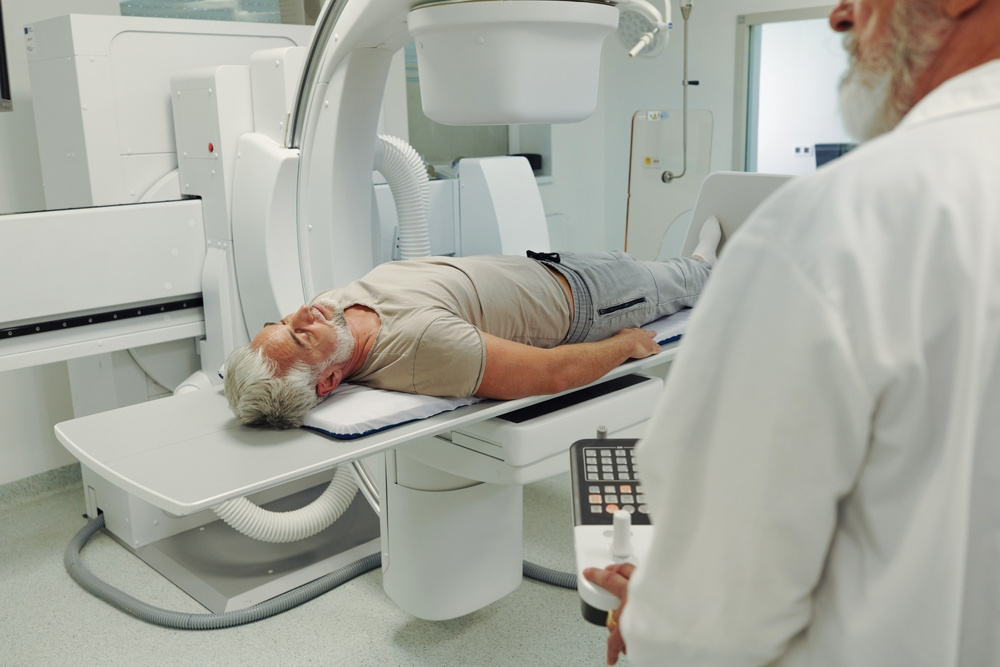
The symptoms, however, rarely announce themselves in ways that clearly signal urgency. Early stage pancreatic tumors often produce subtle signs such as mild digestive discomfort, fatigue, or changes in appetite. These are symptoms shared with far more common and less serious conditions, which makes immediate escalation to advanced imaging unlikely. By the time clearer indicators appear, the disease may have progressed beyond its point of origin.
Risk assessment adds another layer of complexity. While certain factors, such as smoking, chronic pancreatitis, family history, and inherited genetic mutations can increase the likelihood of developing pancreatic cancer, most cases arise in individuals without a strong hereditary pattern. That reality limits the ability of physicians to identify a clearly defined group for routine intensive screening. In practical terms, there is no straightforward roadmap for deciding who should be monitored more closely.
Compounding these challenges is the aggressive nature of many pancreatic tumors. Cancer cells can begin spreading microscopically before the primary tumor grows large enough to produce unmistakable symptoms. As a result, the opportunity for curative intervention narrows quickly. The combination of anatomical inaccessibility, nonspecific early signs, limited screening frameworks, and potential for early spread has positioned pancreatic cancer as one of the most difficult diseases to detect at a stage when treatment outcomes are strongest.
Research Before Resources
Before there was a prototype or a laboratory bench, there was a process that resembled investigative reporting more than traditional medical training. Without institutional affiliation or funding, Jack Andraka began where many modern researchers begin today, with access to digital databases and published scientific literature. The question guiding him was not how to treat pancreatic cancer, but whether it left behind a detectable signal early enough to matter. If the disease proved so lethal because it was discovered too late, then the first task was to determine whether measurable changes occurred in the body before symptoms became unmistakable.
“I found an online database of 8,000 proteins associated with pancreatic cancer and started searching for a biomarker,” he recalls.

Rather than approaching the list casually, he worked through it methodically, reviewing protein functions, comparing findings with existing studies, and examining whether any candidate appeared in elevated levels during early stage disease. A biomarker, in medical terms, is a measurable biological substance that can indicate the presence of a disease process. In oncology, many biomarkers circulate in the bloodstream, which makes them potential targets for blood based screening tools. The challenge lies in identifying one that is both specific to the disease and detectable early enough to change outcomes.
On his 4,000th search attempt, he identified mesothelin, a protein present in the bloodstream at high levels during the early stages of pancreatic cancer. The discovery did not solve the problem, but it narrowed it. What began as a broad frustration with late diagnosis became a defined engineering objective: determine whether mesothelin could be measured quickly, affordably, and reliably in a small blood sample. By translating a clinical gap into a concrete scientific target, Andraka shifted from questioning the system to designing within it, laying the groundwork for the device that would soon follow.
Translating Biology Into Measurable Data
Once mesothelin emerged as a viable target, the challenge shifted from identification to interpretation. Detecting a protein in theory is one matter, but creating a device capable of registering its presence quickly and reliably is another. Andraka’s approach drew from two established scientific tools that rarely intersect in everyday conversation yet are foundational in laboratory research. Antibodies, which are engineered to bind with high specificity to a chosen protein, provided the biological recognition component. Carbon nanotubes, described in the source article as one fifty thousandth the diameter of a human hair, stronger than steel, and better at conducting electricity than copper, supplied the structural and electrical backbone.
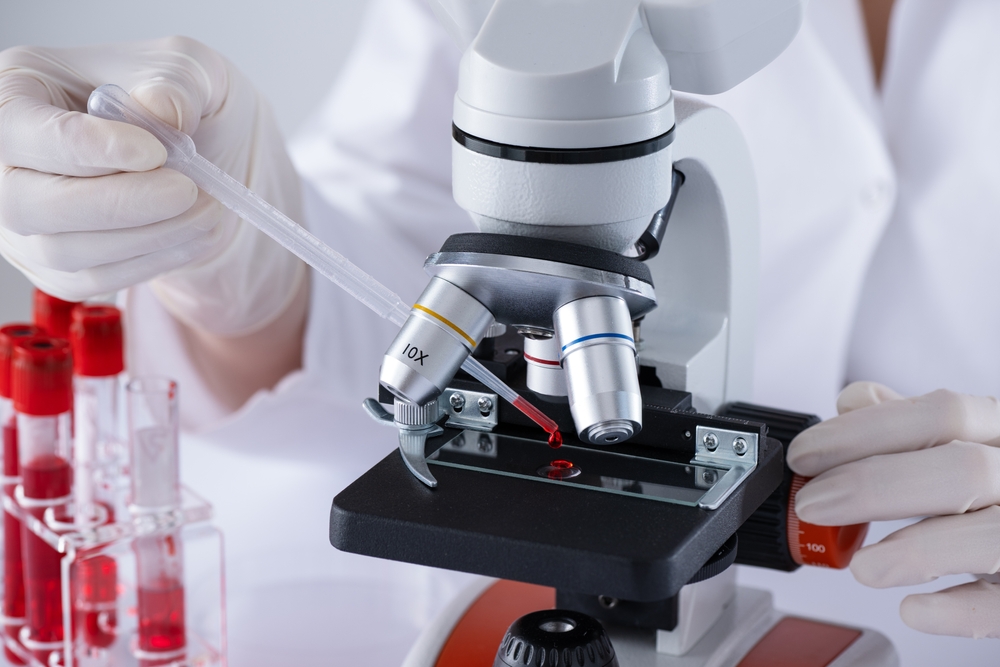
The concept rested on the interaction between these elements. Andraka proposed embedding antibodies sensitive to mesothelin within a network of carbon nanotubes. When mesothelin molecules in a blood sample attached to the antibodies, the physical binding would alter the electrical properties of the nanotube network. That change could then be measured as a shift in electrical resistance, effectively converting a biological event into a readable signal. In essence, the device was designed to translate molecular recognition into quantifiable data without relying on complex imaging systems or large scale laboratory equipment.
Equally notable was the format of the sensor itself. Rather than constructing a sophisticated apparatus limited to research institutions, Andraka built a small dipstick style probe using strips of filter paper and paired it with a basic instrument for measuring electrical resistance that he purchased at a hardware store. The intent was not simply scientific proof of concept but practical accessibility.
According to the source article, his preliminary findings suggested approximately 90 percent accuracy, testing that was 168 times faster, and sensitivity that was 400 times greater than existing methods, with each test costing about three cents and taking five minutes to complete. While those results were described as preliminary, they framed the project as more than a classroom experiment. They positioned it as an attempt to rethink how early detection tools could be designed for speed, affordability, and broader reach.
Recognition and the Question of Access
As Andraka’s work gained international attention, his role quickly expanded beyond that of a student researcher. Winning the 2012 Intel International Science and Engineering Fair and receiving the 75,000 dollar grand prize placed him in the public eye, leading to speaking engagements at universities and conferences worldwide. His project was no longer discussed solely for its technical design, but for what it represented about youth participation in science and the pathways through which new ideas enter established systems.

Central to that conversation was access to research itself. Andraka became involved with the Right to Research Coalition, advocating for public access to federally funded scientific studies. Reflecting on his own experience navigating scientific literature, he said, “Currently, you have to pay for most journal articles. These paywalls are a real hurdle if you’re young or disadvantaged. A brilliant discovery may be out there in the brain of someone with inadequate resources. Open access will tap ideas from 5.5 billion people who have previously been cut off.” His argument positioned transparency not as an abstract policy issue, but as a practical factor that can shape who gets to contribute to scientific progress.
Education Beyond the Textbook
Amid the attention surrounding his research, Andraka also spoke candidly about how science is taught and who feels invited to participate in it. His own experience did not begin in a formal laboratory or through a structured mentorship program. It began with curiosity and access to information, which later shaped his views on how education systems approach scientific learning. He has argued that engagement cannot rely solely on passive instruction, stating, “You can’t engage kids with a textbook. You have to get your hands dirty and learn science by doing it.”

That perspective aligns with a broader conversation within education policy about experiential learning and inquiry based approaches. For Andraka, the lesson was practical rather than theoretical. His research developed not because he had mastered advanced coursework, but because he was willing to explore a problem directly and persist through complexity. He has also reflected on his own starting point, noting, “I was 15, had no clue what a pancreas was, and knew nothing about cancer. But I also had no preconceived notions and was ready to try anything. I made a discovery with a laptop, a smartphone, and some online searches. My big message to kids is, ‘Why not you? Why can’t you come up with the next great innovation or cure?’”
In raising these points, Andraka reframed his story as less about exceptional talent and more about opportunity, mindset, and access. The emphasis was not on bypassing traditional expertise, but on expanding the pipeline of those who feel capable of entering scientific fields.
When Curiosity Enters the Mainstream
Jack Andraka’s story ultimately sits at the intersection of science, access, and cultural visibility. What began as independent research by a teenager evolved into a conversation about early detection, educational opportunity, and who gets to participate in innovation. His work drew attention not only because of its technical ambition, but because it challenged assumptions about age, credentials, and proximity to institutional power. In a field often defined by long career trajectories and established hierarchies, his entry point was curiosity supported by publicly available knowledge.
Whether his early findings translate into long term clinical impact remains a matter for continued research and validation, but the broader narrative carries its own significance. It underscores the importance of questioning established systems, expanding access to scientific literature, and encouraging hands on engagement in education. In doing so, Andraka’s journey invites a larger reflection on how many potential breakthroughs may depend less on brilliance alone and more on whether emerging voices are given the tools and visibility to be heard.