
Your cart is currently empty!
Carl Sagan’s Decades Old Warning About Power Feels Unsettlingly Relevant Today

There are moments in history when words spoken decades ago begin to feel less like reflections and more like warnings. Carl Sagan, the renowned astronomer and science communicator, left behind not just a legacy of cosmic wonder but also a deeply human concern about the future of society. Today, those concerns are resurfacing with renewed urgency.
Contents
show
In an era shaped by rapid technological change, misinformation, and shifting political landscapes, Sagan’s voice feels strikingly relevant. His cautionary message was not aimed at any single person or moment, but at a pattern he believed could emerge if society lost its grip on critical thinking.
What makes his warning so compelling is not just its accuracy, but its tone. It was not alarmist or dramatic. Instead, it was thoughtful, grounded, and quietly unsettling. And now, many believe we may be living in the very world he once described.
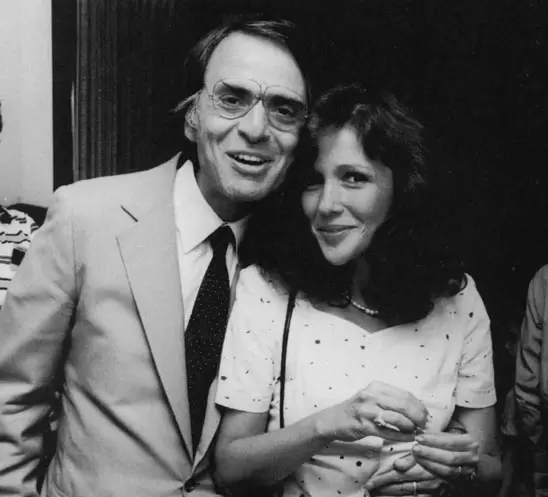
The Warning That Refuses to Fade
Carl Sagan’s warning about a potential ‘charlatan’ leader did not come from a place of cynicism, but from observation. He believed that when scientific literacy declines, societies become more vulnerable to manipulation. Sagan emphasized that a population unable to question authority could easily fall under the influence of someone charismatic but deceptive.
This idea is not rooted in conspiracy, but in history. Societies throughout time have seen leaders rise by appealing to emotion over evidence. Sagan feared that without a strong foundation in science and critical thinking, people might prioritize belief over fact.
He described a future where complex issues are simplified into digestible but misleading narratives. In such an environment, a persuasive figure could gain trust without accountability. The danger, he suggested, was not just the leader, but the conditions that allow such leadership to flourish.
What stands out is how calmly he presented this possibility. There was no sensationalism, only a clear and reasoned argument. That calmness is perhaps what makes the message feel even more powerful today.
A Society Drifting From Scientific Thinking
One of Sagan’s central concerns was the gradual erosion of scientific understanding in everyday life. As noted in discussions from Open Culture, he warned about a society increasingly dependent on technology, yet lacking the knowledge to understand it. This disconnect, he believed, could lead to a dangerous imbalance.
When people rely on systems they do not understand, they are more likely to trust those who claim authority over those systems. This creates fertile ground for misinformation. Without the tools to evaluate claims, individuals may accept ideas based on familiarity or emotional appeal.
Sagan also pointed to the rise of pseudoscience and superstition as indicators of this decline. When scientific reasoning is replaced by unverified beliefs, it becomes easier for misleading narratives to take hold. Over time, this shift can reshape how entire societies perceive truth.
The implications extend beyond politics. They affect health decisions, environmental policies, and even personal relationships. A decline in scientific thinking does not just change what people believe. It changes how they think.

The Role of Media and Information Overload
In today’s digital age, information is more accessible than ever before. Yet, this abundance has not necessarily led to greater understanding. In fact, it has often created confusion. Sagan anticipated a world where information overload could blur the line between fact and fiction.
Social media platforms amplify voices regardless of credibility. This democratization of information has its benefits, but it also allows misinformation to spread rapidly. When every opinion appears equally valid, distinguishing truth becomes increasingly difficult.
Sagan warned that this environment could be exploited by those seeking power. A charismatic individual with a compelling narrative could easily capture attention. In a crowded information landscape, simplicity often wins over complexity.
This dynamic creates a feedback loop. As misinformation spreads, trust in reliable sources may decline. This, in turn, makes people more susceptible to alternative narratives, even if they lack evidence.

Why the ‘Charlatan’ Archetype Still Matters
The term ‘charlatan’ is not tied to a specific individual. Instead, it represents a type of leader defined by style rather than substance. Sagan used this term to describe someone who prioritizes persuasion over truth.
Such leaders often rely on emotional appeal. They may present themselves as outsiders or saviors, offering simple solutions to complex problems. Their confidence can be mistaken for competence, especially in uncertain times.
Sagan’s concern was not just about the rise of such figures, but about society’s readiness to accept them. When critical thinking declines, the ability to evaluate leadership also weakens. This creates an opening for manipulation.
Importantly, Sagan did not suggest that this outcome was inevitable. His warning was a call to awareness. By recognizing the signs, societies can take steps to prevent them.
Lessons We Can Still Learn Today
Sagan’s message is not just a warning. It is also a guide. At its core, it emphasizes the importance of education, curiosity, and skepticism. These qualities act as safeguards against misinformation.
Encouraging scientific literacy is one of the most effective ways to strengthen society. When individuals understand how to evaluate evidence, they are less likely to be misled. This applies not only to science, but to all areas of life.
Another key lesson is the value of questioning. Healthy skepticism does not mean rejecting all information. It means examining claims carefully and seeking reliable sources. This approach fosters a more informed and resilient.
Finally, Sagan’s words remind us of the power of collective responsibility. The strength of a society depends on the engagement of its people. By staying informed and thoughtful, individuals contribute to a more stable and trustworthy environment.

A Warning Worth Remembering
Carl Sagan’s warning continues to resonate because it speaks to fundamental aspects of human behavior. It highlights the delicate balance between knowledge and belief, and the consequences of losing that balance.
Rather than viewing his message as a prediction, it may be more useful to see it as an invitation. An invitation to think critically, to value evidence, and to remain curious about the world.
In a time when information is abundant but clarity is scarce, these principles are more important than ever. Sagan’s legacy is not just about understanding the universe, but about understanding ourselves. And perhaps that is the most important lesson of all.
There is also a quiet sense of responsibility embedded in his words that feels especially relevant today. Each generation inherits not only knowledge, but the duty to question and protect it. If that responsibility is neglected, the consequences may not be immediate, but they are inevitable.