
Your cart is currently empty!
All Five DNA Building Blocks Found on Asteroid Ryugu for the First Time

Something extraordinary arrived on Earth in December 2020, sealed inside a capsule that had traveled millions of kilometers through space. JAXA’s Hayabusa2 spacecraft delivered 5.4 grams of dust collected from the surface of asteroid Ryugu, a carbon-rich body orbiting between Earth and Mars. Scientists had already found organic molecules in earlier analyses of that dust, including one of the five nucleobases that encode genetic information in DNA and RNA. But one nucleobase out of five left a gap that nagged at researchers for years. A new study published in Nature Astronomy has now filled that gap, and the results carry implications that extend well beyond a single asteroid.
Contents
show
A Quick Primer on Nucleobases
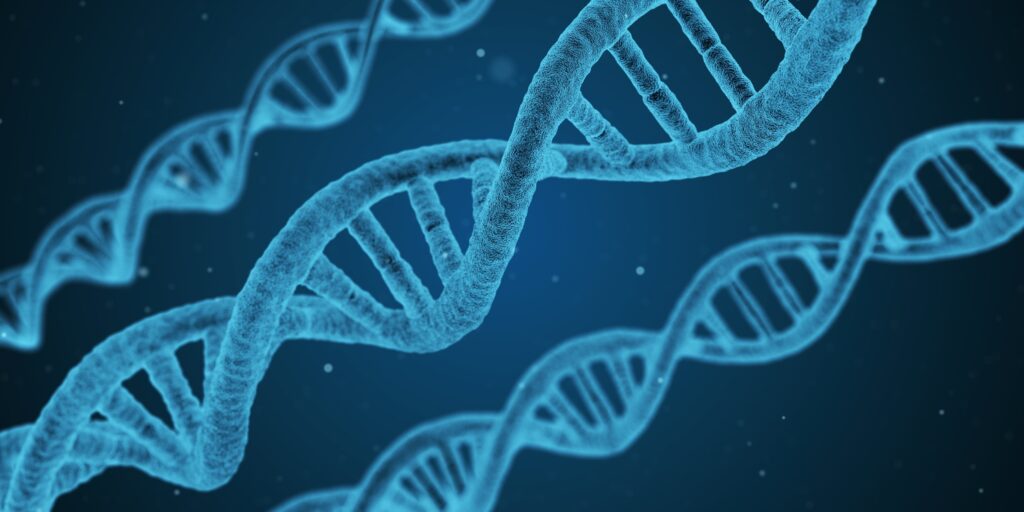
Five molecules sit at the heart of every genetic system on Earth. Adenine, guanine, cytosine, thymine, and uracil form the molecular “letters” that encode DNA and RNA. Without them, no organism could grow, reproduce, or transmit genetic information to the next generation. Adenine and guanine belong to a chemical class called purines, while cytosine, thymine, and uracil are classified as pyrimidines.
Nucleobases do more than store hereditary instructions. Nucleotides built from these molecules serve as energy carriers, such as adenosine triphosphate (ATP), and as coenzymes like nicotinamide adenine dinucleotide (NAD+/NADH). Under the RNA world hypothesis, ribonucleic acids may have acted as both genetic carriers and catalysts in the earliest biochemical systems on Earth. Where and how nucleobases first formed remains one of the most important open questions in origins-of-life research.
How Hayabusa2 Collected What No Meteorite Could

JAXA launched Hayabusa2 in December 2014 with a destination 300 million kilometers away. After arriving at Ryugu in 2018, the spacecraft performed two surface landings the following year and even fired a projectile to expose subsurface material. It returned to Earth in December 2020 with its cargo of pristine asteroid grains.
“Pristine” matters enormously here. Meteorites like Murchison, which fell in Australia in 1969, and Orgueil, which fell in France in 1864, have supplied scientists with extraterrestrial organic molecules for decades, including nucleobases. But every meteorite endures a fiery passage through Earth’s atmosphere and eventual ground contact, opening the door to contamination from biological and environmental sources. Ryugu’s samples bypassed all of that. Collected in the vacuum of space, they were opened only inside ultra-clean laboratories with ISO Class 5 and 6 conditions.
An earlier round of analysis on two separate Ryugu samples, designated A0106 and C0107, had detected only uracil along with nicotinic acid (vitamin B3) and several imidazoles. A single nucleobase out of five hinted at something interesting, but it also raised questions. Were the other four absent, or had limited sample material simply prevented their detection?
Cracking Open a Bigger Sample Changed Everything
A team of Japanese researchers set out to answer that question by working with two larger aggregate samples, designated A0480 (11.9 mg) and C0370 (8.3 mg), allocated through JAXA’s third Announcement of Opportunity. Armed with high-performance liquid chromatography coupled with electrospray ionization high-resolution mass spectrometry (HPLC/ESI-HRMS), they applied a two-step extraction protocol designed to maximize molecular recovery. Water extraction at room temperature isolates heat-sensitive molecules first. A subsequent extraction with 6 M hydrochloric acid at 110°C for 12 hours released compounds bound more tightly to the mineral matrix. Cation-exchange chromatography then separated the extracts into fractions optimized for different molecular classes.
Both samples yielded all five canonical nucleobases. Adenine, guanine, cytosine, thymine, and uracil were confirmed through retention times matching authentic standards. Capillary electrophoresis with high-resolution mass spectrometry (CE-HRMS) corroborated these identifications. Where sufficient material allowed, tandem mass spectrometry generated fragmentation patterns consistent with reference compounds for guanine and cytosine.
In a finding that echoes earlier meteorite research, the discovery adds “to evidence that life’s building blocks exist elsewhere in the solar system,” as Chemistry World reported.
What Ryugu’s Chemistry Looks Like Up Close
Beyond the five canonical nucleobases, analysis revealed hypoxanthine and xanthine, both intermediates in nucleotide biosynthesis, as well as 6-methyluracil, a non-biological structural isomer of thymine. Nicotinic acid and its isomers appeared again, as did urea, ethanolamine, and several amino acids. Every nitrogen-containing heterocycle found in Ryugu also turned up in the Orgueil meteorite, which served as a comparative reference because of its similar mineralogy and elemental composition.
Concentrations varied between Ryugu’s two touchdown sites. C0370 contained a total nucleobase concentration of 1,577 ± 35 picomoles per gram, roughly three times higher than A0480 at 507 ± 21 picomoles per gram. Such variation falls within the range already documented for other water-soluble organic molecules across earlier Ryugu analyses. About 60% of nucleobases in both Ryugu samples came from the acid extraction step, while Orgueil showed the opposite pattern, with 76% of its nucleobases recoverable from water extraction alone.
Guanine dominated the acid extract in C0370 at 445 ± 10 pmol g⁻¹, while uracil dominated Orgueil’s water extract at 2,640 ± 47 pmol g⁻¹. Given the overall similarity between Ryugu and CI chondrites in elemental and mineralogical properties, the study’s authors noted that “the marked difference in nucleobase composition is particularly striking.”
Purines vs. Pyrimidines and What the Ratios Reveal
Purine-to-pyrimidine (Pu/Py) ratios offer a useful way to fingerprint nucleobase chemistry across different extraterrestrial materials. Ryugu’s two samples showed near-equal amounts of purines and pyrimidines, with Pu/Py ratios of approximately 1.1 and 1.2. Place those values against other samples, and the contrasts become dramatic. Murchison skews heavily toward purines with a Pu/Py ratio of roughly 3.4, likely reflecting hydrogen cyanide polymerization-type reactions on its parent body. Bennu, sampled by NASA’s OSIRIS-REx mission, leans toward pyrimidines at about 0.55. Orgueil tips even further in that direction at roughly 0.10.
Ryugu’s ratios deviate from Chargaff’s rule, which states that purine and pyrimidine bases occur in a 1-to-1 ratio in all biological DNA. Because Ryugu’s nucleobases don’t follow that biological signature, their non-biological, extraterrestrial origin gains even stronger support. Detection of 6-methyluracil at levels comparable to thymine reinforces an abiotic formation process, since 6-methyluracil rarely appears in living systems.
Ammonia as a Possible Chemical Switch
One of the study’s most unexpected findings involves ammonia. A strong statistical correlation (R² = 0.89) links purine-to-pyrimidine ratios to ammonia concentrations across Ryugu, Bennu, and Orgueil samples. Put simply, the more ammonia present, the more pyrimidines a sample contains relative to purines.
Where did that ammonia come from? Ices from the outer solar system likely carried it to each asteroid’s parent body during formation. How much ammonia each body received may have tipped the chemical balance toward different nucleobases. Bennu, for example, underwent more alkaline and ammonia-rich water-based alteration than Ryugu, and its higher pyrimidine content fits neatly with that picture. Murchison, heavy on purines, may reflect an altogether different chemistry where hydrogen cyanide reactions dominated instead.
How These Molecules Might Have Formed in Space
Several laboratory experiments have produced both purines and pyrimidines under plausible astrochemical conditions. Photochemical reactions simulating interstellar ice chemistry generated nucleobases dominated by uracil, with very low Pu/Py ratios around 0.034. Proton irradiation of formamide (HCONH₂) using meteorite powders as catalysts yielded ratios between 0.38 and 1.3, much closer to Ryugu’s values.
No one has yet detected formamide in any meteorite or asteroid sample, but its presence in interstellar clouds and comets implies it was likely incorporated into asteroidal parent bodies. Urea, the most abundant compound identified in the current Ryugu extracts, bears a close structural resemblance to formamide. High-energy irradiation from gamma rays associated with the decay of short-lived radionuclides like aluminium-26 may have driven the conversion of small nitrogen-bearing molecules into nucleobases. Laboratory experiments have demonstrated that similar irradiation processes can produce amino acids and sugars, lending plausibility to this pathway for nucleobase synthesis as well.
From Asteroid to Early Earth

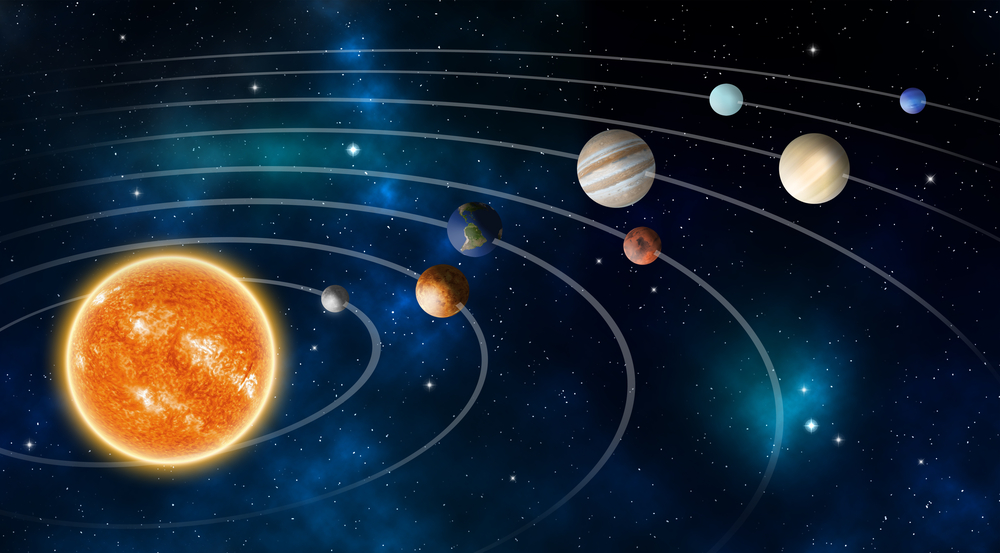
Carbon-rich asteroids across the solar system carry nucleobases, though each body’s chemical fingerprint reflects its own formation history and parent body environment. Murchison, Orgueil, Bennu, and now Ryugu each record a slightly different version of the same chemical story. What makes Ryugu’s contribution especially valuable is its provenance. Collected in space and shielded from terrestrial contamination, these samples preserve one of the clearest records of ancient solar system chemistry, with materials largely unchanged over approximately 4.5 billion years.
Confirming all five canonical nucleobases in pristine asteroid material strengthens a hypothesis that has gained momentum for decades. Asteroids may have served as delivery vehicles, seeding early Earth with the molecular raw materials necessary for the emergence of RNA and DNA. As a recent analysis put it, the discovery makes “the origin of life part of a much larger cosmic chemical story.” And with each new sample that reveals these fundamental molecules, that story becomes harder to dismiss.
Source: Koga, T., Oba, Y., Takano, Y., Naraoka, H., Ogawa, N. O., Sasaki, K., Sato, H., Yoshimura, T., & Ohkouchi, N. (2026b). A complete set of canonical nucleobases in the carbonaceous asteroid (162173) Ryugu. Nature Astronomy. https://doi.org/10.1038/s41550-026-02791-z