
Your cart is currently empty!
Scientists Say They’ve Created A Pill That Could Let Humans Live To 150

For as long as people have been getting older, someone has been trying to sell the idea that aging can be slowed, reversed, or somehow bargained with. That is part of what made the latest claim explode online so quickly. A Chinese biotech startup has been linked to bold headlines suggesting a pill could one day help humans live to 150, turning a niche area of longevity science into a full-blown viral talking point. On paper, it sounds like the kind of breakthrough that would rewrite medicine, retirement, family life, and maybe even the way people think about death itself. It is also exactly the sort of claim that social media loves most: simple, hopeful, futuristic, and just plausible enough to feel like it might be real. In a world where people are constantly being told technology is about to change everything, the idea that science may finally be preparing to take on aging itself feels almost inevitable, even if it still sounds unbelievable.
Contents
show
The truth is more interesting and a lot less tidy. There is real science underneath the hype, and that is why the story has stuck. Researchers have genuinely been studying a compound called PCC1, which comes from grape seeds and appears to target old, damaged cells often referred to as “zombie cells.” Those cells are believed to play a role in inflammation and age-related decline, making them a serious area of interest in anti-aging research. But there is a very big difference between a promising lab finding and a pill that can carry people to 150 years old. That gap is where this story lives, suspended somewhere between legitimate scientific curiosity and the oldest fantasy in human history. Science is not fake, but the way it is being talked about online makes it sound much closer to reality than it actually is, and that is where things start to get messy.

Why This Claim Spread So Fast Online
The reason this story moved so quickly is obvious the second you read the headline. “Scientists say they’ve made a pill that could let you live to 150” does not sound like ordinary health news. It sounds like the beginning of a future that people have been imagining for centuries. It also arrives at a moment when people are already primed to believe that biotech, AI, and personalized medicine are about to unlock things that once seemed impossible. When a claim like this appears, it does not need much help to spread. It already carries its own momentum because it taps into something universal: almost everyone has wondered what life would look like if the human body did not begin breaking down so aggressively with age.
What makes it even more shareable is that it borrows just enough real science to sound convincing. The startup tied to the story, Lonvi Biosciences, reportedly claims its formula targets senescent cells, the old cells that linger in the body and may contribute to aging and disease. According to the material circulating online, the company’s CEO described the capsule in striking terms, saying, “This is not just another pill. This is the Holy Grail.” That kind of quote practically guarantees attention, especially when it is paired with the idea that extreme longevity could move from science fiction into pharmacy shelves. Once you add a dramatic quote, a “secretive biotech lab” vibe, and a promise of living well beyond 100, the internet does the rest.
There is also a cultural reason stories like this hit so hard. Aging is one of the few universal experiences nobody can opt out of, and any claim that promises more time instantly becomes emotional. Some people read it as hope. Others read it as hype. Either way, it triggers a reaction. That is why these stories often become much bigger than the science itself. They are never just about cells and molecules. They are about fear, ambition, status, and the uncomfortable fact that most people would like more life, provided it comes with fewer aches, less loss, and some guarantee they will still recognize the world around them. That emotional pull is exactly what makes stories like this so powerful and so dangerous at the same time.

The Science Behind the So-Called “Zombie Cells”
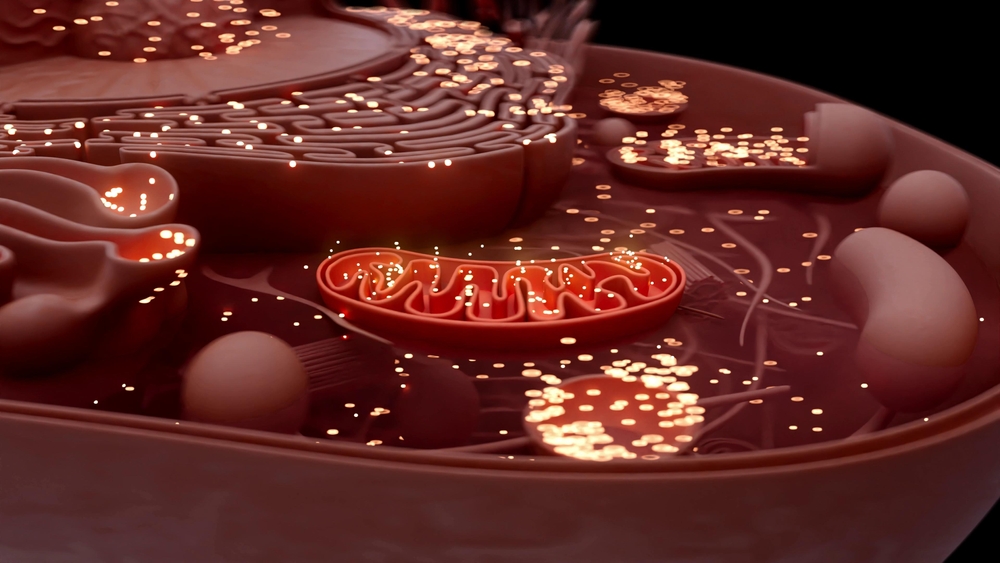
At the center of the claim is a real scientific idea that researchers have been exploring for years. Senescent cells are damaged or aged cells that stop dividing but do not die when they should. Instead, they stay in the body and can release inflammatory signals that may affect nearby tissue. Because of that, many scientists believe these cells may contribute to age-related decline, frailty, and a range of chronic conditions. This is where the nickname “zombie cells” comes from. They are not fully functioning, but they also refuse to go away, and over time, that buildup may create a biological environment that makes aging worse rather than better.
That has led to growing interest in treatments designed to clear these cells out or reduce the harm they cause. In longevity science, this area is often referred to as senolytics. The basic theory is simple enough to understand, even if the biology is not. If these cells help create the physical wear and tear associated with aging, then removing them might improve health later in life. It is a serious and active field of study, not a fringe fantasy, and that is one reason this story cannot be dismissed as pure nonsense. Scientists are not chasing immortality in a comic-book sense, but they are trying to understand whether some of the processes we accept as “normal aging” might actually be treatable.
Lonvi’s pitch leans directly into that science. The company claims its PCC1-based capsule does more than just target aging in the abstract. It reportedly says the treatment can strengthen cells, prevent deterioration, and maintain energy production over time. The promise is not only that people could live longer, but that they could stay healthier while doing it. That distinction matters because longevity research is not just chasing extra years. In many cases, the real goal is extending healthspan, meaning the number of years people remain physically and mentally well enough to enjoy life rather than simply endure it. That is a much more realistic and medically useful ambition, even if it is not quite as headline-friendly as “live to 150.”

What Pcc1 Actually Is and What Researchers Found
PCC1, or procyanidin C1, is a real compound found in grape seed extract and other plant sources. It has been studied for antioxidant and anti-aging properties, and it is not something invented out of thin air for a clickbait headline. The research most often connected to the current claim comes from scientists at the University of the Chinese Academy of Sciences, whose work found that PCC1 appeared to selectively target senescent cells in mice and showed potential for improving physical function and survival in certain aging-related models. That is why this story has managed to sound more convincing than the average internet miracle cure. It is built on something real, and that makes it easier for people to assume the rest of the claim must be real too.
That is where things become easy to exaggerate. The viral version of the story tends to leap from “interesting findings in mice” to “human life extension is around the corner.” But the actual research does not make that jump. Even the study itself stressed caution and said, “Further work will be needed to assess whether PCC1 can be safely and effectively translated for human use.” That is not the language of a finished miracle. It is the language of early-stage scientific promise, which is exciting in a lab and far less cinematic on a social feed. This is often the exact point where a legitimate scientific development gets transformed into something much bigger than it currently is.
The startup’s public framing, however, is much bolder. According to the claims now circulating online, Lonvi says the treatment increased overall lifespan in mice and dramatically extended life from the first day of treatment. Its Chief Technology Officer was also quoted as making a striking prediction, saying, “Living to 150 is definitely realistic,” and adding, “In a few years, this will be the reality.” Those quotes are exactly the kind of thing that turns a technical story into a viral one. They are also exactly the kind of statements that demand more scrutiny than enthusiasm. Bold predictions may be good for headlines, but medicine is not built on confidence alone.
The Biggest Issue is That None of This Has Been Proven in Humans
This is the point where the fantasy runs into the wall of actual medical science. A very large number of compounds have looked impressive in mice and failed to become meaningful treatments for people. That does not mean the science was fake. It means biology is difficult, translation is slow, and human bodies are far more complicated than controlled animal models. The history of medicine is full of early breakthroughs that did not survive the journey from laboratory excitement to real-world treatment. That is why experienced scientists are usually much more cautious than founders, influencers, and viral posts when talking about “game-changing” discoveries.
That is also why experts in aging research consistently urge caution whenever senolytic claims start sounding too revolutionary too quickly. PCC1 may be a genuinely promising compound, but no established human clinical trials are proving it can safely extend lifespan, and there is no regulatory approval anywhere in the world for a drug that can make humans live to 150. Claims suggesting otherwise are not just premature. They are misleading. That is especially important in a space where people are often emotionally vulnerable to promises about disease, decline, and extra time. Once a story like this starts circulating widely, it becomes very easy for people to confuse possibility with proof.
There is also a practical issue that gets buried beneath the hype. Even if a compound shows promise, turning it into a legitimate medical treatment would require years of additional work. Researchers would need to establish safety, dosage, long-term effects, interactions, and measurable benefits in actual people. That process is not glamorous, and it does not fit neatly into a viral post. But it is the difference between science and salesmanship. Right now, PCC1 belongs much closer to the first category than the second, even if some of the language around it sounds like a product launch from the future.
Why the Longevity Industry is Booming Anyway
Even if this specific claim gets ahead of itself, the wider industry behind it is very real. Longevity has become one of the most aggressively funded and closely watched corners of biotech, with startups, investors, and governments all paying increasing attention to the possibility of slowing biological aging. China, in particular, has become a major player in this space as anti-aging research shifts from fringe interest to commercial ambition. That broader context helps explain why a story like this appears now rather than ten years ago. What once sounded eccentric is now being packaged as innovation, and that shift has changed how the public responds to these kinds of claims.
The appeal is obvious. A treatment that could delay age-related disease even modestly would have enormous consequences for healthcare, economics, retirement, and quality of life. That means there is a lot of money, status, and political interest attached to any research that hints at extending healthspan. It also means the field attracts a dangerous amount of overstatement. Once investors, founders, and viral media all start speaking at once, careful scientific caveats tend to get trampled by the louder promise of a world where aging becomes optional. In that environment, it becomes incredibly easy for a small scientific finding to be inflated into something that sounds civilization-changing before the evidence has actually earned that level of attention.
That is why misinformation thrives so easily in this space. It is not just that people want to believe in a miracle pill. It is in the market’s best interests when they do. A compound can be real, the science can be partially credible, and the public story can still become wildly distorted by commercial interests and internet momentum. That is what makes longevity stories so difficult to cover responsibly. The truth is rarely boring, but it is almost always less magical than the version designed to go viral. And yet, the magical version is usually the one that spreads first.
If Humans Really Could Live to 150, the World Would Look Very Different
There is also a bigger question hiding beneath all the chemistry and hype. If medicine ever really does push human life anywhere near 150, society would not simply keep functioning the same way with extra birthdays added on top. It would force a redesign of nearly every institution built around the assumption that human life has a much shorter arc. Work, retirement, healthcare, inheritance, parenting, housing, and even relationships would all be reshaped by the possibility of radically extended lifespans. It sounds futuristic, but once people begin seriously talking about longevity breakthroughs, these questions stop being abstract and start becoming part of the real conversation.
That future sounds thrilling to some people and exhausting to others. More years only feel like a gift if those years are healthy, meaningful, and accessible to more than just the wealthy. Otherwise, life extension becomes less of a medical breakthrough and more of a social dividing line. Who gets to live dramatically longer? Who pays for it? Who gets left behind? Those are not science-fiction questions anymore. They are the kind of ethical questions that start appearing the moment anti-aging science moves from laboratory possibility into real-world policy and commerce. The fantasy of living longer is easy. The politics of it would be much harder.
And maybe that is why stories like this land so powerfully. They do not just flirt with immortality. They force people to imagine what more time would actually mean. Not just more youth, but more history, more loss, more reinvention, more boredom, more adaptation, and more uncertainty. It is one thing to fantasize about defeating aging. It is another to picture what kind of world would be waiting on the other side if someone actually pulled it off. The promise of longevity sounds glamorous in a headline, but the reality would be far more complicated than simply “more life equals better life.”
The Takeaway is Simple: Fascinating Science, Wildly Overcooked Claim
There is a reason this story has captured so much attention. It sits right at the intersection of legitimate research and irresistible fantasy. PCC1 is real. Senescent-cell science is real. The broader field of longevity research is moving faster and attracting more serious interest than it did a decade ago. None of that should be laughed off. There is enough here to justify curiosity and even cautious optimism about what aging research might eventually achieve. It is not unreasonable to think medicine may one day become much better at delaying the damage associated with growing older.
What is not justified is pretending that a mouse study and a startup’s confidence amount to proof that humans are about to start living to 150. They do not. At least not yet. Right now, this story says more about the internet’s appetite for miracle futures than it does about medicine’s current ability to deliver them. The science deserves attention, but the headline deserves skepticism. If anything, this is a reminder of how quickly modern health stories can be turned into something more dramatic, more clickable, and much less accurate than the underlying evidence actually supports.
If a genuine anti-aging breakthrough of this scale ever does arrive, it probably will not first appear as a neat viral promise wrapped around a dramatic quote and a shiny capsule. It will arrive through years of clinical testing, repeated scrutiny, regulatory hurdles, and a mountain of evidence strong enough to survive outside the lab. Until then, this is best understood for what it is: a fascinating glimpse at where science is exploring, and a reminder that humans remain very easy to seduce whenever someone suggests time itself might finally be negotiable.
Sources:
- Xu, Q., Fu, Q., Li, Z., Liu, H., Wang, Y., Lin, X., He, R., Zhang, X., Ju, Z., Campisi, J., Kirkland, J. L., & Sun, Y. (2021). The flavonoid procyanidin C1 has senotherapeutic activity and increases lifespan in mice. Nature Metabolism, 3(12), 1706–1726. https://doi.org/10.1038/s42255-021-00491-8
- Campisi, J., & Di Fagagna, F. D. (2007). Cellular senescence: when bad things happen to good cells. Nature Reviews Molecular Cell Biology, 8(9), 729–740. https://doi.org/10.1038/nrm2233
- PCC1 chromatin DNA-binding EKC/KEOPS complex subunit PCC1 [Saccharomyces cerevisiae S288C] – Gene – NCBI. (n.d.). https://www.ncbi.nlm.nih.gov/gene/1500489
Aging research, anti aging drug, anti aging pill, anti aging research, biotech breakthrough, future medicine, grape seed extract, health news, human lifespan, life extension, life extension research, live to 150, longevity pill, longevity science, longevity startup, PCC1, Science news, senescent cells, viral science story, zombie cells