
Your cart is currently empty!
Michael Sheen Used £100,000 of His Own Money to Wipe £1 Million in Debt for 900 Strangers
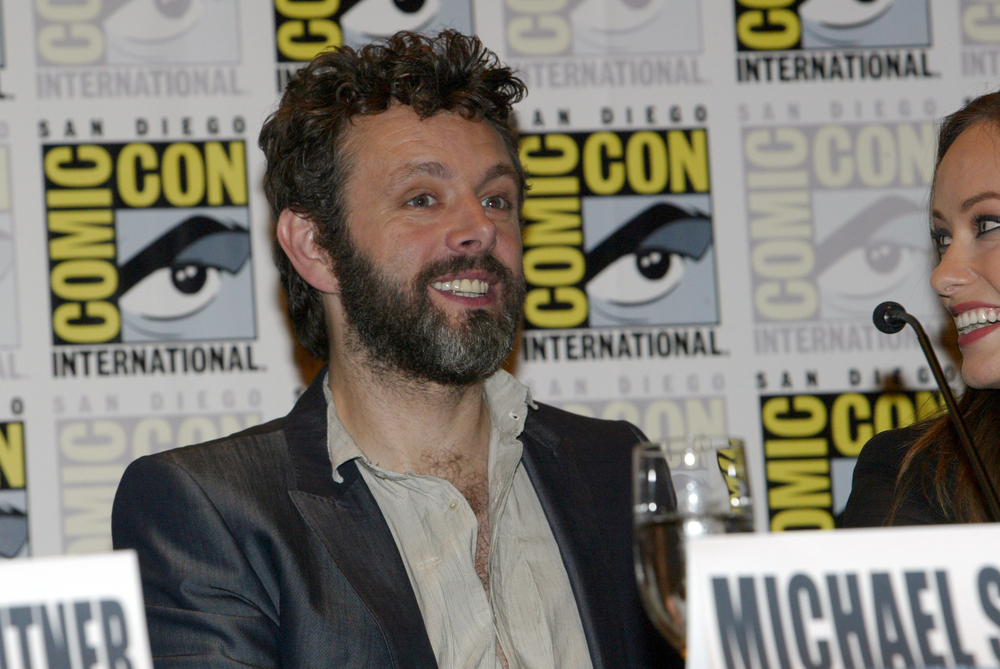
Michael Sheen walked into a post office in Port Talbot and asked to withdraw £100,000. A young woman behind the counter thought he was joking. When she realized he wasn’t, she turned to a colleague for help. She could not process the request.
Contents
show
What Sheen planned to do with that money would take two years, a secretly formed company, and a willingness to give away nearly everything he had left. It would also become one of the most unusual acts of financial activism ever attempted by a working actor. But before any of that could happen, Sheen had to confront something closer to home, something rooted in a childhood he once thought was comfortable and a town slowly losing its reason to exist.
Growing Up on the Edge in Port Talbot
Born in Newport and raised from age eight in Port Talbot, Sheen grew up in a household that never felt poor. His father worked his way from the factory floor to middle management at the local steelworks. His mother worked as a secretary. By every surface measure, they were a stable, ordinary family. “I always felt like we were doing all right, but in retrospect, we were barely getting by,” Sheen has said.
Poverty surrounded him, but he didn’t see it. He was consumed by acting and youth theatre throughout his teenage years, so absorbed that he can barely remember the 1984 miners’ strike that shook Port Talbot. Class awareness didn’t come until later, when he arrived at RADA in London and began to understand where his family had actually sat on the economic ladder.
From Hollywood to Homecoming

Sheen’s career took off in the theatre before moving to film, where he became known for disappearing into real-life figures. He played Tony Blair three times across separate productions, and earned wide acclaim for his portrayals of David Frost’s famous interview subject Richard Nixon and football manager Brian Clough in films like Frost/Nixon and The Damned United. Hollywood came calling, and for years, he lived in Los Angeles, where his daughter from a former relationship with actor Kate Beckinsale was growing up.
Everything shifted when he returned to Port Talbot to stage The Passion, a sprawling three-day theatrical event performed with 1,000 residents. Working so closely with community organizations exposed him to hardships he had been oblivious to as a child. He learned about young carers looking after ill or disabled parents, and about small organizations running on shoestring budgets that kept getting cut. A woman who had lost her son, a schoolfriend of Sheen’s, had set up a grief counselling group to fill a gap in local services. Months later, funding dried up, and it closed. Each story made him ask harder questions about why these gaps existed at all.
A Refugee Camp Visit That Changed Everything
A visit to a refugee camp with UNICEF deepened his sense of obligation. Sheen watched a hungry child pick grains of rice from caked mud and asked how quickly he could get money from his own bank account to help that specific child. He was told it didn’t work that way.
Something broke open in him. He made a private bargain with himself. He could walk away and return to his comfortable life, and nobody would blame him. But he decided he wouldn’t do that. If he couldn’t help that one child directly, he would find another way to act. Going home and forgetting was no longer an option.
Selling Everything for the Homeless World Cup

In 2019, Sheen led Cardiff’s bid to host that year’s Homeless World Cup, an annual tournament that brings together 500 players from 50 countries, all of whom have experienced homelessness. When the funding collapsed, he faced a stark choice. He sold his houses in Los Angeles and Wales to keep the event alive.
It wiped him out. He was left with nothing and saddled with heavy personal debt, a burden he says he is still paying off. His partner, actor Anna Lundberg, was pregnant with their first child at the time. Fear was reasonable. Resentment from a partner would have been understandable. “Anyone would have been within their rights to go, ‘Sorry, I didn’t sign up for this.’ It could have gone either way, but I’m very glad that it went the way it did. I just couldn’t have got through that without her,” Sheen has said.
He lost his financial safety net, but learned something unexpected. His earning power as an actor meant he could rebuild. And the experience of losing everything taught him how little of it he actually needed.
Declaring Himself a “Not-for-Profit” Actor
In 2021, Sheen made a public pledge to funnel his acting earnings into causes and community projects. He described himself as a “not-for-profit” actor. It sounded like a throwaway quip, but it was grounded in genuine conviction. He acknowledged that he sometimes looked at peers with similar careers and noticed what they had that he didn’t. But he had made a conscious choice and felt at peace with it.
His commitment has extended beyond debt relief. He recently announced plans to fund a new theatre company to replace National Theatre Wales after it folded, adding yet another financial obligation to a life already organized around giving.
Inspired by John Oliver’s Debt Buyback

Seeds for the debt project were planted in 2016, while Sheen was still living in Los Angeles. He watched John Oliver’s Last Week Tonight spend roughly $60,000 to purchase and erase $15 million worth of US medical debt. Oliver’s stunt was entertaining television, but it also exposed something deeply wrong with how debt markets operated.
Sheen wondered if he could do something similar in the UK. He quickly discovered that British regulations made replication far harder. Undeterred, he established the End High Cost Credit Alliance in 2018 and began educating himself about high-cost credit, debt collection, and the mechanics of how financial suffering gets packaged and sold.
Inside a Two-Year Secret Operation
Armed with £100,000 of his own money, Sheen set up a debt acquisition company. He could not attach his name to it and had to operate at arm’s length throughout. Debt-buying firms are legally permitted to purchase bundles of existing debt at a fraction of face value, since that debt loses worth over time as it passes between collectors. Sheen used that mechanism to acquire roughly £1 million in debt owed by about 900 people across South Wales, and then immediately cancelled it.
Data protection laws meant he never learned the identities of those he helped. He knew only where they lived and the type of debt they carried. What he expected to take a few weeks stretched into a covert two-year operation, documented for a Channel 4 programme titled Michael Sheen’s Secret Million Pound Giveaway. At one point, the process grew so complicated that Sheen considered abandoning it entirely.
Steelworkers in Tears and a Cafe Conversation

What kept him going was a conversation in a Port Talbot cafe. In late 2024, Port Talbot’s last blast furnace shut down, ending traditional steelmaking in South Wales. Tata Steel announced 2,800 job cuts, devastating families across the region. While filming at the cafe, a woman who worked there told Sheen about steelworkers sitting at every table in tears after learning they were losing their livelihoods.
Her account hit him hard enough to push through his doubts. If those workers could face that kind of loss, he could keep fighting through paperwork and bureaucracy.
Breaking Down Myths About Debt
Much of Sheen’s motivation centers on dismantling a persistent myth. Many assume people in debt made reckless choices or spent beyond their means. Sheen sees a different reality. He has met people working two jobs who still can’t cover the basic costs of living. In the documentary, he speaks with a woman running a community gym who turned to a credit card to cover essentials. Interest rates meant her repayments barely reduced the balance.
UK personal debt has reached record levels. According to the charity Debt Justice, 10 million people in Britain are in serious financial difficulty, driven by rising rent and utility bills. In the US, household debt climbed by $93 billion by the end of 2024, reaching $18.04 trillion according to the Federal Reserve Bank of New York.
Sheen experienced his own version of credit inequality. Because of his earning potential, his debt came with manageable interest rates. Friends and neighbors in similar circumstances but with lower incomes faced punishing terms on high-cost loans, creating cycles that became nearly impossible to escape. Organizations like Responsible Finance argue that expanding credit unions and Community Development Finance Institutions could multiply affordable credit options for people shut out by major lenders.
“I Don’t Want People to Think I’m Great”

Sheen knows his “heist,” as he calls it, invites skepticism. Critics might say going public with his generosity is self-serving. He has thought about it and made a conscious decision. Using his own money proves sincerity, he believes, and visibility encourages others to take similar steps.
His broader ambition goes beyond one project. He supports a proposed Fair Banking Act, which would push banks to extend affordable credit to people excluded based on income, background, or geography. He also urges anyone in South Wales to check their accounts, since stigma around money means some may not even realize their debts have been wiped.
“I’m not doing it because I want people to think I’m great; I want us to be able to imagine an alternative to this, because this doesn’t work,” Sheen has said.
At 56, Michael Sheen has less money than most actors of his stature. He has no property portfolio, no Hollywood mansion, and debt of his own still to pay off. What he has instead is a belief that the financial system can be challenged one small act at a time, and that looking away was never really an option once he chose to look.