
Your cart is currently empty!
Trump Jokes That Karoline Leavitt May Be Behind His Bad Publicity
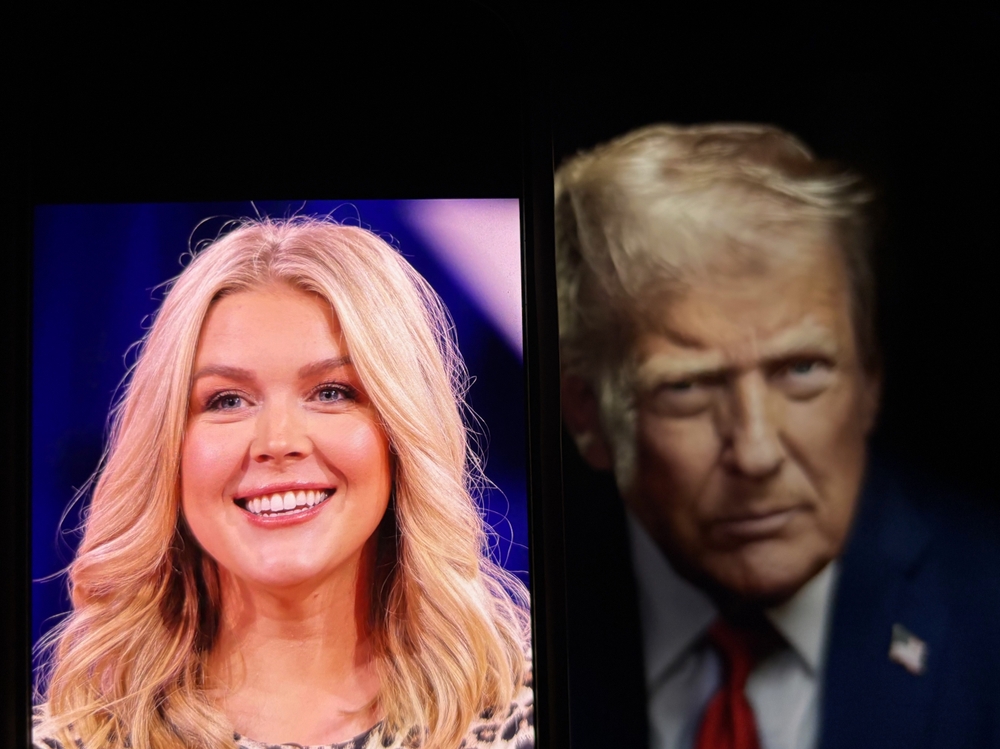
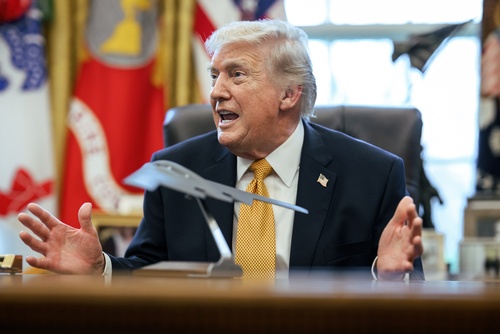
Donald Trump has once again found a way to turn a routine White House moment into a headline, this time by joking directly to Karoline Leavitt’s face that she might be responsible for his “bad publicity.” During a March 31 appearance in the Oval Office, Trump was speaking to reporters while signing an executive order when he launched into one of his now-familiar complaints about the press. But instead of keeping the focus on the media, he suddenly shifted his attention toward Leavitt, his press secretary, and delivered a line that instantly stood out: “Maybe Karoline’s doing a poor job, I don’t know.” He then looked at her and added, “You’re doing a terrible job.” The moment was awkward, funny to some, and undeniably on-brand for a president whose unscripted remarks often become bigger stories than the policy events they interrupt.
Contents
show
What makes the exchange more interesting is not just that Trump said it, but the way it fits into his larger political style. He has long mixed humor, personal commentary, grievance, and media attacks into one running performance, often leaving the public to decide whether he is joking, venting, or doing both at once. In this case, the White House later indicated the comments were made jokingly, and Trump himself followed them by asking, “Shall we keep her? I think we’ll keep her.” But even when framed as humor, the remark still landed in a political environment where every offhand comment carries meaning. That is especially true when it involves Karoline Leavitt, the youngest White House press secretary in history, who has become one of the administration’s most visible and closely watched public defenders.
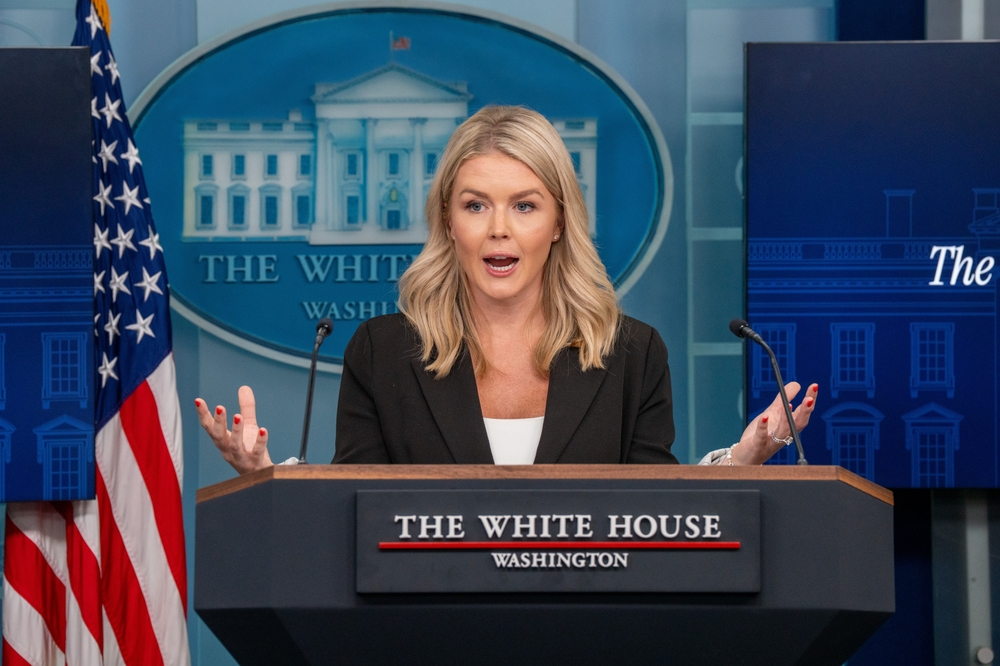
Trump Turned a Press Complaint Into a Viral White House Moment
The exchange happened during what should have been a fairly standard Oval Office event. Trump was in front of reporters, signing an executive order and fielding questions, when he once again shifted into a complaint about the media. He told the room, “I got 93% bad publicity, some people say 97, but between 93 and 97. A person that gets 97% of bad … maybe Karoline’s doing a poor job, I don’t know.” That line immediately changed the tone of the room because it moved his usual anti-press rant into something more personal and theatrical. It was not just a criticism of coverage anymore. It became a direct, public jab at the person whose job is to shape and defend the administration’s message every day.
He did not stop there. Trump turned directly toward Leavitt and said, “You’re doing a terrible job.” It was the kind of line that instantly feels designed for replay, whether or not that was the actual intention. He then followed it up with, “Shall we keep her? I think we’ll keep her,” suggesting he wanted the moment to land as a joke rather than a serious rebuke. Still, when the president jokes publicly about whether his press secretary should stay in her job, it naturally draws attention because it blurs the line between teasing and performance.
That blurring is part of why moments like this travel so quickly online. Trump has always understood that the modern press cycle feeds on spontaneity. A prepared statement about policy may get some coverage, but a line like “You’re doing a terrible job” can dominate the conversation for hours. Whether supporters saw it as playful banter or critics saw it as another example of chaos in official settings, the outcome was the same: Trump once again turned a short media availability into a story larger than the event itself.
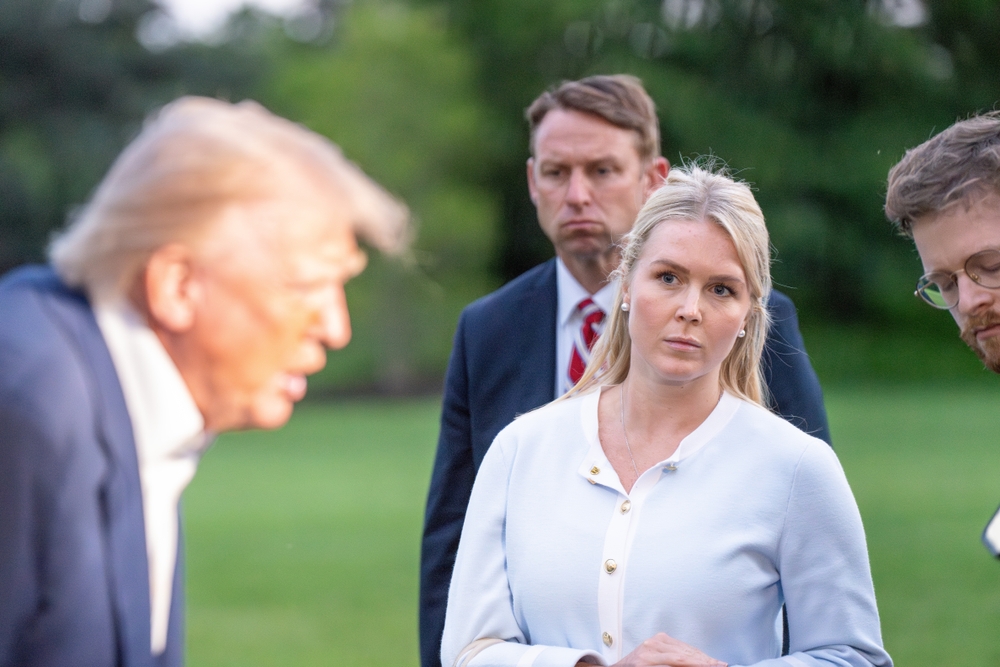
His Comments Were Framed as a Joke, But They Still Reveal Something
The White House has made clear that Trump’s comments were intended as a joke, and on one level that is easy to believe. Trump often uses sarcasm, exaggeration, and crowd-aware humor when speaking in front of cameras. He likes testing lines in real time and seeing how people react. In that sense, his comments to Leavitt fit neatly into a pattern that has followed him for years. He says something sharp, provocative, or bizarre, then leaves enough ambiguity around it for allies to describe it as humor or harmless banter.
But jokes in politics are rarely just jokes. They still reveal how a leader sees power, loyalty, image, and public attention. In this case, Trump was using Leavitt as part of a broader complaint about how he believes he is treated by the media. He was not randomly teasing a staff member in private. He was making her part of a public performance about grievance, image, and distrust of the press. That matters because it shows how central media conflict remains to Trump’s political identity. Even when he is joking, he is still reinforcing the idea that the press is against him and that the coverage he receives is unfair.
There is also a strategic edge to that kind of humor. It softens the delivery while still getting the message across. Trump can make a cutting remark, keep the room entertained, and still push his larger narrative. That is one reason his communication style remains so effective for his supporters and so frustrating for his critics. He often says things in a way that allows different audiences to hear different meanings. One person hears a joke. Another hears disrespect. A third hears a political tactic. Trump benefits from all three reactions because they all keep the focus exactly where he wants it.
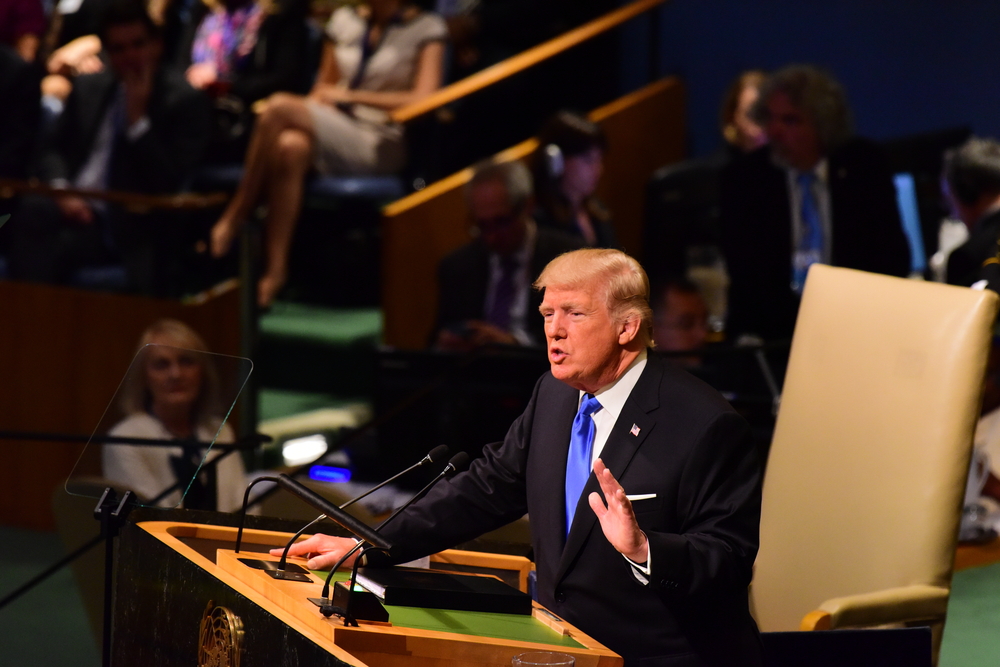
Karoline Leavitt Has Become One of the Administration’s Most Visible Defenders
Karoline Leavitt is not just another White House staffer who happened to be standing nearby. She is one of the administration’s most public-facing figures and one of the key people responsible for defending Trump’s message in a deeply polarized media environment. At 28, she became the youngest White House press secretary in history, a milestone that put immediate attention on her every move. That kind of visibility means even a joke at her expense from the president is never going to be treated as a throwaway moment.
Her role is especially demanding because serving as Trump’s press secretary is not a conventional communications job. It requires not only delivering official messaging but also keeping pace with a president whose public remarks often move faster than the prepared line. Leavitt is expected to answer for headlines as they happen, defend rhetoric that can shift without warning, and maintain confidence in front of a press corps that is often openly skeptical. In that environment, she is not just explaining policy. She is managing unpredictability in real time.
That is part of why Trump’s public teasing lands differently than it might in another workplace setting. It comes against the backdrop of a role that already demands unusually high pressure and total public composure. Leavitt has largely maintained that composure while becoming one of the administration’s most recognizable surrogates. So even if Trump meant the remark lightly, it still underscored the unusual dynamics of working as a public spokesperson in an administration where the principal can become the story at any moment.
Trump Has Publicly Zeroed In on Leavitt Before
This was not the first time Trump has singled out Leavitt during a media interaction, which is part of why the latest moment drew such quick attention. He has repeatedly brought her into the spotlight while talking to reporters, sometimes to praise her and other times in ways that feel more unpredictable. In October, while answering a question about international diplomacy as he departed Israel, Trump abruptly shifted focus and asked reporters, “How’s Karoline doing? Is she doing good?” He then followed with, “Should Karoline be replaced?”
When reporters voiced support for her, Trump reassured them that replacing her would “never happen.” But he still kept going, adding, “That face… and those lips, they move like a machine gun.” It was another example of how he often personalizes official interactions in ways that are difficult to separate from spectacle. These moments do not always fit cleanly into traditional political norms, but they do fit Trump’s instinct for making staff relationships part of the public show.
He has also spoken warmly about Leavitt in other settings. During an interview with Newsmax, he said, “She’s a star, and she’s great. I don’t think anybody has ever had a better press secretary than Karoline. She’s been amazing.” That contrast is important because it shows how Trump often moves between praise and mock criticism without much warning. He can elevate an ally one moment and put them on the spot the next, all while keeping the tone loose enough that supporters see it as part of his personality rather than a contradiction.
The Real Story Is Still Trump’s War With the Press
As much as the Karoline Leavitt moment grabbed attention, the larger point Trump was trying to make was the same one he has been making for years: that the media is fundamentally unfair to him. His complaint in the Oval Office was not really about Leavitt’s performance. It was about his belief that major news organizations continue to frame him negatively no matter what he does. He told reporters, “But, I get 93-97% bad press, fake press, all fake. I won in a landslide. When you get 93-97 bad stories, bad press, and you win in a landslide, you know what that says? People don’t believe the press.”
That argument has become one of the central pillars of Trump’s political appeal. He does not just criticize coverage. He uses media criticism as a way to validate himself in the eyes of supporters. If the press attacks him, he presents that as proof that he is fighting the establishment. If coverage is negative, he casts that as evidence that the media is disconnected from ordinary voters. It is a formula he has repeated so often that even when the exact numbers he cites are unsupported, the underlying message still lands with people who already distrust major institutions.
What keeps this strategy effective is that it does more than defend him from criticism. It actively reshapes the battlefield. Instead of debating whether a particular controversy is true or fair, Trump shifts the conversation toward whether the media itself can be trusted. That is a much broader and more emotionally charged argument, and it allows him to turn almost any uncomfortable headline into a new grievance story. The Leavitt exchange may have looked like a joke, but it was also another chapter in that larger and highly familiar political script.
Why Moments Like This Keep Resonating Beyond the Joke
There is a reason small moments like this continue to dominate headlines long after the actual event ends. In today’s political culture, personality often travels faster than policy. A joke, insult, side comment, or improvised line can spread more widely than an executive order ever will. Trump understands that better than almost any modern politician. He has built much of his political power on moments that feel unscripted, meme-ready, and emotionally legible within seconds.
That does not mean these moments are trivial. In many ways, they reveal more than formal speeches do. They show how a president thinks in real time, how he treats the people around him, and what themes he returns to when he is not reading from a prepared script. In this case, the themes were familiar: resentment toward the press, confidence in his own political instincts, and a willingness to fold even his closest allies into the public theater of his message. That combination is a big part of why Trump remains such a singular political figure.
For the public, the real challenge is knowing how to read these moments. Some will dismiss them as harmless banter. Others will see them as signs of a political culture that increasingly values spectacle over substance. Both readings can be true at once. Trump’s line to Karoline Leavitt may have been delivered as a joke, but it also reflected the deeper mechanics of how he governs, communicates, and stays at the center of attention. That is why even a few seconds in the Oval Office can end up saying far more than they first appear to.