
Your cart is currently empty!
Archaeologists Find a One-of-a-Kind Baptismal Artifact at an Ancient Christian City Above the Sea of Galilee
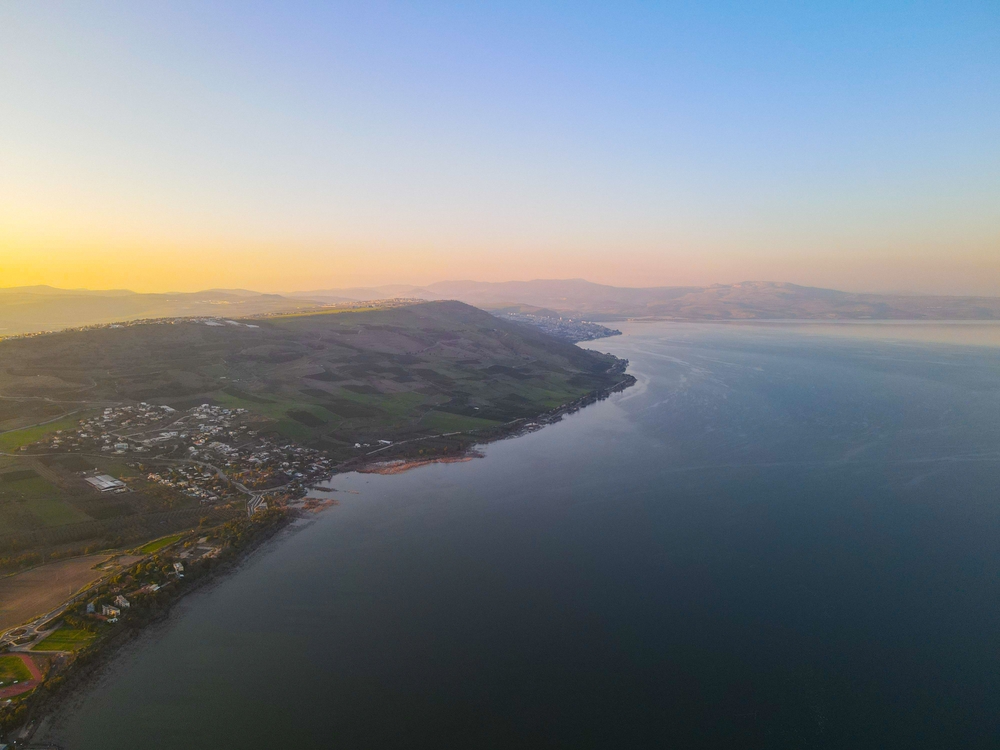
Something lay buried beneath earthquake rubble for more than 1,200 years on a hilltop overlooking one of Christianity’s most sacred bodies of water. When archaeologists finally pulled it free, they found themselves staring at an object no one had ever seen before, anywhere in the world.
Contents
show
Hippos, an ancient city perched 350 meters above the Sea of Galilee, has long rewarded those who dig into its ruins. But even by its own standards, what emerged from a small baptismal hall in the city’s cathedral complex caught researchers off guard. A weathered marble block, modest in appearance, may now rewrite part of what scholars know about one of Christianity’s oldest and most sacred ceremonies.
Where Early Christianity Took Root
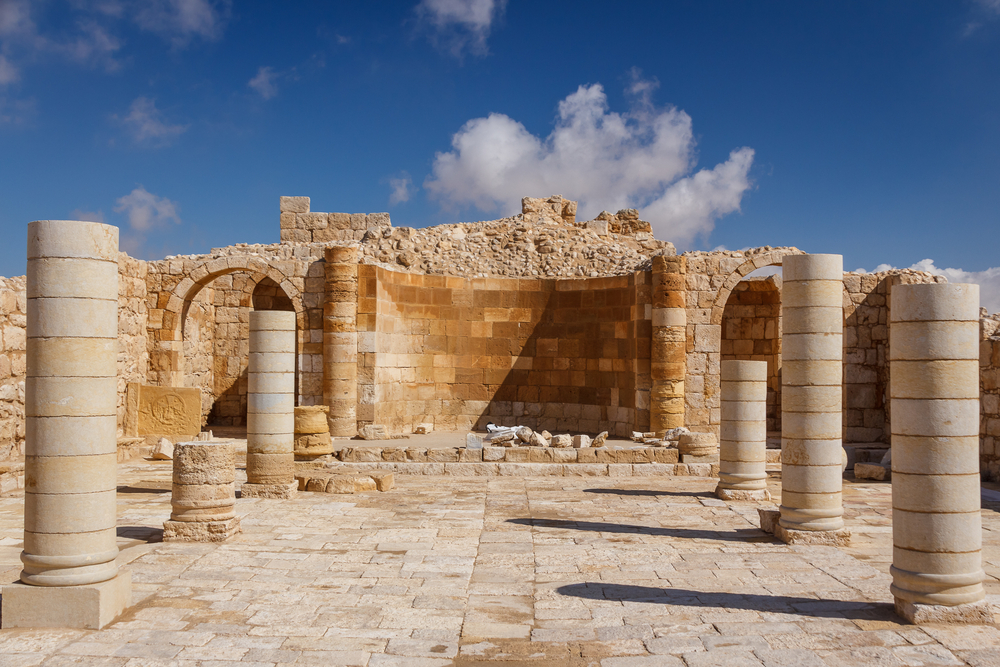
Few cities can claim as direct a connection to the birth of Christian worship as Hippos. Founded by the Seleucids and later counted among the cities of the Roman Decapolis, it occupied a commanding position on the eastern shore of the Sea of Galilee. Its territory stretched across the southern Golan and along most of the lake’s eastern coastline, reaching regions closely associated with the ministry of Jesus.
By the Byzantine period, Hippos had become a bishop’s seat within the province of Palaestina Secunda. Its first recorded bishop, Petros, attended the Council of Seleucia in 359 CE. At least seven churches stood within the city walls, five of which have been at least partly excavated. Among all the settlements ringing the Sea of Galilee during that era, Hippos held a singular distinction. It was the only Christian city on the lake, well-recognized and visible from great distances on its hilltop perch.
Even after the Islamic conquest of 635 CE brought political change to the region, the churches of Hippos continued to function. Decline came gradually as Tiberias, across the water, became the new regional capital. Hippos shrank into a fading Christian town until an earthquake in 749 CE destroyed it entirely.
A Cathedral With Two Baptismal Halls
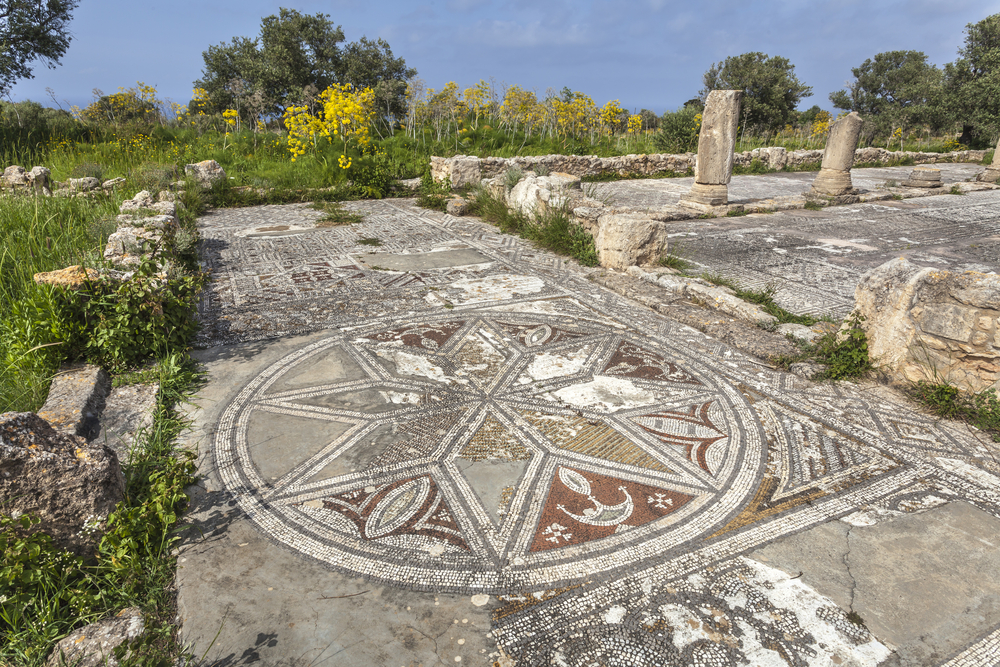
Among the city’s churches, the cathedral was the largest, built south of the main east-west road and east of the forum. It’s a complex, including the main basilica, an atrium, and an attached baptismal hall, covering an estimated 1,500 square meters.
A baptismal hall, known in Greek as a photisterion or “place of illumination,” occupied the northern wing. It followed a basilical plan with three apses and a mosaic floor bearing inscriptions in Greek. One inscription dated to 590/591 CE provided both the name of the space and a dedication to the physician-saint brothers Cosmas and Damianus, popular martyrs venerated across Syria, Palestine, and Arabia.
At the center of the main apse sat a round-quatrefoil baptismal font built of ceramic fragments. A lead pipe fed water from the wall above, while a drain near the bottom allowed continuous flow, creating what early Christians called “living water.” Among all known baptismal structures in Byzantine Palaestina, the northern photisterion at Hippos was the largest building dedicated solely to baptism.
All of that was already known. What excavators found starting in 2021, however, changed the picture entirely.
A Second Font Hidden in a Martyrion
Recent digs revealed a previously unknown southern wing attached to the main basilica. Inside, a diakonikon split into two halls contained something unexpected in its eastern room. Behind a set of carved marble chancel screens decorated with ivy branches and Maltese crosses, a second baptismal font sat wedged into a corner between the screens and the basilica wall.
Smaller and simpler than its northern counterpart, the font had a rounded basin with short cruciform arms, measuring roughly half a meter across and deep enough to hold about 110 liters of water. Unlike the northern font, it had no drain. Water had to be carried in and emptied by hand, providing only still water for the rite. Researchers believe its compact size points to a specific purpose. It was likely designed for baptizing infants and toddlers, while the larger northern font served adults.
No other early church is known to have operated two photisteria simultaneously. Before 590/591 CE, only the northern font existed. Evidence suggests the southern font was added during or after renovations concluded that year, built on top of an existing opus sectile floor in what had originally functioned as a martyrion, a chapel for venerating saints. A marble reliquary found in the same space, weighing 42 kilograms and bearing a small Maltese cross on its front, confirmed the room’s dual identity as both a place of baptism and a site of sacred veneration.
An Artifact With No Known Match
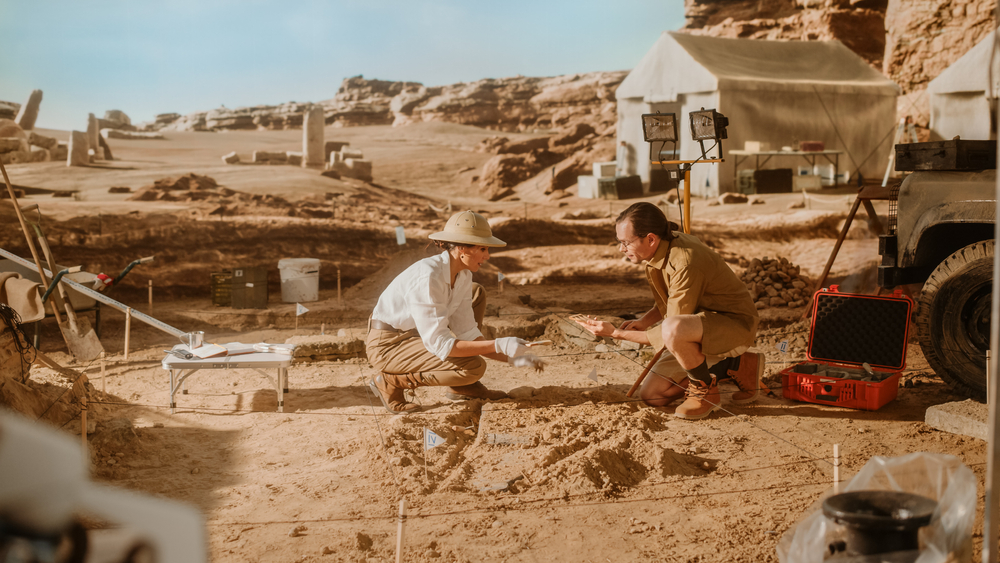
Among the rubble surrounding the southern font, excavators recovered an assemblage of liturgical objects scattered by the force of the 749 CE earthquake. One item stood apart from the rest.
A rectangular marble block from the Prokonnesos quarries, 42 centimeters long and weighing 23.7 kilograms, bore three identical hemispheric cavities arranged in a row. Each cavity measured 14 centimeters in diameter and 5 centimeters deep, capable of holding just over a third of a liter. Carved rims and stylized lotus leaves decorated the upper face, while most other surfaces were polished smooth. One short side retained gentle chisel marks, suggesting it once rested against a wall.
At first, the block resembled a mensa ponderaria, a public measuring table from the Roman world. But the cavities were identical in size and lacked any outlets at their bottoms, ruling out that explanation. Michael Eisenberg, the University of Haifa archaeologist who led the excavations and recently published the findings in the journal PEQ, recalled the moment of discovery with candor. “The object was nothing special at first glance,” he told Fox News Digital. “But here is exactly where the archaeological and liturgical studies came into play.”
After comparing it against every known ecclesiastical and secular parallel, the research team reached a striking conclusion. Nothing like it had ever been documented, anywhere.
What Were the Three Basins For?
Standard early Christian baptism involved two anointings, one before immersion and one after. A vessel designed to hold three separate substances did not fit neatly into any recorded liturgical practice. Yet its position right beside a baptismal font strongly suggested a ceremonial function tied to the rite.
Researchers now propose that each cavity held a different oil, used during a threefold anointing ceremony connected to the threefold immersion that was standard in early Christian baptism. Historical texts offer fragments of supporting evidence. Philoxenus of Mabbug, writing in the early sixth century, described a sequence of holy oil anointing before baptism, followed by three immersions, and then anointing with myron oil afterward. Other sources reference varied local anointing traditions, though none explicitly describe three distinct oils used together in a single rite.
If the interpretation holds, the marble block records a stage of the baptismal ceremony that has gone entirely unrecorded in written sources. Regional liturgical traditions often developed independently, and many disappeared without documentation. “Realizing that it is a one-of-a-kind artifact that may fill unknown regional and perhaps wider lacunae in one of the most ancient and sacred Christian ceremonies was a complete surprise,” Eisenberg said.
Bronze, Marble, and an Earthquake That Preserved It All
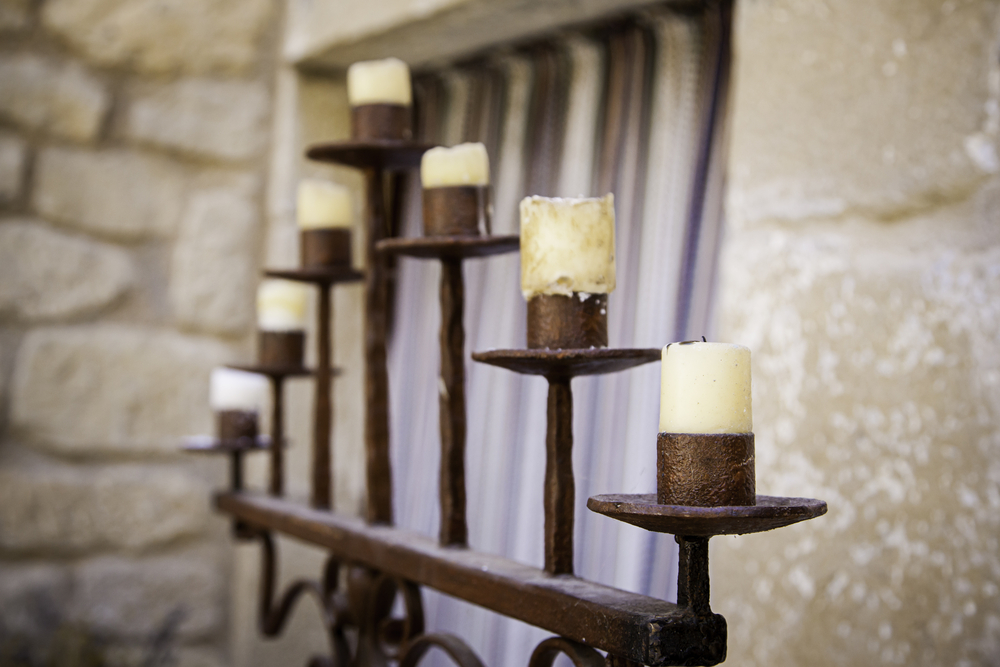
Beyond the marble block, the assemblage recovered from the southern photisterion included several other objects of considerable interest. A large bronze candelabrum, found just south of the font, consisted of a three-legged base with bulbous feet resembling animal hooves and a stem topped with a Corinthian capital. At a combined weight of nearly 13 kilograms and a stem length of 105 centimeters, it dwarfs every comparable candelabrum from Byzantine Palaestina. One of its legs had broken in antiquity and been repaired with welding and four rivets, a sign of long and valued use.
A decorative round marble support block, carved with four circling tori, was also found in the debris, though no matching colonnettes or similar elements were identified nearby. Like the three-cavity block, it has no exact known parallel.
All of these objects owe their survival to catastrophe. When the 749 CE earthquake leveled Hippos, the southern wing collapsed inward, burying its contents under basalt ashlars and rubble. While the main basilica had already been partly abandoned and was later scavenged for materials, the diakonikon remained sealed. Its chancel screens, font, reliquary, candelabrum, and marble implements lay undisturbed for over twelve centuries.
Why Hippos Needed Two Fonts When No Other Church Did
Why the Hippo Cathedral required a second baptismal installation remains an open question, and one that researchers are still debating. Several theories have emerged. Growing demand for infant baptism by the late sixth century may have driven the addition. A desire to connect the baptismal rite with the cult of martyrs already present in the diakonikon could have played a role. Or perhaps the answer is more practical, with no suitable space elsewhere in the complex, the corner of the martyrion offered the only viable location.
A parallel trend supports the idea that demand for baptismal facilities grew during that period. At nearby Kursi, a monastery and pilgrimage site about five kilometers north of Hippos associated with the Miracle of the Swine, a photisterion with a baptismal font was added to the basilica’s southern apse in 585 CE. At least five other sites across Byzantine Palaestina saw similar additions around the same time.
Still, none of those sites had two functioning baptismal halls within a single church complex. Whatever drove the decision at Hippos was without precedent.
A Time Capsule on a Hilltop
Hippos has spent the last two and a half decades steadily reshaping how scholars understand Christian life around the Sea of Galilee. Just last year, excavators found a 1,600-year-old care facility for the elderly at the site, possibly the world’s oldest known nursing home. Each season of fieldwork seems to produce something unexpected.
With the southern photisterion, the pattern continues. Eisenberg sees the implications extending well beyond a single artifact or a single church. “In different regions, distinct liturgical traditions developed, many of which are not documented in written sources,” he said. “This find offers a rare glimpse into how the baptismal rite was shaped and practiced in the Byzantine Christian community of Hippos.”
More excavation is planned. More of the cathedral complex remains underground, and the southern wing itself has only been partially exposed. For now, a modest marble block with three small basins, easily overlooked at first glance, has opened a window into ceremonies that took place on a hilltop above the Sea of Galilee more than fourteen centuries ago, ceremonies that no surviving text ever described.
Source: Eisenberg, M., & Kowalewska, A. (2026). The Southern Photisterion at the Hippos Cathedral and its Unique Byzantine-Period Liturgical Implements. Palestine Exploration Quarterly, 1–22. https://doi.org/10.1080/00310328.2026.2634232