
Your cart is currently empty!
Capybaras Live Among Caimans Without Becoming Prey, and One Surprising Reason Explains Why
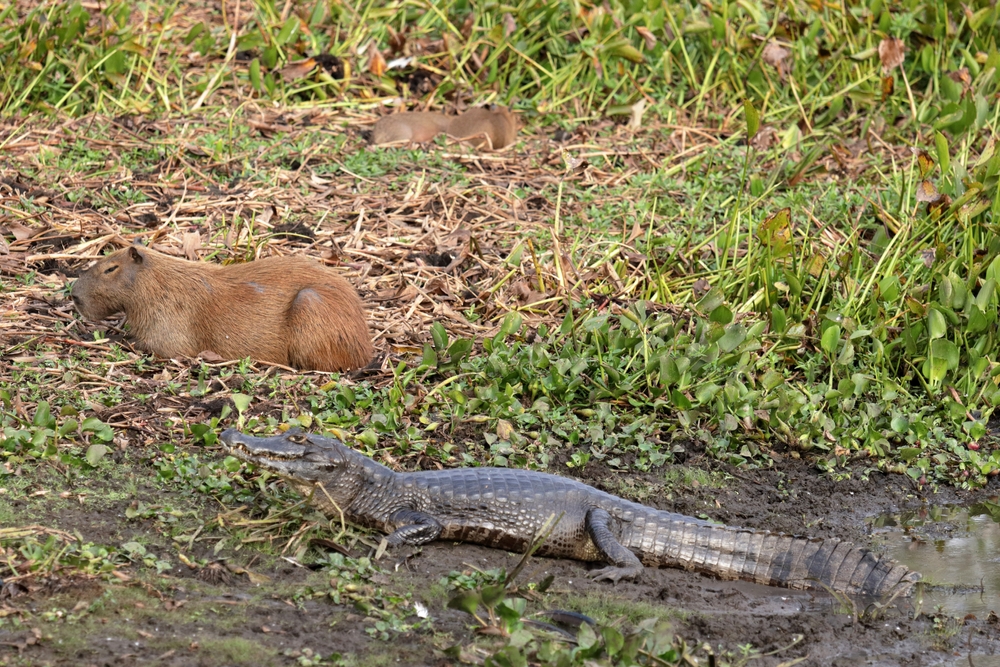
Somewhere in the wetlands of South America, a 130-pound rodent lounges at the edge of a murky river. A few feet away, a reptile with powerful jaws and armored skin floats in the shallows, eyes barely breaking the water’s surface. Any reasonable observer would expect nature to take its course. Yet the rodent does not flinch. It does not flee. It barely seems to register the predator’s presence at all.
Contents
show
Capybaras have earned a reputation as the most relaxed creatures on the planet, and viral photos of them sitting calmly beside caimans have baffled millions of people online. How does the world’s largest rodent survive in waters patrolled by crocodilians? Most would guess sheer luck or some strange evolutionary loophole. But the real answer has less to do with luck and far more to do with what a capybara is hiding behind that docile face.
Before we get there, though, it helps to understand what makes a capybara tick and why an important distinction between crocodiles and caimans changes the entire conversation.
Everyone’s Favorite Giant Rodent
Capybaras (Hydrochoerus hydrochaeris) are native to much of South America and carry the title of the largest living rodent species on Earth. Adults can weigh anywhere from 77 to 146 pounds, roughly the size of a large dog. Picture a guinea pig scaled up to the size of a Labrador retriever, and you’re in the right ballpark.
Social by nature, capybaras live in groups that can number anywhere from ten to thirty or more. Most of their day revolves around two simple activities. Eating grass and aquatic plants near the water’s edge, and cooling off in rivers, lakes, and swamps when temperatures climb. Life, for a capybara, moves at a pace most of us can only envy.
Yet that laid-back lifestyle puts them right in the path of some of South America’s most formidable predators. Jaguars prowl the riverbanks. Anacondas coil through the underbrush. And in the water itself, crocodilians wait with prehistoric patience. So how does an animal with no claws, no venom, and no particular speed survive in such company? Part of the answer starts with a correction most people never think to make.
Crocodilians, Not Crocodiles
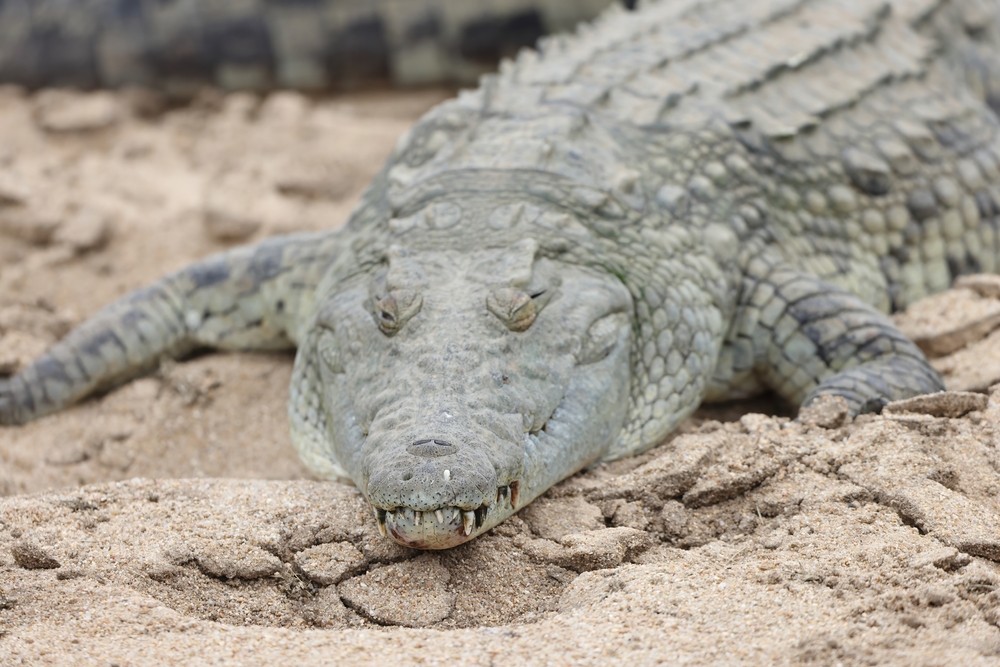
When people picture a capybara sitting beside a “crocodile,” they’re almost always wrong about the reptile in the frame. True crocodiles live primarily in Africa, Asia, and Australia. Only one species, the American crocodile (Crocodylus acutus), exists in parts of the Americas, and even then, its geographic range barely overlaps with where capybaras live.
South American waterways belong to caimans, a related but separate group of reptiles within the family Alligatoridae. Several species of caiman call these jungle rivers and swamps home, from the smaller spectacled caiman to the massive black caiman, which can exceed 16 feet in length.
So when those viral photos show a capybara cozied up beside a scaly neighbor, the reptile in question is almost certainly a caiman. And while caimans are absolutely capable of killing prey, their relationship with capybaras is far more peaceful than anyone might expect.
An Unlikely Coexistence
Dr. Elizabeth Congdon, a certified capybara expert and assistant professor at Bethune-Cookman University in Florida, has spent significant time studying these animals in their natural habitat. Speaking to IFLScience, she confirmed what the viral photos suggest. Caimans very rarely hunt adult capybaras.
“It is rare, especially when there are plenty of fish and easier prey to handle than a capybara,” Dr. Congdon explained. She added that she has personally observed the two species sleeping side by side in the wild, with neither showing signs of distress or aggression.
For caimans, hunting is a cost-benefit calculation. Fish and smaller animals require far less effort to catch and consume. An adult capybara, on the other hand, presents a challenge that most caimans would rather avoid. And that brings us to the real reason behind this strange truce.
Sharp Teeth and a Big Body
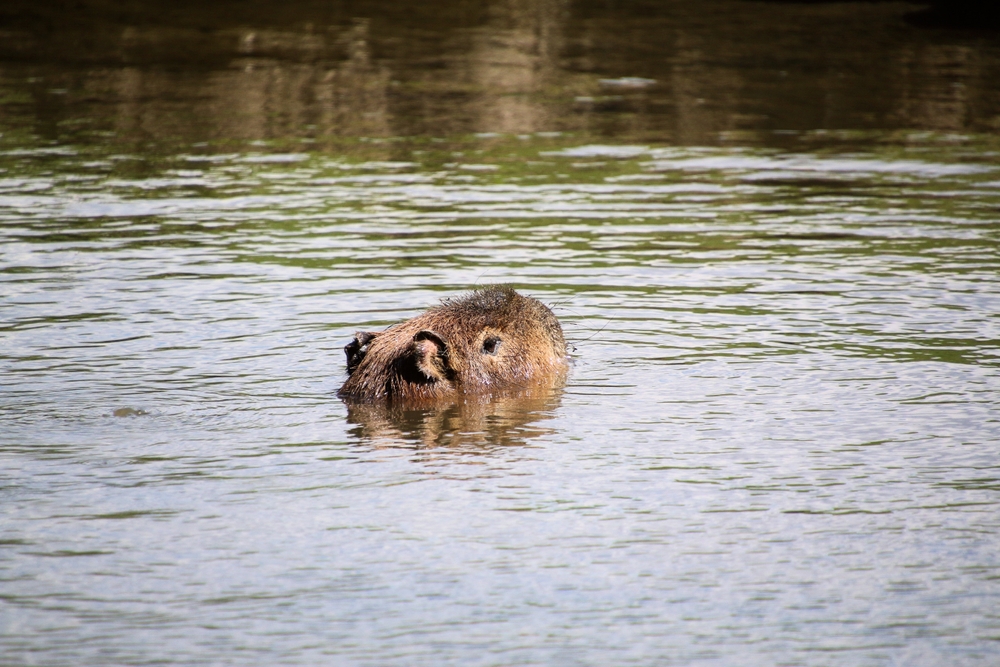
Capybaras look harmless. Round, placid, perpetually unbothered. From a distance, they could pass for oversized stuffed animals. But appearances can deceive, and any predator that mistakes a capybara for an easy meal risks learning a painful lesson.
Behind that gentle face sits a pair of massive front incisors. Like all rodents, capybaras have teeth that grow continuously throughout their lives, and those teeth are razor-sharp. Designed to shear through tough grasses and aquatic vegetation, they can just as easily slice through flesh and cause serious wounds.
Pair those teeth with a body that can weigh well over 100 pounds, and the equation shifts against the predator. A caiman attacking an adult capybara risks a bite that could damage its eyes, snout, or the soft tissue around its jaws. For an animal that relies on ambush and a quick kill, that kind of injury could compromise its ability to hunt for weeks or even permanently.
Dr. Congdon put it plainly. “Capybaras have big, sharp teeth. Combined with their body size, I think they are just not worth the trouble and risk of injury.”
In predator-prey dynamics, energy conservation matters. A caiman that sustains an injury from a capybara’s bite may burn more calories recovering than it gained from the meal. When rivers are stocked with fish and smaller, less dangerous prey, the math simply does not work in favor of attacking a full-grown capybara.
Baby Capybaras Are Fair Game
Adults may get a pass, but the same protection does not extend to the young. Baby capybaras lack the size, the powerful jaws, and the sharp teeth that make adults such risky targets. For caimans and a long list of other predators, juvenile capybaras represent a much easier meal.
Dr. Congdon was blunt about this reality. “Babies are snacks for lots of things,” she noted, adding that even birds of prey target young capybaras.
Group living offers some degree of protection. Adult capybaras tend to keep their young close, and the sheer number of watchful eyes in a herd can deter opportunistic hunters. But losses among juveniles remain a natural part of life in the wetlands, and no amount of parental vigilance can eliminate the risk.
Friends with Everyone
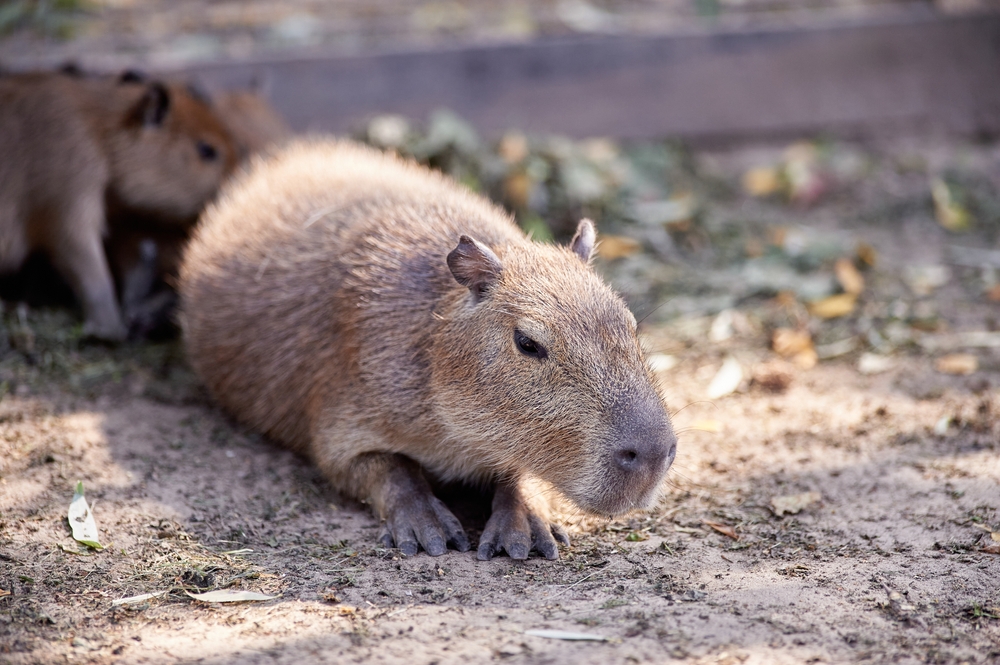
Caimans are hardly the only species that seem comfortable in a capybara’s company. Across South America and in zoos worldwide, capybaras have been photographed and filmed alongside an astonishing variety of animals, almost all of them looking perfectly at ease.
Birds perch on their broad backs while they graze. Turtles climb aboard and sunbathe while the capybaras nap. Monkeys, ducks, rabbits, and even small cats have been documented curling up beside them without a hint of tension.
Dr. Congdon has witnessed these interactions firsthand. “I have pictures of capybaras with birds riding on their backs, turtles sunbathing on their backs while they sleep, and there are lots of examples in zoos and in captivity,” she said. “If they have a patch of grass to eat or a nice pond to stay cool in, they’re good.”
As herbivores with no territorial instincts toward other species, capybaras pose zero threat to the animals around them. Other creatures seem to sense this. In a world where most animals view their neighbors with suspicion or outright hostility, capybaras radiate a calm that puts everyone at ease. It is, by any measure, a rare quality in the animal kingdom.
Humans Remain Their Biggest Threat

For all their ability to coexist with caimans and other predators, capybaras face a far greater danger from a species that rarely makes the viral photo roundup.
Humans have hunted capybaras for centuries across South America. Many communities continue to hunt and eat wild capybaras, even in countries where legal bans on the practice exist. Capybara meat is considered a delicacy in some regions, and during Lent, certain Catholic communities in Venezuela have historically classified capybara as fish, making it an acceptable protein during the fasting period.
In recent years, capybara farms have emerged as a way to ease hunting pressure on wild populations. Somewhat surprisingly, the species has proven well-suited to commercial agriculture. Capybaras breed readily, grow quickly, and require relatively simple diets of grasses and aquatic plants. Farming operations have expanded in Brazil and other countries, though wild hunting persists in many areas.
Habitat loss adds another layer of pressure. As wetlands shrink due to agricultural expansion and urban development, capybara populations lose the rivers and swamps they depend on for food, thermoregulation, and social life.
Don’t Push Your Luck
Given their internet fame as nature’s most easygoing animal, it might be tempting to assume capybaras welcome all attention. That assumption would be a mistake.
While reliable statistics on capybara attacks in South America are scarce, media reports and viral videos paint a clear picture. Capybaras have been known to bite pets and people when they feel threatened or cornered. And given the size and sharpness of those incisors, the results can be severe. A capybara bite can require stitches and carries the risk of infection, just like any animal bite.
In urban areas of Brazil, where capybara populations have grown in public parks and waterways, encounters with humans have become more frequent. Most interactions are peaceful, but residents and visitors have learned to give these animals space, especially mothers with young.
So yes, capybaras are calm. Yes, they seem to get along with almost everything that breathes. And yes, even caimans tend to leave them alone, largely because a mouthful of razor-sharp rodent teeth is not worth the trouble. But every animal, no matter how chill its reputation, has a breaking point. Approach with respect, admire from a distance, and let the capybara do what it does best. Relax.