
Your cart is currently empty!
Scientists Dropped a Cow 1.6 KM Deep Into the South China Sea, and Something Surprising Showed Up
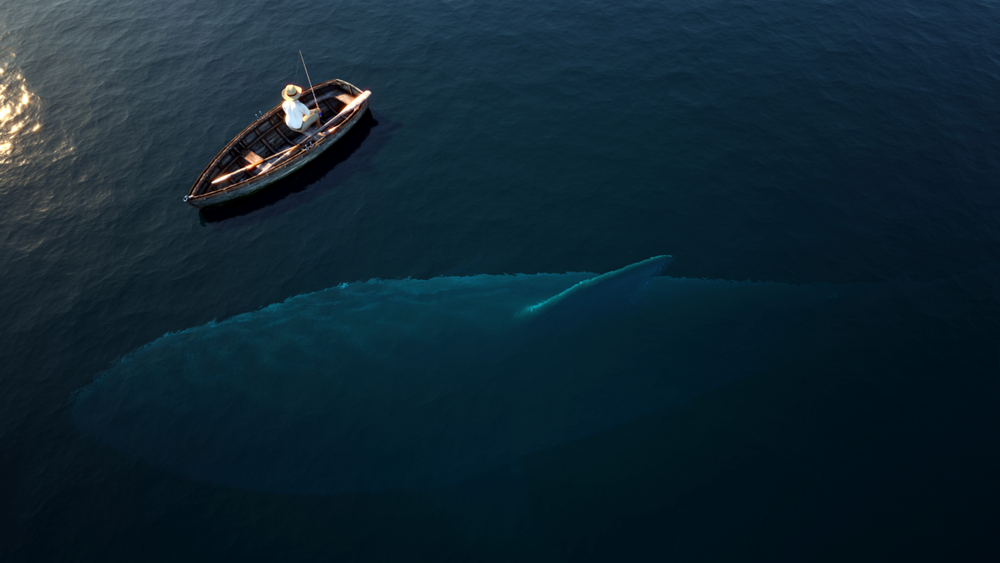
Have you ever considered what happens when something from our world suddenly appears in the total darkness of the ocean floor? In the South China Sea, a group of scientists decided to find out by lowering a land-dwelling animal nearly a mile deep into the abyss.
Contents
show
This unusual experiment created a rare oasis of energy in a place where food is typically nonexistent, acting as an irresistible signal for creatures lurking in the shadows. What the cameras captured provides a startling glimpse into a hidden society where the arrival of a single meal can set off a chain of events that rarely meets human eyes.
Observing Deep-Sea Scavengers in Action
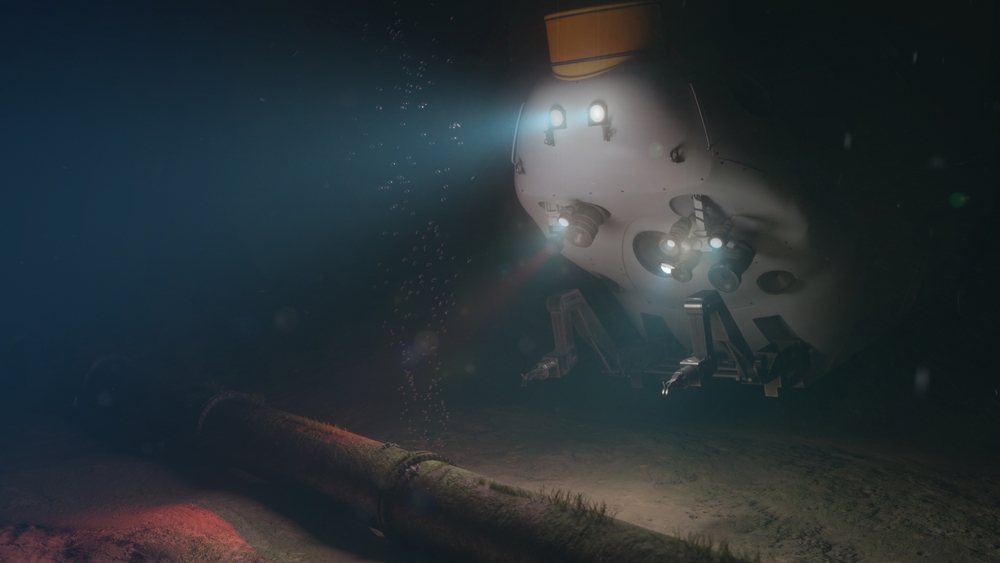
The bottom of the South China Sea is a world of total darkness and crushing pressure, where food is incredibly hard to find. To see how creatures survive in such an unforgiving place, researchers recently conducted a fascinating experiment. They lowered a deep-sea lander nearly a mile down—1,629 meters to be exact—carrying a cow carcass. While it might seem like an unusual choice, this was done to mimic a “food fall.” In nature, when a large animal like a whale dies and sinks, it becomes a massive, unexpected feast that can sustain deep-sea life for years.
The team watched the site for 44 hours using high-definition cameras. Using a lander allowed the scientists to see exactly which animals showed up and how they interacted with a new food source. In the deep ocean, nutrients are usually scarce, mostly consisting of “marine snow”—tiny bits of organic waste that drift down from the surface. A single large carcass provides a concentrated burst of energy equivalent to decades or even centuries of that typical nutrient rain. It essentially turns a desert-like patch of the seafloor into a bustling hub of activity.
By recording the event in real-time, the researchers were able to witness a biological hierarchy that rarely meets human eyes. The goal was to track the arrival of different scavengers and see how they handled the prize. This experiment reminds us that in the deep sea, nothing goes to waste. The arrival of a single meal triggers a fast and orderly response from a variety of specialized creatures, proving that even in the dark, life is always waiting for an opportunity.
First to the Feast
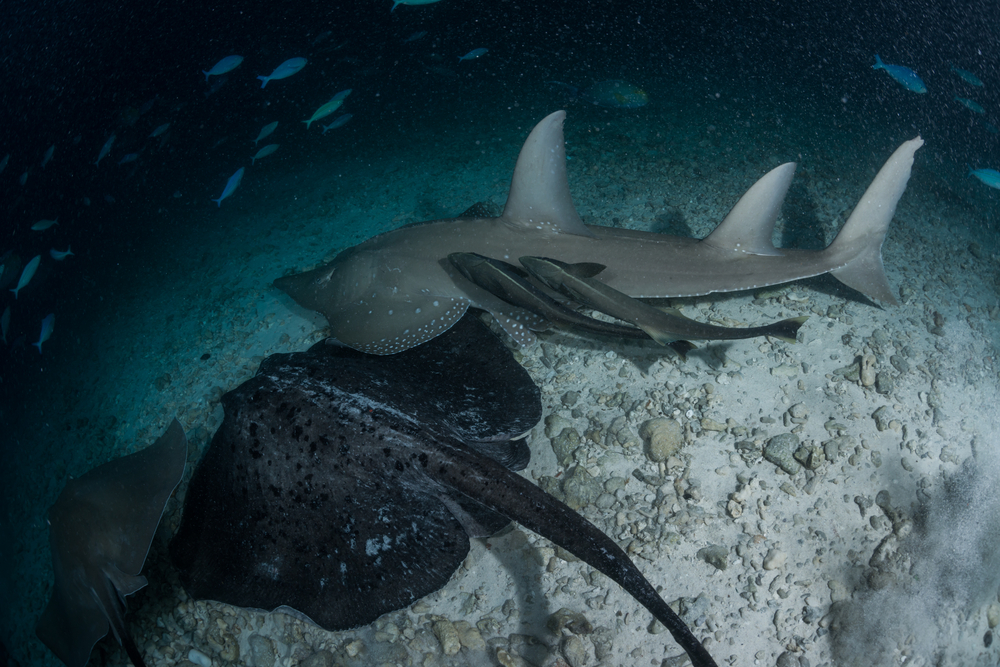
It didn’t take long for the deep-sea residents to notice the new arrival. Within just a few hours of the lander settling on the seafloor, the first scavengers began to emerge from the darkness. Among the earliest and most impressive visitors were several Hexanchid sharks, commonly known as sixgill sharks. These ancient-looking predators are perfectly adapted for life in the deep, possessing a keen sense of smell that can detect a carcass from a significant distance. Their arrival marked the beginning of the “scavenger stage,” where large, mobile animals take the lead in breaking down the remains.
As the cameras rolled, the sixgill sharks began to circle the carcass with slow, deliberate movements. These sharks are notable because they have six pairs of gill slits instead of the five found in most modern shark species, a trait that links them to ancestors from millions of years ago. On the video feed, they appeared calm but efficient, using their powerful jaws to tear into the tough hide of the carcass. This initial stage of decomposition is vital because it opens up the remains, making it easier for smaller, less powerful scavengers to access the nutrients inside.
Alongside the sharks, other smaller creatures began to gather, though they often stayed at a distance to avoid the larger predators. The interaction between these species revealed a structured social order where size and speed dictated who ate first. The sharks didn’t just feed; their presence changed the local environment, stirring up sediment and attracting even more life through the scent of the disturbed water. This first wave of activity showed just how quickly the “grapevine” works in the deep sea, turning a quiet patch of mud into a competitive dining hall in a matter of hours.
The Appearance of the Pacific Sleeper Shark
Among the most significant visitors caught on camera was the Pacific sleeper shark, a species rarely seen by humans in its natural habitat. This shark is a massive, slow-moving predator that can grow to lengths of over seven meters, making it one of the largest fish in the ocean. Its presence at the carcass was a major highlight of the experiment, as it provided researchers with a rare opportunity to observe its feeding behavior and physical characteristics up close. The sleeper shark earns its name from its sluggish appearance and low-energy swimming style, an adaptation that allows it to survive in the cold, food-scarce depths.
Physically, the sleeper shark is built for life in extreme conditions. It possesses a large, cylindrical body and a short, blunt snout, which it uses to navigate the darkness. One of its most fascinating features is its skin, which is covered in tiny, tooth-like scales called dermal denticles that reduce friction in the water. According to the Shark Research Institute, these sharks are generalist scavengers and predators, known to eat everything from giant squid to carrion. Their ability to survive at depths exceeding 2,000 meters makes them a vital part of the deep-sea ecosystem, where they act as top predators and cleaners of the seafloor.
The footage showed the sleeper shark approaching the cow carcass with surprising grace for its size. Unlike the more aggressive movements seen in surface-dwelling sharks, the sleeper shark used a more energy-efficient method to feed, often lingering near the carcass for extended periods. This behavior is typical of deep-sea giants that must conserve every calorie. Observing this shark in the South China Sea adds a piece to the puzzle of its global distribution, confirming that these massive scavengers are quick to exploit large food falls wherever they occur in the deep.
Beyond the Giants: A Diverse Scavenger Community
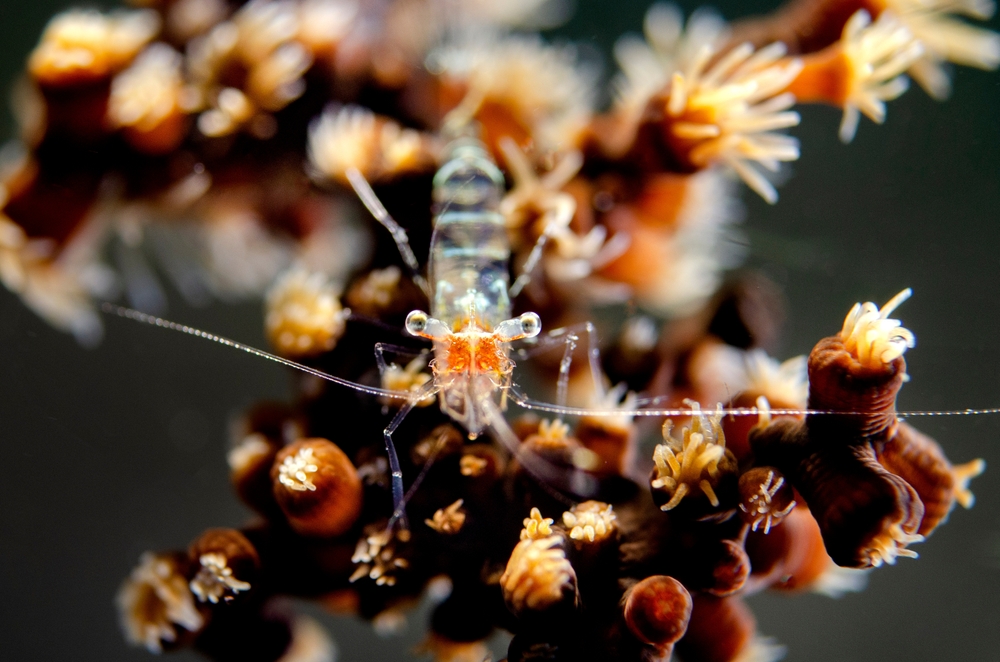
While the massive sharks grabbed the headlines, they were far from the only visitors to the deep-sea feast. As the experiment progressed, the cameras captured a wide variety of smaller, highly specialized organisms that play equally vital roles in the seafloor ecosystem. Among these were hagfish, often called “slime eels,” which are famous for their ability to produce massive amounts of thick mucus as a defense mechanism. These eel-like creatures use their rasping tongues to bore into the flesh of a carcass, often feeding from the inside out and leaving only skin and bones behind.
In addition to hagfish, the site was swarmed by thousands of tiny amphipods and isopods. These small crustaceans are the cleanup crew of the ocean, acting as the primary recyclers of organic matter. While a single amphipod is barely a few centimeters long, their sheer numbers allow them to strip a carcass with incredible speed. They are often the most abundant scavengers at these depths, arriving in massive clouds to pick away at the smallest fragments of tissue. Their presence ensures that almost every gram of energy from the carcass is incorporated back into the local food web.
The study also documented the arrival of various deep-sea fish, such as grenadiers and cutthroat eels, which hovered on the periphery of the activity. These fish often wait for the larger predators to dislodge pieces of meat or stir up smaller invertebrates to eat. This complex “succession” of species—moving from large sharks to smaller fish and finally to swarms of crustaceans—demonstrates the intricate biological balance of the deep sea. Each animal has a specific niche to fill, ensuring that even in a place as remote as the South China Sea, the cycle of life and death remains perfectly efficient.
Our Future, Beneath the Waves
The cow carcass experiment in the South China Sea is more than just a fascinating look at hungry sharks. It provides essential data on how energy flows through the least-understood parts of our planet. Every species recorded, from the massive Pacific sleeper shark to the tiny amphipods, plays a role in maintaining the health of the ocean floor. These ecosystems are often overlooked because they are out of sight, yet they are vital for carbon storage and global nutrient cycles. When we understand how deep-sea scavengers process organic matter, we gain a better understanding of how the entire ocean functions as a single, connected system.
However, these deep-sea frontiers are increasingly under threat from human activities, such as deep-sea mining and climate change, which can disrupt the delicate balance of these environments. Studies like this one remind us that the deep ocean is not a barren wasteland, but a vibrant, interconnected community that responds rapidly to changes in its surroundings. Protecting these habitats is crucial, not just for the survival of rare species like the sleeper shark, but for the overall stability of our global environment.
We can all play a part in safeguarding these mysterious depths by supporting marine conservation efforts and advocating for more research into the deep sea. The more we learn about the unexpected visitors of the South China Sea, the more we realize how little we truly know about our own planet. By valuing these hidden worlds, we ensure that future generations can continue to unravel the secrets of the deep. Let this experiment be a call to look beneath the surface and appreciate the incredible, quiet efficiency of life in the dark.