
Your cart is currently empty!
How The Process Could Unfold After Democrats File 25th Amendment Bill
The political atmosphere in Washington has reached another boiling point after Democrats in Congress introduced a proposal centered on one of the most serious and rarely discussed constitutional mechanisms available. This is not a routine policy disagreement or a symbolic resolution meant to make headlines for a day or two. Instead, it is an effort that directly touches the core of presidential power and raises difficult questions about leadership, stability, and the limits of executive authority in moments of perceived risk. Even the mere introduction of such a bill has been enough to trigger widespread debate, not just among lawmakers but across the broader public, where conversations about accountability and constitutional responsibility are becoming more urgent and more complex.
Contents
show
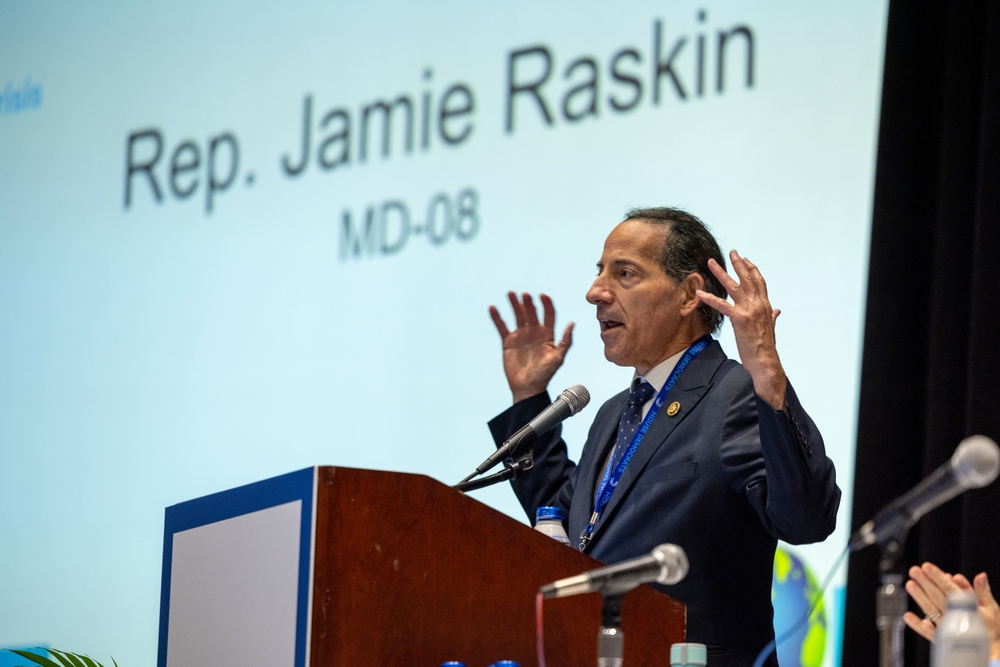
At the center of this development is a proposal led by Representative Jamie Raskin that seeks to establish a formal commission under the 25th Amendment to evaluate whether a sitting president is fit to continue serving in office. The timing of the bill is closely tied to growing concern among some lawmakers regarding recent statements and actions related to foreign policy, particularly involving tensions with Iran. While the proposal faces steep political challenges and is unlikely to pass in the current balance of power, it still forces a serious and unavoidable question into the national conversation. What should happen when elected officials believe that the stability of leadership itself could pose a risk, and how far should constitutional tools be used to address those concerns?
The Bill That Sparked the Debate
Democrats formally introduced the legislation on April 14 with the backing of around 50 co sponsors, outlining a plan to create a structured and independent commission capable of assessing presidential fitness under Section 4 of the 25th Amendment. This is a significant distinction because the bill itself does not directly remove a president from office, nor does it immediately transfer power. Instead, it attempts to create the institutional framework required to begin a process that could eventually lead to such an outcome, making it a procedural step rather than a direct action. Even so, the implications of creating that framework are substantial, as it opens the door to a pathway that has rarely been pursued in modern American politics.
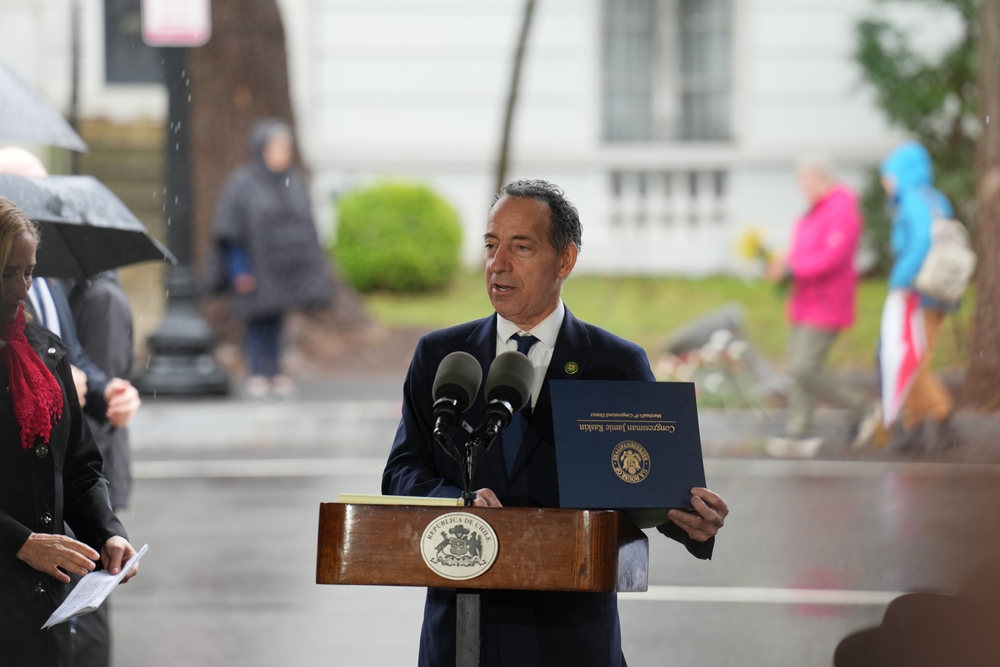
Representative Jamie Raskin made the urgency behind the proposal clear in a public statement, saying, “We are at a dangerous precipice, and it is now a matter of national security for Congress to fulfill its responsibilities under the 25th Amendment to protect the American people from an increasingly volatile and unstable situation.” His words reflect the seriousness with which supporters of the bill view the current moment, framing it not as a partisan maneuver but as a response to what they believe are escalating risks tied to presidential conduct and decision making. The language used emphasizes responsibility and duty, suggesting that inaction could carry consequences that extend beyond domestic politics and into global stability.
Supporters of the bill have pointed to recent developments involving rhetoric around international conflict as a central concern, particularly statements that they believe could heighten tensions with other nations. In their view, this is not simply about disagreement over policy or ideology, but about the potential real world consequences of leadership decisions in a highly interconnected and sensitive global environment. By introducing this legislation, they are attempting to shift the conversation from political debate to constitutional responsibility, arguing that the tools already exist within the system to address situations that may threaten national security.
How the Proposed Commission Would Work
The legislation lays out a detailed plan for a 17 member commission that is intended to balance political representation with professional expertise, reflecting an effort to create credibility and avoid accusations of partisanship. Congressional leadership from both parties would play a direct role in appointing members, with the Senate Majority and Minority leaders as well as the House Speaker and House Minority Leader each selecting individuals to serve on the panel. This approach ensures that both Democrats and Republicans would have a voice in shaping the commission, which is a crucial factor given the sensitivity and potential consequences of its work.
In addition to these appointments, the commission would include former high ranking executive branch officials selected evenly by both parties, bringing the total number of members to sixteen before a final chairperson is chosen. These individuals are expected to contribute institutional knowledge and experience, which could help ground the commission’s work in practical understanding rather than purely political considerations. Once assembled, those sixteen members would then select a seventeenth member to serve as chair, with the requirement that this person be either a senior former official or a physician, introducing an additional layer of expertise into the process.
It is important to understand that the commission itself does not have the authority to remove a president from office. Its role is to evaluate, deliberate, and produce findings that could inform further action. Any meaningful step toward transferring power would still depend on the vice president agreeing with the commission’s conclusions, making this a collaborative process that cannot move forward unilaterally. This structure highlights just how complex and restrained the system is, designed to ensure that such a significant action cannot be taken lightly or without multiple layers of agreement.
Understanding the 25th Amendment
The 25th Amendment, ratified in 1967, was created to provide clarity and structure around presidential succession and the transfer of power during times of crisis. Before its adoption, there was significant uncertainty about how to handle situations where a president could no longer serve due to illness, incapacity, or other extraordinary circumstances. The amendment addresses these concerns by outlining specific procedures for different scenarios, ensuring continuity of leadership even in moments of uncertainty.
Section 4 of the amendment is the most complex and controversial part, and it is the focus of the current proposal. This section allows the vice president and a majority of the Cabinet, or another body established by Congress, to declare that a president is unable to perform the duties of the office. Once such a declaration is made, the vice president immediately assumes those duties, effectively taking over as acting president. This mechanism is designed as a safeguard for situations where a president cannot or will not voluntarily step aside despite being unable to fulfill the responsibilities of the role.
However, the process does not end with that initial declaration. The president has the right to challenge the decision, which triggers a strict timeline and requires Congress to step in and make a final determination. To uphold the transfer of power, a two thirds majority is required in both the House and the Senate, making it one of the highest thresholds in the American political system. This high bar is intentional, ensuring that the amendment can only be used in situations where there is overwhelming agreement across political lines.
Why This Effort Faces Long Odds
Despite the seriousness of the proposal and the attention it has received, the political reality makes its success highly unlikely in the current environment. The balance of power in Congress plays a critical role, and with Republicans holding control, the chances of the bill advancing through both chambers are extremely low. Even if it were to gain unexpected traction, it would still face the possibility of a presidential veto, adding another layer of difficulty to an already challenging path.
Beyond the legislative obstacles, the structure of the 25th Amendment itself creates significant barriers to action. The requirement that the vice president must agree with any declaration of incapacity is a major hurdle, as it demands alignment at the highest level of the executive branch. Without that support, the process cannot even begin to move forward, regardless of the findings of any commission or the concerns raised by lawmakers.
There is also the broader issue of bipartisan agreement, which is essential for any successful use of Section 4. Achieving the necessary two thirds majority in both chambers of Congress would require a level of cooperation that is rarely seen in today’s political climate. This reality underscores why the amendment has never been successfully used to remove a president, despite being in place for decades as a constitutional safeguard.
The Broader Political Context
This development is part of a larger pattern of increasing tension and polarization in American politics, where disagreements are becoming more intense and more deeply rooted. Constitutional mechanisms that were once considered distant or theoretical are now being brought into active discussion, reflecting a shift in how political conflicts are approached and addressed. This shift raises important questions about the evolving nature of governance and the role of institutions in managing disputes.
In recent years, there has been growing scrutiny of presidential behavior, communication, and decision making, driven in part by the rapid spread of information and the heightened visibility of political actions. Lawmakers are facing pressure not only from their peers but also from the public, who expect accountability and transparency in ways that were less immediate in the past. This environment creates conditions where proposals like this one can emerge, even if they face significant obstacles.
At the same time, the lack of historical precedent adds uncertainty to the situation. Section 4 has never been successfully used, which means there is no clear example of how the process would unfold in practice. Every step would likely be contested, closely monitored, and subject to intense public and political scrutiny, making the situation as unpredictable as it is significant.
Public Reaction and National Conversation
The introduction of the bill has sparked strong reactions from across the political spectrum, highlighting the deep divisions that continue to shape the national conversation. Supporters argue that the proposal demonstrates a willingness to use constitutional tools responsibly, emphasizing the importance of addressing serious concerns rather than ignoring them. From this perspective, the bill is seen as a necessary step to ensure that leadership remains stable and capable in a complex global environment.
Critics, however, see the situation very differently, expressing concern that such efforts could turn a constitutional safeguard into a political weapon. They argue that using the 25th Amendment in this context could set a precedent that future administrations might exploit, potentially escalating political conflicts rather than resolving them. This viewpoint reflects a broader about how constitutional mechanisms should be applied and whether their use could have unintended consequences.
The debate ultimately centers on a fundamental question that does not have a simple answer. Where is the line between legitimate oversight and political maneuvering, and who gets to define that boundary? As the discussion continues, this question remains at the heart of how the proposal is interpreted and evaluated by both lawmakers and the public.