
Your cart is currently empty!
New DNA Analysis of the Shroud of Turin Reopens a Centuries-Old Debate
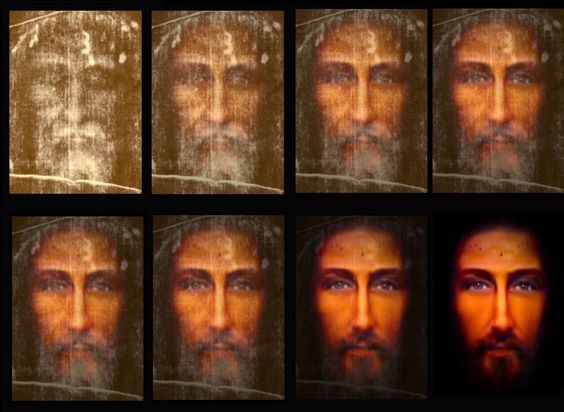
Few artifacts in the world occupy the space between faith, history, science, and public fascination quite like the Shroud of Turin. For centuries, the linen cloth has been treated by some believers as a sacred relic connected to Jesus Christ, while many historians and scientists have regarded it as a medieval creation whose mystique only grew with time.
Contents
show
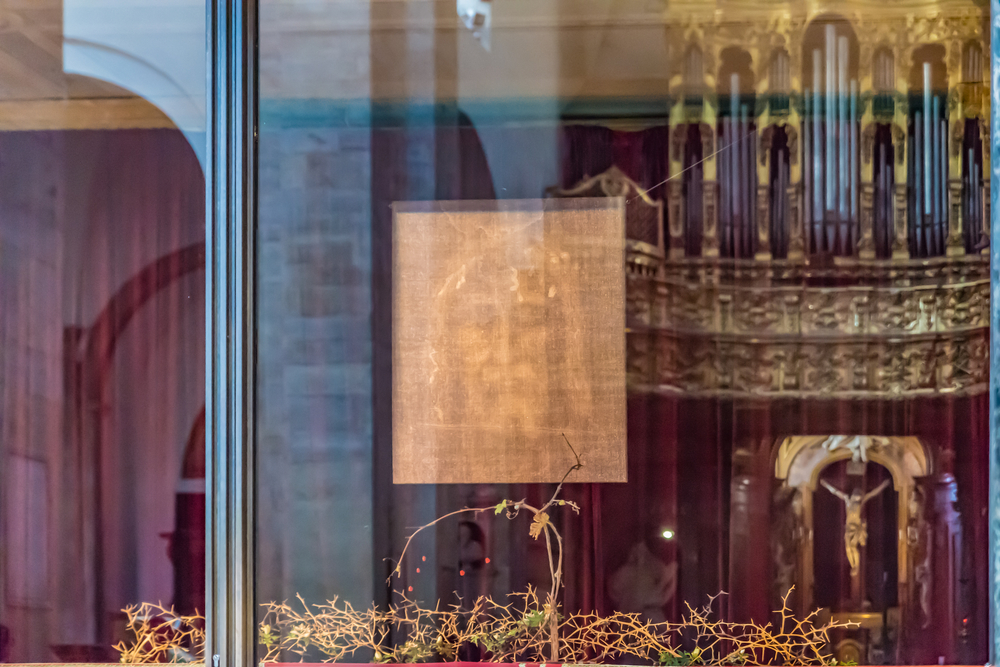
Now, a new DNA analysis has pushed the cloth back into headlines. The study offers intriguing details about biological traces found on the shroud, but the bigger story is not a neat revelation. It is the reminder that the most compelling historical objects often resist simple conclusions, especially when cultural meaning and scientific uncertainty move side by side.
Why the Latest Study Attracted So Much Attention
The immediate appeal of the latest findings is easy to understand. In a new DNA analysis of traces found on the Shroud of Turin, samples collected in 1978 were revisited using modern metagenomic methods to identify human, plant, and animal DNA.
That alone is enough to generate global attention. The Shroud is one of those rare objects that carries religious reverence, visual intrigue, and enduring media power. Any claim that appears to move the story forward, whether it strengthens skepticism or invites new speculation, tends to travel fast.

But it also landed in a climate where headline culture often rewards novelty before it rewards caution. In practice, the new analysis is most valuable not because it settles the Shroud’s origin, but because it shows how much material history can accumulate on a revered object that has been touched, displayed, moved, studied, and debated for generations.
What the Researchers Say They Found
The DNA profile recovered from the samples is strikingly varied. That diversity is part of what makes the findings interesting, but also what makes them difficult to interpret cleanly.
Among the reported takeaways were:
- Plant traces: DNA associated with plants and food species, including wild carrot, orange, banana, and peanut was identified.
- Animal traces: DNA linked to species such as pigs, sheep, goats, chickens, rabbits, horses, cats, and dogs was identified.
- Human ancestry signals: More than half of the human DNA was described as corresponding to lineages from the Near East, while a substantial share appeared connected to Indian lineages.
- Geographic speculation: The findings raised the possibility of extensive exposure in the Mediterranean region and even the possibility that the yarn itself could have been produced in India.
That final point is the one that captured the most attention. Gianni Barcaccia described it as “the possibility that the yarn was produced in India.” It is an arresting idea, especially because it expands the story beyond the familiar Europe-versus-Holy-Land framing.
At the same time, the paper itself points to a problem that cannot be ignored: contamination. A cloth with centuries of devotional handling, public exhibition, travel, conservation, and atmospheric exposure is exactly the sort of object that can accumulate an extraordinarily messy biological record.
Why Experts Remain Cautious and Why the Medieval Dating Still Matters
The most important contextual point is that this DNA paper has not yet been peer reviewed. That does not make it irrelevant, but it does mean its claims should be treated as provisional rather than conclusive.
A more cautious reading has also emerged in expert commentary on the findings, reflecting both the interest of the results and the limits of the methods used. Biological anthropologist Allison Mann, who was not involved in the research, said: “There is a lot of legwork that needs to be done.”
That caution matters even more because these findings enter an already established scientific debate. The 1989 radiocarbon dating results concluded that the cloth dated to the medieval period rather than the first century.
The abstract’s wording remains unusually direct: “The results provide conclusive evidence that the linen of the Shroud of Turin is medieval.” That conclusion has been challenged over the years by critics who argue the tested samples may not have been representative, but it remains one of the most consequential scientific findings associated with the cloth.
Put simply, the new DNA analysis may offer insight into the Shroud’s contact history, but it does not overturn the radiocarbon result on its own. At this stage, the more measured reading is that the paper adds another layer of information to a contested object without settling its origin.
For journalists and readers alike, that distinction matters. A development can be genuinely newsworthy without amounting to a final answer.
Why the Shroud Continues to Matter Beyond the Lab
The Shroud of Turin has persisted in the public imagination not simply because of laboratory results, but because it speaks to questions that science alone cannot fully contain. It is an object onto which people project devotion, doubt, historical curiosity, and the human desire for proximity to sacred narrative.
That helps explain why even cautious or skeptical findings do not dissolve interest in the cloth. The Shroud functions not only as a disputed artifact but as a cultural and spiritual symbol.
When Pope Francis visited Turin in 2015, he framed its significance in spiritual rather than forensic terms. In his Angelus address in Turin, he said the Shroud “attracts people to the face and tortured body of Jesus.” Whatever one’s position on authenticity, that line helps explain the relic’s enduring gravity for millions of people.
What Careful Reporting Should Take From This Moment
The latest burst of attention around the Shroud offers a useful case study in how cultural stories should be handled when they move between scholarship, belief, and mass media.
Three principles stand out:
- Novelty is not proof. A surprising data point can be genuinely newsworthy without being definitive.
- Context is not optional. Any new claim about the Shroud has to be read alongside the medieval radiocarbon dating and the long history of contamination concerns.
- Respect improves clarity. Reporting is stronger when it avoids ridicule, sensationalism, and certainty that the evidence itself does not justify.
Stories like this are often flattened into two familiar scripts: either science has finally vindicated belief, or science has once again disproved it. Neither framing captures the evidence particularly well.
The more accurate picture is slower, more layered, and more revealing. The Shroud remains a resonant object whose scientific record is still contested, which is precisely why careful reporting matters.
How to Approach Claims Like This With Perspective
Stories like this tend to invite instant conclusions, especially when they involve faith, science, and a globally recognized artifact. But moments like these are often best approached with patience rather than certainty.
A useful starting point is to separate three different questions that are often collapsed into one. The first is whether a new finding is interesting. The second is whether it is methodologically strong. The third is whether it actually changes the broader historical picture. Those questions do not always produce the same answer.
It also helps to pay attention to the status of the evidence itself. A preprint can be valuable and worthy of coverage, but it does not carry the same weight as a peer-reviewed study that has already faced scrutiny from specialists. In high-interest stories, that distinction is often where the real discipline begins.
Just as importantly, cultural and spiritual significance do not disappear when scientific questions remain unresolved. Holding those realities together without forcing a false choice is often the most thoughtful way to engage with a story of this kind.
Why the Shroud Still Holds the World’s Attention
There is a reason the Shroud of Turin continues to return to public conversation generation after generation. It sits at the intersection of image and faith, evidence and imagination, archive and myth. In a media environment that often favors definitive answers, it reminds us that some of the most enduring stories are the ones that remain partially unresolved.

For readers, the takeaway may be less about choosing a side immediately and more about learning how to sit with complexity. For journalists, the lesson is equally valuable: the most responsible story is often the one that leaves room for wonder without surrendering rigor.
That is what this latest chapter seems to demand. Not breathless certainty. Not dismissive mockery. Just the discipline to say that the Shroud of Turin is still telling a story, and that science, history, and belief are still arguing over how to read it.
Featured Image from Monozigote, CC BY-SA 4.0, via Wikimedia Commons
