
Your cart is currently empty!
Researchers Say They’ve Found Tunnels Beneath Site Believed to Be Noah’s Ark
High in the mountains of eastern Turkey, a strange geological formation continues to stir curiosity, debate, and fascination among researchers and the public alike. For decades, the Durupınar Formation near Mount Ararat has been quietly sitting in one of the most historically and culturally significant regions in the world, yet its true nature remains uncertain. Some see it as nothing more than an unusual natural structure shaped by time, pressure, and shifting الأرض processes, while others believe it could represent something far more extraordinary. Now, with new scans and renewed investigation efforts, the site is once again at the center of global attention, raising questions that go beyond archaeology and into how humans interpret history, belief, and environmental events.
Contents
show
According to the Bible, the massive vessel saved humanity and every kind of animal from annihilation during a catastrophic flood more than 4,300 years ago. That story has persisted across generations, not only as a religious account but also as a reflection of how ancient societies may have understood large-scale environmental disasters. While many scientists remain firm in their position that the Durupınar Formation is simply a natural geological feature, a team of researchers believes the evidence beneath the surface suggests something far more complex. Their findings, based on modern scanning technologies and soil analysis, are now fueling a fresh wave of debate about whether this site could hold answers to one of history’s most enduring mysteries.
A Discovery That Refuses to Fade
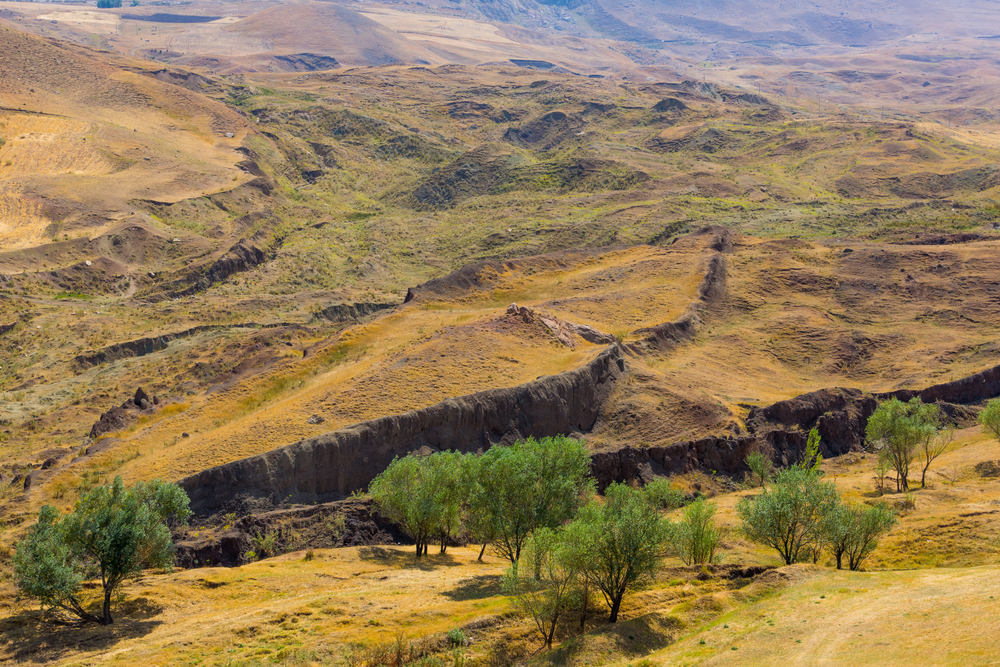
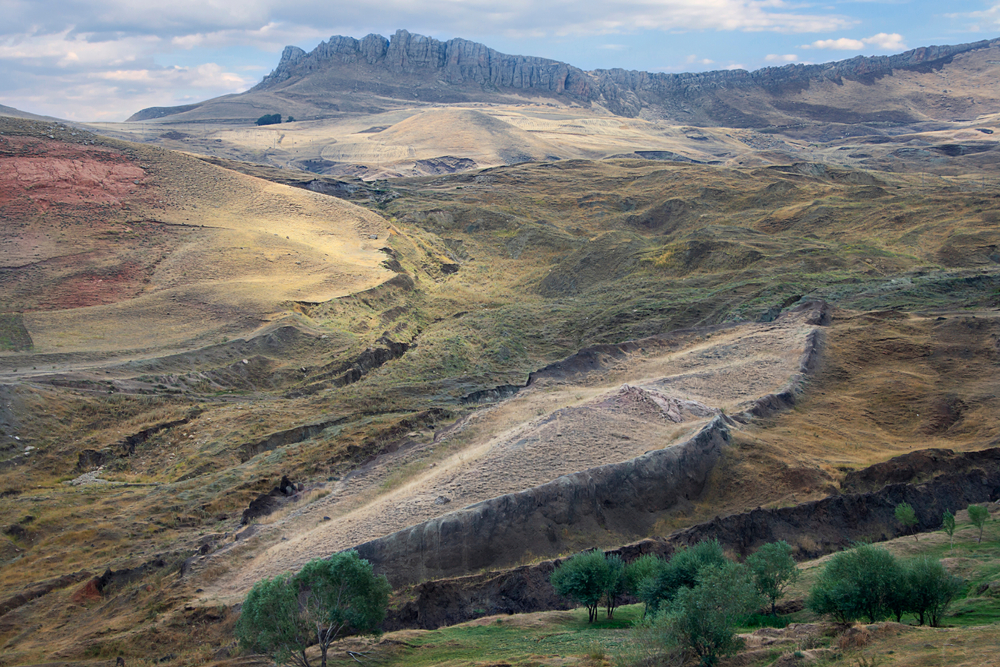
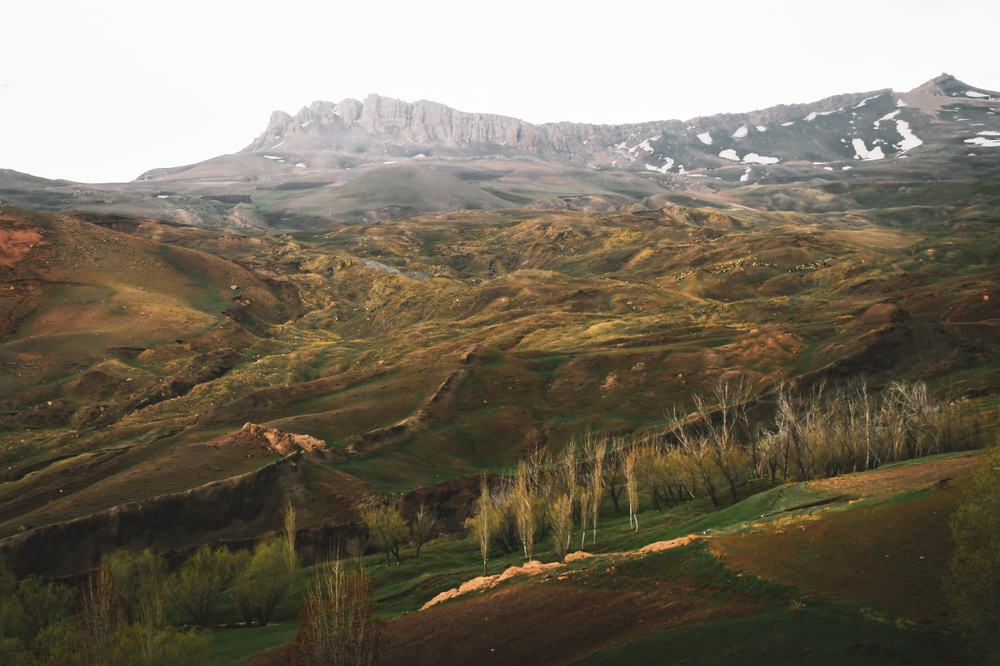
The Durupınar Formation first came into the modern spotlight in 1948 after heavy rains and earthquakes exposed its distinctive shape, revealing an outline that many immediately described as boat-like. Located just 18 miles south of Mount Ararat, which is Turkey’s highest peak and long associated with the biblical account of Noah’s Ark, the site was reportedly discovered by a Kurdish shepherd. Since then, it has remained a point of interest for both scientists and independent researchers, each bringing their own interpretations to what they see in the landscape. The formation’s symmetry and proportions have played a major role in keeping the discussion alive, as they appear unusually consistent for a natural structure.
The Bible states that Noah’s Ark came to rest on the “mountains of Ararat” after a 150-day flood that drowned the Earth and every living creature not sheltered inside the wooden vessel. What continues to intrigue researchers is how closely the dimensions of the Durupınar Formation seem to align with the biblical description, which lists the Ark as “300 cubits long, 50 cubits wide, and 30 cubits high,” roughly translating to 515 feet in length, 86 feet in width, and 52 feet in height. For many, this level of similarity is difficult to ignore, even if it does not serve as direct proof.
At the same time, the scientific community has largely remained cautious and often skeptical of such claims. Many geologists argue that natural processes such as erosion, sediment deposition, and tectonic activity can create formations that appear structured or symmetrical without any human involvement. Still, the persistence of this debate shows how powerful the combination of physical resemblance and historical narrative can be, especially when both seem to reinforce each other in such a striking way.
New Scans and Underground Patterns
In recent years, Andrew Jones, an independent researcher working with Noah’s Ark Scans, has taken a more technological approach to investigating the site. By using ground-penetrating radar, he and his team have attempted to look beneath the surface without disturbing the formation itself. Their findings suggest the presence of subsurface anomalies that appear organized rather than random, including what they describe as corridors and a central hollow space. “What’s interesting is that these voids are lining up below the ground – and they’re not just random. These tunnels also follow a pattern. GPR is just a way to look below the soil using radar.”
Jones has connected these findings directly to the biblical account, suggesting that the internal layout could reflect the structure described in ancient texts. “God told Noah to bring the animals in. And so these animals would have stayed there, plus Noah and his family,” he explained. This interpretation has sparked renewed interest, particularly among those who believe that the Ark may not have completely decayed but instead remains buried beneath layers of soil and sediment.
The team has also used infrared thermography, a heat-sensing technology that can reveal hidden structures based on temperature differences beneath the ground. According to their analysis, the data suggests the presence of a ship-shaped form buried deep within the formation. While these findings are still open to interpretation, they have added another dimension to the ongoing investigation and have strengthened the team’s belief that the site deserves further exploration.

Soil Evidence and Environmental Clues
Beyond scanning technologies, the research team has also focused on analyzing the soil within and around the formation. In 2024, they collected 88 samples from different areas of the site, comparing the composition inside the structure to the surrounding الأرض. According to Jones, the results showed unusually high levels of potassium within the formation, which he believes could be consistent with the decomposition of organic materials such as wood. This finding has been presented as one of the more compelling pieces of evidence supporting the idea that the structure may not be entirely natural.
“However, due to the extremely cold climate, many parts of the Ark are still intact and petrified. It spends almost six months out of the year completely frozen,” the team explained. These harsh environmental conditions could play a significant role in preserving materials over long periods, especially in a region where freezing temperatures slow down the natural processes of decay and erosion. This possibility has led some to consider whether remnants of ancient structures could survive far longer than typically expected.
Jones also pointed to visible differences in vegetation growing on the site as another intriguing detail. “We noticed that the grass growing within the boat-shaped formation is a different color compared to the area just outside it,” he said. While this observation alone does not confirm anything, it adds another layer of curiosity, suggesting that the الأرض within the formation may have a different composition than its surroundings.
Internal Structures and the Case for Design
One of the most debated aspects of the research is the claim that the formation contains structured features beneath its surface that resemble man-made design. In 2024, Jones reported the discovery of angular formations located as deep as 20 feet below the surface, which he believes could represent rooms beneath a deck-like structure. This idea aligns closely with the biblical description found in Genesis 6:14, which outlines the construction of the Ark with multiple levels and compartments.
“This is not what you’d expect to see if the site were simply a solid block of rock or the result of random mudflow debris,” Jones said. “But it is exactly what you’d expect to find if this were a man-made boat, consistent with the biblical specifications of Noah’s Ark.” His interpretation suggests that the patterns detected are too organized to be dismissed as natural coincidence, although this remains a point of contention among experts.
Another researcher involved in the project, William Crabtree, added further detail by stating that a tunnel appears to run from one end of the formation toward its center and is large enough for a person to walk through. Observations like this have strengthened the belief among the team that the structure may have been intentionally built, even though definitive proof has yet to be established.
Science, Skepticism, and Ongoing Debate
Despite the growing claims, many scientists continue to approach the findings with caution. Geologists argue that natural formations can often appear structured, especially in regions where tectonic activity has shaped the landscape over long periods of time. They emphasize that without clear evidence of man-made materials or construction techniques, it is difficult to conclude that the formation is anything other than a natural geological feature.
At the same time, the research team remains committed to continuing their investigation and gathering more evidence. “The ultimate goal is not just soil test, which is great, or GPR scans, but to get inside the ship somehow,” Jones said. “Core drilling, getting samples deep inside of it to where we see the substructure, these voids, put a camera in it.” These next steps could provide more direct insights into what lies beneath the surface, although they also present challenges in terms of access and preservation.
“This is an opportunity coming up that possibly will allow us to do that next season. Whatever happens, whenever God opens doors, we will continue working on the site.” His statement reflects both the determination of the team and the uncertainty that still surrounds the entire project, as each new finding seems to raise as many questions as it answers.
Why This Story Still Matters Today
Beyond the question of whether the Durupınar Formation is truly connected to Noah’s Ark, the story continues to resonate because it reflects humanity’s long-standing relationship with environmental events and natural disasters. The idea of a catastrophic flood is not unique to one culture or religion, as similar stories appear across different civilizations, often linked to real experiences with rising waters and extreme weather conditions.
In today’s world, these themes feel especially relevant as communities across the globe face increasing environmental challenges. Rising sea levels, extreme weather events, and shifting ecosystems echo the kinds of large-scale disruptions that ancient stories may have been trying to capture. Whether taken literally or symbolically, these narratives continue to shape how people think about survival, adaptation, and the قوة of nature.
The Durupınar Formation, regardless of its true origin, serves as a powerful reminder of how history, belief, and science often intersect. It keeps alive a conversation that goes beyond one site and touches on how humans understand their past and prepare for their future.