
Your cart is currently empty!
People Are Literally Running Into Scientology Buildings For Views

If you have spent even a few minutes scrolling through TikTok recently, you might come away with the impression that something bizarre is happening on a massive scale. Video after video shows young people sprinting into Scientology centers, pushing through doors, turning corners at full speed, and laughing as they try to make it deeper into the building before someone stops them. The clips feel chaotic but strangely cinematic, almost like scenes from a low-budget action film where the main character is breaking into a restricted zone. The way they are edited, stitched, and reposted creates a constant stream of similar moments, making it seem like this is not just a one-off joke but a full-blown cultural moment that has taken over social media feeds.
Contents
show
But that sense of scale is not as real as it feels. The internet has a way of stretching a handful of moments into something that looks much bigger than it actually is, and this trend is a perfect example of that effect in action. “From the look of it, it seems like it’s actually built off a handful of clips that are endlessly recycled, stitched together in compilations, and reacted to by others, all to the point that it now feels on the verge of omnipresence.” When you slow down and look closer, what appears to be a widespread movement starts to shrink into something far more contained, driven by repetition rather than participation, and amplified by the way platforms reward content that keeps people watching.

What Exactly Is a ‘Scientology Run’?
At its core, the concept is simple, but the execution is what gives it viral appeal. A Scientology run involves someone filming themselves as they rush into a Church of Scientology building and attempt to get as far inside as possible before they are stopped and removed. “In case you’re still lost as to what the heck is going on, a Scientology Run is when people film themselves charging into a Church of Scientology building to see how far they can get before being caught and booted out.” It is not subtle, it is not investigative, and it is not meant to be anything more than a fast, high-energy stunt designed to capture attention within seconds.
The structure of these videos tends to follow a predictable pattern, which actually helps them perform better online because viewers immediately understand what they are watching. There is the sudden burst of movement as the person enters the building, followed by quick navigation through hallways or staircases, often filmed with shaky camera angles that add to the intensity. Then comes the inevitable confrontation with staff, which becomes the emotional peak of the clip, before the runner is escorted out or the video cuts off abruptly. Each step is short, sharp, and designed to hold attention in a fast-scrolling environment.
What makes it more than just a prank is the way it is framed by the creators themselves. These runs are presented almost like challenges or missions, where the goal is to get further than the last person or to capture a more dramatic reaction. That framing turns a simple act into a performance, where the building becomes a stage and everyone inside it becomes part of an unscripted scene that is ultimately packaged for an audience watching from their phones.
@swhileyy Deepest recorded run in scientology #hollywood #la #scientology ♬ original sound – Jayden
Why Scientology Buildings?
The choice of location is a major part of why this trend has gained traction, because it is not random and it is not interchangeable with just any building. Scientology has a long-standing reputation for being secretive, controlled, and difficult to access, which naturally creates curiosity among people who feel drawn to what they cannot easily see or understand. “It’s a notoriously secretive religion, so it turns the whole place into an action-movie set piece where the protagonist is trying to infiltrate a compound while fending off its legion of foot soldiers, clad in terrifying white button-ups with black vests.” That description captures the strange mix of seriousness and spectacle that makes these locations feel different from any other setting.
For viewers, part of the appeal comes from the idea that something hidden is being briefly exposed, even if only for a few seconds. The act of running into a space that is perceived as off-limits carries a sense of rebellion, even when the actual outcome is predictable. It taps into a familiar curiosity about what happens behind closed doors, but instead of answering that curiosity in a meaningful way, it transforms it into a quick, visual moment that can be consumed and shared almost instantly.
There is also a visual and tonal contrast that adds to the experience of watching these clips. “Because I guess the deeper you go into a Scientology center, the more everyone looks like the valet attendants that should be greeting you on the outside of it?” That slightly awkward observation highlights how the environment itself can feel surreal, creating a mix of tension and unintended humor that makes the videos more engaging and memorable for viewers who are not used to seeing these spaces at all.

The Illusion of a Massive Trend
One of the most interesting aspects of this trend is how it appears much larger than it actually is, largely because of how content spreads online. “I’ve seen talk about it spread to a few publications now, so before it gets too big, I think we should clarify that the clips circulating make it seem like it’s a much bigger trend than it actually is.” This line points directly to the gap between perception and reality, which is something that shows up again and again in viral culture.
A large portion of what people are seeing is not new content, but repeated content that has been reshaped in different ways. The same clips are reposted, edited into compilations, reacted to by other creators, and shared across multiple platforms, which gives them a longer life and a wider reach than they would have on their own. Each new version adds a layer of commentary or humor, but the core footage remains the same, creating the illusion that many different people are participating.
“It’s not. Like many trends, it’s just the handiwork of a handful of people that’s now being extrapolated to many more than are actually participating.” This is a pattern that reflects how modern platforms operate, where visibility can easily be mistaken for popularity and repetition can create a sense of scale that does not actually exist in the real world.

Why Gen Z Finds It Funny
There is a clear reason why these videos resonate with younger audiences, and it comes down to a mix of absurdity, tension, and familiarity with internet humor. “On the one hand, this is very funny. On the other hand, however, it’s still very funny,” which might sound repetitive but actually reflects how viewers experience these clips in real time. The situation is strange, the reactions are awkward, and the outcome is expected, yet it still manages to be entertaining in a way that feels effortless.
A big part of the humor comes from contrast, because the setting is formal and controlled while the behavior is chaotic and unpredictable. Watching someone disrupt that environment creates a moment that feels rebellious without being overly serious, which fits well with the type of humor that thrives on platforms built around quick, attention-grabbing content. The tension builds quickly and is released just as quickly, making it easy for viewers to move on to the next clip without losing interest.
There is also a sense of shared understanding among viewers, where the joke does not need to be explained in detail. The format is simple, the goal is clear, and the reactions are relatable, which makes the videos easy to engage with and even easier to share. That simplicity is one of the reasons they spread so quickly, even if the actual number of participants remains small.
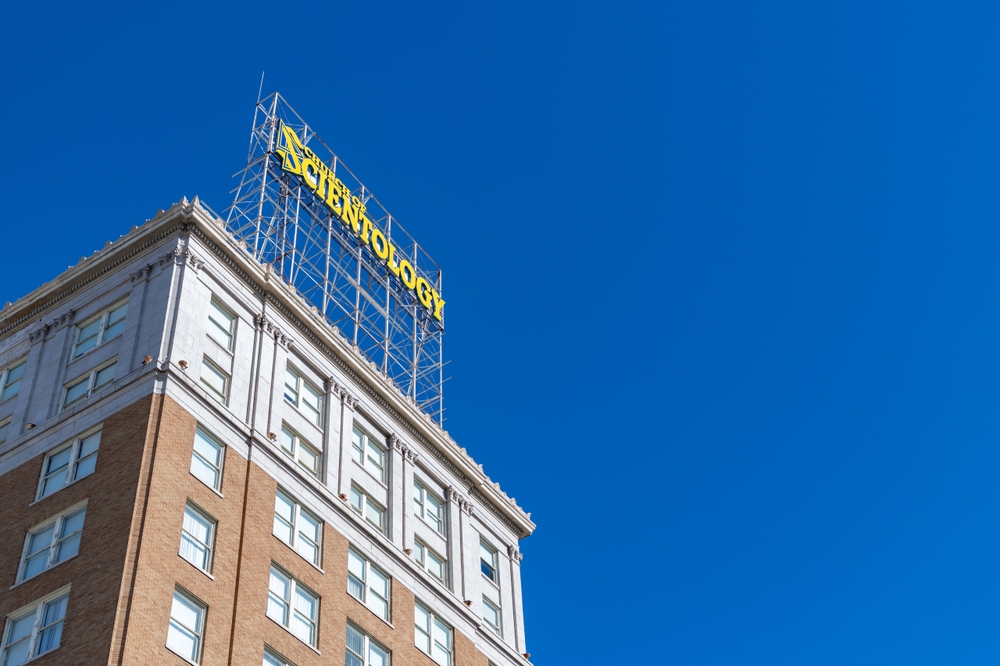
Where Humor Meets Discomfort
Even though many people find the trend entertaining, there is an underlying discomfort that becomes harder to ignore the longer you think about it. “but also maybe we shouldn’t turn running full speed into a house of religion, no matter how hokey that religion may be, into a trend?” That question shifts the tone from amusement to reflection, raising concerns about boundaries and respect that are not always obvious at first glance.
The act itself involves entering a private space without permission and disrupting the people inside, which introduces a layer of complexity that goes beyond simple entertainment. Regardless of how people feel about Scientology as an organization, the individuals inside these buildings are still being affected by what is happening, even if only briefly. That tension between humor and impact is what makes the trend feel slightly uneasy beneath the surface.
There is also a contradiction in how the organization is perceived and how it is treated in these videos. “Yes, the whole enterprise is shady at best, and they believe in some weird space alien magic.” That perspective might explain why some viewers are less concerned about the disruption, but it does not fully resolve the ethical questions about turning real spaces into content without considering the consequences.

The Bigger Pattern Behind the Trend
This trend does not exist in isolation, but rather as part of a larger shift in how content is created and consumed. “If you’ve spent more than five minutes on TikTok lately, you might think there’s a nationwide movement of people sprinting into Scientology centers.” That perception highlights how quickly a specific type of content can dominate attention, even when it is not as widespread as it seems.
More and more, real-world environments are being used as backdrops for viral moments, turning everyday spaces into stages for performance. The goal is not just to capture something interesting, but to create something that stands out in a crowded feed, which often means pushing boundaries or doing something unexpected. In that context, a Scientology run becomes less about the location itself and more about the reaction it generates.
This creates a cycle where certain types of content are rewarded with more visibility, encouraging others to replicate or remix the idea. Even if only a few people are actively participating, the constant exposure makes it feel like a defining trend, reinforcing the illusion that it is happening everywhere at once.

Could This Have Been Something More?
There is an interesting contrast between what these videos are and what they could have been if approached differently. “But maybe a better use of Scientology infiltration tactics would be an investigative piece rather than a viral speed run.” That line points to the gap between curiosity and depth, suggesting that the same idea could have been used to explore something more meaningful.
The concept of entering a secretive organization to understand what happens inside has long been associated with investigative work, where the goal is to uncover information and provide insight. In this case, that concept has been reduced to a quick burst of action designed to entertain rather than inform, leaving many questions unanswered and unexplored.

That shift reflects a broader change in how curiosity is expressed online, where the focus often moves from understanding to capturing attention. The result is content that is engaging in the moment but does not necessarily leave a lasting impact beyond the initial reaction.