
Your cart is currently empty!
A Glowing Orb Was Filmed Floating Over An Alberta Field And No One Can Explain It
It was supposed to be an ordinary evening shaped by routine curiosity, the kind that draws weather enthusiasts outside when the sky begins to shift and storms start to build. In rural Alberta, Ed and Melinda Pardy were doing exactly that, watching the horizon with quiet anticipation as dark clouds gathered and a tornado watch heightened the sense of possibility in the air. Lightning flickered in the distance, the atmosphere heavy with tension, but nothing about the moment initially suggested that what they were about to witness would stand out from countless other storms they had observed over the years. It was just another storm, another chance to look for funnel clouds, another evening spent paying attention to nature’s patterns.
Contents
show
What followed, however, quickly turned that ordinary moment into something far more extraordinary and difficult to explain. After a lightning strike hit the ground nearby, something lingered in the sky in a way that defied expectation, forming into a glowing orb that seemed to hover and move with purpose across an open field. The Pardys managed to capture part of the event on video, and that short clip has since sparked widespread curiosity, raising questions that sit somewhere between science and mystery. Some viewers believe the footage may show the elusive phenomenon known as ball lightning, while others argue it could be explained by more familiar electrical effects, yet the uncertainty itself is what continues to draw attention and fuel discussion.
A surveillance camera in the US recorded a huge glowing orb appearing out of nowhere during the night. The video looks like CGI, but it’s real. Experts suggest that it may be a rare case of ball lightning — still poorly understood. pic.twitter.com/J3CHsdeIjr
— The Husky (@Mr_Husky1) April 9, 2026
A Stormy Evening Turns Extraordinary
The moment began in a way that felt entirely typical for a storm of that intensity, with a lightning strike landing less than a kilometre from the Pardys’ home and briefly illuminating the surrounding landscape. Ed was already watching closely from the back porch, focused on the sky and scanning for signs of rotation, when he noticed something that didn’t behave like lightning usually does. Instead of fading instantly, a bright sphere began to form in the distance, suspended above the ground at what he estimated to be around seven meters high, holding its position as if it were separate from the chaos of the storm itself.
What made the sight even more unusual was the way the light behaved after appearing. Rather than dimming, it seemed to intensify, growing brighter and more defined as seconds passed, almost as though it was building energy instead of losing it. “Once the lightning bolt kind of disappeared, the ball of light kind of got bigger, intensified, like, really bright,” Ed explained, describing how the phenomenon seemed to evolve in front of him rather than vanish as expected. The brightness was steady and striking, making it impossible to dismiss as a fleeting visual effect.
At first, he assumed it would disappear quickly, as most lightning-related phenomena do, lasting only a moment before fading into darkness. That assumption proved wrong almost immediately. “Then I was like, ‘Oh, that’ll go away really soon,’ and it didn’t.” Instead, the glowing sphere remained visible, moving slowly and steadily across the field in a way that felt controlled and deliberate, creating a moment that stood apart from anything he had previously experienced while watching storms.
Chinese researchers successfully activated and captured a luminous sphere highly similar to natural #balllightning for the first time. They confirmed its nature as an electromagnetic soliton, providing important experimental evidence for unraveling the mystery of ball lightning.… pic.twitter.com/ME4l0OooSq
— ShanghaiEye🚀official (@ShanghaiEye) April 16, 2026
Capturing The Unexplainable On Camera
Realizing that what he was seeing might not last forever, Ed quickly called for Melinda, asking her to bring her phone so they could record what was happening. By the time they began filming, the glowing orb had already been present for some time, which meant they were only able to capture part of the full incident. Even so, the 23 seconds of footage they recorded would later become central to the discussion, offering a rare visual record of something that is usually described only through eyewitness accounts.
The video itself shows a luminous orb glowing with a distinct blue-white color, maintaining a steady height above the ground as it drifts across the field with a subtle, almost rhythmic motion. Unlike typical sparks or flashes of electricity, the object appears stable and contained, moving in a way that suggests continuity rather than randomness. This steady movement is one of the key reasons the footage has drawn so much attention, as it challenges common expectations of how lightning behaves.
As suddenly as the phenomenon appeared, it ended just as abruptly, leaving behind a sense of confusion and awe. “There was a little bit of pop and then it just kind of disintegrated,” Ed recalled, describing the moment the glowing sphere vanished from view. There was no lingering glow, no visible aftermath, only the memory of something unusual that had existed briefly and then disappeared without explanation.
Could This Be Ball Lightning?
The possibility that this could be ball lightning emerged almost immediately, especially for Ed, who remembered reading about the phenomenon when he was younger. Ball lightning has long been described as a glowing orb that appears during thunderstorms, often behaving in ways that differ significantly from conventional lightning, which tends to be brief, directional, and unpredictable in a different sense. The resemblance between those descriptions and what the Pardys witnessed was difficult to ignore.
Accounts of ball lightning stretch back centuries, with one of the earliest known descriptions dating to the 12th century, when an observer wrote that “a sort of fiery globe threw itself down into the river.” Reports like this have appeared sporadically throughout history, often separated by long periods of time, which has contributed to both the intrigue and skepticism surrounding the phenomenon. The rarity of such sightings makes each new report particularly compelling.
Despite the number of reported encounters, ball lightning remains one of the least understood phenomena in atmospheric science. “For a long time, ball lightning was regarded with scepticism. Although it is now generally accepted as a genuine phenomenon with thousands of reported sightings, there is still no accepted scientific explanation of its origin,” researchers Giles Gasper and Brian Tanner explained. Their words reflect the unusual position ball lightning holds, existing in a space where it is widely reported yet still not fully explained.
What Science Says So Far
Over the years, scientists have proposed several theories to explain how ball lightning might form, though none have been universally accepted as definitive. One of the more notable breakthroughs came in 2012, when researchers in China managed to capture what they believed to be ball lightning using specialized equipment in a region known for frequent lightning activity. This provided a rare opportunity to analyze the phenomenon in detail rather than relying solely on eyewitness descriptions.
Their findings revealed the presence of elements such as silicon, iron, and calcium, which are commonly found in soil. This led researchers to propose that ball lightning could be created when a lightning strike hits the ground and vaporizes these elements, producing a glowing effect as they interact with oxygen in the air. “It is known that silicon, iron, and calcium are the main components of soil. Consequently, there are reasons to believe that our observed [ball lightning] is generated by the [cloud-to-ground] lightning striking the soil on the ground,” the team explained.
They also noted that “the radiation from soil elements is present for the entire lifetime of the ball lightning,” suggesting that the glow is sustained by ongoing chemical reactions rather than a single burst of energy. While this theory provides a plausible explanation for some observations, it does not fully account for all reported cases, which continue to vary in size, color, and behavior.
Why Some Experts Aren’t Convinced
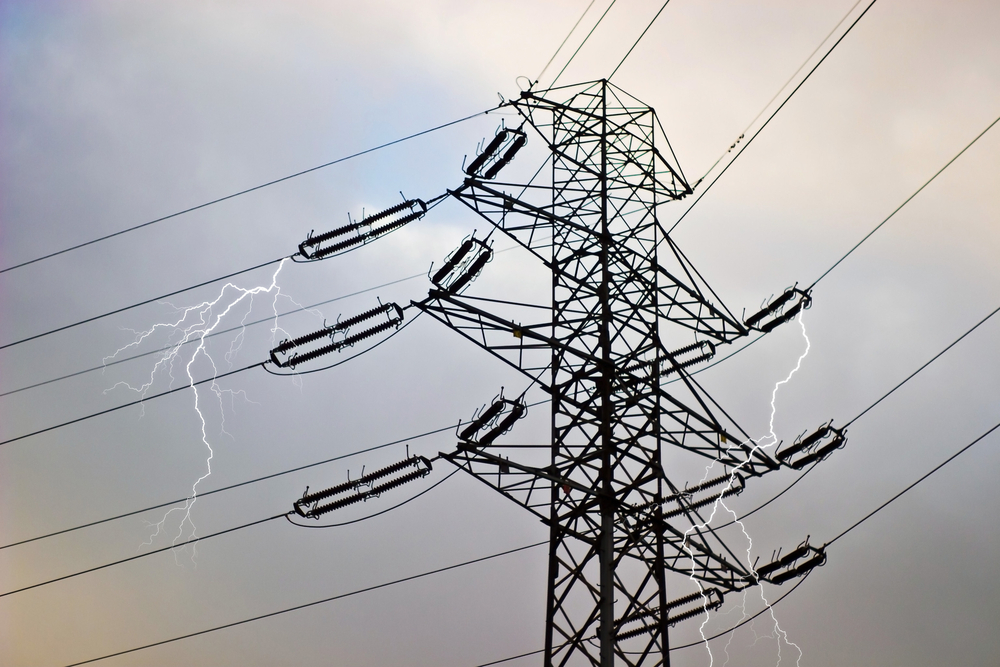
Despite the excitement surrounding the footage, some experts believe there may be a more conventional explanation for what the Pardys captured. Storm chaser George Kourounis reviewed the video that the glowing orb could be the result of electrical activity involving nearby power lines, specifically a phenomenon known as an electrical arc. These arcs can occur during storms and produce bright, moving light that can resemble more mysterious phenomena.
“Sometimes an arc can be formed that travels across those lines, flashing with an orange and blue light, and then at the very end, it typically vanishes in a puff of sparks. And that’s exactly what we’re seeing here,” he said, pointing to similarities between known electrical behavior and the footage. This explanation offers a grounded alternative that aligns with established science, making it a strong candidate in the debate.
At the same time, he acknowledged the limits of interpretation based on video alone. “Without me having been there to see it firsthand, I can’t say with 100 per cent certainty.” He also left room for the possibility that the footage could indeed show something far rarer. “If it is ball lightning, then this is one of the best ball lightning videos I’ve ever seen.” The Pardys, however, remain unconvinced by the power line explanation, noting the apparent distance from any such infrastructure.
A Rare Moment That Sparked Global Curiosity
Since sharing their footage, the Pardys have found themselves at the center of a wave of attention from people across different fields, including scientists and those interested in unexplained phenomena. This response highlights just how rare it is to capture something like this on video, especially when the phenomenon in question is so often described but so rarely documented visually.
Ball lightning, if that is what this was, has long been difficult to study precisely because it appears unpredictably and disappears just as quickly. Most accounts rely on personal testimony, which can be questioned or dismissed, but video evidence introduces a new level of credibility and opens the door for closer analysis and discussion among experts.
Even experienced observers have expressed interest in the footage, noting how its characteristics set it apart from many other reported sightings. The brightness, duration, and movement all contribute to a sense that this was not a typical lightning-related event, regardless of the final explanation.
Why Moments Like This Matter
Moments like this resonate because they challenge the boundaries of what we think we understand about the natural world, reminding us that there are still phenomena that do not fit neatly into established explanations. They create space for both scientific inquiry and human curiosity, encouraging people to look more closely at the world around them and question what they see.
They also highlight the importance of being present and observant. If the Pardys had not been watching the storm so closely, or if they had not taken the time to record what they saw, this moment would have passed unnoticed and unexamined. Instead, it has become part of a broader conversation that bridges everyday experience and scientific exploration.
There is something inherently human about these encounters, a mix of surprise, curiosity, and the desire to understand. They remind us that discovery is not limited to laboratories or research institutions, but can happen anywhere, even in a quiet field during a storm.
The Takeaway: Wonder Over Certainty
For Ed and Melinda Pardy, the experience was not about proving a theory or settling a debate, but about witnessing something that felt truly out of the ordinary. “I never thought I’d see anything like that in my lifetime,” Ed said, reflecting on the moment and the impression it left on him.
Whether the glowing orb was ball lightning, an electrical arc, or something else entirely, the experience serves as a reminder that not everything can be immediately explained. There are still gaps in our understanding, and moments like this bring those gaps into focus in a way that is both intriguing and humbling.
In a world where answers often feel instant and information is readily available, experiences like this encourage a different mindset, one that values observation, patience, and curiosity. Sometimes the most meaningful takeaway is not having a definitive answer, but recognizing that there is still more to learn, more to explore, and more to understand about the world around us.