
Your cart is currently empty!
State Department Confirms Limited-Edition America 250 Passports Will Feature President Trump’s Portrait
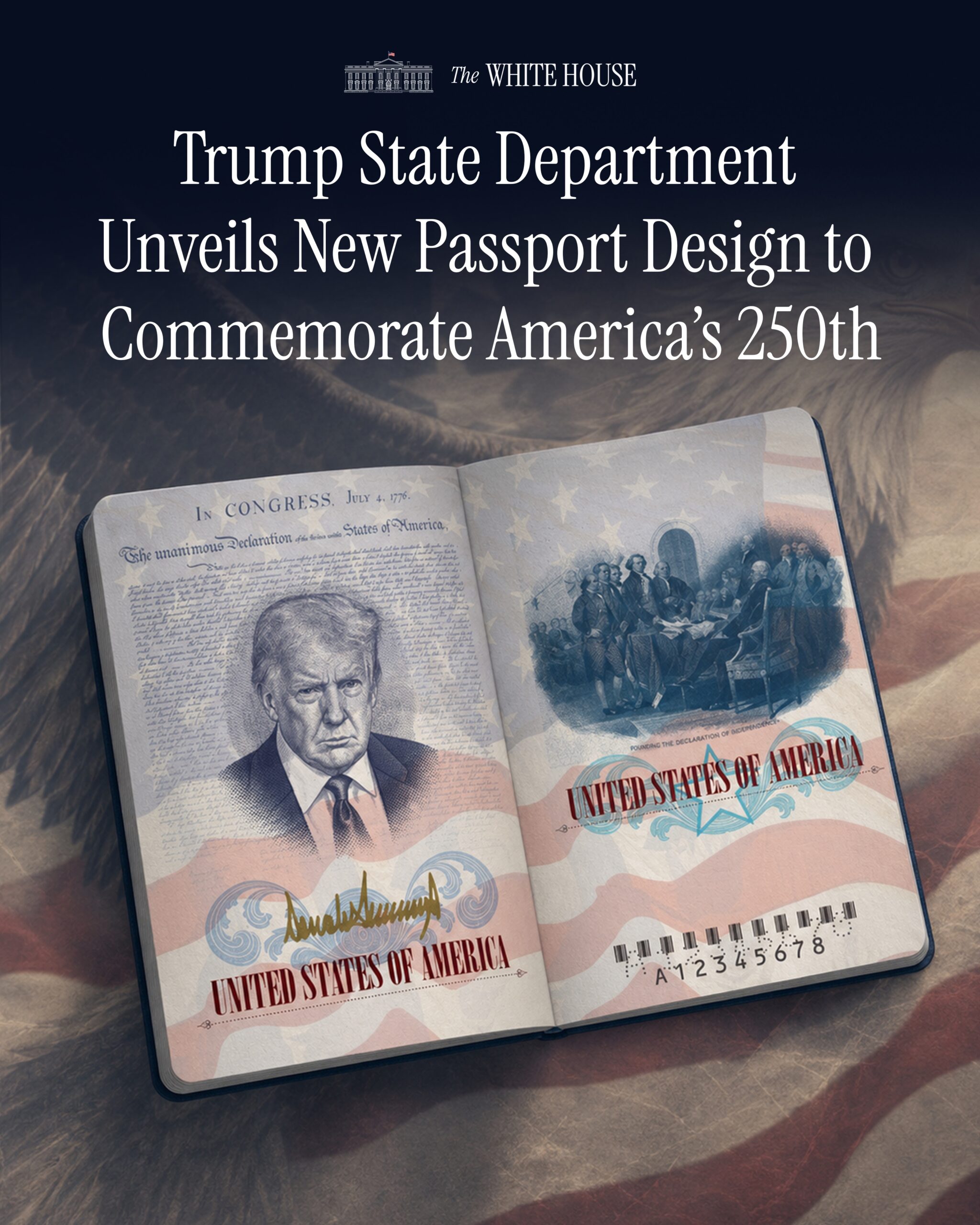
Since taking office, President Donald Trump has put his name on battleships, his face on federal buildings, and his signature on soon-to-be-printed dollar bills. Each move drew attention and, in several cases, legal challenges. Now, the latest step in that pattern reaches further than anything that has come before, touching one of the most personal documents an American citizen can carry, one that works not just at home but in every country on earth.
Contents
show
On Tuesday, the State Department announced plans to release a limited series of specially designed passports this summer, framed as a commemoration of the nation’s semiquincentennial, its 250th anniversary of independence. For travelers who renew their passports at a specific federal agency before the supply runs out, the booklet they receive will look different from anything issued in American history.
A Passport That Looks Different From the Start
Even before cracking open the cover, holders of the new passport will notice changes to the exterior. On current passports, “United States of America” appears in smaller text beneath a large “Passport” label on the front cover. On the new design, that arrangement flips, with “United States of America” positioned at the top in larger text and “Passport” moved lower. A rendering of the bald eagle from the U.S. seal replaces the existing cover imagery, and the word “Passport” appears in gold lettering rather than the standard silver.
Flip to the back cover, and the redesign continues. An image of the 1777 version of the American flag fills the panel, with “250” inscribed at the center of 13 stars, each representing one of the original colonies. Taken on its own, the exterior reads as a considered piece of anniversary design, a commemorative refresh of a long-familiar document. Open the booklet, however, and the picture changes.
Inside the Cover
On the inside front cover sits an image of President Trump, his face superimposed over the text of the Declaration of Independence, with his signature rendered in gold lettering below. A separate interior page carries John Trumbull’s 1819 painting “Declaration of Independence,” depicting the Founding Fathers gathered for the signing of that document, a scene of historical weight that now shares space with a contemporary presidential portrait.
State Department spokesperson Tommy Pigott confirmed the release in a statement issued Tuesday. “As the United States celebrates America’s 250th anniversary in July, the State Department is preparing to release a limited number of specially designed U.S. Passports to commemorate this historic occasion. These passports will feature customized artwork and enhanced imagery while maintaining the same security features that make the U.S. Passport the most secure documents in the world.”
For those curious about what the new design replaces, the current inside front cover carries a reproduction of Percy Moran’s painting of Francis Scott Key on the morning after the bombardment of Fort McHenry, accompanied by lines from what would become the national anthem. Key’s connection to that page has been a quiet piece of American travel lore for years. A sitting president’s image has never appeared in that space, and the State Department has yet to confirm whether any administration in the country’s history has ever placed one there.
Who Gets One and When
Availability for the new passport will be narrower than the announcement might at first suggest. According to a State Department official, the commemorative version will be the default option at the Washington Passport Agency once it becomes available, but online applications and all other locations across the country will continue to issue the current design.
No additional fee will accompany the limited edition. A department official told TIME that “the new designs will be available for any American citizen who applies for a passport when the rollout happens and will continue for as long as there is availability.” Earlier reports placed the production run at 25,000 copies, but a State Department official called that figure “fake news” without specifying how many will be produced. Release is expected to coincide with July’s anniversary.
A Celebration With a Broader Agenda
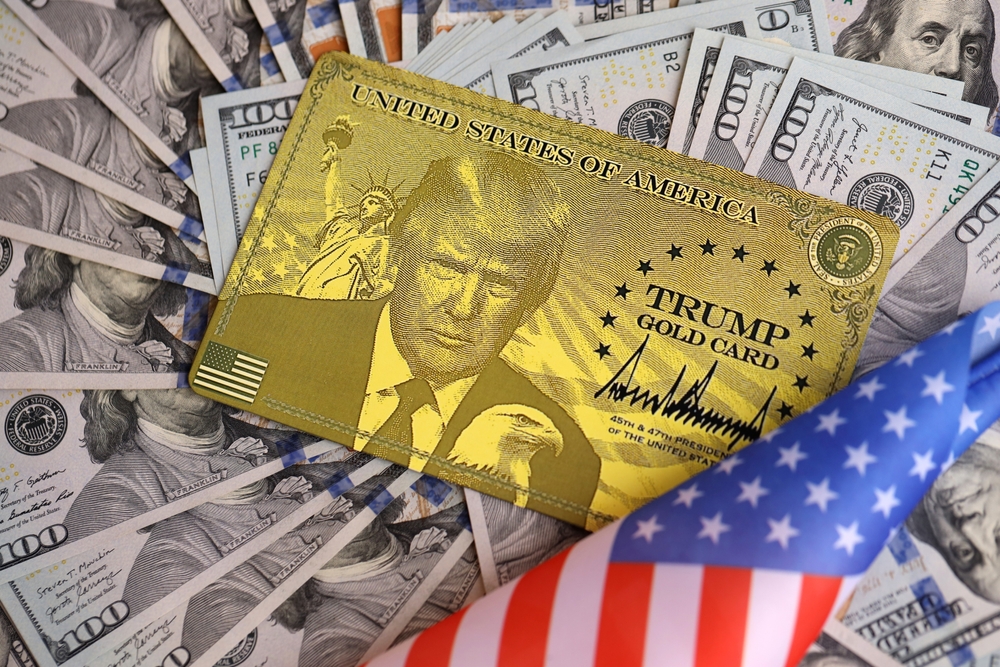
Placing Trump’s image inside a U.S. passport forms part of a wider set of semiquincentennial plans that blend national commemoration with presidential branding. Among the events planned around the July milestone are a Grand Prix race on the National Mall and a UFC match on the White House South Lawn. On the commemorative goods side, two items are worth examining for how squarely they place the president’s likeness on official government products.
In March, the Commission of Fine Arts, made up entirely of Trump-appointed members, voted to approve a 24-karat gold coin bearing Trump’s image for the 250th anniversary. That same month, the Treasury Department announced plans to add Trump’s signature to future U.S. dollar bills, making him the first sitting president to have his name printed on paper currency. Historically, only the signatures of the Treasury Secretary and the Treasurer have appeared on banknotes.
White House spokesperson Olivia Wales framed the passport announcement in keeping with those moves, saying that Trump’s “new patriotic passport design provides yet another great way Americans can join in the spectacular celebrations for America’s 250th birthday” and that Trump “continues to proudly lead a renewal of national pride and patriotism during our historic semiquincentennial celebration.”
A Pattern That Predates the Anniversary
While the semiquincentennial has provided a natural occasion for new commemorative items, Trump’s practice of attaching his name and image to government property extends well beyond anniversary planning and traces back to the early months of his current term.
Large banners bearing Trump’s face have been hung on the exteriors of the Department of Justice, the Department of Labor, and the Department of Agriculture. His name now appears on the John F. Kennedy Center for the Performing Arts, which the administration has rebranded as “The Trump Kennedy Center.” A legal challenge to that name change is currently underway, with Democratic Rep. Joyce Beatty of Ohio arguing that Congress designated the venue as a memorial to President Kennedy alone. Trump’s name was also added to the headquarters of the U.S. Institute of Peace, a nonprofit think tank, after the administration fired most of its board earlier in the year.
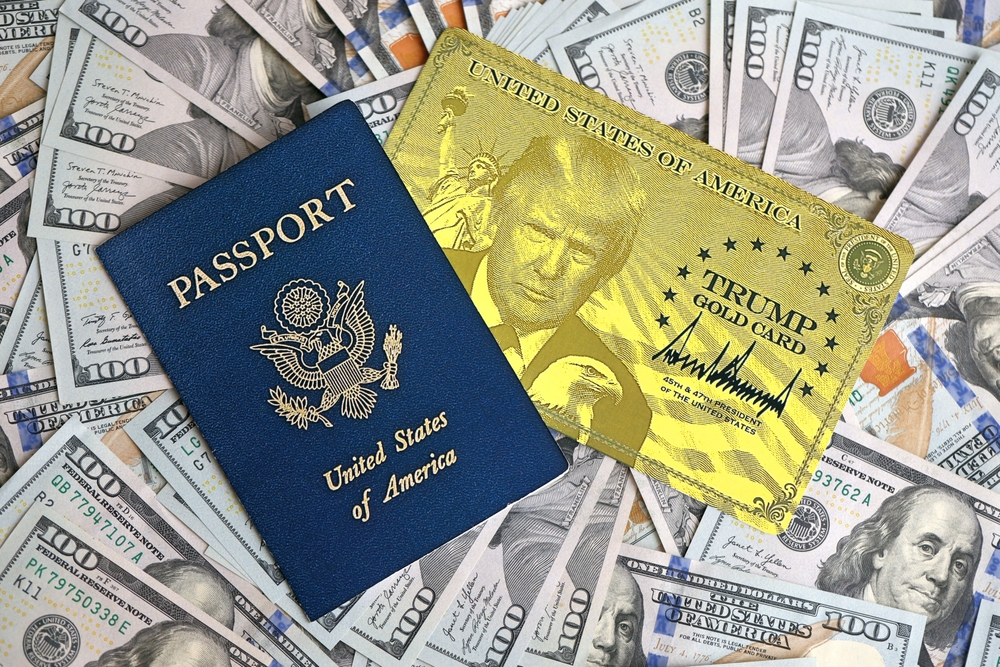
Federal programs have followed the same pattern. His administration launched TrumpRx.gov, a government website for discounted prescription drug purchases. Plans for a new class of Navy battleships carry the name “Trump class,” with construction slated to begin in the early 2030s. A “Trump gold card” visa program, established by executive order, offers residency privileges to wealthy foreign nationals for a substantial fee. And the “One Big Beautiful Bill,” signed into law last July, created “Trump Accounts,” federally seeded investment accounts for babies born between 2025 and 2029, with a planned launch date of July 4th of this year.
Looking further back, Trump’s first term saw his name printed on COVID-19 stimulus checks sent to roughly 35 million Americans during the pandemic. More recently, a redesign of the annual “America the Beautiful” national parks pass for 2026 placed Trump’s face alongside George Washington’s on the cover. Park enthusiasts responded by placing stickers over Trump’s image on their passes, prompting the National Parks Service to reportedly update its policy, warning that altering a pass in any way could render it invalid. A lawsuit opposing the design remains ongoing.
Why a Passport Carries More Weight
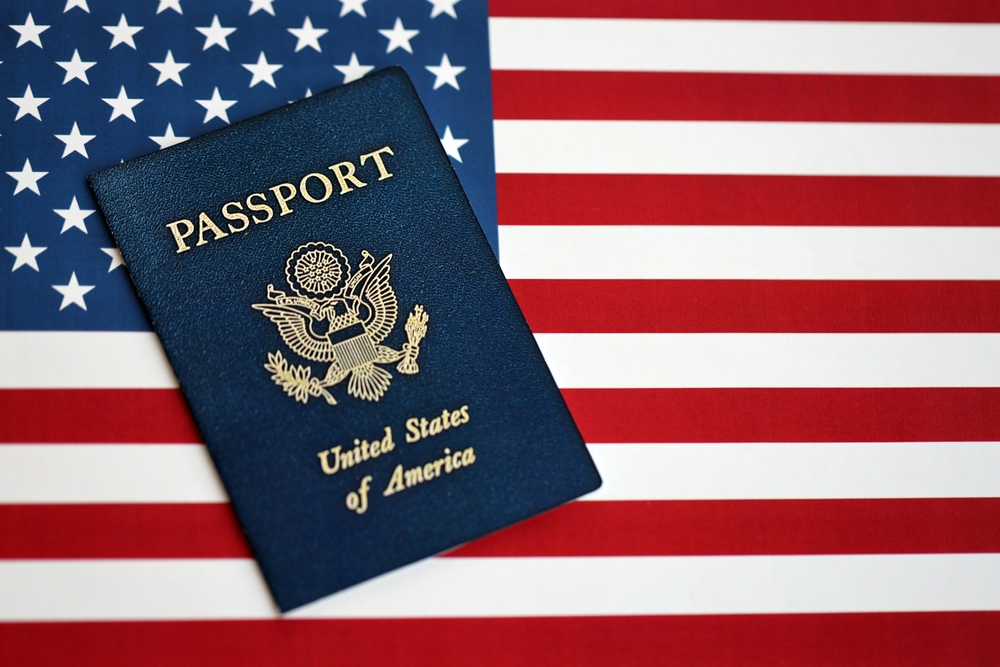
Coins, building banners, and national park passes all carry symbolic weight, but a U.S. passport sits in a different category from any of them. Known worldwide as a primary form of government-issued identification, a passport travels with its holder across international borders, through airport checkpoints, and into foreign embassies where domestic political symbols carry little meaning.
A commemorative coin stays in a collector’s case. A building banner stays on a building. A national park pass remains within domestic borders. A passport, by contrast, accompanies its holder for up to ten years, used at every international departure and arrival for the full duration of its validity. For Americans who pick up a new passport at the Washington Passport Agency this summer, Trump’s face and gold signature will accompany them on every international trip they take until at least 2036.
Whether that prospect reads as a source of national pride or raises questions about the role of presidential imagery on internationally recognized identity documents will depend on where one stands politically. What is harder to dispute is that among all the items on the administration’s growing list of branded government products, a passport travels furthest and lasts longest. No building banner crosses a border. No commemorative coin clears customs. A passport does both, every single time.
America 250, America’s 250th anniversary, commemorative passport, Declaration of Independence, limited edition passport, passport design change, presidential branding, semiquincentennial, State Department, Tommy Pigott, Trump administration, Trump image government, Trump passport, US passport 2026, US passport redesign, Washington Passport Agency