
Your cart is currently empty!
Taylor Swift Takes Legal Action to Protect Her Voice From AI
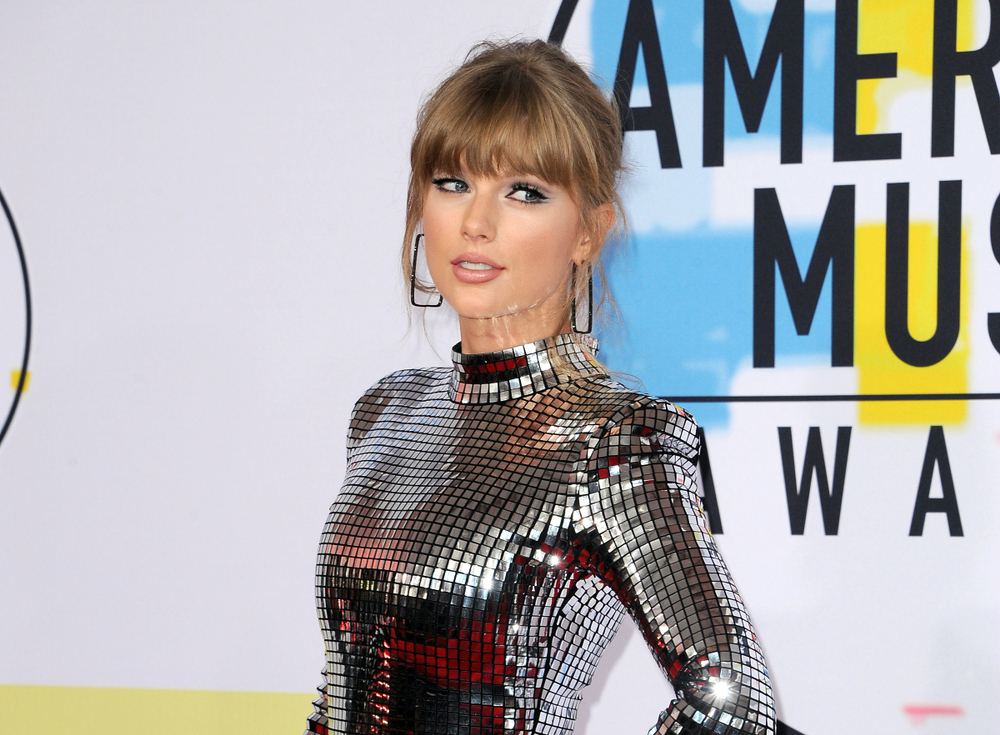
Taylor Swift has just made a move that could change how fame works in the digital age. Not with a song, not with a tour, but with a legal filing that targets something far more personal.
Contents
show
Her own voice.
In a world where artificial intelligence can replicate anyone in seconds, the global superstar is taking steps to draw a line. And if it works, other celebrities are almost certain to follow.
A Legal Move That Goes Beyond Music
Taylor Swift’s latest filings are not about protecting lyrics or album names. They are about protecting identity itself.
On April 24, Swift’s company TAS Rights Management submitted three trademark applications to the United States Patent and Trademark Office. Two of those filings focus on short audio clips of Swift speaking, while the third targets a specific image from her Eras Tour.
The audio clips are simple, almost casual phrases. In one, Swift says, “Hey, it’s Taylor Swift.” In another, she introduces herself with, “Hey, it’s Taylor.” Both clips were originally used to promote her album The Life of a Showgirl across platforms like Spotify and Amazon Music.
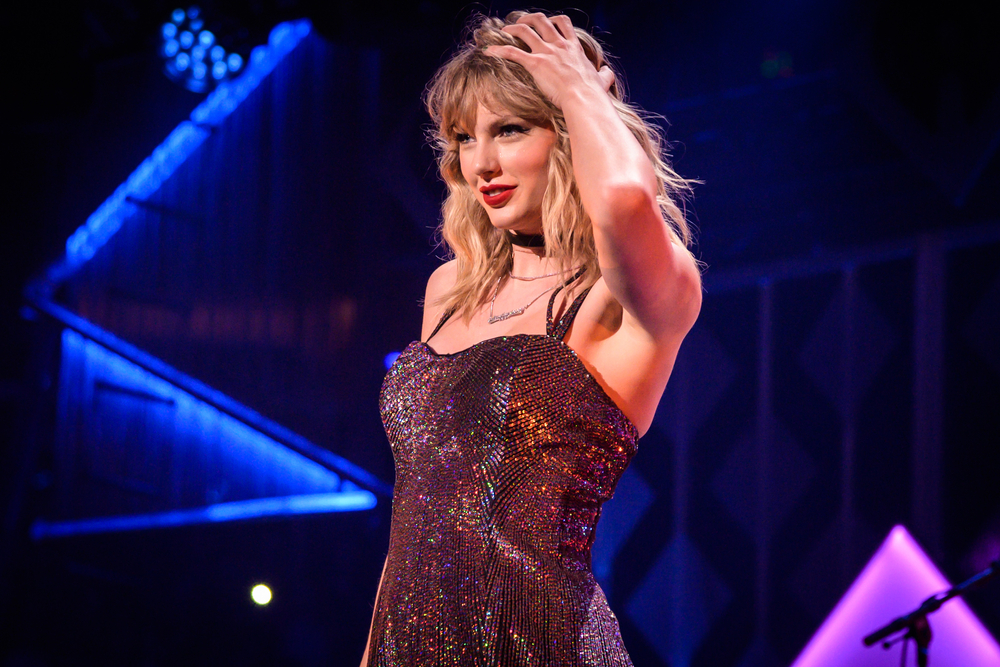
The image she is seeking to trademark is far more visual. It captures Swift on stage holding a pink guitar, dressed in a shimmering bodysuit, standing under vibrant lighting. For fans, it is instantly recognizable. For lawyers, it may soon become protected intellectual property in a new way.
Why These Filings Are So Different
Trademark law has long been used by celebrities to protect names, logos, and slogans. Swift herself has filed hundreds of trademarks over the years, covering everything from song lyrics to album branding.
What makes these new filings stand out is the category they fall into.
They are known as sound marks.
Sound marks are a lesser-known type of trademark protection. Instead of protecting a visual logo or written phrase, they protect a specific sound that is tied to a brand or identity. Think of the Netflix intro chime or the MGM lion’s roar.
Attempting to register a human voice, especially a celebrity voice, pushes this concept into new territory.
Trademark attorney Josh Gerben, who first highlighted the filings, described this as an untested legal strategy. Courts have not yet fully determined how far this kind of protection can extend, especially when AI-generated content enters the picture.
The Growing Threat Of AI Deepfakes
Swift’s move is not happening in a vacuum. It comes at a time when artificial intelligence is rapidly reshaping the entertainment industry.
AI tools can now generate realistic audio that mimics a person’s voice with alarming accuracy. They can also create images and videos that place celebrities in situations they were never part of.
These creations, often referred to as deepfakes, are becoming easier to produce and harder to detect.
Swift has already been a target.
In recent years, AI-generated images falsely depicting her have circulated online. Some were explicit in nature, while others showed her endorsing political figures she never supported. In one instance, fake images suggested she backed Donald Trump during the 2024 election cycle.
None of it was real. But that has not stopped the content from spreading.
Where Copyright Law Falls Short
Traditionally, artists rely on copyright law to protect their work. Copyright ensures that songs, recordings, and performances cannot be copied without permission.
But AI has created a loophole.
Modern AI systems do not need to copy an existing recording. They can generate entirely new audio that sounds like a specific artist without directly using any original material.
That distinction matters legally.
If nothing is technically copied, copyright protections may not apply. This creates a gap where artists have limited control over how their voice is replicated.
Trademark law may offer a way to close that gap.
By registering specific phrases tied to her voice, Swift could potentially challenge not only identical reproductions but also imitations that are considered confusingly similar. That standard is central to trademark law and could become a powerful tool in the AI age.
What Swift Could Actually Control
If Swift’s trademarks are approved and upheld, they could give her new leverage in court.
In practical terms, she could argue that any AI-generated voice that closely resembles her registered sound marks violates her rights. The same logic could apply to images that resemble her trademarked stage look.
That does not mean every imitation would automatically be illegal. But it would give Swift a clearer legal path to challenge unauthorized uses of her identity.
It also shifts the conversation from ownership of content to ownership of likeness.
That shift could have major consequences for platforms hosting AI-generated material. If celebrities begin enforcing these trademarks, companies may face pressure to filter or remove content that mimics real individuals.
A Strategy Other Celebrities Are Already Testing
Swift is not alone in exploring this approach.
Actor Matthew McConaughey recently filed similar trademark applications to protect his voice and his image. One of his filings focuses on his famous line “Alright, alright, alright,” a phrase that has been closely associated with him since the 1990s.
McConaughey explained his reasoning clearly in a statement. He said he wants to ensure that any use of his voice or likeness happens with his approval.
That idea of consent is becoming central to how public figures think about AI.
Swift’s filings take that same concept and apply it at a much larger scale. Given her global influence, her actions are likely to set a precedent for others in the entertainment industry.
Swift’s Long History Of Brand Control
This is not the first time Swift has taken aggressive steps to protect her intellectual property.
Over the years, she has built one of the most carefully managed brands in the music industry. She owns trademarks for album titles, tour names, and even specific lyrics like “This sick beat” and “We never go out of style.”
She has also trademarked phrases tied to her performances, including “Female Rage: The Musical,” a reference to a segment of her Eras Tour.
In total, Swift has filed more than 300 trademark applications in the United States alone.
Legal experts say this strategy strengthens her ability to control how her brand is used. It also allows her to monetize different aspects of her identity while preventing unauthorized exploitation.
These new filings extend that strategy into new territory.

The Bigger Fight Over AI And Identity
At its core, Swift’s move highlights a broader issue facing the entertainment world.
Who owns a person’s voice in the age of AI?
For decades, the answer seemed obvious. Your voice was yours.
Now, technology has blurred that line.
Anyone with access to the right tools can create a convincing imitation of a celebrity voice. That imitation can be used in songs, ads, videos, or even fake interviews.
The potential for misuse is enormous.
It raises questions about consent, ownership, and accountability. It also forces lawmakers and courts to reconsider how existing laws apply to new technology.
Swift’s filings represent one attempt to answer those questions.
What This Means For The Entertainment Industry

If Swift’s approach proves effective, it could trigger a wave of similar filings across Hollywood and beyond.
Musicians, actors, influencers, and even public figures outside entertainment may start trademarking their voices and likenesses.
This could lead to a new layer of legal protection that sits alongside copyright and right-of-publicity laws.
It could also reshape how AI companies operate.
Platforms that generate or host synthetic content may need to build stronger safeguards to avoid infringing on these trademarks. That could include filtering systems, licensing agreements, or new forms of consent verification.
At the same time, there may be legal challenges.
Courts will need to decide how far trademark protection can extend when it comes to human voices. They will also need to balance those protections with free speech and creative expression.
The Technology Is Moving Faster Than The Law

One of the biggest challenges in this space is the speed of innovation.
AI tools are evolving rapidly. New models are released every year, each one more capable than the last. They can generate realistic voices, faces, and entire performances with minimal input.
Legal systems, by contrast, move slowly.
Cases can take years to resolve. Laws often lag behind technological change.
This creates a period of uncertainty where new capabilities exist without clear rules governing them.
Swift’s filings are an attempt to get ahead of that curve.
By securing trademark protection now, she is positioning herself to respond quickly if her voice or image is misused in the future.
Why This Moment Matters Right Now
The timing of Swift’s move is not accidental.
AI-generated content has reached a tipping point. What once required advanced technical skills can now be done with user-friendly tools available online.
At the same time, public awareness of deepfakes is growing.
High-profile cases involving celebrities have brought attention to the risks. From fake endorsements to explicit images, the consequences are becoming harder to ignore.
Swift’s decision to act now reflects that shift.
She is not waiting for a major legal battle to define the rules. She is trying to shape them in advance.
Key Reasons Celebrities Are Turning To Trademarks
Several factors are driving this new approach to protection:
- Control over identity: Celebrities want to decide when and how their voice or image is used
- Gaps in copyright law: AI-generated content often falls outside traditional protections
- Rise of deepfakes: The volume and realism of fake content are increasing rapidly
- Brand value: A recognizable voice or look is a major commercial asset
- Legal leverage: Trademarks provide a clearer path to challenge confusingly similar imitations
Each of these factors contributes to a growing sense that existing laws are not enough.
A Precedent That Could Spread Quickly
Legal experts expect Swift’s move to influence others.
She is widely seen as a leader in intellectual property strategy. When she takes action, the industry pays attention.
If her trademarks are approved and successfully enforced, they could become a model for how public figures protect themselves in the AI era.
That model could extend beyond celebrities.
Business leaders, content creators, and even everyday individuals may start exploring similar protections as AI tools become more accessible.
The Balance Between Innovation And Protection
There is another side to this conversation.
AI has opened up new creative possibilities. It allows artists to experiment with sound and visuals in ways that were not possible before. It also enables fans to engage with content in new formats.
Some argue that overly strict protections could limit that creativity.
Others believe that without strong safeguards, individuals risk losing control over their own identity.
Finding the right balance will be one of the defining challenges of the coming years.
Swift’s filings do not solve that problem. But they push it into the spotlight.

What Happens Next
Swift’s trademark applications are currently awaiting review.
If approved, they will move into a phase where they can be examined and potentially challenged. From there, their real impact will depend on how they are used and how courts interpret them.
The first major test may come if Swift or another celebrity uses these trademarks in a legal dispute over AI-generated content.
That case could set a precedent that shapes the future of digital identity rights.
For now, the filings send a clear message.
Swift is not willing to leave her voice up for grabs in a world where technology can copy it with ease.
A New Era Of Ownership Is Taking Shape
The idea that someone can replicate your voice without your consent once felt like science fiction. Today, it is a daily reality.
Taylor Swift’s latest move shows how quickly the rules are changing.
Control over identity is becoming one of the most valuable assets in the digital age. And those who move early may have the strongest claim to it.
Swift has made her move.
The rest of the industry is watching closely.