
Your cart is currently empty!
The Real Reason Cats Bump Their Heads Against You
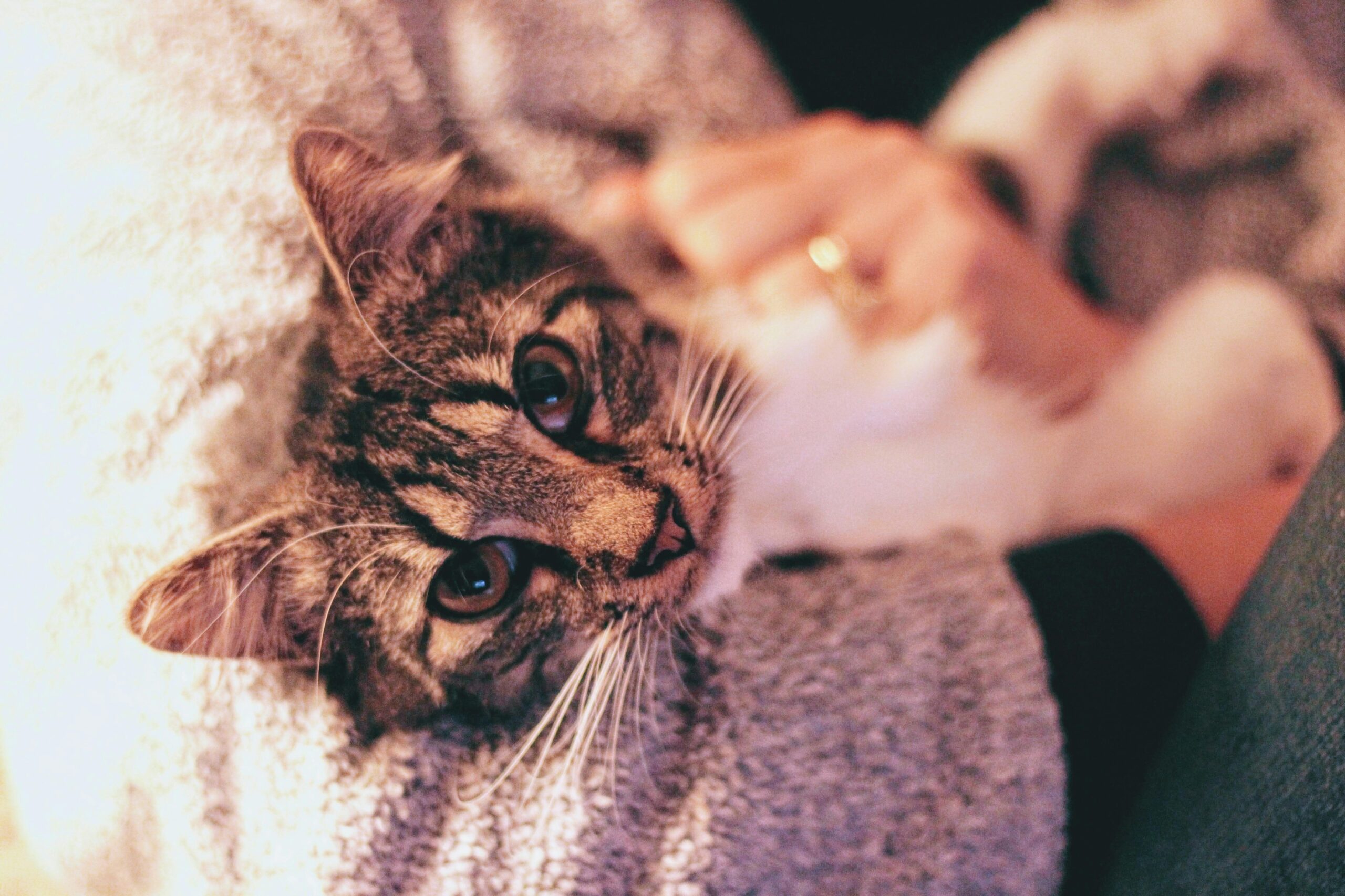
You feel the soft thud before you even realize what’s happening. Your cat walks up, presses their forehead into you, then lingers there like it means something.
Contents
show
It does.
That small, almost awkward gesture has a name, a purpose, and a deeper meaning that most people completely misunderstand. It looks simple on the surface, but underneath it sits a layered system of communication built on scent, memory, instinct, and trust.
The Behavior That Looks Aggressive But Isn’t
In human terms, a headbutt signals conflict. In the feline world, it signals connection.
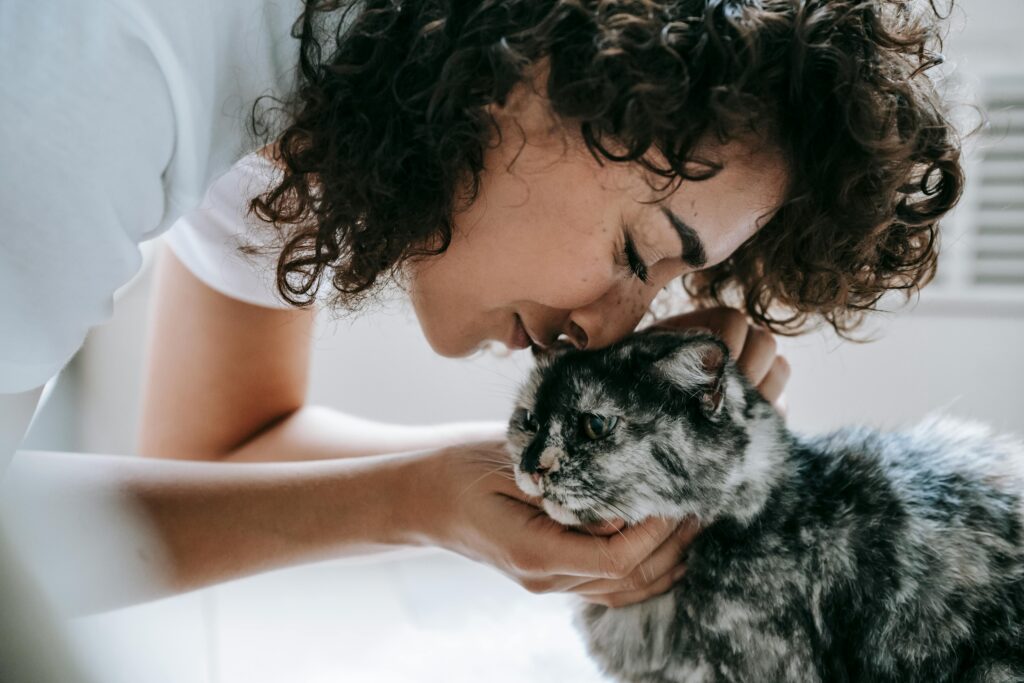
This behavior is known as bunting. It involves a cat pressing their head against a person, object, or another animal, often followed by a slow, deliberate rub along the face. It can happen in quick bursts or linger for several seconds, depending on the cat’s mood and personality.
What makes bunting so fascinating is that it blends physical contact with chemical communication. Cats are not just touching you. They are transferring information through scent glands located on their forehead, cheeks, chin, and even the base of their tail. When they press into you, those glands release pheromones that other animals can detect instantly.
To a human, it feels like a nudge. To a cat, it is a full message.
Why Cats Use Scent As Their Primary Language
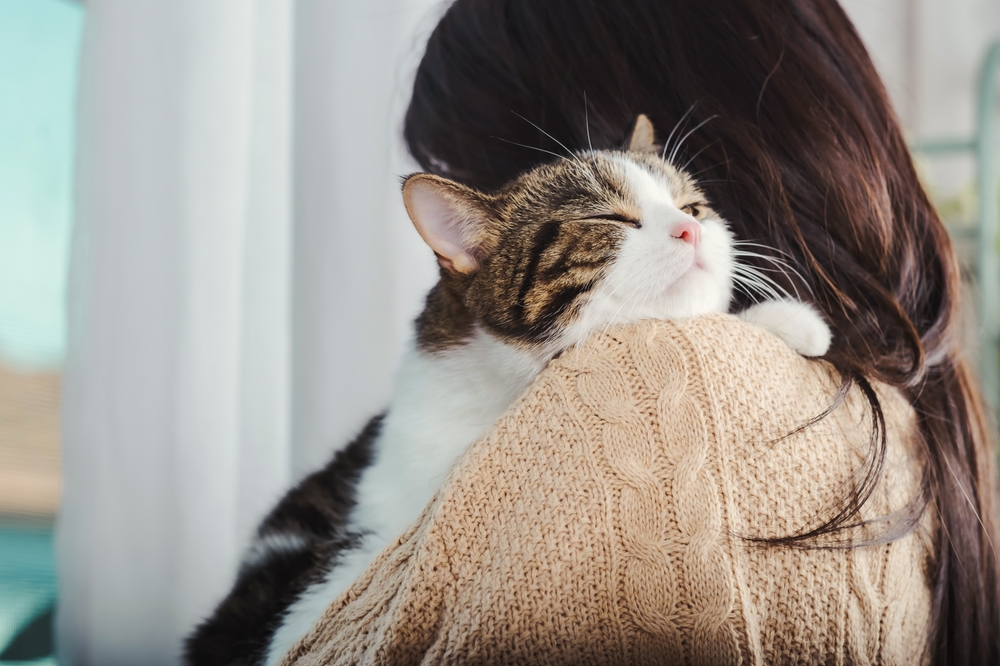
Cats do not rely on words, tone, or facial expressions the way humans do. Their communication system is rooted in smell.
A cat’s sense of smell is vastly more advanced than ours. While humans have around five million scent receptors, cats can have up to 200 million. This difference changes how they experience the world.
Every object, person, and animal carries a scent signature. Cats build mental maps based on those scents, constantly updating them as things change. When something smells familiar, it signals safety. When something smells unfamiliar, it triggers alertness.
When your cat headbutts you, they are actively shaping that scent map.
They are making sure you smell like them.
Marking You As Safe, Not Just Owned
Study finds one scent as effective as taking a pill for better sleep. One of the most commonly cited reasons for headbutting is territorial marking. Cats leave their scent on you as a way of claiming you.
But the word “claiming” often gets misunderstood.
In a cat’s world, territory is not about dominance in the way people imagine. It is about safety zones. Anything within their territory is predictable, known, and less likely to pose a threat.
By marking you with their scent, your cat is doing two things at once.
They are telling other animals that you belong to their environment.
They are also telling themselves that you are part of their safe world.
This is why many cats will immediately headbutt their owners after they come home. When you leave, your scent changes. You pick up unfamiliar smells from outside. Your cat notices this instantly.
Headbutting resets that.
It brings you back into their version of normal.
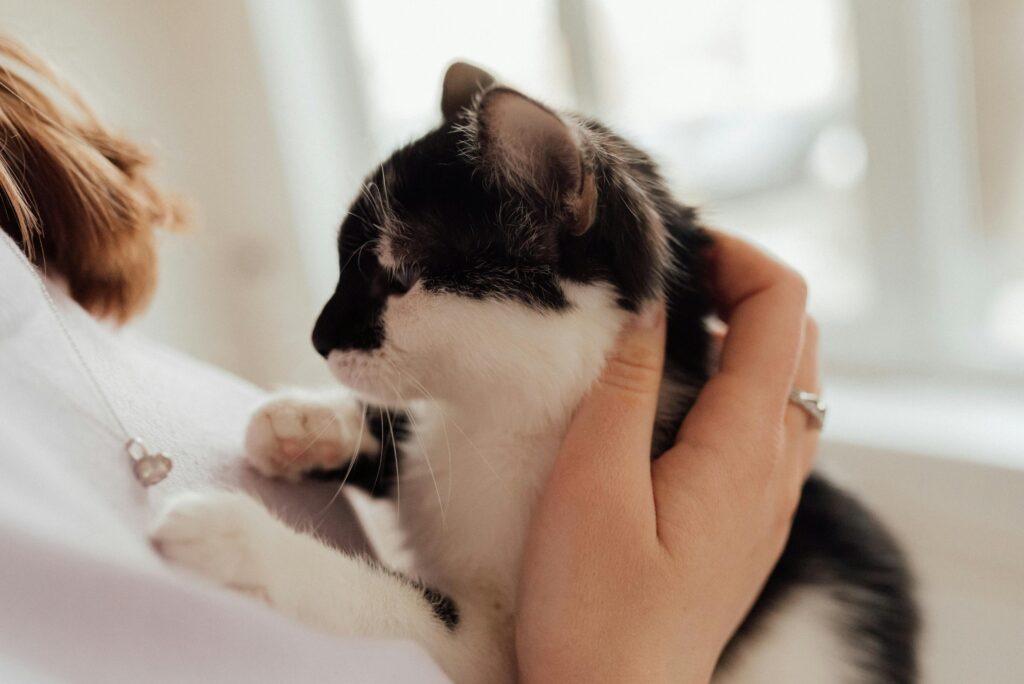
Cats that live together often develop what is known as a group scent. This happens when they repeatedly rub against each other, mixing their pheromones into a shared identity.
This behavior reduces conflict. It helps cats recognize who belongs and who does not. It creates a sense of unity within the group.
When your cat headbutts you, they are extending that same concept.
You are being folded into their group scent.
This is one of the clearest signs that your cat does not see you as separate. You are not just a provider. You are part of the social structure they rely on.
That shift is subtle, but it changes everything about how your cat relates to you.
A Greeting That Goes Beyond Hello
Headbutting is often tied to specific moments in your daily routine.
You walk through the door.
You sit down after being away.
You wake up and your cat is already there.
These are all points where your cat chooses to reconnect.
In these moments, bunting acts as a greeting. It acknowledges your return and re-establishes familiarity. It also serves as a quick way to reapply scent, ensuring that you once again match the environment your cat recognizes.
Unlike human greetings, which rely on sound or words, this is entirely physical and chemical. It is quiet, but it carries weight.
Some cats will combine headbutting with purring, kneading, or weaving around your legs. Each of these behaviors layers onto the same message. You are back. You are safe. You are part of this space again.
The Hidden Layer Of Trust Behind The Gesture
There is a deeper emotional component to this behavior that often gets overlooked.
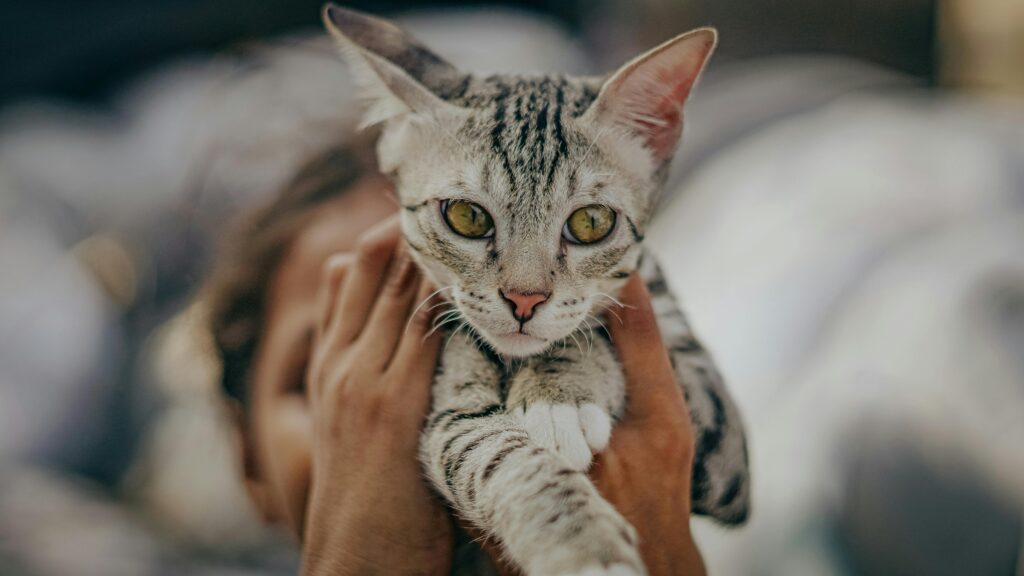
When a cat presses their head against you, they are placing one of their most vulnerable areas within reach. The head contains critical sensory organs, and exposing it requires a level of comfort that cats do not offer lightly.
In the wild, a cautious or threatened cat keeps its distance. It stays alert, ready to react.
Bunting is the opposite of that state.
It signals relaxation.
It shows that your cat does not perceive you as a threat.
That trust is built over time. It comes from repeated positive interactions, consistent routines, and an environment where the cat feels secure.
When it shows up in the form of a headbutt, it is not random. It is earned.
Affection That Doesn’t Look Like Affection
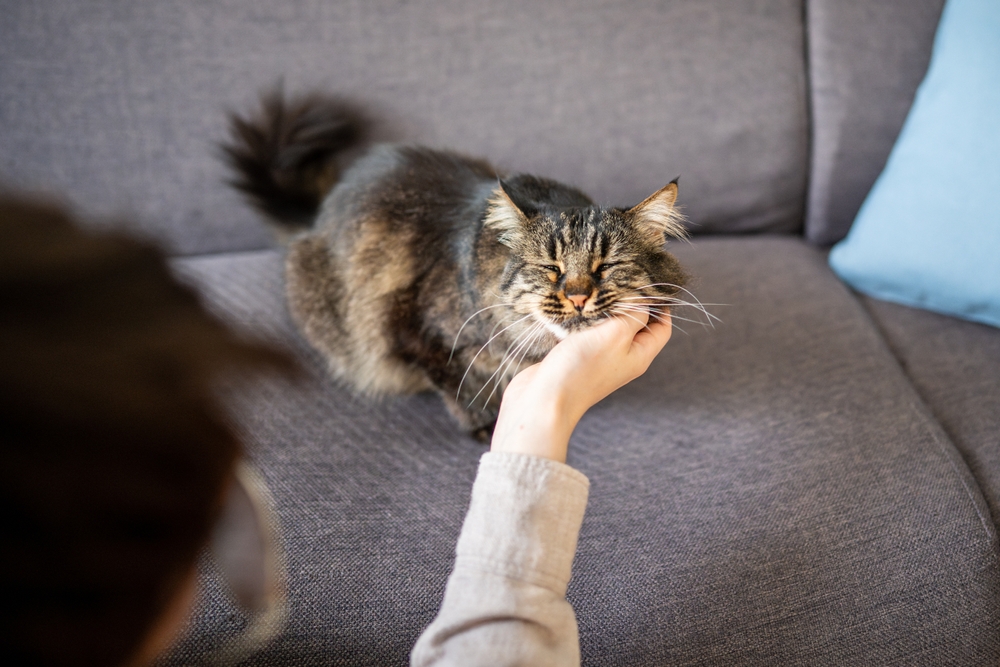
Cats are often labeled as distant or independent, especially when compared to dogs. That reputation exists largely because their affection looks different.
They do not always seek constant attention. They do not always respond to commands or display excitement in obvious ways.
Instead, they show attachment through subtle, consistent behaviors.
Headbutting is one of the clearest examples of this.
It may not feel dramatic, but it is deliberate. It is repeated. It is tied to emotional states like comfort and security.
Other behaviors often appear alongside it.
A cat that headbutts you may also:
- Sit near you without demanding attention
- Follow you from room to room
- Sleep close to you or on you
- Knead your lap or nearby surfaces
- Purr when you are present
Each of these actions reinforces the same idea. Your presence matters.
When Headbutting Becomes A Request
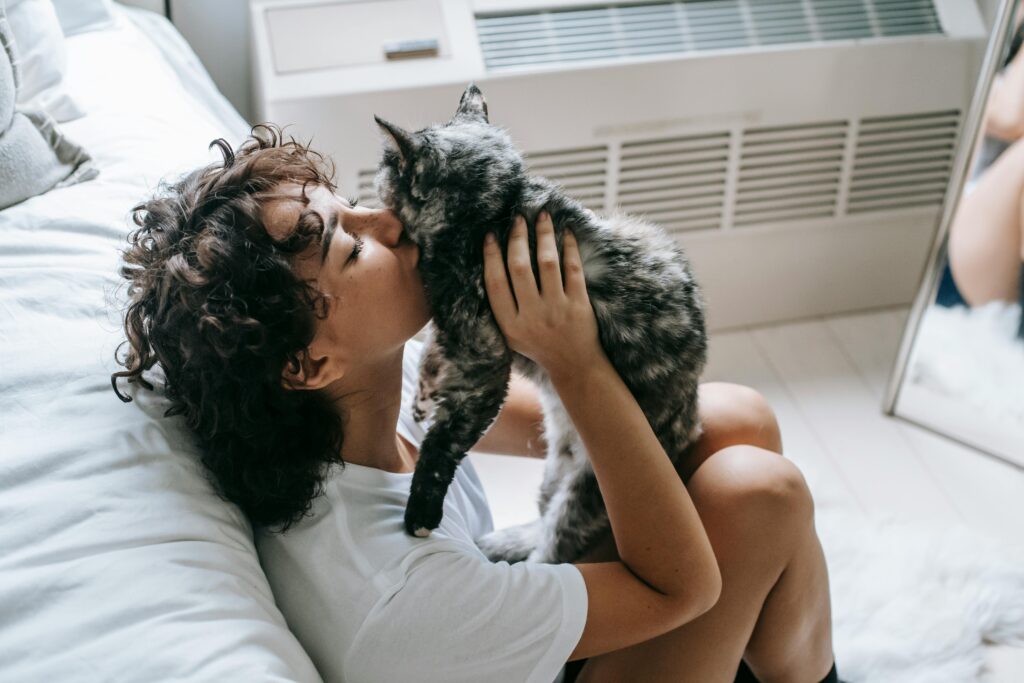
While bunting often reflects trust and bonding, it can also serve a more practical purpose.
Cats are observant. They learn quickly which behaviors get results.
If headbutting leads to food, petting, or playtime, your cat may begin to use it intentionally as a way to communicate needs.
You might notice patterns forming over time.
A cat that headbutts near their food bowl may be signaling hunger.
A cat that nudges you repeatedly while you are working may be asking for attention.
A cat that increases contact at certain times of day may be responding to a routine.
In these cases, the behavior is still positive, but it carries an added layer of purpose.
It becomes a tool.
Curiosity And Information Gathering
Not every headbutt is about affection or requests.
Cats also use physical contact as a way to gather information.
When they encounter a new person or animal, they may approach cautiously and initiate a brief head press. This allows them to collect scent data, which they can process to determine whether the new presence is safe or unfamiliar.
This type of bunting tends to be shorter and less repetitive. It may not be followed by lingering contact or other affectionate behaviors.
Understanding this distinction helps avoid misreading your cat’s intentions, especially in unfamiliar situations.
Why The Behavior Feels Good For Them
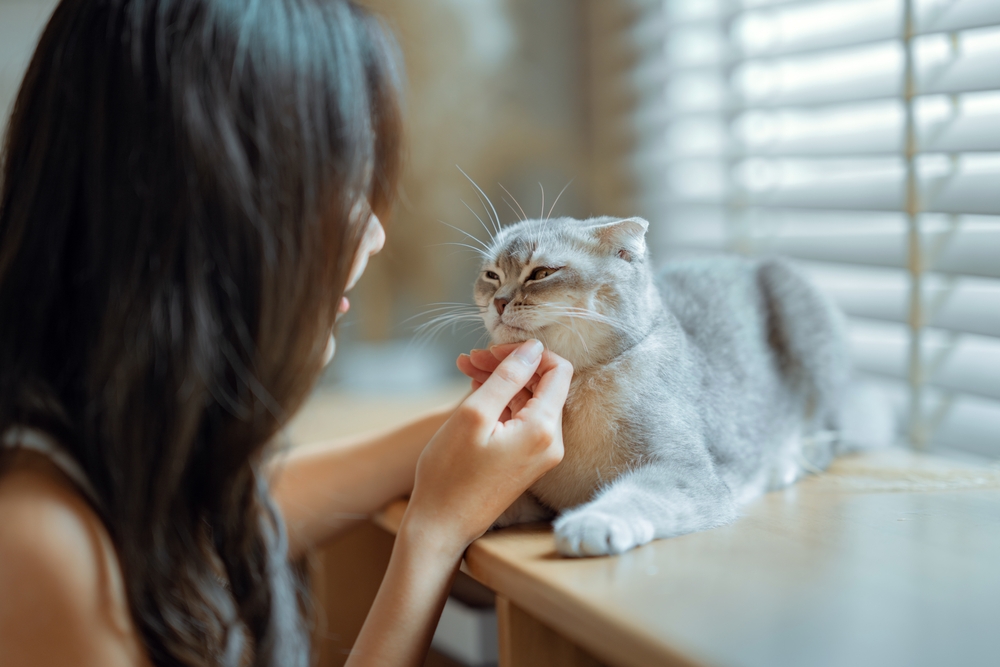
There is a biological component to bunting that goes beyond communication.
When cats release pheromones, it is believed to trigger calming responses in the brain. These chemical signals can reduce stress and reinforce a sense of familiarity.
This creates a feedback loop.
The cat engages in bunting.
Pheromones are released.
The cat feels calmer and more secure.
Because the behavior produces a positive internal response, it is likely to be repeated.
Your presence becomes part of that loop. Over time, you are associated with comfort on a chemical level, not just a behavioral one.
When Something Might Be Off
Although headbutting is typically harmless, changes in how often or how intensely it occurs can signal underlying issues.
A sudden increase in rubbing, especially if it appears frantic or obsessive, may indicate discomfort.
There are several conditions that can cause excessive rubbing or head pressing.
These include:
- Allergies or skin irritation
- Fleas or parasites
- Ear infections
- Neurological issues
- Stress or anxiety-related conditions
Physical symptoms may appear alongside the behavior.
Hair loss, constant scratching, unusual vocalization, or changes in posture can all point to a problem that needs attention.
In more serious cases, cats may press their head against walls or hard surfaces repeatedly. This is not the same as bunting and should be treated as a medical concern.
Monitoring changes in behavior is one of the most effective ways to catch these issues early.

Why Some Cats Do It Constantly While Others Rarely Do
Not all cats headbutt with the same frequency. Some do it multiple times a day, while others rarely engage in the behavior.
This variation comes down to several factors.
Personality plays a major role. Some cats are naturally more social and seek out interaction more often.
Early experiences also matter. Cats that have had consistent, positive contact with humans are more likely to initiate physical behaviors like bunting.
Environment is another influence. Cats that feel secure and stable in their surroundings are more comfortable expressing relaxed behaviors.
Changes in routine, new pets, or unfamiliar environments can temporarily alter how often a cat headbutts.
Over time, as the environment stabilizes, the behavior often returns to its baseline.
How Your Response Shapes The Habit

Your reaction to your cat’s headbutting plays a role in how often it continues.
If you respond with gentle petting, calm attention, or even simple acknowledgment, you reinforce the behavior as positive.
Cats remember these interactions. They learn that this action leads to a favorable outcome.
Some owners experiment with lightly offering their forehead in return. In some cases, cats will respond by repeating the gesture, creating a mirrored interaction that strengthens the bond.
The key is to remain gentle and allow the cat to initiate and control the interaction.
Forcing contact can have the opposite effect, especially with more reserved cats.
The Layered Meaning Behind A Simple Gesture
At a glance, a headbutt looks small.
It takes a second. It is easy to overlook.
But when you break it down, it carries multiple layers of meaning at once.
It is communication through scent.
It is a way of marking territory in a non-aggressive way.
It is a greeting ritual tied to routine and familiarity.
It is a sign of trust that requires vulnerability.
It is sometimes a request for attention or care.
It is also a self-soothing behavior linked to chemical responses in the brain.
All of that is packed into one brief moment of contact.

Why This Changes How You See Your Cat
Once you understand what bunting represents, it becomes difficult to see it as random or insignificant.
It is one of the clearest windows into how your cat perceives you.
Not as an owner in the human sense, but as part of their environment, their routine, and their sense of safety.
That shift in perspective matters.
It reframes the relationship from one of control to one of shared space and mutual recognition.
The Meaning Behind That Next Headbutt
The next time your cat presses their head into you, it is not an accident.
It is a signal built from instinct, reinforced by experience, and shaped by your presence in their life.
It places you inside their inner circle.
That circle is small, selective, and deeply tied to survival in the way cats experience the world.
Being included in it is not casual.
It is something your cat has decided, over time, that you have earned.