
Your cart is currently empty!
Student Creates Device Designed to Stop Deadly Stove Accidents

A forgotten pot left sitting on a hot stove overnight could have ended in tragedy.
Contents
show
Instead, it became the spark for an invention that may one day protect dementia patients in homes and care facilities around the world.
Montreal ninth-grader Aviana Machnes turned a frightening moment involving her grandmother into an award-winning science fair project called “Forget-Me-Not,” a device designed to detect dangerous stove situations before they become emergencies.
What began as a family scare is now being talked about as the kind of practical innovation that could genuinely save lives.
One Night In The Kitchen Changed Everything
Machnes’ grandmother has early-onset dementia.
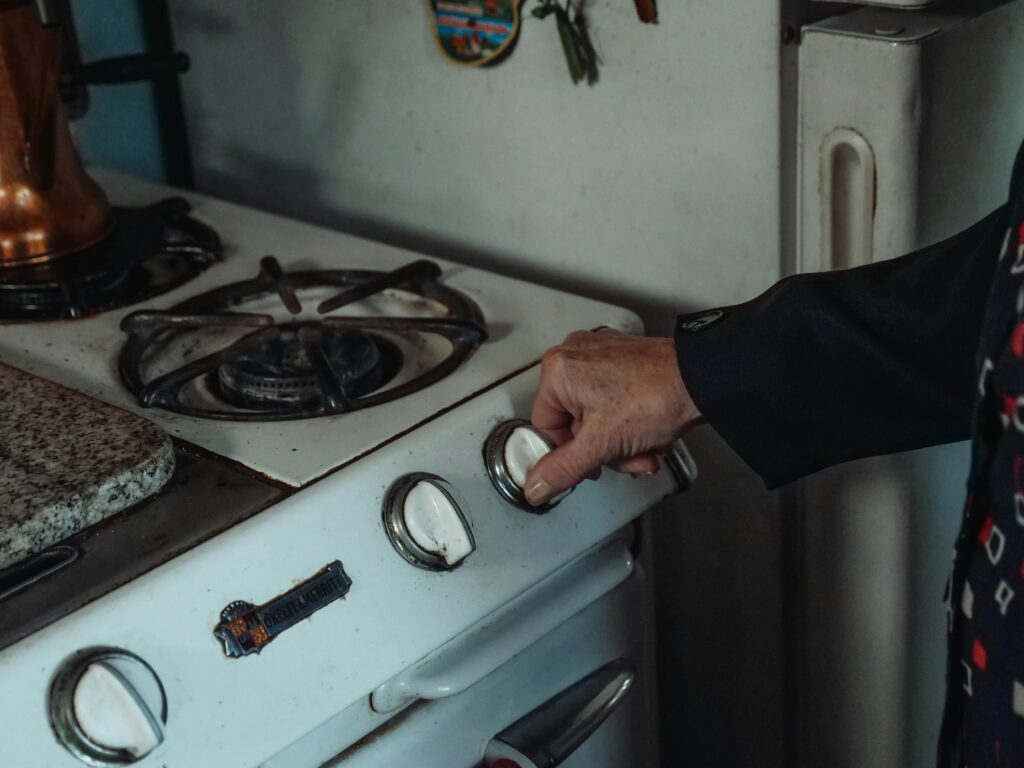
One evening, she accidentally left a pot sitting on an active stove burner overnight. By the next morning, the situation could have turned into a devastating house fire.
For many families dealing with dementia, this kind of close call feels painfully familiar.
Cooking is one of the first daily activities that becomes risky when memory loss progresses. A forgotten burner, an unattended pan, or confusion about appliances can suddenly create dangerous situations inside otherwise ordinary homes.
Machnes said the experience stayed with her because she realized there did not seem to be a simple solution already available.
Instead of moving on from the incident, she started thinking about how technology could step in before accidents spiral out of control.
That idea became the foundation for Forget-Me-Not.
The Device Was Built To Catch Dangerous Moments Early
Machnes designed the invention using current sensors and motion detectors.
The system monitors stove activity and checks whether someone is still nearby while cooking is happening. If the stove remains on for an extended period and no movement is detected in the kitchen, the device triggers an alarm.
The goal is straightforward: intervene before a forgotten stove becomes a fire.
A lot of science fair projects sound impressive in theory, but never move beyond the classroom.
Forget-Me-Not immediately stood out because nearly everyone understands the problem it is trying to solve.
Kitchen fires are among the most common household emergencies. According to fire safety organizations, unattended cooking remains one of the leading causes of home fires worldwide.
For dementia patients, the danger becomes even greater.
Memory lapses can interrupt routine tasks without warning. Someone may start boiling water, become distracted, and completely forget the stove is still active.
The invention specifically targets situations like:
- Burners accidentally left on after cooking
- Pots forgotten on active stoves
- Dementia-related memory lapses during meal preparation
- Situations where someone walks away from the kitchen and does not return
- Delayed emergency response inside homes or assisted living spaces
The concept avoids unnecessary complexity.
It focuses on one common danger and tries to stop it before firefighters, caregivers, or family members ever need to get involved.
The project’s name, “Forget-Me-Not,” carries an emotional layer that connected with many people following the story.
The phrase references both memory loss and the tiny blue flower often associated with remembrance.
For families dealing with dementia, memory can feel fragile and unpredictable.
The name gives the invention a human quality that makes it feel less like a piece of machinery and more like a protective companion.
Judges Were Shocked By The Level Of Thought Behind The Project

Machnes presented the invention at her regional science fair.
She was competing against older students, many with more advanced technical experience.
Despite that, Forget-Me-Not earned one of the competition’s top placements.
Teachers and judges reportedly connected with the project because it addressed a real-world issue that affects millions of families.
The invention was not built around flashy presentation tricks or abstract scientific theories.
It came directly from a lived experience.
One of Machnes’ science teachers, Jesse Clair, praised the invention as an example of students using education to tackle meaningful problems.
He explained that projects like this allow students to “get their hands dirty” while working on “actual real-world problems.”
That point matters because many classroom projects stay disconnected from everyday life.
Forget-Me-Not did the opposite.
It tackled a situation that firefighters, caregivers, and elderly families deal with constantly.
The emotional connection behind the invention also gave it weight.
People were not just reacting to a smart engineering idea. They were reacting to a teenager trying to protect someone she loves.
Dementia Is Creating A Growing Safety Crisis Inside Homes

Machnes’ invention arrives during a period when dementia diagnoses continue rising around the world.
As populations age, more families are becoming caregivers for parents, grandparents, and relatives living with memory-related illnesses.
That shift has created huge emotional and logistical challenges.
Dementia affects much more than memory.
It can interfere with judgment, spatial awareness, decision-making, and the ability to complete familiar routines safely.
Activities most people perform automatically can suddenly become dangerous.
Cooking is one of the biggest examples.
People living with cognitive decline may:
- Forget food is still cooking
- Leave burners switched on
- Place flammable objects near heat sources
- Wander away while preparing meals
- Forget how appliances function
- Become confused midway through tasks
Families often struggle to balance independence with safety.
Many dementia patients want to continue living normal lives and maintain daily routines. Caregivers, meanwhile, worry constantly about accidents happening while nobody is watching.
That tension creates difficult decisions.
Some families remove appliances entirely. Others increase supervision or move loved ones into assisted living environments earlier than planned.
Technology like Forget-Me-Not attempts to create another option.
Instead of taking independence away completely, it adds a layer of protection.
The Emotional Weight On Caregivers Is Huge

The emotional toll of caregiving rarely gets enough attention.
Family members often live in a constant state of low-level anxiety, worried about what could happen during ordinary moments.
A missed phone call can trigger panic.
A relative arriving home late can feel terrifying.
Even sleeping through the night becomes difficult when families fear emergencies could happen at any moment.
Kitchen accidents remain one of the most common concerns because they combine fire risks with the unpredictability of memory loss.
That is one reason people reacted so strongly to Machnes’ invention online.
It addressed a fear many families already live with every day.
Smart Safety Technology Is Becoming More Common
Forget-Me-Not is part of a larger wave of technology designed to help elderly people stay safe while preserving independence.
Over the past decade, companies and researchers have invested heavily in systems aimed at reducing risks inside homes.
Several technologies are now commonly used by families and care homes.
Some examples include:
- Smart stove shut-off systems that automatically disable burners
- Motion-sensor lighting designed to prevent nighttime falls
- GPS trackers for dementia patients who may wander
- Emergency response watches with one-touch alert buttons
- Simplified communication tablets with large icons and voice assistance
- Medication reminder systems that issue alerts when doses are missed
- Bed sensors that notify caregivers when someone gets up unexpectedly
The demand for these tools keeps growing.
Healthcare experts expect dementia cases to increase significantly over the next several decades, especially as populations continue aging.
That means safety-focused inventions will likely become far more important in everyday life.
One reason Forget-Me-Not drew attention is because it avoids overcomplication.
A lot of modern “smart home” products rely on expensive systems, confusing apps, or complicated installation processes.
That can create problems for elderly users and overwhelmed caregivers.
Machnes’ invention focuses on a simple sequence:
The stove is on.
Nobody is nearby.
The alarm activates.
That clarity makes the idea feel practical instead of futuristic.
People immediately understand how it works and why it matters.
Dementia Research Is Advancing Faster Than Before
While inventions like Forget-Me-Not focus on day-to-day safety, researchers are also making progress in understanding dementia itself.
Scientists around the world are racing to improve treatment options, early detection methods, and long-term patient care.
Several recent medical developments have focused on slowing cognitive decline in patients with early-stage Alzheimer’s disease.
Researchers are studying medications that target abnormal protein buildup in the brain, which is believed to play a major role in memory deterioration.
While experts caution that these treatments are not cures, some studies suggest they may slow progression in certain patients.
That has created cautious optimism among doctors and families.
Early diagnosis has also improved significantly.
Advanced brain imaging and blood-based testing methods are helping specialists identify warning signs earlier than before.
The earlier dementia is detected, the more opportunities patients have to seek treatment, plan for care, and adjust their lifestyles.
Researchers are increasingly examining how everyday habits influence cognitive health.
Studies have linked several lifestyle factors to brain function later in life.
These include:
- Physical activity levels
- Sleep quality
- Social interaction
- Nutrition and heart health
- Mental stimulation
- Stress management
Doctors frequently encourage patients to stay mentally and physically active for as long as possible.
Although lifestyle changes cannot fully prevent dementia, many experts believe healthy habits may help support long-term brain health.
That broader focus on prevention has made practical safety inventions even more valuable.
Families are looking for tools that help people continue living independently while reducing major risks.
Science Fair Projects Have Changed The World Before

One reason this story resonates so strongly is that people love seeing young inventors tackle serious problems.
History is filled with student projects that later evolved into real-world products and medical breakthroughs.
Children and teenagers sometimes approach problems differently because they are not locked into traditional assumptions.
They ask simple questions adults may overlook.
Why does this happen?
Why has nobody fixed this yet?
Could there be an easier solution?
That perspective can lead to surprisingly effective ideas.
Some notable inventions that began as student projects include:
- Affordable water purification systems for developing regions
- Portable medical diagnostic tools
- Low-cost prosthetic limbs created through 3D printing
- Early-warning heart monitoring systems
- Eco-friendly materials designed to reduce plastic waste
Many of those inventions started with deeply personal experiences.
A family illness.
A community problem.
A dangerous moment witnessed firsthand.
Machnes’ story follows that same pattern.
She was not trying to build something trendy for attention.
She was trying to solve a frightening problem inside her own home.
Stories like this also challenge assumptions about what science education should look like.
For many students, science fairs feel disconnected from real life.
Projects often revolve around experiments designed mainly to satisfy grading requirements.
But when students are encouraged to tackle genuine problems, the results can become surprisingly meaningful.
Teachers play a huge role in that process.
Access to mentorship, tools, and encouragement can turn curiosity into practical innovation.
That is one reason educators praised Machnes’ project so strongly.
It represented more than a good grade.
It showed what can happen when students apply creativity to issues affecting their families and communities.
The Invention Could Eventually Expand Beyond Homes

Right now, Forget-Me-Not remains a science fair project with growing attention.
But Machnes reportedly hopes to patent the invention and pair it with a companion phone application.
That opens the door for much larger possibilities.
Long-term care facilities constantly balance patient independence with safety management.
Kitchen access can become complicated in environments where residents experience varying levels of cognitive decline.
Technology capable of monitoring unattended cooking could reduce risks without requiring constant staff supervision.
Systems like Forget-Me-Not might eventually help:
- Assisted living communities
- Senior apartment complexes
- Rehabilitation centers
- Independent retirement residences
- Private family homes
The invention could also integrate with existing smart-home technology.
Imagine caregivers receiving phone alerts if a stove remains active too long.
Or emergency contacts being notified automatically when alarms go unanswered.
Those possibilities explain why people immediately saw real-world potential in the project.
The world’s population is getting older.
That demographic shift is already reshaping healthcare, housing, transportation, and technology design.
Products once considered niche are becoming mainstream because millions of families now face similar caregiving challenges.
Simple safety innovations may become just as common as smoke detectors or security cameras in future homes.
Machnes’ project arrived at exactly the right time.
Social Media Quickly Connected With The Story

The story spread rapidly online because it combines several things people naturally respond to.
There is the emotional family element.
There is the fear of dementia.
There is the creativity of a teenager solving an adult problem.
And there is the rare feeling that an invention could genuinely make life safer for vulnerable people.
Many viral stories fade quickly because they feel distant from everyday life.
This one did not.
Countless people have experienced moments where a parent or grandparent forgot something important.
For families already caring for relatives with dementia, the story hit even harder.
A forgotten stove is not an abstract danger.
It is one of the situations caregivers fear most.
That emotional recognition helped the story travel far beyond local science fair coverage.
Online reactions often focused on Machnes herself.
People were impressed not only by the invention, but by the motivation behind it.
Teenagers are frequently portrayed online as distracted by social media trends, internet drama, or viral entertainment.
This story showed something completely different.
A young student noticed a dangerous problem affecting her grandmother and decided to spend time building a solution.
That kind of story cuts through internet cynicism quickly.
The Biggest Innovations Are Often Surprisingly Simple

Some of the most successful inventions in history share one thing in common.
They solve everyday problems in ways people immediately understand.
Forget-Me-Not fits that pattern.
The device does not promise to cure dementia.
It does not rely on futuristic artificial intelligence or expensive robotics.
It simply tries to stop a dangerous situation before disaster happens.
That practicality is what makes the invention feel so powerful.
Families caring for dementia patients are not always searching for miracle technologies.
Sometimes they just want one less thing to worry about.
A Single Family Moment Could End Up Protecting Thousands Of Others
What makes this story memorable is how ordinary it began.
A pot left on the stove is the kind of accident many people could imagine happening in their own homes.
For Aviana Machnes, that frightening moment became motivation.
Instead of accepting the risk, she started building a solution.
Now, a project that began around one family kitchen table may eventually help protect vulnerable people in homes and care facilities far beyond Montreal.
That is a remarkable outcome for something that started with a forgotten pot and a teenager asking one simple question:
How do we stop this from happening again?