
Your cart is currently empty!
Nietzsche Never Married. But He Left Behind One Question That May Be the Best Marriage Advice Ever Written
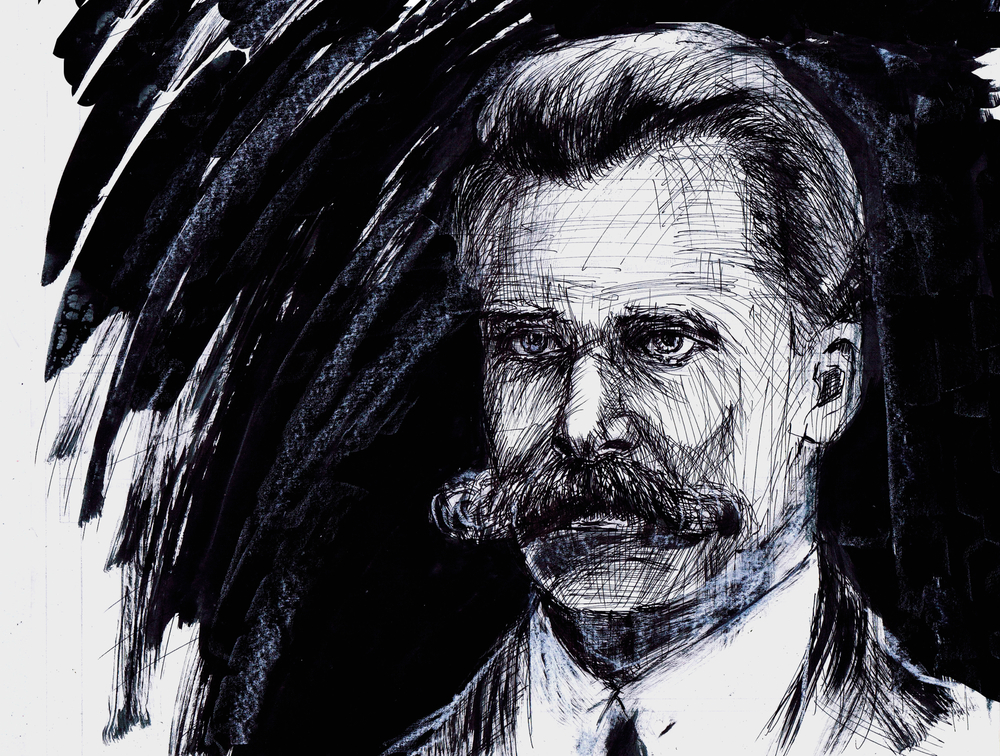
Most people preparing to marry spend their energy thinking about the wrong things. Whether the attraction will hold. Whether their finances are compatible. Whether their families approve of each other and their life goals point in roughly the same direction. Relationship advice from friends, therapists, and a thousand magazine articles tends to orbit the same cluster of concerns, each one reasonable on its own but collectively missing something that sits closer to the center of what a long marriage actually is.
Contents
show
One of the 19th century’s most challenging and provocative philosophical minds believed he had found that missing thing. Friedrich Nietzsche spent a considerable portion of his intellectual life thinking about marriage, not as a romantic institution but as a practical arrangement between two people who would have to build a shared life across decades. What he arrived at was not a checklist, not a compatibility framework, and not a theory about love. It was a single question, and once you hear it, most other pre-marriage advice begins to feel slightly beside the point.
Why a Philosopher Who Never Married Thought So Deeply About It
Friedrich Nietzsche lived from 1844 to 1900 and never married, a biographical detail that might seem to undercut his authority on the subject. In practice, it may have given him a clearer angle on it. Nietzsche wrote about marriage often and seriously, approaching it with the same instinct he brought to everything else, namely a desire to strip away sentiment and convention to find out what was actually true underneath.
Where most cultural thinking about marriage leaned on romantic idealism, Nietzsche was more interested in durability. What holds two people together not in the first years, when novelty and attraction carry much of the weight, but in the long middle stretch of a life, when those early forces have quieted down, and something steadier has to take their place? Nietzsche believed most people never seriously asked themselves that question before committing, and that the omission explained a great deal about why so many marriages eventually ran dry.
The Question That Cuts Through Everything Else

Nietzsche distilled his thinking on marriage into one question that he believed should precede any serious commitment. His words were direct and deliberately unglamorous. “Do you believe you are going to enjoy talking with this woman [or partner] up into your old age? Everything else in marriage is transitory, but most of the time you are together will be devoted to conversation.”
Sit with that for a moment, because what Nietzsche is asking is not whether the conversation is good right now. Most couples in the early stages of a relationship find talking easy and natural, fueled by novelty and mutual curiosity about someone who is still largely unknown to them. What he is asking is something far more specific and far more demanding. Can you imagine sitting with this person in your old age, after careers have run their course and children have grown up and the texture of daily life has settled into something quieter and more ordinary, and still finding the exchange genuinely worth having?
Most people never ask themselves that version of the question. It does not carry the same emotional charge as asking whether you love someone deeply enough to marry them. But Nietzsche argues that it is the more honest question, because it is asking you to evaluate the version of the relationship that will actually occupy most of your married life, rather than the version you are currently living.
Why Conversation Outlasts Almost Everything Else

What makes Nietzsche’s question so disarming is how plainly it maps onto the reality of a long marriage. Attraction, in its early intensity, does not sustain itself across decades at the same pitch. Nobody expects it to, and most people in lasting marriages would say their relationship changed shape rather than diminished. Financial situations improve, deteriorate, and shift in ways nobody predicts at the altar. Shared interests evolve as people change. Family circumstances bring their own pressures and alterations over time.
What does not change is that two people living together are constantly, inevitably in each other’s conversational company. Dinner tables, long drives, quiet evenings, weekend mornings, the ordinary accumulation of hours that make up a life together. A marriage conducted across fifty years is, among other things, an enormous quantity of conversation, and whether that conversation feels alive or exhausted makes a larger difference to daily happiness than most of the factors people prioritize before saying yes.
Mark Manson on Why Nietzsche Got This Right
Mark Manson, author of The Subtle Art of Not Giving a F*ck, has cited Nietzsche’s marriage question publicly as the most impactful piece of relationship advice he has ever encountered. Speaking on the Pursuit of Wonder podcast, Manson explained why the quote has stayed with him in terms that translate the philosophy into something immediate and concrete.
“Looks come and go. Interests come and go. Finances come and go. Family problems come and go. But at the end of the day, can you spend the rest of your life in this conversation?” Manson continued by noting that nearly everything people care about when they first meet someone loses its weight by the time old age arrives. What remains is the conversation itself, and whether two people can keep sustaining it through every other shift and loss along the way.
Manson’s reading of Nietzsche is useful because it takes the philosophy out of the 19th century and places it squarely in front of the kinds of decisions people face today. Young couples spend enormous amounts of energy on factors that will look different in twenty years, and relatively little energy on whether they genuinely enjoy being in each other’s company as a simple, ongoing reality rather than a romantic highlight.
Friendship as the True Foundation of a Lasting Marriage

Nietzsche’s marriage question did not exist in isolation. It was part of a broader and somewhat countercultural argument he made throughout his writing about what actually holds a marriage together over time. Where popular thinking about marriage placed romantic love at the center, Nietzsche consistently argued that friendship was the more reliable and more important foundation.
In Human, All Too Human, he wrote directly to this point. “It is not a lack of love, but a lack of friendship that makes unhappy marriages.” For Nietzsche, romantic love was too volatile and too dependent on physical intensity to serve as the primary bond in something designed to last a lifetime. Friendship carried different qualities: steadiness, genuine interest in another person’s mind and character, a pleasure in their company that did not depend on circumstances being favorable.
He extended that argument in another passage from the same work, writing that “the best friend will probably acquire the best wife, because a good marriage is founded on the talent for friendship.” Researcher Skye Nettleton, writing on Nietzsche’s views in 2009, also noted his warning that sensuality can accelerate love before its roots are deep enough to hold, leaving the attachment easy to pull apart when conditions become difficult.
Read together, these ideas form a consistent position. Nietzsche was not dismissing love or attraction as irrelevant to marriage. He was arguing that they are insufficient on their own, and that the people who build the most durable partnerships are those who have also built a genuine friendship with their partner, a relationship that can carry weight when the more volatile emotional forces settle or shift.
What the Question Is Really Asking You to Do
Nietzsche’s marriage question is, at its core, an invitation to honest self-examination at a moment when most people are more inclined toward romantic certainty than toward rigorous honesty. Asking whether you will enjoy talking with someone into old age requires imagining a future version of the relationship that looks nothing like its present form. No courtship excitement, no early-relationship intensity, no external events providing ready-made conversational material. Just two people, and whatever they naturally have to say to each other when everything else has quieted down.
If that image feels genuinely good, if the prospect of sitting in the same room and talking with this person for decades strikes you as something worth looking forward to rather than something to be managed, Nietzsche would suggest that you have found something more durable than most of what people chase when they think about choosing a partner. If the image is uncertain or uncomfortable, no amount of attraction or compatible goal-setting elsewhere in the relationship addresses what that discomfort is pointing toward.
Marriage, by Nietzsche’s account, is not primarily a romantic arrangement. It is a long conversation, and the question of whether you want to be in that conversation, for all the ordinary years that no one writes poetry about, is the one question most people never think to ask before they say yes.