
Your cart is currently empty!
Scientists Built A Touchscreen Game For Birds And The Results Shocked Them
Wind turbines have become one of the biggest symbols of clean energy, but there’s one problem scientists still haven’t solved. Birds and bats continue crashing into the spinning blades every year, and while the numbers may seem small compared to other environmental threats, conservationists say the losses still matter, especially for endangered species already struggling to survive. Researchers estimate turbines can unintentionally kill between two and six birds and four to seven bats per megawatt every year, creating pressure to find solutions that protect wildlife without slowing renewable energy growth.
Contents
show
Now, scientists believe they may have discovered a surprisingly simple answer after studying one of nature’s oldest survival tricks. A new experiment found birds were far less likely to approach wind turbines painted with warning colors inspired by venomous coral snakes and poison dart frogs. To test the idea safely, researchers even built a touchscreen game designed specifically for birds, allowing them to simulate real-world turbine encounters inside a laboratory without putting any animals in danger.
Scientists Wanted To Make Turbines Easier For Birds To See
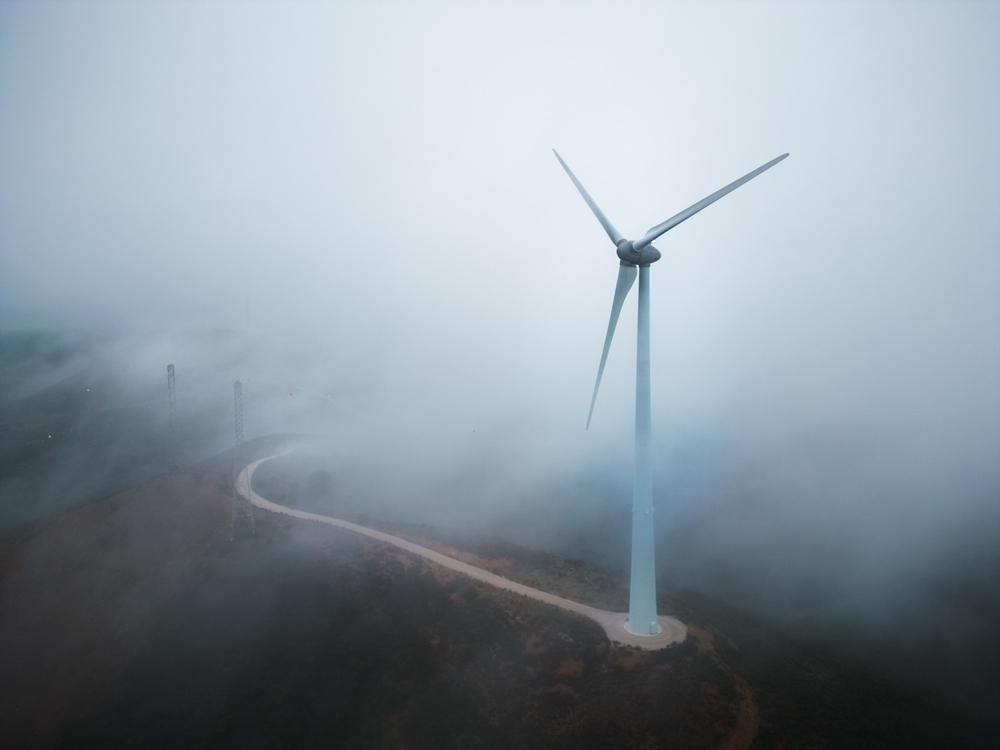
Researchers from the University of Helsinki and the University of Exeter focused their study on one major issue surrounding wind farms. Many birds simply fail to detect turbine blades early enough while flying, especially during migration periods or in difficult weather conditions. Traditional white turbine blades can blend into cloudy skies or create motion blur while spinning at high speed, making them harder for birds to avoid.
The team decided to explore whether stronger visual warning signals could trigger instinctive avoidance behavior. Instead of redesigning turbines mechanically, they borrowed inspiration directly from nature, where bright colors often act as survival warnings. Across the animal kingdom, species with dangerous toxins or venom frequently use high-contrast colors to scare predators away before an attack even happens.
Their study, published in the journal Behavioral Ecology, tested several different turbine designs. Researchers compared standard white blades, turbines with one black blade, red-and-white striped blades, and a new red-black-yellow pattern inspired by venomous animals like coral snakes. The goal was to determine whether birds would naturally hesitate around patterns associated with danger.
The Experiment Used A Touchscreen System Built For Birds
Instead of exposing birds to actual turbines outdoors, researchers designed a controlled laboratory experiment using video simulations. Birds were placed in front of a touchscreen system specially designed to study animal behavior and decision-making.
The setup allowed scientists to show spinning turbine blades with different color schemes and rotation speeds while tracking how closely the birds approached each design. Researchers described the process almost like a behavioral video game created specifically for avian test subjects.
“By using a touchscreen especially designed for birds, we can use games to explore their behavior and ecology by simulating real-world scenarios, without putting the birds at risk,” explained University of Exeter ecologist and study co-author George Hancock.
The touchscreen system gave researchers the ability to study avoidance behavior in a safe environment while controlling lighting, movement, and visual contrast. That also eliminated the ethical concerns that would come with testing dangerous turbine interactions in the wild.
White Blades Produced The Worst Results
The findings quickly revealed one clear pattern. Birds approached traditional white turbine blades more often than any of the other designs tested during the experiment.
Meanwhile, the biomimetic red-black-yellow warning pattern produced the strongest avoidance response by far. Researchers said the effect was far larger than they initially expected when the study began.
“White blades, which are the most frequently used pattern around the world, turned out to be the worst option for birds,” Johanna Mappes, a University of Helsinki environmental scientist and study co-author, said in a statement. “This suggests that a relatively simple visual change could reduce bird mortality in connection with wind power.”
Researchers already knew birds react differently to warning colors in natural environments, but the scale of the behavioral shift still surprised the team.
“We’ve known for a long time that birds change how they respond to objects with warning colors, but to see such a large effect was remarkable,” Hancock added.
Nature Has Been Using Warning Colors For Millions Of Years
The study relies on a biological principle called aposematism, which refers to warning coloration found throughout nature. Many dangerous species evolved bright, recognizable patterns that signal predators to stay away before physical contact occurs.
Coral snakes use bands of red, yellow, and black to advertise their venom. Poison dart frogs display vivid blue, yellow, and orange skin patterns that predators quickly learn to avoid. Even creatures like ladybugs and monarch butterflies use bright warning colors as a survival strategy.
Scientists believe birds may carry similar instinctive caution toward those same color combinations, even when they appear on completely unfamiliar objects like wind turbines. The high-contrast patterns may also improve blade visibility against changing skies, helping birds recognize danger earlier while flying.
Researchers said this combination of visibility and instinctive avoidance could explain why the striped warning blades performed so well during the touchscreen trials.
The Wind Industry Could Adopt The Change Cheaply
One reason the findings are attracting attention is that the solution may be relatively easy for wind farms to implement. Many existing collision-reduction systems rely on radar tracking, motion detection, or temporary turbine shutdowns during migration seasons, which can become expensive and difficult to manage.
Changing paint patterns on turbine blades would require far less infrastructure. Scientists believe the biomimetic warning colors could potentially reduce bird collisions without affecting energy production or requiring major engineering redesigns.
The researchers also suggested similar visual warning systems could eventually help reduce bird deaths caused by other human-made structures.
Potential applications include:
- Power lines
- Building windows
- Communication towers
- Solar facilities
Bird collisions with buildings and infrastructure kill millions of animals globally every year. Conservation experts say even modest reductions across multiple industries could make a significant long-term difference for vulnerable species.
Scientists Still Need To Test The Turbines Outdoors
Although the laboratory results were strong, researchers say the next step involves testing the warning patterns under real-world conditions. Bird behavior can vary depending on species, weather, geography, migration routes, and visibility conditions.
A pattern that works effectively in northern Europe may not produce identical results in tropical regions or desert environments. Scientists now want to study how birds react to the designs around actual wind farms operating outdoors.
“If the results are repeated in practical conditions in different countries and with different bird species, it could be a significant change for the entire wind power industry,” said Mappes.
The research team believes the findings open the door for larger field studies that could eventually reshape how future turbines are designed around the world.
Engineers Are Increasingly Copying Nature’s Designs
The turbine experiment is part of a larger scientific movement known as biomimicry, where engineers study how nature solves problems and adapt those solutions into technology.
Researchers have already borrowed ideas from animals for several major innovations. Japanese engineers redesigned bullet trains after studying kingfishers because the birds enter water with almost no splash, helping reduce tunnel noise and improve efficiency. Scientists have also copied shark skin textures to create surfaces that resist bacteria buildup inside hospitals.
Owls have inspired quieter turbine blades and aircraft wings because their feather structure allows them to fly almost silently. The new wind turbine study adds another example showing how evolutionary survival strategies can sometimes solve modern engineering problems more effectively than complex technology.
The idea may sound unusual at first, but researchers believe nature has already spent millions of years refining systems that humans are only beginning to understand.
A Paint Pattern Could Help Protect Wildlife
Wind energy remains one of the most important tools for reducing dependence on fossil fuels, but scientists say renewable energy systems still need to evolve alongside wildlife protection efforts.
This study suggests one of the most effective solutions may also be one of the simplest. Instead of relying entirely on expensive monitoring systems or complicated redesigns, researchers found birds responded strongly to visual signals already embedded throughout the natural world.
If future outdoor tests confirm the laboratory results, the giant white turbines covering landscapes today could eventually look very different. And for birds flying overhead, those warning colors may become enough to trigger the same instinctive reaction they feel when spotting a venomous snake in the wild.
Sources:
- Hancock, G. R. A., Lehtonen, H., Brown, T., Ejjite, A., Nokelainen, O., Mappes, J., & Winters, S. (2026). Biologically inspired warning patterns deter a passerine, Parus major, from digital turbine blades. Behavioral Ecology, 37(4), arag039. https://doi.org/10.1093/beheco/arag039
animal behavior, avian safety, bats, Behavioral Ecology, biomimicry, bird conservation, bird strikes, birds, Clean Energy, coral snakes, Environmental Science, green energy, poison dart frogs, renewable energy, Science news, snake-inspired turbines, technology, touchscreen game for birds, University of Helsinki, viral science news, wildlife, Wildlife Protection, wind farms, wind turbines